
Aeolia
Aeolia — or Aeolis — is the lost middle child of ancient western Anatolia: the strip of coastline and hill-country between the Troad (aka Troy) in the north and Ionia in the south, between the Aegean shore and the inland slopes of Mount Ida and Mount Yunt. After the Bronze Age collapse, Greek-speaking settlers descended (according to legend) from Agamemnon's bloodline crossed the Aegean and founded a confederation of twelve Aeolian cities here. They spoke the Aeolic dialect of Greek — the same dialect that Sappho and Alcaeus would later use on Lesbos — they invented a distinctive temple style, and they laid the cultural foundation for what would eventually become the great Hellenistic kingdom of Pergamon.
This is a region most travelers drive through without noticing. We slow down. Walk the wild ridges of Aigai above the Manisa plain, where goat herds graze among Hellenistic agora walls and a forgotten Aeolian acropolis watches the sea. Climb to the marble hilltop of Assos, where Aristotle taught philosophy for three years and where Saint Paul once boarded a ship for Mytilene. Wander the harbor of Cyme, the largest of the Aeolian cities, and the medieval Genoese castle that still defines Pitane. This category is the slow, scholarly cousin of our Anatolia Archaeology coverage — written for travelers who want to read a coast that most guidebooks skip.
Walk it with our archaeologist-guide Ümit Işın, or have us design a custom Aeolian itinerary threading these sites with Troy, Pergamon, and the Ionian coast.
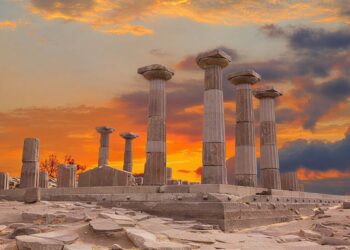
Assos: Where Aristotle Watched the Aegean
Explore the ancient city of Assos where Aristotle taught. Discover dramatic ruins with epic Aegean Sea views.
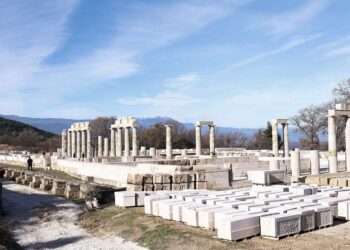
Aigai: A Lost City in the Heart of Aeolia
Step into Aigai, an ancient mountain city in Manisa where Hellenistic architecture, Roman rebuilding, and dramatic Aegean landscapes meet.
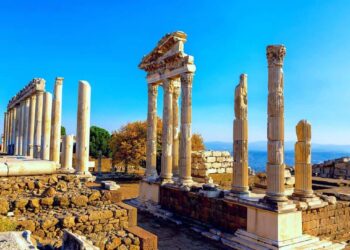
Pergamon – Ancient City of Art, Science and Medicine
Explore the ancient city of Pergamon's rich history, ancient ruins, travel tips, and cultural heritage in our detailed, comprehensive guide...
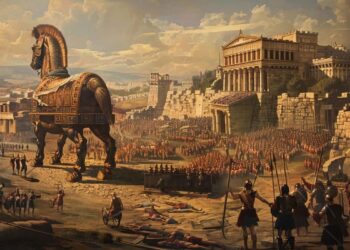
Troy – Where Myth Meets History in Turkey’s Timeless Land
Discover the timeless allure of this ancient city, uncover its legendary war, deep history, ruins and visitor tips in our...
