History in brief
The Lycian region stands out for its democratic federation of city-states, rock-cut tombs, and blend of Greek, Persian, and Roman influences. Its coastal beauty and unique script make it a rare cradle of both natural and cultural heritage.
Lycian beginnings: elite tombs and terraces announce power
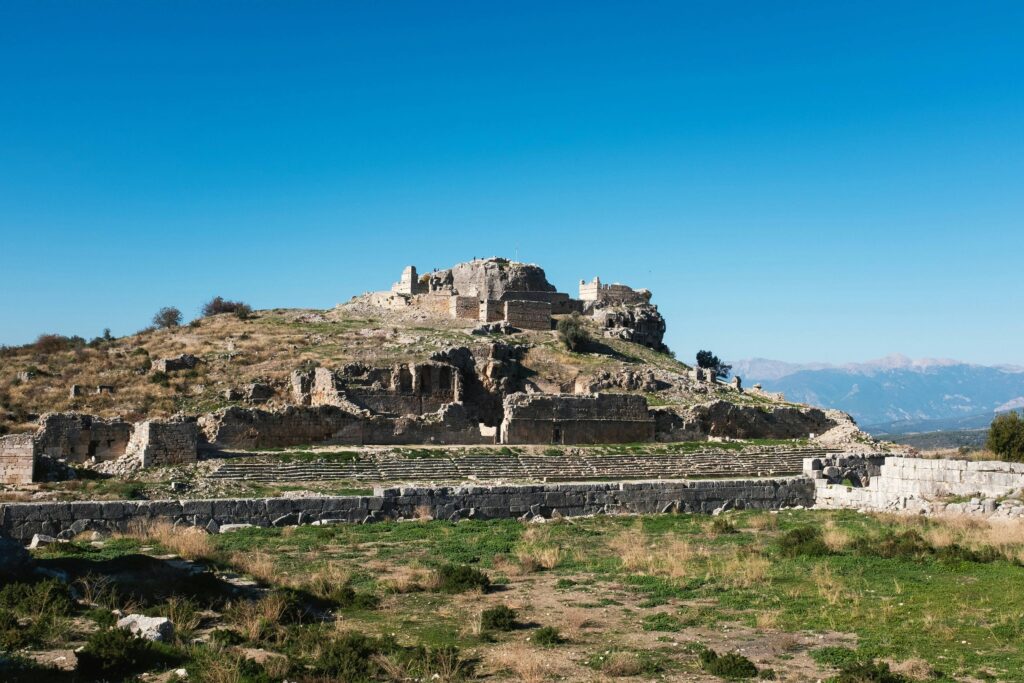
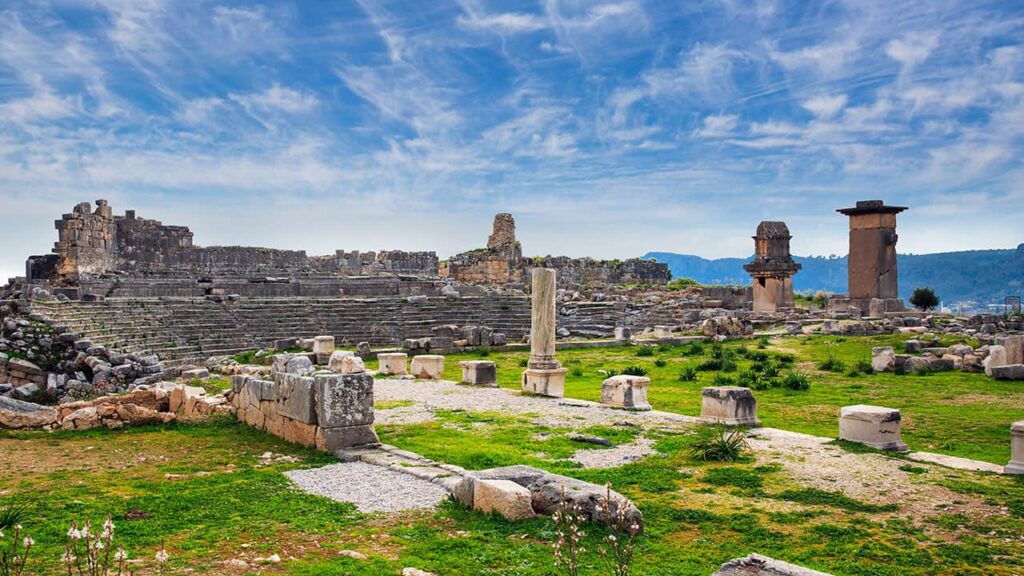
Long before empires arrive, Tlos reads like a Lycian statement piece: a high, defensible ridge above the Xanthos valley with commanding sightlines and a built environment designed to be seen.
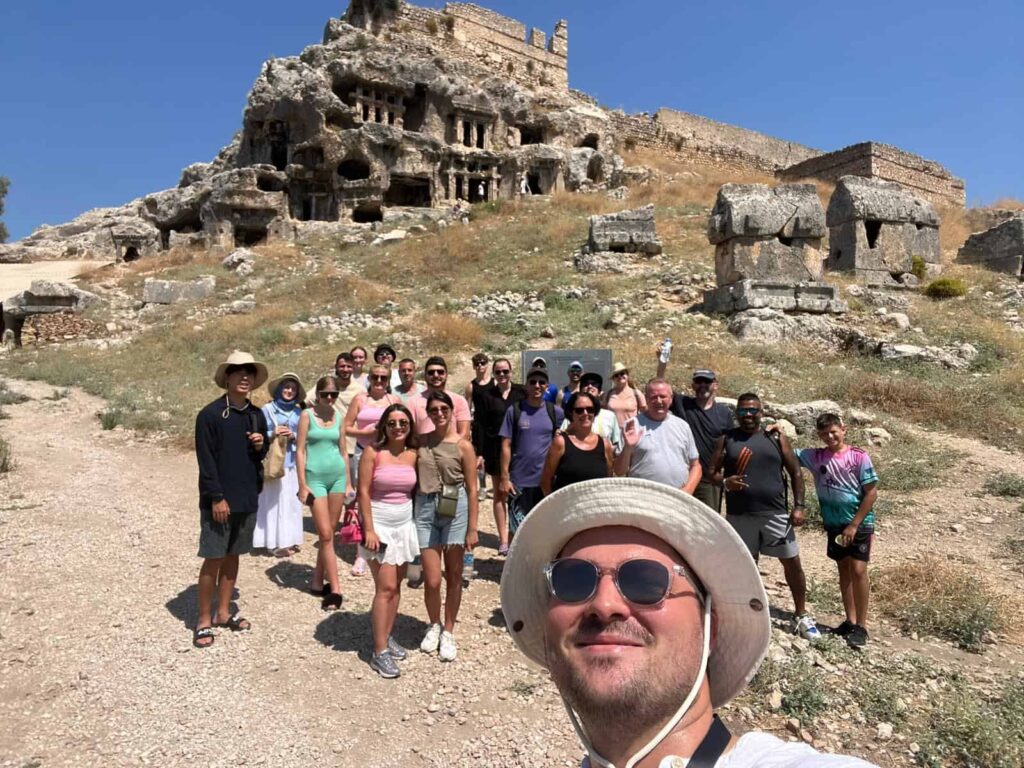
The earliest “headline architecture” is funerary—rock-cut tombs and pillar/house-type forms that broadcast lineage and status in the Lycian way, turning cliffs into public genealogy. Terraces, retaining walls, and carefully staged approaches begin to “edit” the mountain into usable civic space, suggesting organized labor and local authority strong enough to reshape geology.
In this phase, the city’s identity is intensely regional: Lycian language and customs, local elites, and a landscape-focused sense of power where control of routes, pasture, and valley agriculture matters as much as walls.
Persian (Achaemenid) horizon
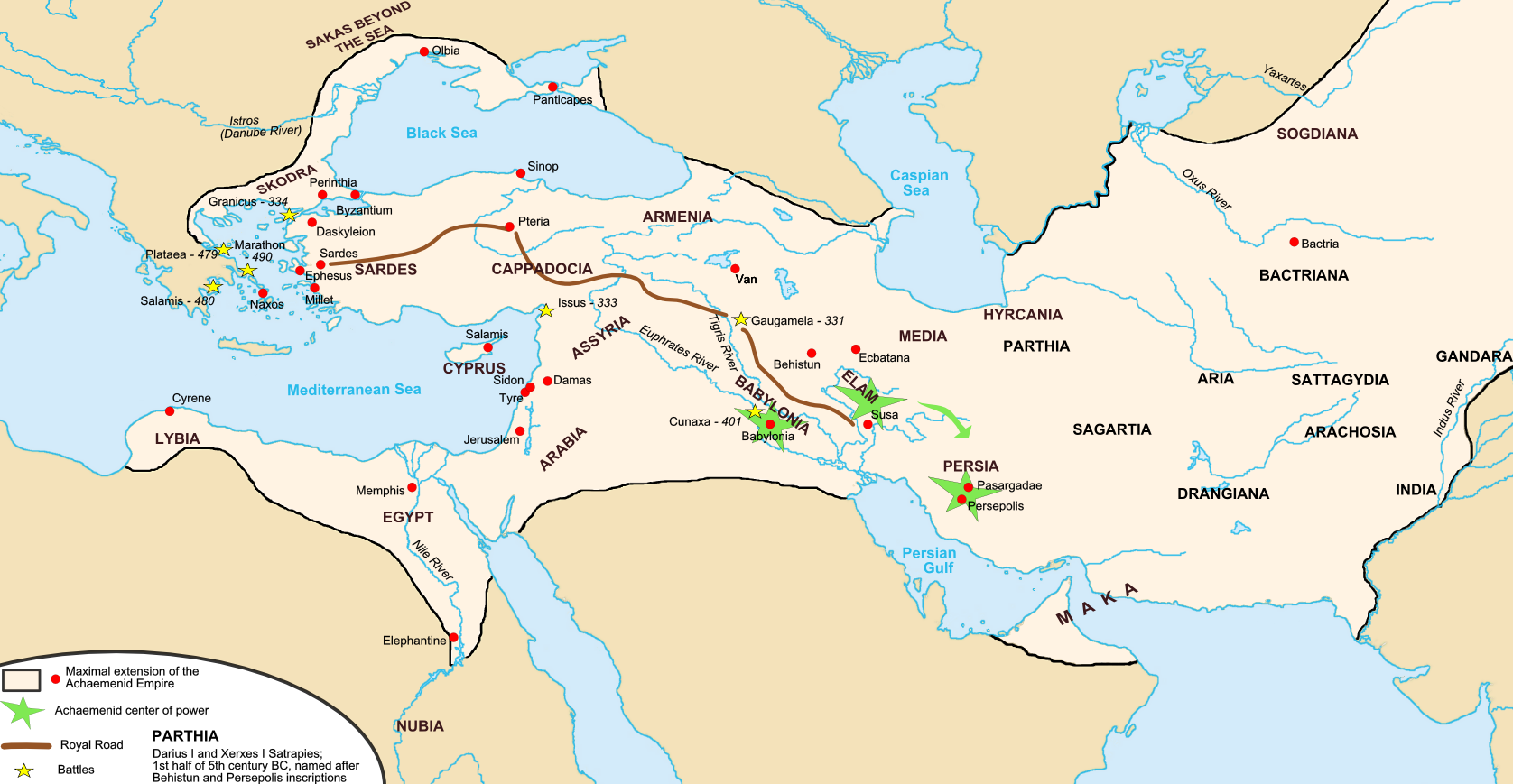
After the Persian general Harpagus conquered Lycia around 540 BCE, Lycian cities (including Tlos) came under the Achaemenid Empire’s sphere and the city prospered during the 5th–4th centuries BCE under Persian-era conditions.
In practice, this usually meant a new political “ceiling” rather than a total cultural reset: local dynasts and established elites continued to run day-to-day affairs, now operating inside imperial networks of tribute, diplomacy, and security.
The Persian connection is often felt less as visible “Persian-style” buildings at a single site and more as a wider Lycian-world shift—elite display, inter-city competition, and access to broader economic circuits that reward stability.
Tlos benefits from that bigger frame: safer corridors, more predictable regional order, and the prestige that comes from being a notable node in a satrapal landscape.
The result is not a Persian colony feel, but a Lycian city doing well under Persian-era geopolitics—prospering, consolidating, and setting the stage for the architectural reimagining that comes next.
Hellenistic refit: terracing and theater
When the Hellenistic world takes hold, Tlos starts “speaking” in the shared civic language of Greek-style urbanism.
The goal is legibility and display: carve the hillside into clear platforms, define public zones, and give the city a ceremonial center that can host crowds and civic spectacle.
Terracing becomes a planning tool—turning irregular terrain into ordered steps of activity—while the theater anchors the new identity: a place where community, performance, politics, and prestige meet.
Even if older Lycian features remain in the background, the Hellenistic layer reframes the city as a participant in a wider Mediterranean cultural stage.
The slope is no longer just defended and inhabited; it’s curated—made rational, theatrical, and publicly persuasive.
Roman centuries: stadium, baths, and repairs
Under the Roman Empire, the emphasis shifts from “showpiece” to “serviceable grandeur”: infrastructure that keeps people healthy, entertained, and loyal, while maintaining the city’s status in a networked province.
The stadium and bath complexes aren’t just amenities—they’re a Roman rhythm of life, tying identity to public leisure, hygiene, and civic benefaction. Repairs and reinforcements matter here too: a long Roman phase is rarely one build; it’s many cycles of construction, earthquake response, reuse, and upgrade.
Tlos in this period feels busy and continuous—an inhabited hill town with enough population and wealth to sustain major public works and keep them functioning. The result is a cityscape that looks confidently “Roman” in its public institutions, even as local topography and older layers keep its personality distinct.
Byzantine continuity: churches and reused blocks (spolia)
In the Byzantine era, Tlos doesn’t disappear so much as re-purpose itself. The ridge remains useful, the terraces remain valuable, and the ruins become a quarry of meaning and material.
Churches introduce a new sacred geography—different focal points, different processional logic—while spolia (reused blocks, columns, inscriptions) stitch the old city into the new one in a very practical way: why haul fresh stone when the past is already cut and waiting?
This reuse is also symbolic, even when unintentional: earlier civic monuments become building stock for Christian spaces, folding prior prestige into new religious and communal identities.
The “late” city is often smaller and more selective in what it maintains, but it is still clearly living on the same spine of rock—adapting, conserving, and surviving by transforming what came before into what it needs now.