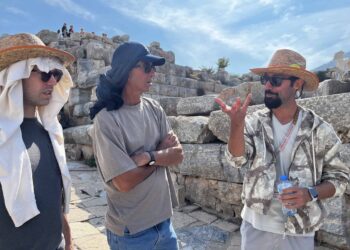
Long before empires took hold in Anatolia, people here turned to Cybele, the Great Mother Goddess of nature, fertility, and the mountains. From Çatalhöyük to the lands of Phrygia, her presence shaped how life, land, and belief were understood. Even today, her story lingers across Turkey for those who know where to look.
Table of Contents
Tracing Anatolia’s First Goddess
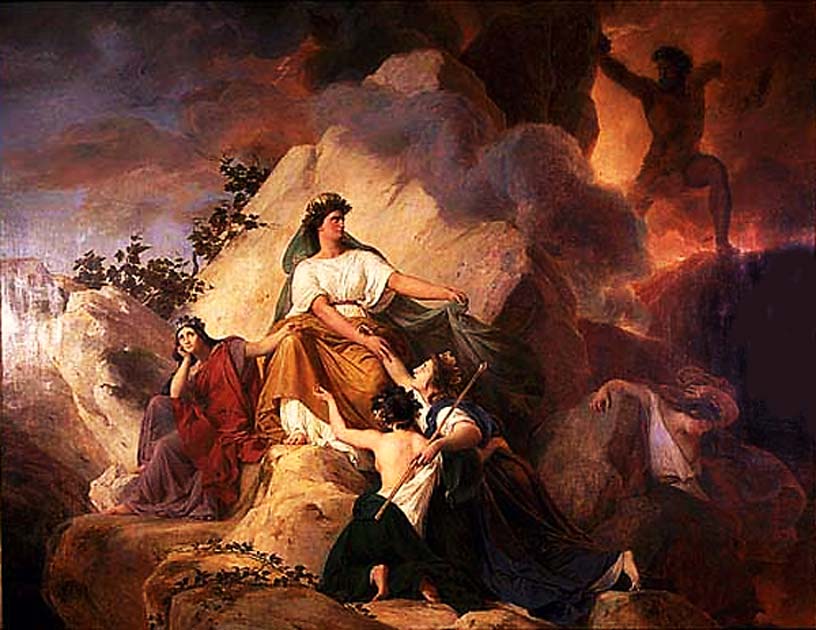
Cybele’s origins are rooted deep in Anatolia’s pre-classical past, where she emerged as a dominant mother figure associated with mountains, fertility, and wild nature. In Phrygia, she became a central state deity, worshipped not in enclosed temples alone but in open landscapes, reflecting her connection to the natural world.
Archaeological and literary evidence suggests her cult developed long before written history in Anatolia. Sites such as Çatalhöyük indicate early mother-goddess symbolism, while later Phrygian centers like Gordion formalized her worship.
By the classical period, Cybele’s worship had expanded beyond Phrygia into Greek cities along the Aegean coast. Greeks integrated her into their own pantheon while preserving her foreign identity. This duality (assimilation without erasure) helped her cult survive across centuries and cultural shifts in Anatolia and beyond.
Primordial Mother of Anatolia
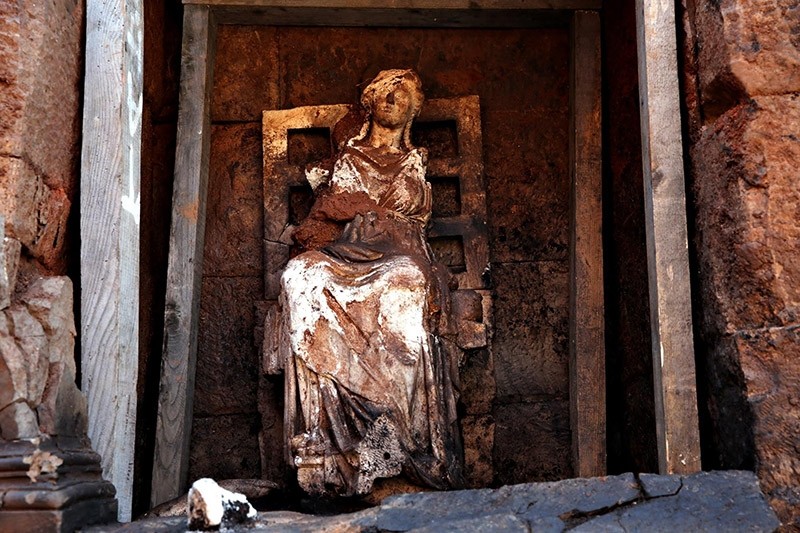
Cybele appears in Anatolian and Phrygian tradition as a mother goddess associated with the natural landscape, particularly the mountains and highlands of central Anatolia.
Her earliest forms are linked to regional belief systems that predate classical Greek religion, where divine authority is understood through physical geography rather than abstract theological structure.
In Phrygian context, she is consistently associated with fertility, earth-based productivity, and the regulation of natural cycles. Her mythic identity is defined through this integration with nature, functioning as an active force within the environment rather than a distant creator figure, shaping continuity of life through seasonal and agricultural rhythms.
Divine Symbols of Cybele
Cybele’s mythic identity is expressed through a consistent set of symbols rooted in Anatolian religious tradition. These elements define how her presence is conceptualized in Phrygian belief systems, where divine power is closely tied to nature, fertility, and landscape rather than abstract theology.
The Lion as Manifest Power
Lions are among the most persistent symbols associated with Cybele in Phrygian tradition. Archaeological reliefs from sites such as Gordion and Phrygian highland sanctuaries frequently depict her seated or accompanied by lions, indicating a long-established iconographic convention tied to authority over wild nature.
Classical descriptions and Anatolian relief traditions suggest that these animals were not decorative motifs but symbolic extensions of her divine function. In scholarly interpretations, the lion represents controlled natural force, reinforcing Cybele’s position within early Anatolian religious systems as a regulating power over untamed landscapes.
Sacred Highplaces of Phrygia
Cybele’s worship in Phrygia is strongly associated with elevated terrain, particularly rocky hills and mountain zones documented in central Anatolia. Archaeological surveys in the region around Gordion and Pessinus indicate that cult activity often occurred in open-air highland settings rather than enclosed temple structures.
This pattern aligns with broader Anatolian religious practice in which divinity is tied to specific geography. Excavations and landscape studies suggest that these high places functioned as ritual zones, reinforcing Cybele’s identity as a deity embedded within the physical structure of the land itself.
Aniconic Stones of Worship
Early phases of Cybele’s cult include the use of sacred stones as focal objects of worship, a practice attested in literary sources and supported by parallels in early Anatolian religious archaeology. At Pessinus, ancient traditions describe a meteorite-like stone associated with the goddess.
While the original object has not survived, its historical reference reflects an aniconic stage of religious representation. Such stones, often integrated into sanctuaries or carried in ritual processions, indicate a form of worship where divine presence was understood through material continuity rather than human-shaped imagery.
Mythic Role in Fertility and Cosmic Order

Cybele is attested in Phrygian tradition from at least the early 1st millennium BCE, with cult development centered in central Anatolia, particularly around Gordion (modern Polatlı, Ankara region) and Pessinus (modern Ballıhisar, Eskişehir Province). Within this framework, she is linked to fertility as a structured cycle tied to seasonal agricultural rhythms.
In mythic interpretation preserved through Anatolian and later classical sources, Cybele governs the continuity of life processes across the landscape of Phrygia.
Her role is framed as a stabilizing force ensuring renewal in nature, where growth and decay are part of an ordered cycle embedded in the geography and subsistence patterns of early Anatolian societies.
Cybele Relics in Anatolian Civilizations Museum
The Museum of Anatolian Civilizations (Ankara) holds one of the most important collections connected to Cybele, with artifacts largely coming from central Anatolia, especially Gordion and nearby Phrygian sites.
Most of these finds date to the early 1st millennium BCE, a period when Cybele’s role in Phrygian belief was firmly established.
Among the collection are terracotta figurines and carved stone pieces showing seated female figures, widely associated with Cybele in archaeological interpretation.
These forms follow consistent Phrygian artistic patterns, where figures are presented in a stable, frontal posture rather than dynamic or narrative scenes.
Explore Cybele Legacy with Us
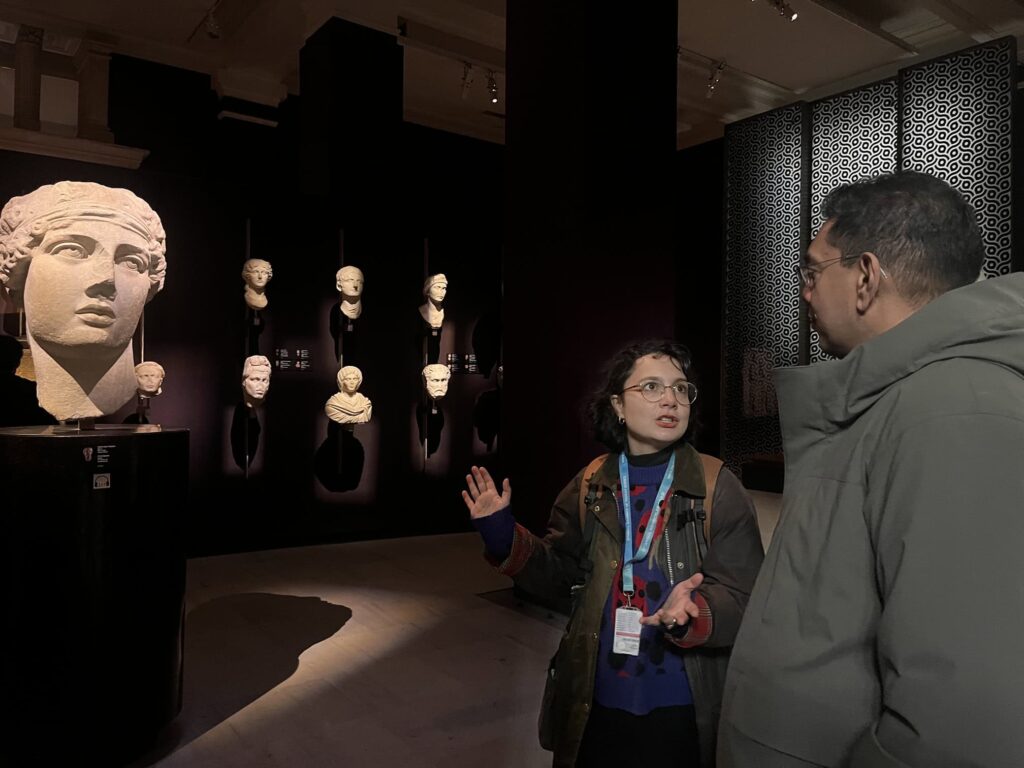
If you’ve enjoyed this exploration of Cybele’s story, her legacy becomes far more compelling when experienced beyond the page.
From the Museum of Anatolian Civilizations in Ankara to the ancient landscape of Gordion, her world gains depth when seen through its original context.
Let’s explore this legacy together. The Other Tour offers private guided tours, expert historical interpretation, and tailored itineraries across Anatolia, helping you connect Cybele’s mythic world with the places and evidence that still preserve her story today.