Constantine the Great wasn’t just an emperor—he was a visionary who tore down the old Roman world to build something entirely new. From military camps in Britain to the shores of the Bosphorus, his bold choices reshaped history. By embracing a new faith and moving the capital, he laid the immortal foundations of the Byzantine Empire.
Table of Contents
A Boy on the Roman Frontier
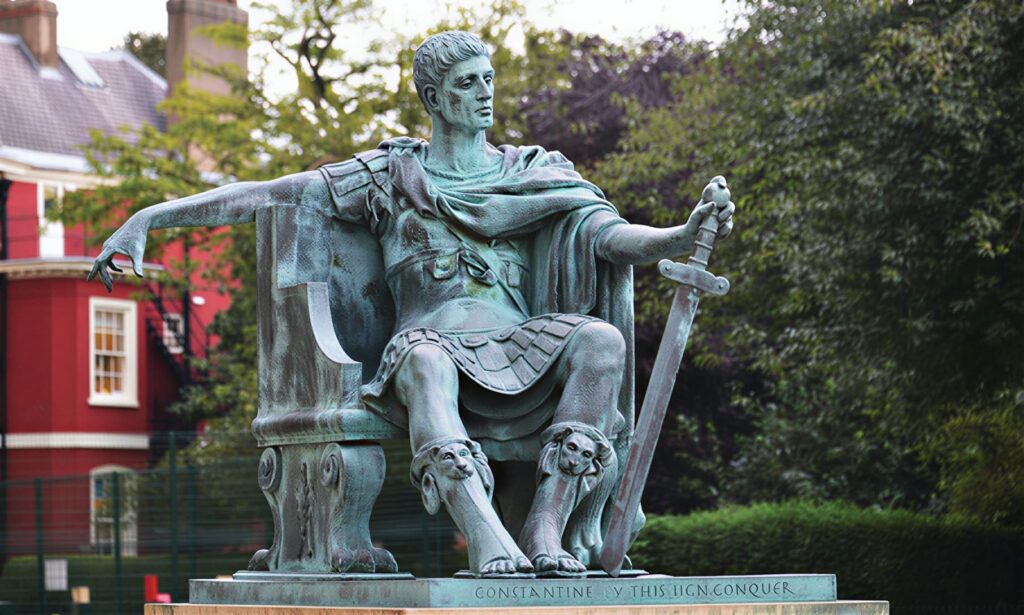
Born in Naissus around 272 CE, Flavius Valerius Constantinus entered a Roman world stretched to its breaking point. His life was immediately shaped by ambition and the rising shadow of his father, Constantius, a military officer climbing the ranks of an empire desperate for stability.
To halt Rome’s collapse, Diocletian created the Tetrarchy, dividing power among four men. Constantius rose to rule the West, setting aside Constantine’s humble mother, Helena, for a political marriage. Despite this, her bond with her son endured, and she would later become Saint Helena.
Meanwhile, young Constantine was kept at Diocletian’s eastern court. He was officially an honored guest, but in reality, he was a political hostage ensuring his father’s loyalty. There, he received a sharp military education while quietly watching the fragile Tetrarchy begin to fracture.
The Defining Moment in York

By 305 CE, Constantine was no longer a captive boy but a fiercely seasoned officer. Navigating the treacherous politics of the East, he finally managed to join his father in the West. Together, they traveled to the wild northern frontier of Britannia for a grueling military campaign.
Father and son fought side by side against the fierce Picts beyond the legendary Hadrian’s Wall. It was during this harsh northern expedition that history unexpectedly pivoted.
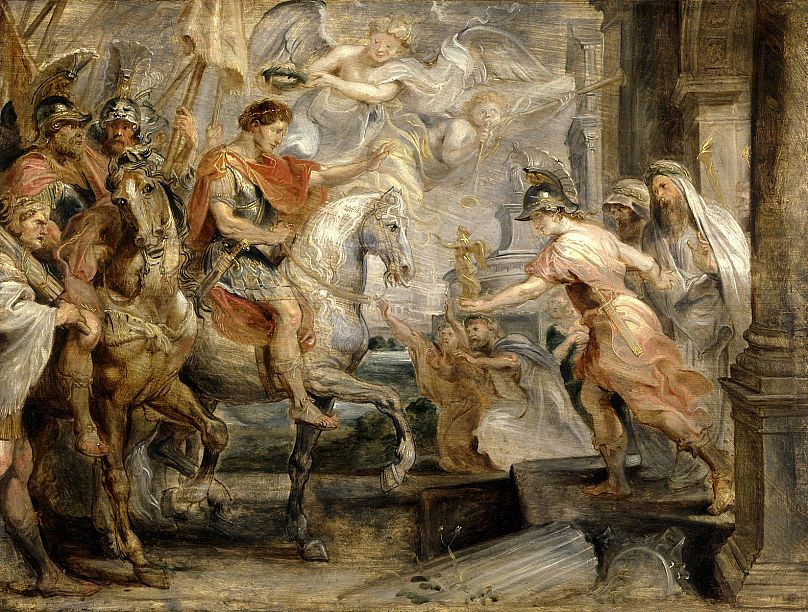
On July 25, 306 CE, Constantius suddenly died in the heavily fortified Roman city of Eboracum, modern-day York. Upon his death, fiercely loyal troops refused to wait for Rome’s approval.
They immediately raised Constantine upon their battle shields, boldly hailing him as Augustus. In that single, electrifying moment, the careful balance of the Tetrarchy shattered, and a new world order was born.
How Constantine Transformed Rome
Constantine didn’t just inherit Rome—he reinvented it. Through visionary leadership, bold reforms, and a willingness to challenge tradition, he reshaped the empire’s political, religious, and cultural landscape. His choices set the stage for a new era, leaving a legacy that would influence centuries to come.
Building a New Capital on the Bosphorus
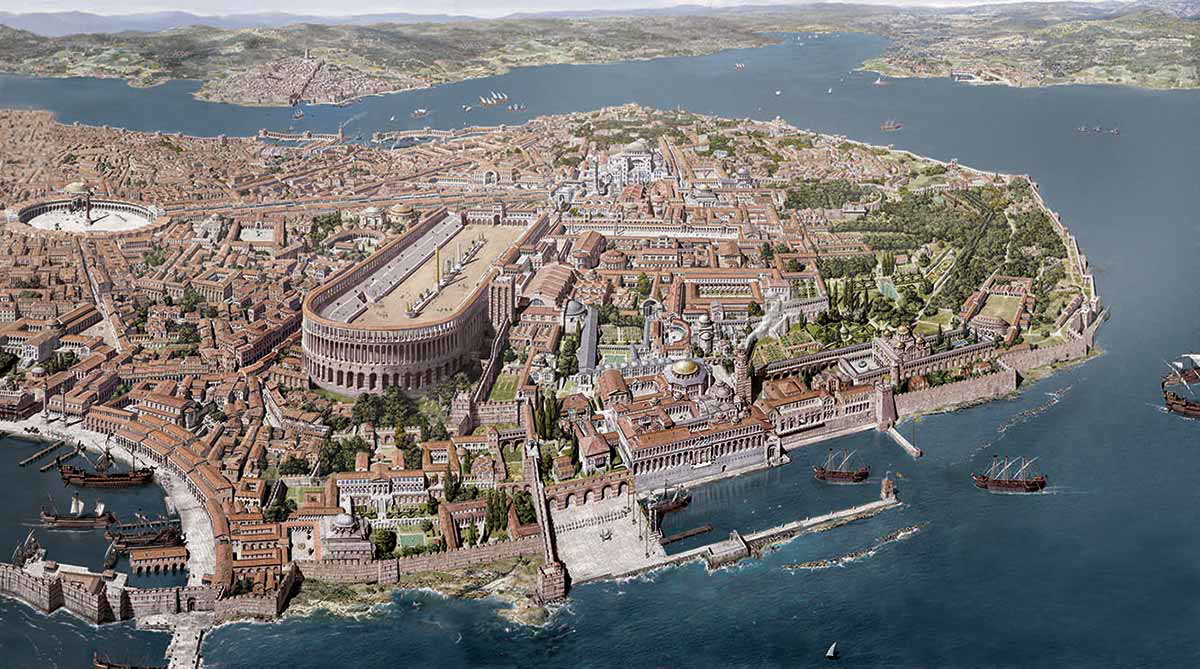
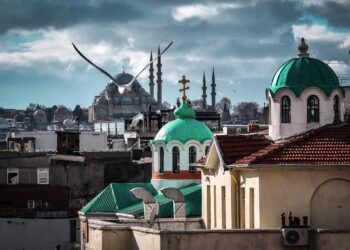
Constantine’s decision in 330 CE to establish a new imperial capital was a masterpiece of strategic planning. By relocating the center of power eastward, he positioned his government closer to the wealthiest provinces and critical trade routes.
The city’s geography provided extraordinary natural defenses against rising foreign threats. Massive resources were quickly mobilized to transform the modest Greek settlement into a breathtaking metropolis.
The emperor oversaw the rapid construction of monumental public forums, sprawling defensive walls, and luxurious imperial palaces. He incentivized aristocratic families to move, offering generous tax breaks and free grain.
Officially dedicated as Nova Roma, but instantly known as Constantinople, the spectacular city became the thriving heartbeat of the Byzantine Empire. It beautifully blended traditional Roman architectural mastery with a vibrant new Christian identity. This visionary urban project ensured the survival of the empire for over a millennium.
Championing the Christian Faith

Constantine didn’t merely tolerate Christianity; he fundamentally revolutionized its societal position. Alongside Licinius, he issued the groundbreaking Edict of Milan in 313 CE, finally granting believers official legal recognition. This pivotal decree ended centuries of brutal, state-sponsored persecution across all Roman territories.
The emperor passionately directed vast imperial wealth toward the rising church. He ordered the construction of magnificent religious centers, including the original Hagia Sophia and the Church of the Holy Sepulchre. Constantine elevated Christian bishops to positions of authority, seamlessly integrating them into his vast administration.
Reorganizing the Empire
After consolidating power in 324 CE, Constantine launched sweeping administrative reforms to stabilize his massive realm. He systematically divided the empire into smaller, manageable provinces, which drastically improved local governance. To prevent rebellion, he carefully separated civil and military authorities in key regions.
Beyond structural changes, he transformed the struggling Roman economy by introducing the solidus, a pure gold coin that stabilized trade for centuries. Through these meticulous bureaucratic and financial improvements, Constantine successfully forged a resilient, centralized state that endured long after his passing in 337 CE.
Making the Council of Nicaea

As the church expanded, deep theological divides began to threaten the stability of both the faith and the empire. The Arian controversy, a bitter dispute concerning the divine nature of Jesus Christ, caused massive riots across eastern cities. Recognizing the grave political danger, Constantine decided to directly intervene in the crisis.
In 325 CE, the emperor summoned hundreds of bishops to the city of Nicaea for an unprecedented global assembly. Presiding over the council himself, Constantine urged the divided clergy to find harmony.
He understood that a fractured, arguing church could easily lead to a dangerously fractured empire, so unity was his ultimate priority. The momentous gathering ultimately produced the Nicene Creed, establishing a standardized Orthodox doctrine that declared the Son co-eternal with the Father.
By tying the church’s structural unity to the imperial state, Constantine fundamentally reshaped the religious landscape and firmly positioned himself as the protector of the faith.
Victory at the Milvian Bridge That Changed Rome
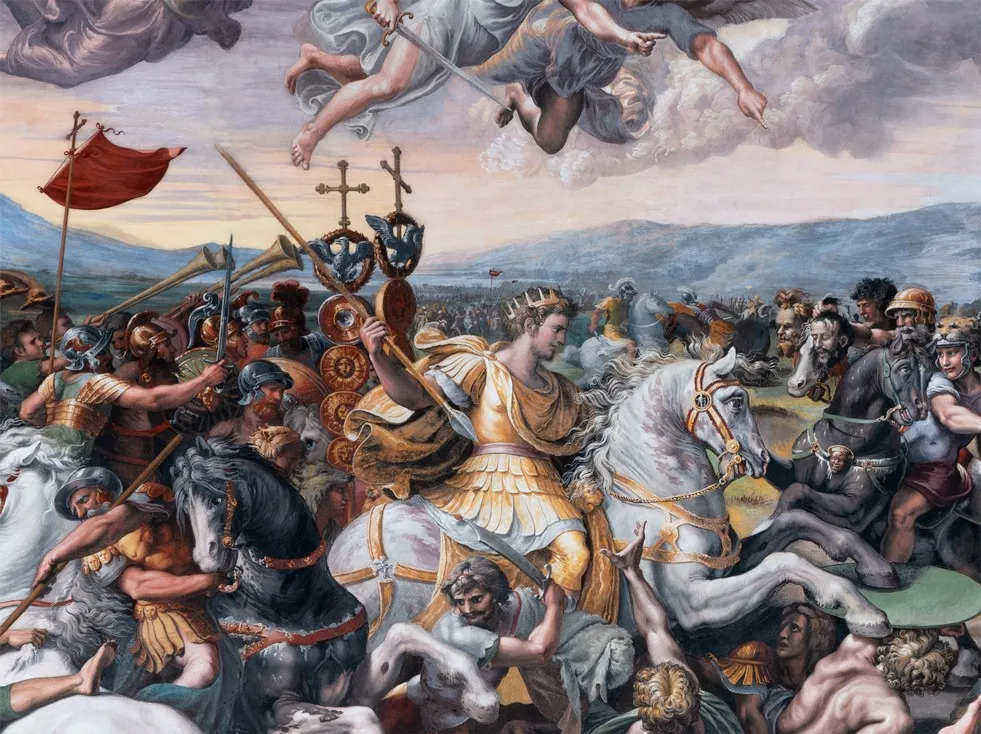
On October 28, 312 CE, Constantine faced Maxentius at the Milvian Bridge, a moment that would define his reign and alter the course of the Roman Empire.
Maxentius controlled Rome and much of Italy, while Constantine had consolidated the western provinces. The battle was tense, with both sides aware that control of the empire hung in the balance.

“In this sign, conquer.”
Constantine the Great
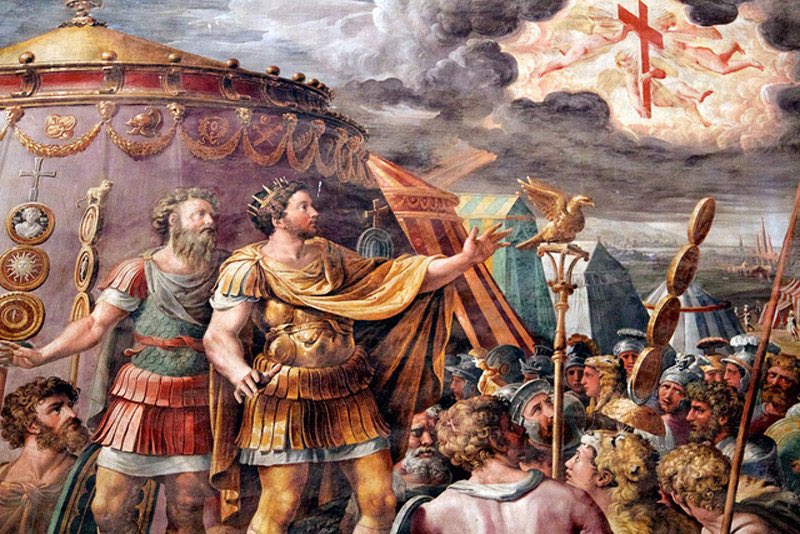
According to later accounts, Constantine experienced a vision of the Chi-Rho—the first two letters of Christ’s name—promising victory if he fought under this sign. Placing it on his soldiers’ shields, he launched a decisive assault.
Maxentius’s army was trapped on the bridge, which collapsed under the weight, leading to his death and Constantine’s uncontested control of the West.
This victory not only solidified his power but also marked the beginning of his promotion of Christianity within the empire.
The Battle of Chrysopolis: Dismantling Tetrarchy

Though he commanded the West, the Roman world remained fractured. The eastern provinces were ruled by Licinius, a formidable co-emperor whose uneasy truce with Constantine was doomed to fail. Their growing tension erupted into a massive final conflict, setting the stage for a dramatic showdown to reunite the divided empire entirely.
In 324 CE, their forces violently clashed at the Battle of Chrysopolis, located in what is now modern-day Üsküdar. Constantine executed a brilliant military campaign, utilizing his navy and infantry to overwhelm his rival’s defenses.
Explore Üsküdar, Istanbul’s historic gem. Discover mosques, palaces, scenic views, and hidden spots in this ultimate travel guide.
This devastating blow shattered Licinius’s remaining power and forced his unconditional surrender. By conquering ancient Byzantium and securing this monumental victory, Constantine achieved the impossible.
He successfully dismantled the broken Tetrarchy system and emerged as the sole, undisputed ruler of a newly unified Roman realm. Looking across the scenic Bosphorus, the victorious emperor saw the perfect place to build his legacy.
The Column of Constantine and Imperial Legacy
To proudly commemorate his city’s legendary founding, the emperor erected the massive Column of Constantine, widely known today as Çemberlitaş. Originally towering high above a grand circular public forum, this colossal porphyry monument was once crowned with a brilliant golden statue of Constantine depicted as the radiant sun god Apollo.
The towering column brilliantly captures the fascinating transitional nature of his complex era. Ancient legends claim that its heavy stone base conceals sacred relics from both pagan and Christian traditions.
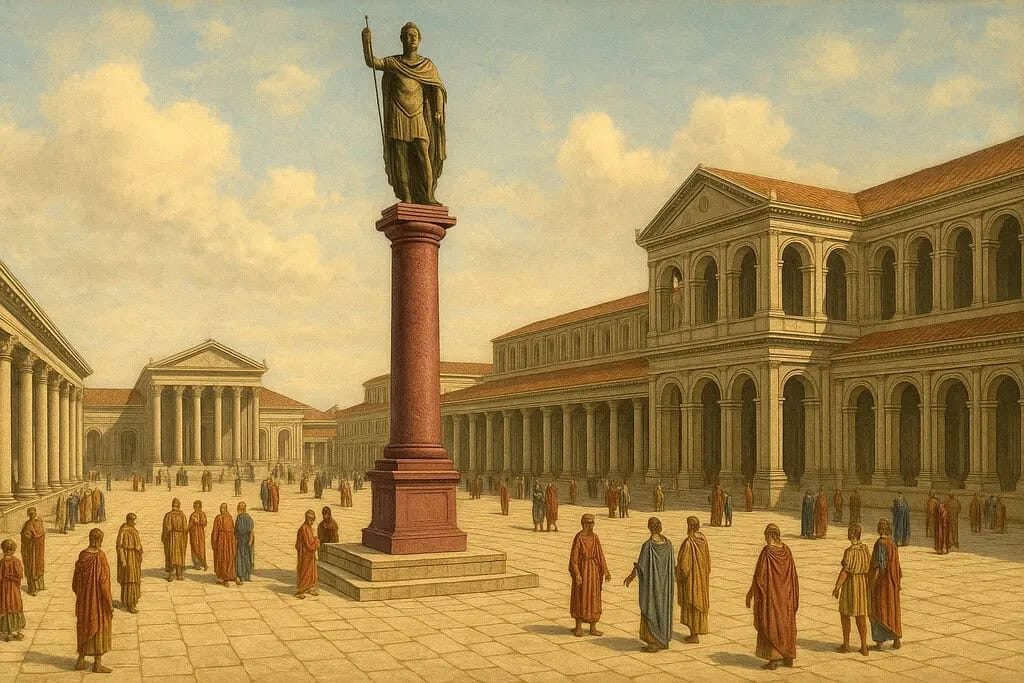
This deliberate symbolic blending perfectly mirrored a massive empire rapidly shifting its overarching spiritual identity. Today, the weathered, iron-hooped pillar remains standing as a quiet, enduring witness to a leader who permanently altered history.
Constantine’s extraordinary legacy—a triumphant church, a transformed administration, and an immortal capital city—continues to define the rich cultural destiny of the vast Mediterranean and European world.
Final Years and a Deathbed Baptism
In his twilight years, Constantine remained relentlessly focused on securing borders and expanding Roman influence. He launched successful campaigns against the Goths, reclaiming lost territories along the Danube.
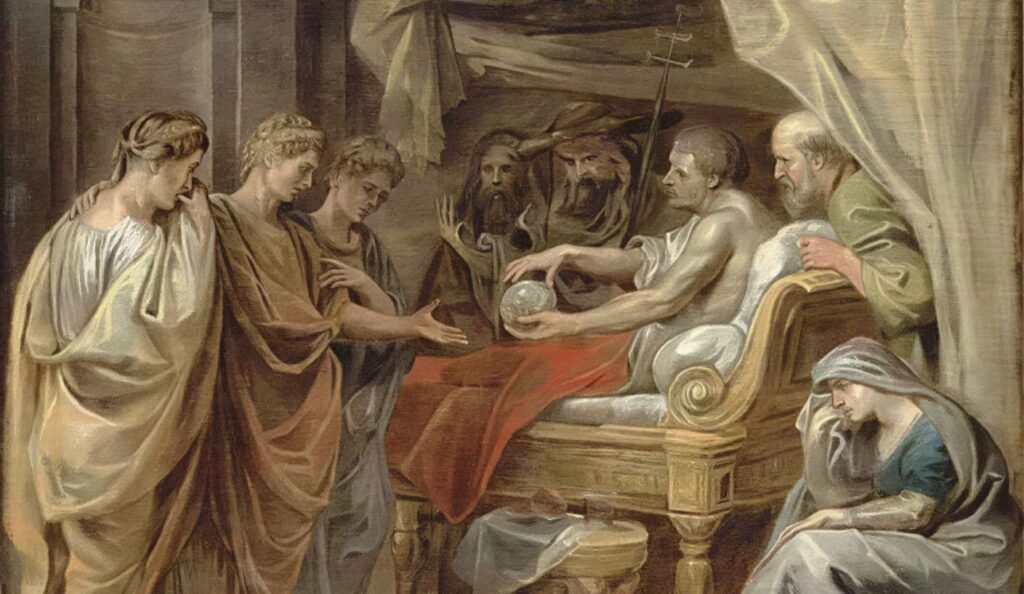
However, his ultimate ambition to conquer the powerful Persian Empire was abruptly cut short by a sudden and fatal illness. As his health rapidly failed in the spring of 337 CE, the dying emperor traveled to a quiet suburban villa near Nicomedia.
Looking for a private professional tour guide in Istanbul? Well, look no further – you just found the best one!
Realizing his end was near, Constantine finally sought Christian baptism. While he had championed the faith for decades, delaying the sacred rite until the very end was a common practice to cleanse all earthly sins.
He was baptized by the Arian bishop Eusebius of Nicomedia, forever securing his spiritual salvation before drawing his final breath. His body was transported to Constantinople and laid to rest in the magnificent Church of the Holy Apostles. He died not just as a triumphant Roman emperor, but as the foundational architect of a new age.
Get in Touch With Us
If the incredible story of Constantine the Great has inspired your imagination, there is no better way to explore his lasting impact than by walking the ancient streets he built. Istanbul remains a captivating, living museum, quietly holding the deep, hidden secrets of a glorious Byzantine past just waiting to be fully discovered by you.
Ready to experience history firsthand? Let our passionate guides seamlessly connect you with the fascinating layers of culture that still define this city today. Reach out to confidently book your adventure.