• About
    • Introduction
    • Explore The Other Tour
    • 2026 Itinerary of The Other Tour Istanbul
    • Common Questions Answered
    • The Other Tour Reviews
    • About Us
    • Contact
  • Istanbul
    • Tour Guides
    • Attractions
    • Tours
    • Neighborhoods
    • Eat & Drink
    • Stay
    • Shop
  • Turkey
    • Turkey Tours
    • Destinations
    • Istanbul
    • Cappadocia
    • Ephesus
    • Pamukkale
    • Antalya
    • Bodrum
  • Services
    • Private Tours
    • Daily City Tours
    • Made-to-order Travel
    • Hire a tour guide
    • Unique Activities
    • Airport Transfers
    • Hotel Selection
    • Vacation Booking
    • Corporate Group Tours
    • Culinary Tours
    • Event Planning
    • Istanbul Layover Tours
    • Family Time
  • Blog
    • TOP 5 ISTANBUL
    • Events
    • Documentary
    • History
    • News
    • All
No Result
View All Result
  • About
    • Introduction
    • Explore The Other Tour
    • 2026 Itinerary of The Other Tour Istanbul
    • Common Questions Answered
    • The Other Tour Reviews
    • About Us
    • Contact
  • Istanbul
    • Tour Guides
    • Attractions
    • Tours
    • Neighborhoods
    • Eat & Drink
    • Stay
    • Shop
  • Turkey
    • Turkey Tours
    • Destinations
    • Istanbul
    • Cappadocia
    • Ephesus
    • Pamukkale
    • Antalya
    • Bodrum
  • Services
    • Private Tours
    • Daily City Tours
    • Made-to-order Travel
    • Hire a tour guide
    • Unique Activities
    • Airport Transfers
    • Hotel Selection
    • Vacation Booking
    • Corporate Group Tours
    • Culinary Tours
    • Event Planning
    • Istanbul Layover Tours
    • Family Time
  • Blog
    • TOP 5 ISTANBUL
    • Events
    • Documentary
    • History
    • News
    • All
No Result
View All Result

The Hittites: Anatolia’s Lost Superpower

Rise and fall of an ancient power

TheOtherTour by TheOtherTour
May 12, 2026
in History, Hittite Empire, Turkey Travel Blog, WATCH
Reading Time: 7 mins read
A A
0

Long before empires like Rome or Byzantium defined this land, Anatolia shaped the rules of power itself. The Hittites built a state rooted in diplomacy, law, and cultural fusion, leaving behind traces that still echo across central Turkey. Their world is not lost—it’s written into stone, waiting to be understood.

Table of Contents

The Empire Beneath Anatolia

Long before Istanbul was Istanbul, Anatolia was the heartland of an empire that made pharaohs negotiate and made Babylon tremble.

The Hittites ruled large parts of central Anatolia and northern Syria from roughly the 17th to 12th centuries BCE, building a multiethnic state famous for diplomacy, law, and military innovation—and then vanishing so thoroughly that their story stayed half-buried for nearly 3,000 years.

At The Other Tour, we love histories that aren’t just “dates and dynasties,” but human stories written into landscapes. The Hittite world is exactly that: gate lions still staring down the road, sanctuaries carved with gods, and archives that whisper how power actually worked in the Bronze Age.

Mapping the Hittite World

The Hittites established their core in central Anatolia, a region that formed the political and cultural backbone of their empire, while their influence extended deep into northern Syria. 

At the center of this world stood Hattusa, their capital and administrative hub, strategically positioned near modern-day Boğazkale. The city’s fortifications, gates, and archives reveal how geography and planning shaped imperial control.

Emerging around the 17th century BCE, the Hittites developed a multiethnic empire that thrived on diplomacy and governance as much as military strength. 

Their reach peaked between the 14th and 13th centuries BCE, before declining during the wider Late Bronze Age collapse around 1200 BCE. This timeline, paired with the map above, helps visualize not just where they lived—but how far their influence truly extended.

Divine Order of the Hittites

Culture of Hittites
Language of Hittites
Gods of Hittites

The Hittites built a culture that reflected the diversity of their empire, where traditions were not erased but absorbed and reshaped. Their world was a blend of Hattian, Hurrian, and Indo-European influences, visible in everything from language and ritual to art and governance. This cultural flexibility allowed them to maintain unity across regions that differed in identity, belief, and practice.

Religion stood at the center of this system. Often described as the land of “a thousand gods,” the Hittites incorporated local deities into their state framework rather than replacing them. Powerful figures like the Storm God and the Sun Goddess of Arinna symbolized both divine authority and political control, with the king acting as a mediator between gods and people.

Kadesh: Where Egypt and the Hittites Collided

In 1274 BCE, two of the ancient world’s most powerful states—the Hittite Empire under Muwatalli II and Egypt under Ramesses II—collided near the city of Kadesh in a massive chariot confrontation over control of Syria. It was not a small border skirmish, but a coordinated imperial campaign involving thousands of troops, elite chariot units, and competing intelligence networks operating at the edge of the known world.

The battle itself remains one of history’s most debated outcomes. Both sides produced inscriptions claiming victory, yet the strategic reality points to something far less triumphant: a grinding, indecisive stalemate.

The Hittites held their position, the Egyptians failed to secure a breakthrough, and neither empire achieved lasting dominance. What mattered was not victory, but exhaustion—war at this scale had reached its limit. That limitation reshaped diplomacy in a way few battles ever do.

Around 1259 BCE, the two powers formalized a peace treaty, preserved in both Egyptian and Hittite records, often described as the earliest surviving example of a structured international agreement.

It established defined spheres of influence, committed both sides to non-aggression and mutual defense, and included clauses on political asylum, extradition, and dynastic stability. In effect, it replaced battlefield uncertainty with written rules of state behavior.

Simple Timeline

c. 2000 BCE:

Hittite-speaking groups begin to establish themselves across central Anatolia, entering a landscape already shaped by earlier Anatolian cultures. Rather than replacing what existed, this period is marked by gradual cultural blending, where languages, traditions, and local identities begin to overlap. This early phase lays the foundation for what would later become a structured and politically unified empire.

c. 1650 BCE:

The rise of Hattusa as a central capital marks a turning point in Hittite political organization. Under early imperial rulers, the city is transformed into a fortified administrative hub, strategically positioned to control key Anatolian routes. From this moment, Hattusa becomes not just a settlement, but the symbolic and functional heart of a growing state.


C. 1595 BCE:

Under Mursili I, the Hittites execute one of the most striking military campaigns of the ancient Near East by sacking Babylon. Although they do not hold the city permanently, the event sends shockwaves across Mesopotamia, signaling the emergence of the Hittites as a serious imperial force capable of projecting power far beyond Anatolia. Roman theater and well-preserved ruins.

C. 1340 BCE:

The reign of Šuppiluliuma I represents one of the most expansive phases of Hittite history. Through a combination of warfare, diplomacy, and strategic alliances, Hittite influence spreads deep into northern Syria, reshaping regional power structures and positioning the empire as a central actor in Near Eastern politics.

C. 1274 BCE:

The Battle of Kadesh takes place between the Hittites and Egypt under Ramesses II, becoming one of the largest chariot battles in recorded history. Though both sides claim victory, the encounter ultimately results in a strategic stalemate, highlighting the limits of sustained imperial warfare at the time.

c. 1259 BCE:

The Hittites and Egyptians formalize a peace treaty, one of the earliest surviving examples of an international agreement. It establishes defined spheres of influence, mutual defense arrangements, and diplomatic protocols, marking a shift from open conflict to structured interstate relations.

c. 1200 BCE:

The Late Bronze Age collapse reaches Anatolia, leading to the destruction of Hattusa and the disintegration of centralized Hittite authority. Administrative systems break down, written records cease, and the imperial structure collapses, ending centuries of political continuity.

The Fall of the Hittite Empire

Hattusa
The Capital of Hittite Empire

By the late 13th century BCE, the structures that had sustained the Hittite Empire for generations began to weaken under combined pressure. What followed was not a single defeat, but a gradual unraveling of political stability, economic continuity, and regional control across Anatolia and beyond.

Internal fragmentation played a major role. Royal succession disputes, shifting alliances among vassal states, and weakening central authority strained the imperial system from within. At the same time, external pressures intensified as trade routes destabilized and neighboring regions became increasingly volatile during the wider Late Bronze Age collapse.

By around 1200 BCE, the capital Hattusa was abandoned after destruction and never regained its former status. What remained were scattered cultural and political remnants that would later be absorbed into emerging Iron Age states across Anatolia and Syria.

Read More About Ancient Civilizations

Explore the Hittite Legacy

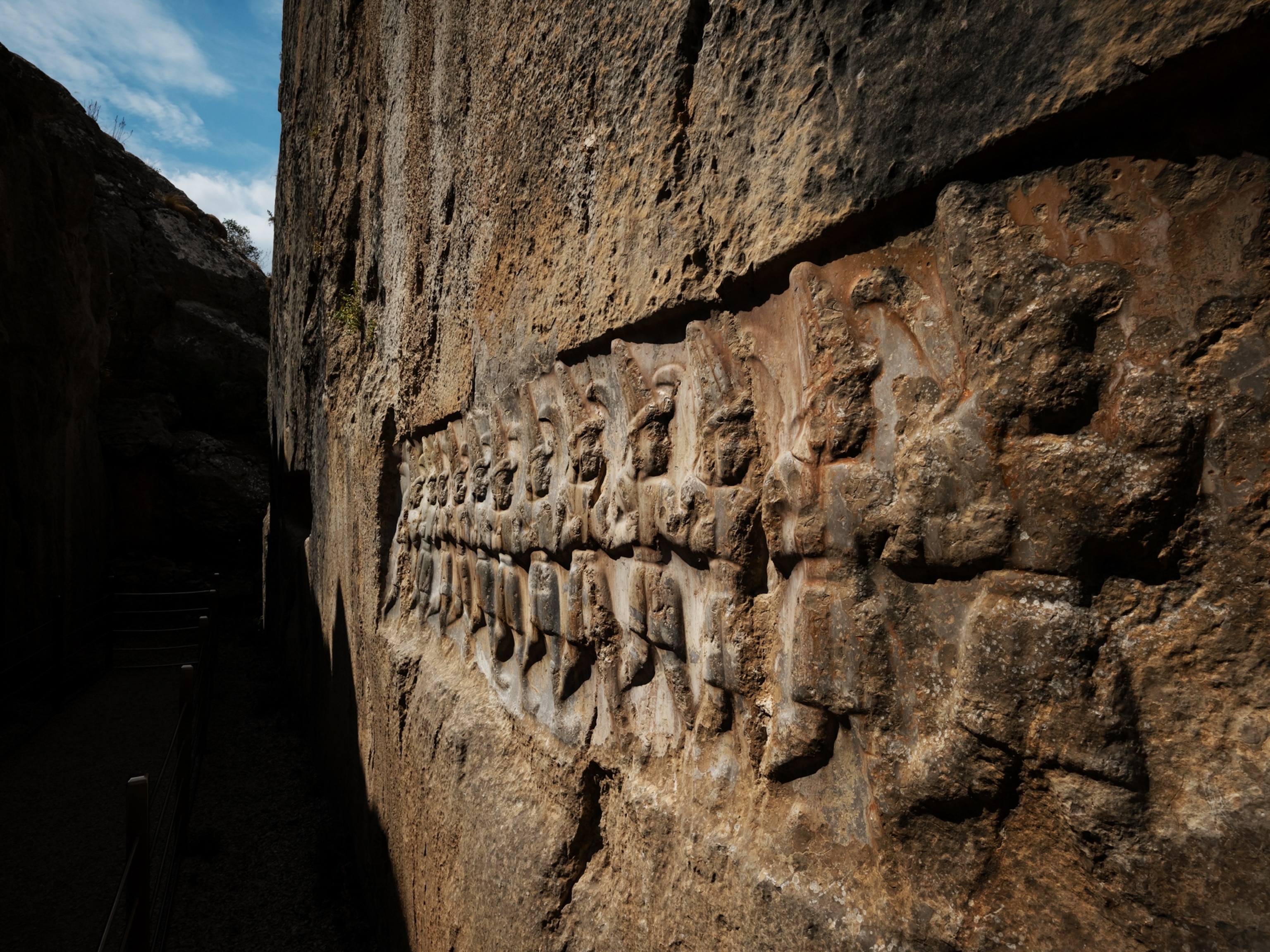
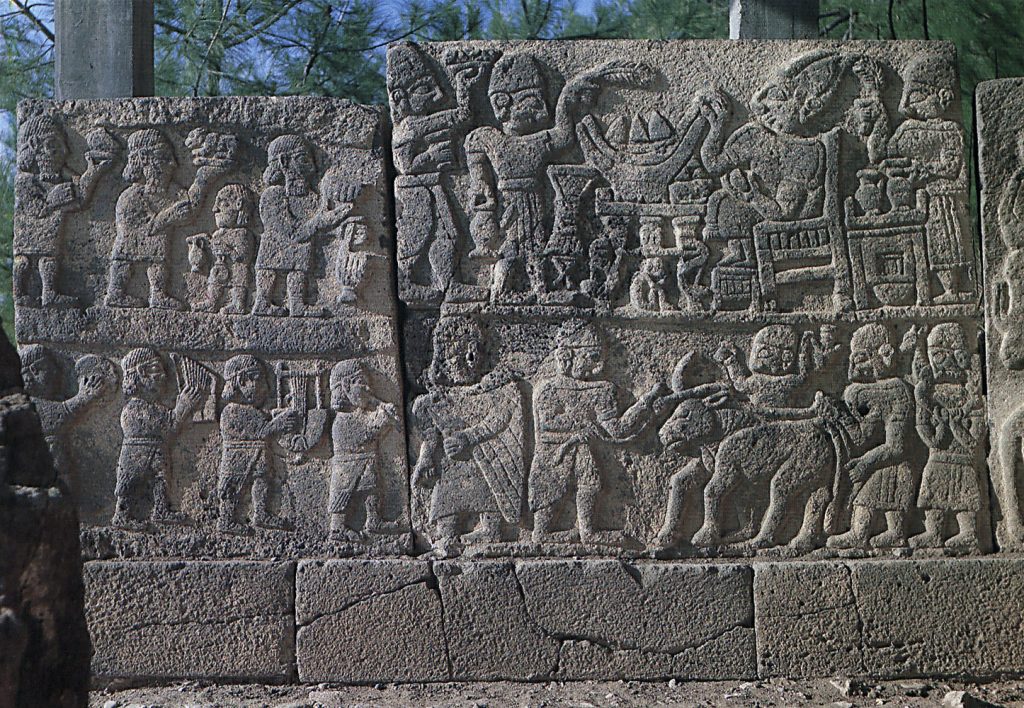
The story of the Hittites is not something that ends in the past—it is something you can still physically step into across central Anatolia. From the monumental gates of Hattusa to the carved sanctuaries of Yazılıkaya, this ancient world still exists in fragments, waiting to be connected into a coherent experience on the ground.

If you want to go beyond reading and actually explore where this civilization lived, ruled, and eventually disappeared, we can help design a route that fits your pace and curiosity. Whether you’re focused on archaeology, ancient politics, or simply the atmosphere of forgotten capitals, the journey can be shaped around what matters to you most.

Get in touch with us and fill the form below, and we’ll help you build a tailored experience through the landscapes of the Hittite world in Turkey.

Tags: Ancient CivilizationsArchitectureArts & CultureCultureHistoric LandmarksHistoryHittite
Share130Tweet81
TheOtherTour

TheOtherTour

Established in 2011, TheOtherTour has evolved from offering alternative city tours in Istanbul to becoming a trusted travel agency that provides top-quality services and curated travel experiences throughout Turkey. With 15 years of experience exploring the nooks and crannies of Istanbul, we delight ourselves in sharing the city's hidden gems, from underground art scenes to music schools and various intimate spaces. The focus is not just on showing you the sights but also on introducing you to the city's heartbeat, its people, and its unsung tales. We have tested and curated the best of what Turkey has to offer—be it boutique hotels, unique experiences, or cultural journeys. The company is committed to sustainable tourism, partnering with local artisans, guides, and businesses to offer an authentic experience that benefits communities as much as it delights travelers. Follow and join us for insider tips, exclusive reviews, and inspirational stories that will make your next journey truly unforgettable.

Related Posts

Ephesus Ancient City - Library of Celcius
Ephesus

5 Excellent Tour Guides in Ephesus You Can Book Directly

When visiting the ancient city of Ephesus, having a professional private tour guide can significantly enhance your experience.

Perge – Turkey’s Biblical City Rooted in Ancient Splendor
History

17 Places to Visit in Turkey in 2026

Explore 17 unforgettable places to visit in Turkey in 2026—ancient cities, sacred sites, cliff tombs, and route ideas to plan your trip.

Kula Geopark - The Other Tour
2026

Kula Geopark: Western Anatolia’s Land of Fire

Uncover Kula Geopark's volcanic wonders, ancient lava flows, kuladokya's fairy chimneys, and dramatic Turkish landscapes.

Column of Constantine - The Other Tour
Istanbul Videos

Column of Constantine: The Last Monument of a New Capital

Discover the Column of Constantine in Istanbul. Uncover the dramatic history of the Burnt Pillar and its incredible Roman origins.

Private Gulet Charter in Turkey – Customized Blue Cruises
5-Day Tours

Living Lycia in Demre: 5-Day Farm, Ruins & Sea Adventure

Experience 5 days in Antalya's star town Demre with farm life, turquoise bays, and ancient Lycian ruins enriched by local stories.

Ariassos – Secrets of an Ancient Pisidian City
Pisidia

Ariassos – Secrets of an Ancient Pisidian City

Explore Ariassos, an ancient city in Turkey's Taurus Mountains, with impressive ruins, rich history, and stunning natural surroundings.

Leave a Reply Cancel reply

Your email address will not be published. Required fields are marked *

  • Is Istanbul Safe - Kadikoy - The Other Tour

    Is it safe to travel to Turkey in 2026?

    16 shares
    Share 2274 Tweet 1421
  • Istanbul Earthquake: A 2026 Update

    42 shares
    Share 1911 Tweet 1194
  • Exploring Istanbul’s Asian Side

    10 shares
    Share 815 Tweet 509
  • The Mystery of Turkish Language

    46 shares
    Share 671 Tweet 420
  • Top 5 Bookshops in Istanbul

    15 shares
    Share 689 Tweet 431

Our Tags

Aegean Sea Ancient City Ancient Civilizations Archaeology Architecture Arts & Culture Asian side Best Tours in Turkey Bosphorus Byzantine Legacy Cappadocia Church Constantinople Cruise Culture Day trips Environment Ephesus European Side Events and Happenings Fun Hagia Sophia Hellenistic Historic Landmarks History Hotels Istanbul Istanbul Tours Istanbul travel Istanbul Trip Istanbul Visit Mediterranean Museums Nature Ottomans Recommendations Religion Reviews Sultanahmet The Other Tour Turkey Turkey Travel Turkish Cuisine Turkish Culture Water

About us

We offer a unique, immersive city tour experience in Istanbul that explores lesser-known areas, engaging participants in cultural activities like local home visits, market explorations, and Bosphorus cruises.

In addition to our signature tour 'The Other Tour', our travel agency also provides a variety of wheelchair-assisted guided tours, custom itineraries, and specialized tours covering historical, cultural, and niche interests like Jewish heritage, vegan spots, and bird-watching. We also offer transportation services with professional guides for a more personalized and flexible experience.

Newsletter

The Other Tour is an immersive Istanbul experience, taking you beyond tourist spots to explore local culture with activities like home-cooked meals, school visits, and Bosphorus cruises. As a travel agency, we also offer personalized travel planning in Istanbul and Turkey, crafting custom itineraries and unique experiences tailored to each traveler.

Company

  • Explore
  • 2026 Itinerary
  • Services
  • F.A.Q.
  • Blog
  • Philosophy
  • About The Other Tour Istanbul
  • Contact

Our Services

  • Private Tours
  • Private Tour Guides
  • Airport Transfers
  • Made-to-order
  • Hotel Selection
  • Culinary Tours
  • Shopping Tours
  • Unique Activities

Turkey

  • Destinations
  • Istanbul
  • Cappadocia
  • Ephesus
  • Pamukkale
  • Bodrum
  • Antalya
  • Mediterranean
  • Terms & Conditions
  • Privacy Policy
  • Jobs
  • Get in touch

© 2026 THE OTHER TOUR by BEFORE TRAVEL - TÜRSAB NO: 7651.

No Result
View All Result
  • Home
  • Explore!
  • The Other Tour
    • Introduction
    • 2026 Itinerary
    • F.A.Q.
    • About us
    • Reviews
  • Istanbul
    • Tours
    • Tour Guides
    • Attractions
    • Neighborhoods
    • Food
    • Stay
    • The Bosphorus
  • Turkey
    • Turkey Tours
    • Destinations
    • Cappadocia
    • Ephesus
    • Pamukkale
    • Antalya
    • Bodrum
  • Services
    • Private Tours
    • Daily City Tours
    • Made-to-order Travel Planning
    • Unique Activities
    • Hire a tour guide in Istanbul
    • Layover Tours
    • Culinary Tours
    • Hotel Selection
    • Family Time
    • Event Planning
    • Corporate Group Tours
    • All Our Services
  • Blog
    • TOP 5 ISTANBUL
    • Read
    • Events
    • News
    • Turkey
    • Documentary
    • Turkish Food
    • Turkish Music
    • Istanbul Videos
    • All Categories
    • All Posts
  • Contact

© 2026 THE OTHER TOUR by BEFORE TRAVEL - TÜRSAB NO: 7651.