Five who bridged worlds with power, law, and cities
History likes to tell us that East and West are two different rooms with a wall between them. Stand on the Galata Bridge at dawn, watch the fishermen cast lines toward Asia while the call to prayer drifts in from the European side, and you realize the wall was never really there. There were only people — stubborn, curious, often brilliant — who decided the rooms should talk to each other.
Some did it with armies. Some did it with libraries. Some did it with a single book that refused to choose a side.
This isn’t a list of conquerors or cosmopolitans by accident. It’s a list of deliberate bridge-builders: rulers, philosophers, and reformers who looked at the supposed gap between civilizations and treated it as a workshop instead of a war zone. They wrote laws that could hold more than one language. They built capitals that faced two horizons. They translated ideas instead of burning them.
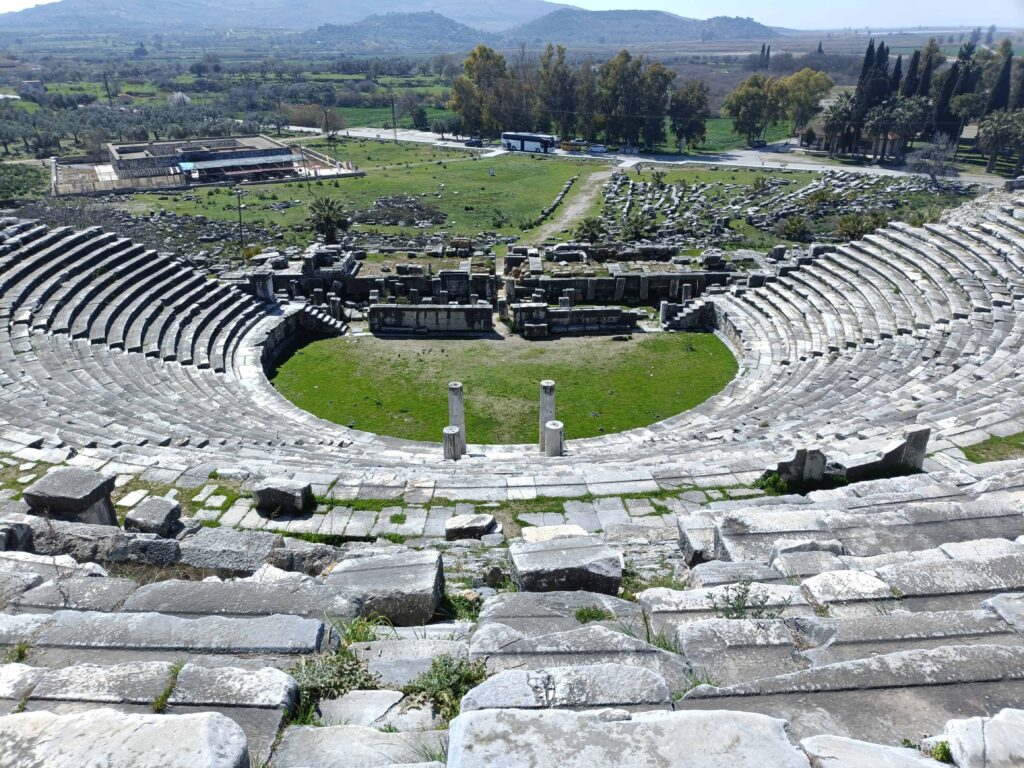
And it’s no coincidence that so many of their stories run straight through Istanbul — and through Turkey more broadly. From Ionian Miletus to Ottoman Constantinople to the Republic of Türkiye, this country has spent three thousand years rehearsing the same lesson: cultures don’t have to win against each other to survive. They can co-exist, borrow, argue, and end up larger than they started.
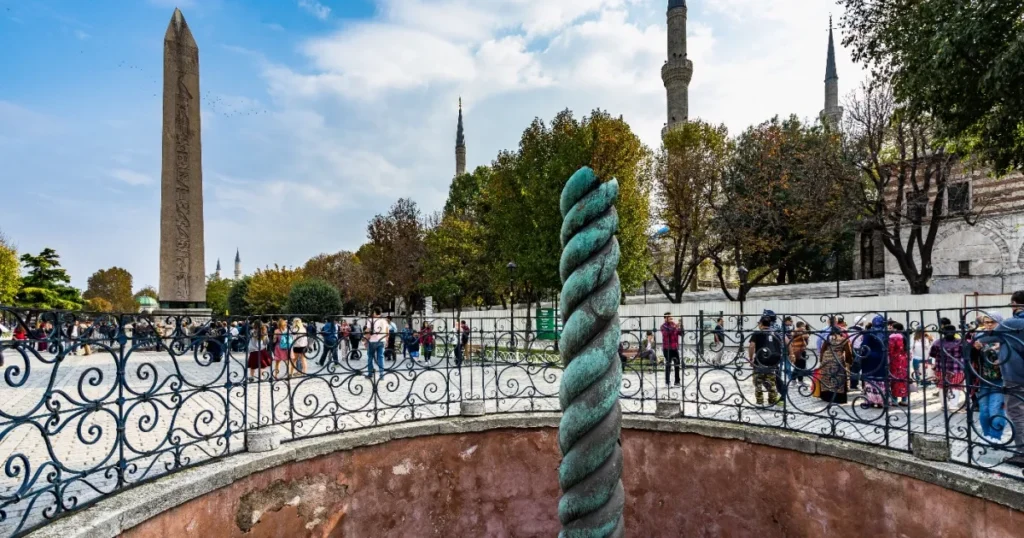
Take a breath and look at Istanbul for what it is: not “between” two worlds, but a seam where worlds get stitched together — sometimes beautifully, sometimes violently, often both at once.
So here’s a list we actually like for The Other Tour: ten figures who didn’t just collide civilizations — they designed ways for them to coexist, translate, and survive one another. Think: governance that can hold differences, courts that import ideas, philosophers who refuse to pick one canon and burn the other.
This list might surprise you, but that’s kind of our forte at The Other Tour.
1) Cyrus the Great
Cyrus (6th c. BCE) is the prototype for a specific kind of empire: one that expands westward into Mesopotamia and Anatolia — then tries to keep those worlds governable by adopting local legitimacy instead of erasing it.
His conquest of Babylon (539 BCE) is the clearest example. The Cyrus Cylinder, recovered from the city’s foundations, is written in Akkadian cuneiform and speaks in a distinctly Babylonian political-religious register: it presents Cyrus as the ruler the god Marduk personally “took by the hand” and “called by name” to restore order after the impieties of the previous king, Nabonidus. The text never calls him a foreign conqueror; it casts him as the legitimate heir to a Mesopotamian royal tradition stretching back to Sargon and Hammurabi.

He even adopts the full Babylonian titulary — “King of Babylon, King of Sumer and Akkad, King of the Four Quarters of the World” — language that any literate Babylonian would have recognized as the script of legitimate kingship. The independent Nabonidus Chronicle, written by Babylonian priests, corroborates the soft-landing version of events: Cyrus‘s army entered the city “without battle,” and daily religious life continued uninterrupted.
What that meant on the ground was pragmatic “bridge-building.” Cyrus respected native religious institutions, supported local customs, and advertised himself as a restorer — especially through temple restoration and the return of displaced communities. The Cylinder itself records the return of cult statues to their original sanctuaries and the resettlement of peoples Nabonidus had uprooted.
A Saint in the Hebrew Bible
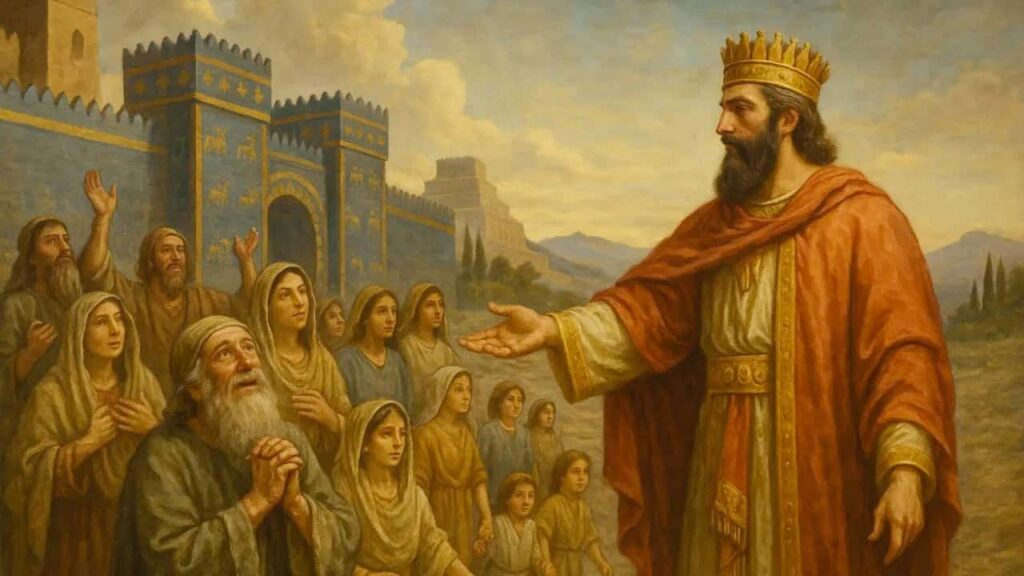
The most famous beneficiary was the Judean community: the Jewish exiles’ return from Babylon and the rebuilding of the Jerusalem Temple are recorded in Ezra 1 and 2 Chronicles 36, and the prophet Isaiah goes so far as to call Cyrus “the LORD’s anointed” (Isaiah 45:1) — the only non-Israelite figure ever given that title in the Hebrew Bible.
Bridging as Statecraft
The same pattern shows up further west: after defeating Croesus of Lydia around 546 BCE, Cyrus left Lydian administrative structures largely intact and reportedly spared Croesus himself — a story Herodotus, writing a century later, repeats with admiration.
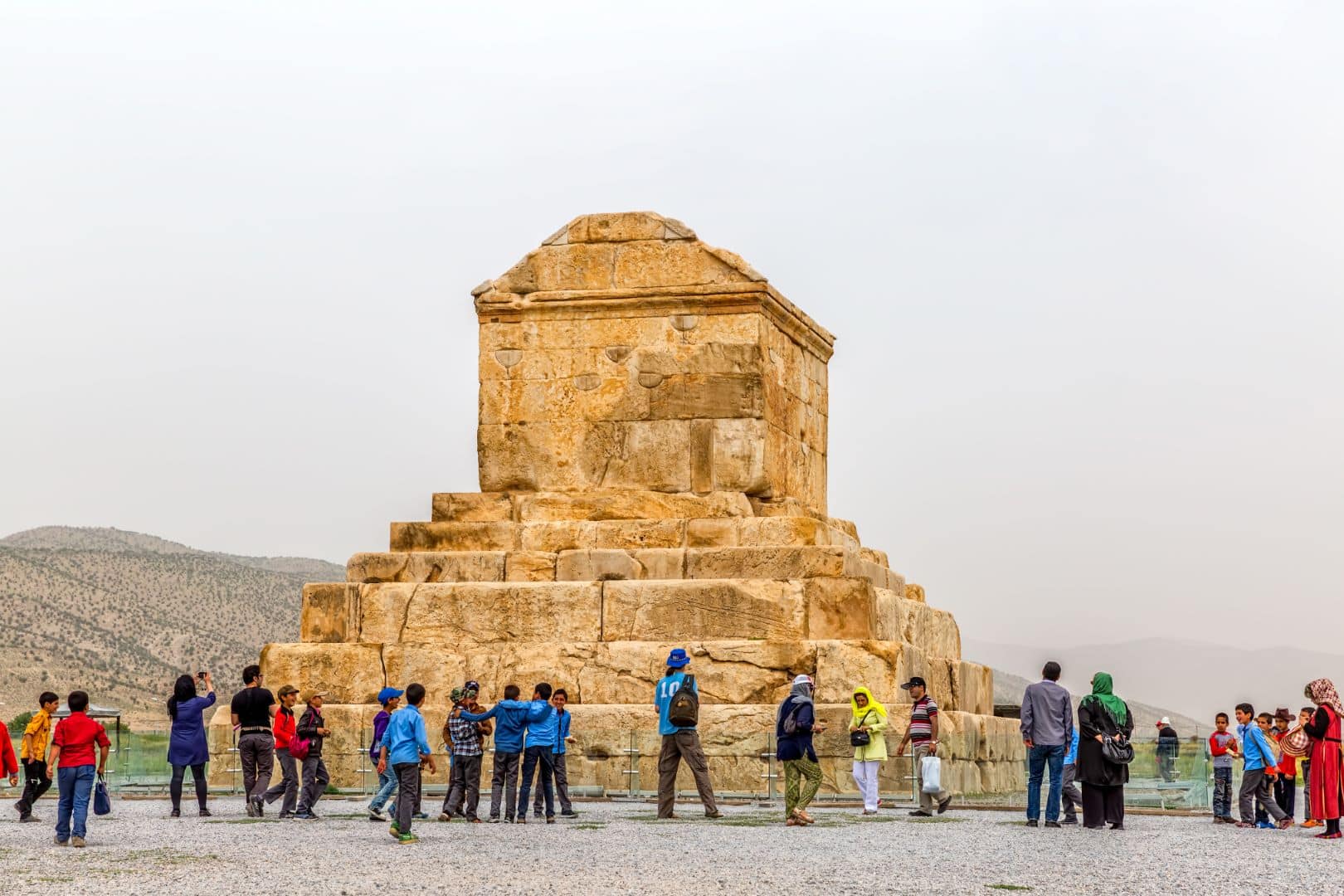
The architecture of his capital tells the same story in stone. Pasargadae, on the Iranian plateau, was built by craftsmen drawn from across the empire — Ionian Greek and Lydian stonemasons cut the ashlar blocks, Mesopotamian artisans contributed reliefs, Elamite traditions shaped the columned halls. The famous winged genius figure at the site wears an Egyptian-style crown atop an Elamite robe, with Assyrian wings — a visual thesis statement about whose traditions the new empire was prepared to absorb.
Administratively, Cyrus inherited and extended a system that ran in multiple languages at once: Old Persian for royal display, Elamite for the bureaucracy, Aramaic as the empire-wide lingua franca, and Akkadian where Akkadian had always been spoken. Even the title later associated with his successors — “King of Kings” (xšāyaθiya xšāyaθiyānām) — encodes the principle: a plurality of kingdoms continuing to exist underneath one Persian roof.
The Greek tradition picked up on this. Xenophon‘s Cyropaedia, written in the 4th century BCE, holds Cyrus up as the model ruler precisely because he governed diverse peoples by understanding them rather than flattening them — and centuries later Thomas Jefferson kept two copies of the work in his personal library for the same reason.
This is bridging as statecraft: not “one culture replaces another,” but “multiple cultures get a workable umbrella” — with Persian power on top, and local life allowed to keep its language, gods, and civic rhythms underneath.
2) Constantine the Great
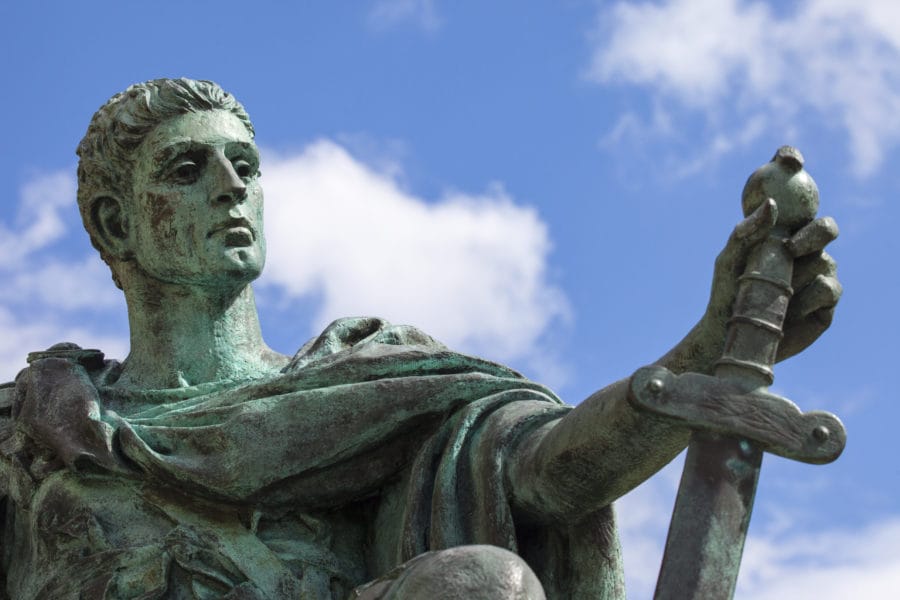
Constantine’s bridge wasn’t a speech—it was a capital. When he refounded Byzantium as Constantinople (dedicated 11 May 330), he planted the imperial “center of gravity” in a place that physically faced both directions: the Greek-speaking eastern provinces and the Latin-speaking western elite. From there, the Roman Empire’s story starts breathing with two lungs—Latin West and Greek East—tied together by a single imperial machine with one court, one fiscal spine, and a new ceremonial center.
But the bridge wasn’t only geographic. Constantine also tried to standardize belonging in a diverse empire by managing religion as public order. The Edict of Milan (313) helped end the legal war on Christians and affirmed broad religious toleration (and the return of confiscated property), reducing one of the empire’s most explosive internal fault lines.
Then he moved from toleration to coordination: by convening the Council of Nicaea (325), he attempted to calm intra-Christian conflict (Arianism) by pushing the church toward a shared formula of belief—less “one religion replaces another,” more “one empire can’t afford rival truth-systems ripping its cities apart.” The point was unity, not theology for theology’s sake.
And underneath the symbols, he reinforced the bridge with bureaucracy: Constantine strengthened a more layered imperial administration, including regional praetorian prefects with civil authority, so distant provinces could be governed with fewer improvisations and fewer local fractures.
Net effect: Constantinople becomes both a hinge city and a governing method—a place, and a system, built to keep different peoples, languages, and religious communities inside the same imperial frame.
Mehmed II is the rare conqueror who reads like a librarian with an army. After 1453, he doesn’t just seize a city—he claims its intellectual inheritance. He gathers Greek scholars and Italian humanists at court and builds a palace library that treats Greek and Latin learning as assets of empire, not trophies to be burned.
That matters because Constantinople wasn’t guarding only “classical Greece.” Its book-world sat at the intersection of Greek, Latin, Arabic, Persian, and Ottoman Turkish—a living archive where ancient philosophy, late antique commentary, and the broader Mediterranean / Islamic scholarly tradition could be copied, translated, argued over, and repurposed. Mehmed (or Mehmet in Turkish) actively commissions and collects across those languages, turning conquest into a kind of cultural logistics: texts don’t just survive; they circulate.
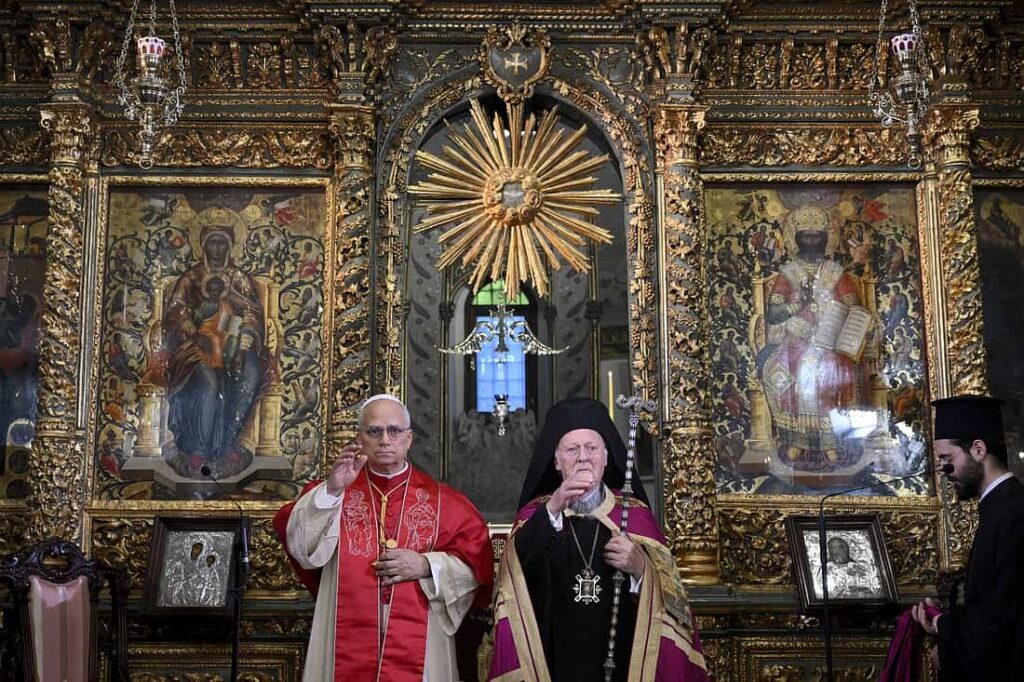
He also chooses governance that keeps plural worlds operational. He preserves the Orthodox Church as an institution under Ottoman rule—creating continuity for the Rum Christian community even as the city is rebuilt and repopulated.
And he doesn’t merely tolerate “Western” art—he recruits it. Inviting Bellini to his court and commissioning a European-style portrait is a signal of confidence: Mehmed is willing to be represented in the visual language of Renaissance diplomacy, while remaining unmistakably Ottoman.
Finally, he imports the Timurid Renaissance moment into the city’s bloodstream: Ali Kuşçu’s arrival links Constantinople to the astronomer-mathematician culture of Samarkand, briefly plugging the post-conquest capital into another apex of Eurasian learning.
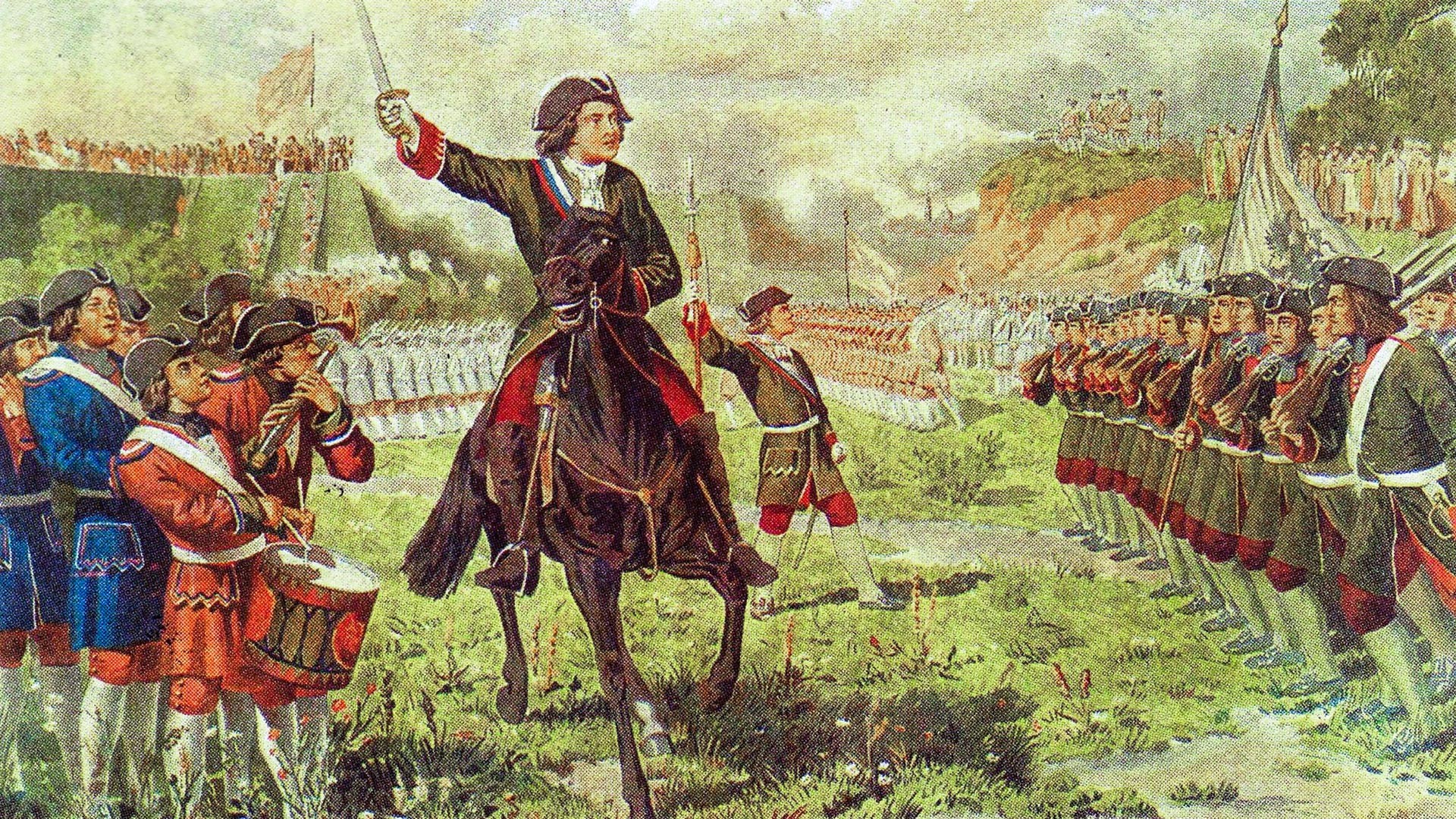
4) Peter the Great
If you want “bridge” as a means of modernization by translation, Peter is unavoidable, importing European institutions and techniques to rewire a Eurasian state.
And Istanbul is part of Peter’s shadow story, too—because Russian–Ottoman rivalry, diplomacy, faith, and exile all leave fingerprints here. Our Russian Istanbul Tour frames this perfectly: Pera as diplomacy “staged in stone,” Fener as the city’s living Orthodox heart, and the Bosphorus as a political shoreline where geography becomes geopolitics.
5) Mustafa Kemal Atatürk
Atatürk’s bridge is built out of education, law, and identity: reforms aimed at a modern, secular nation-state—free compulsory primary education, new schools, women’s rights, a modern legal framework, and the Latin alphabet as a civilizational pivot in daily life.
If Mehmed is “the Renaissance sultan,” Atatürk is modernity turned into infrastructure.














I really enjoyed this post — the “seam where worlds get stitched together” idea is exactly how I experience Istanbul!