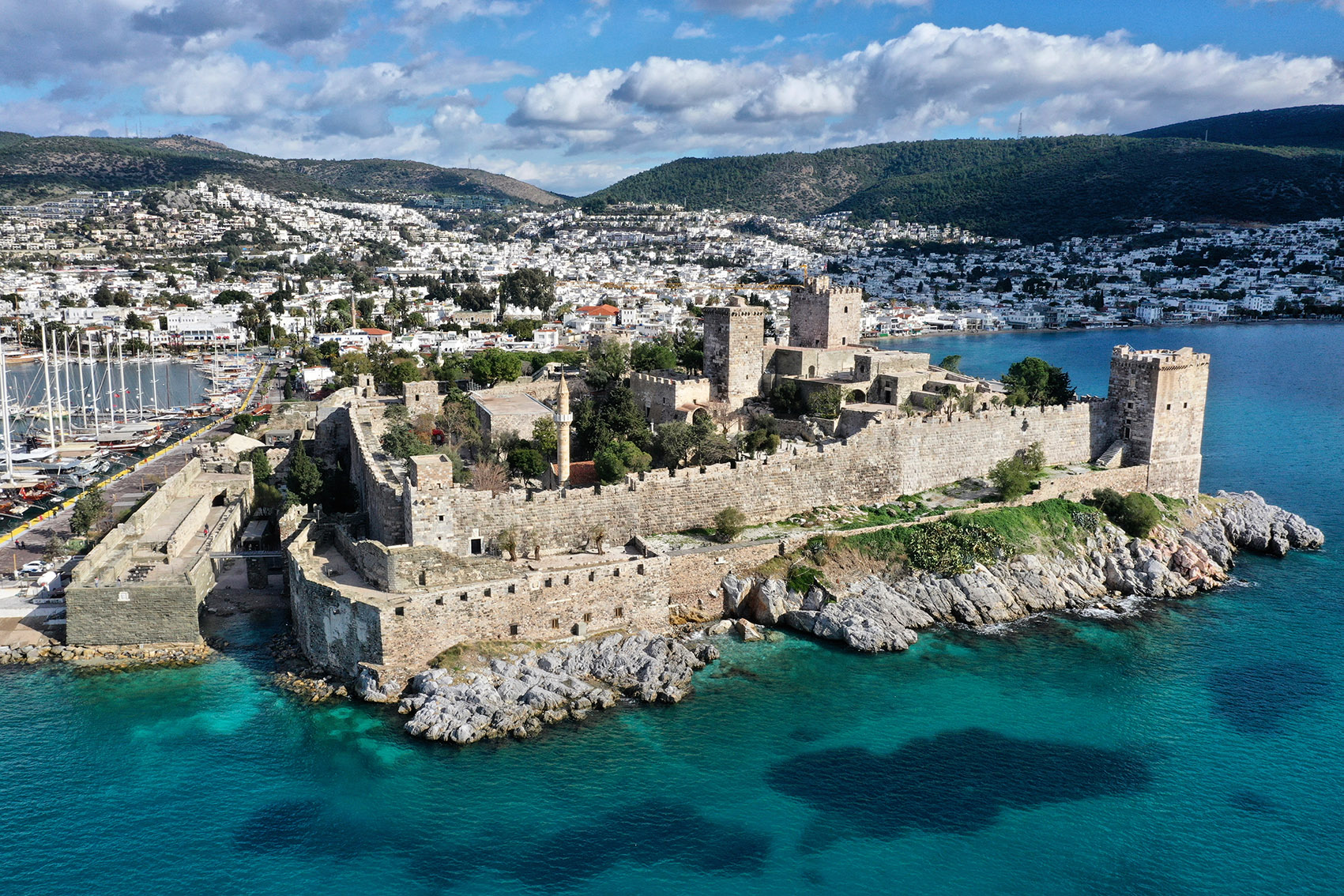
Tucked inside Bodrum Castle, the Bodrum Museum of Underwater Archaeology brings the Aegean’s hidden past to the surface. Shipwrecks, cargo, and everyday objects tell stories of sailors and trade routes that once connected Anatolia with the wider Mediterranean world in a way that feels surprisingly real.
Table of Contents
Where the Sea Tells Stories
Located inside Bodrum Castle, the Bodrum Museum of Underwater Archaeology focuses on shipwrecks discovered along Turkey’s coasts, dating from the Bronze Age to the medieval period. It brings together cargo, ship remains, and artifacts that reflect centuries of maritime activity.
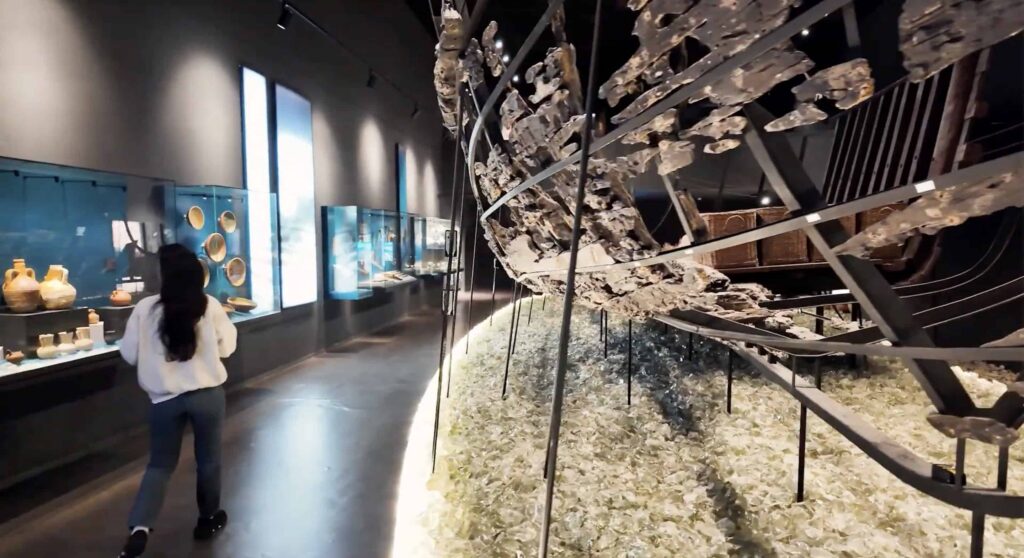
The museum presents reconstructed ships, original hull fragments, and carefully arranged cargoes as they were found underwater. These displays highlight trade networks that once connected Anatolia with the Aegean and the wider Eastern Mediterranean.
Rather than isolated objects, the collection shows how goods such as metals, glass, and ceramics moved across regions. It offers a clear view of how seafaring shaped economic and cultural exchange along Turkey’s southwestern coastline.
Main Sections of the Museum
The museum is divided into several dedicated halls, each focusing on a specific shipwreck or aspect of underwater archaeology. These sections are arranged to guide visitors through different periods of maritime history, from Bronze Age trade networks to medieval seafaring routes across the Mediterranean.
Uluburun Shipwreck Hall (Bronze Age Trade)
The Uluburun wreck, found off the coast of Kaş, dates back to the 14th century BCE and is one of the most remarkable Bronze Age discoveries in the Mediterranean. What makes it stand out is not just its age, but the sheer scale of what was on board when it sank.
Inside the hall, the cargo is reconstructed almost as it was found on the seabed. Copper and tin ingots sit alongside glass, ivory, pottery, and goods pulled from different regions. It quietly shows how Anatolia, Cyprus, the Levant, and the Aegean were already tied together through sea routes long before classical history.
Cape Gelidonya Wreck Exhibit
The Cape Gelidonya shipwreck, dating to around 1200 BCE, was discovered along the Lycian coastline and is known for being the first underwater excavation carried out with modern archaeological methods. It represents a working merchant vessel rather than a luxury cargo ship.
What survives is largely practical: bronze tools, metal scraps, ingots, and basic ship equipment. Together they point to a trader moving between coastal points, collecting and redistributing metal resources that were essential for bronze production across the region.
Serçe Limanı Glass Wreck Hall (Medieval Trade)
This wreck, dating to the early 11th century CE, was found near Bozburun and is best known for its unusual cargo of glass. It captures a moment when maritime trade was still active and highly specialized in the medieval eastern Mediterranean.
The ship carried broken glass meant for recycling as well as finished vessels, along with coins from different political powers of the time. It reflects a trade system where materials, not just finished goods, moved constantly between Byzantine and Islamic ports.
Byzantine Shipwrecks & Amphora Galleries
This section brings together several Byzantine-period wrecks, most of them cargo ships loaded with amphorae filled with oil or wine. The repetition of these jars makes one thing clear: trade was organized, routine, and essential to daily life.
Different amphora shapes and markings point to production centers across Anatolia, the Aegean islands, and the Levant. Rather than rare treasures, these are the remains of working supply chains that kept coastal cities connected through regular sea transport.
Practical Information
Distance from City Centre: The Bodrum Museum of Underwater Archaeology is inside Bodrum Castle, about 1–1.5 km from Bodrum city centre along the marina waterfront.
Ticket Prices: 20 euros per person (official website).
Opening Hours & Days: The museum is open 7 days a week from 08:30 to 17:00, with consistent daily access throughout the main visiting season.
Best Time to Visit: Early morning or late afternoon is ideal to avoid crowds and heat, especially during the peak summer season.
Optional Add-Ons
Private Hotel Transfers to Bodrum Castle
Private transfers can be arranged directly from your hotel to Bodrum Castle, offering a smooth and hassle-free start to your visit. It removes the need to deal with local transport or walking in the heat, especially in peak season.
The service is flexible with timing and allows you to arrive comfortably at the museum entrance without delays or navigation stress.
Professional Museum Guide Service
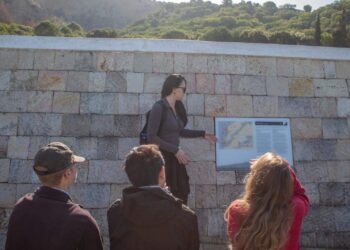
A professional guide can be arranged to accompany your visit inside the Bodrum Museum of Underwater Archaeology, helping you understand the context behind each shipwreck and artifact.
Instead of just viewing displays, you get a clear narrative of trade routes, ancient maritime life, and excavation history. It adds depth to the experience, especially for first-time visitors or history-focused travelers.
Full-Day Bodrum Experience Tour
A full-day Bodrum experience tour brings together the museum, Bodrum Castle, the marina, and selected cultural or coastal highlights into one structured itinerary. It is designed for travelers who want to see more in a single day without planning logistics themselves. The route is paced comfortably, balancing historical insight with time to explore the city’s atmosphere.
Hotel Booking in Bodrum
We can assist in arranging hotel stays in Bodrum based on your preferences, whether you are looking for beachfront resorts, boutique hotels in the old town, or central accommodation near the marina.
The aim is to match your stay with your travel style and itinerary, ensuring easy access to Bodrum Castle and other nearby attractions without unnecessary travel time.
Is It Worth Visiting?

Short answer is, “Absolutely Yes”. The Bodrum Museum of Underwater Archaeology is one of those places that quietly changes how you see the sea around you. What looks like a simple coastal view outside becomes a long history of ships, trade, and people once moving across these waters.
Inside, you are not just looking at artifacts behind glass—you are seeing actual shipwrecks reconstructed from the seabed, with their cargo still arranged as it was found. It takes a bit of time to go through, but it rewards you with a very clear sense of how central these waters were to ancient and medieval life.
Let Us Plan For You
If you want to experience Bodrum beyond a simple museum visit, we can organize the entire journey for you. From hotel pickup to guided entry at Bodrum Castle, everything is arranged so you don’t lose time figuring out logistics. The focus stays on the experience itself, not the planning around it.
Our approach is to connect the museum with the wider story of Bodrum and the Aegean coast. With a professional guide, the shipwreck halls come alive with context that is easy to follow. You leave not just having seen exhibits, but having understood how these maritime routes shaped the region.
Fill the form below.