• About
    • Introduction
    • Explore The Other Tour
    • 2026 Itinerary of The Other Tour Istanbul
    • Common Questions Answered
    • The Other Tour Reviews
    • About Us
  • Tour Guide
    • Istanbul
    • Cappadocia
    • Ephesus
    • Mediterranean
  • Daily Tours
    • Istanbul
    • Cappadocia
    • Antalya
    • Izmir
  • Istanbul
    • Attractions
    • Tours
    • Neighborhoods
    • Eat & Drink
    • Stay
    • Shop
  • Turkey
    • Turkey Tours
    • Destinations
    • Istanbul
    • Cappadocia
    • Ephesus
    • Pamukkale
    • Antalya
    • Bodrum
  • Services
    • Private Tours
    • Daily City Tours
    • Made-to-order Travel
    • Hire a tour guide
    • Unique Activities
    • Airport Transfers
    • Hotel Selection
    • Vacation Booking
    • Corporate Group Tours
    • Culinary Tours
    • Event Planning
    • Istanbul Layover Tours
    • Family Time
  • Blog
    • TOP 5 ISTANBUL
    • Events
    • Documentary
    • History
    • News
    • All
  • Contact
No Result
View All Result
  • About
    • Introduction
    • Explore The Other Tour
    • 2026 Itinerary of The Other Tour Istanbul
    • Common Questions Answered
    • The Other Tour Reviews
    • About Us
  • Tour Guide
    • Istanbul
    • Cappadocia
    • Ephesus
    • Mediterranean
  • Daily Tours
    • Istanbul
    • Cappadocia
    • Antalya
    • Izmir
  • Istanbul
    • Attractions
    • Tours
    • Neighborhoods
    • Eat & Drink
    • Stay
    • Shop
  • Turkey
    • Turkey Tours
    • Destinations
    • Istanbul
    • Cappadocia
    • Ephesus
    • Pamukkale
    • Antalya
    • Bodrum
  • Services
    • Private Tours
    • Daily City Tours
    • Made-to-order Travel
    • Hire a tour guide
    • Unique Activities
    • Airport Transfers
    • Hotel Selection
    • Vacation Booking
    • Corporate Group Tours
    • Culinary Tours
    • Event Planning
    • Istanbul Layover Tours
    • Family Time
  • Blog
    • TOP 5 ISTANBUL
    • Events
    • Documentary
    • History
    • News
    • All
  • Contact
No Result
View All Result

Myra: Rock Tombs and the Real Santa Claus in Lycian Turkey

The Lycian City, the Roman Theatre & the Real Saint Nicholas

TheOtherTour by TheOtherTour
June 30, 2026
in Anatolia Archaeology, Antalya Attractions, History, Lycia, Mediterranean, Roman Empire, Tours from Antalya, Turkey Attractions, Turkey Tours
Reading Time: 25 mins read
A A
0

Some ancient cities make you work to imagine their former glory. Myra is not one of them. Walk up to the cliff at the edge of modern Demre, tilt your head back, and there it is: an entire honeycomb of tombs carved straight into the grey limestone, house-fronts of the dead stacked one above another, with a vast Roman theatre spilling across the slope below. Few sites in Anatolia deliver their drama so immediately, or so generously.

Table of Contents

Introduction to Myra

Myra Demre 2026 - The Other Tour

Myra was one of the great cities of ancient Lycia, a bishop’s seat in the early Christian world, and the home town of the man who would become Saint Nicholas — and, eventually, Santa Claus. It sits on the Antalya coast roughly 150 km from the city, and it makes one of the most rewarding day trips on Turkey’s Turquoise Coast.

It sat among the six most powerful cities of the Lycian League, holding three votes in its federal assembly: the maximum representation permitted and a clear sign of its political, commercial, and regional importance.

Here is everything you need to know before you go: the history, what to see, how to get there, and how to make the most of it.

Let the Cliffs Set the Scene

Before the history and the practicalities, let the cliffs and the theatre set the scene.

A Name Older Than Greek

The name Myra is far older than the Greek and Roman ruins you see today. In the local Lycian tongue the place seems to have been called something like Myrrh or Muri — possibly connected to the fragrant myrrh resin, though the link is debated. What matters is the deeper root. Lycian was not a Greek dialect at all but a member of the Luwian branch of the Anatolian languages, the same family that produced the speech of the Bronze Age Hittites.

Luwian was spoken across southern and western Anatolia for well over a thousand years, and the city names ending in -anda, -wanda and similar endings scattered across the region are its fingerprints. Myra, in other words, belonged to a civilisation that was already ancient and distinctly Anatolian long before Greek became the language of its inscriptions.

This is one of the quiet pleasures of travelling in Lycia. The Greek temples, the Roman baths and the Byzantine churches are only the most recent layers. Beneath them lies an older world of indigenous Anatolian peoples — the same deep substratum that gave Anatolia its mother-goddess Cybele and a tradition of religion and craft stretching back to the Neolithic.

The Lycians: Anatolia's Own People

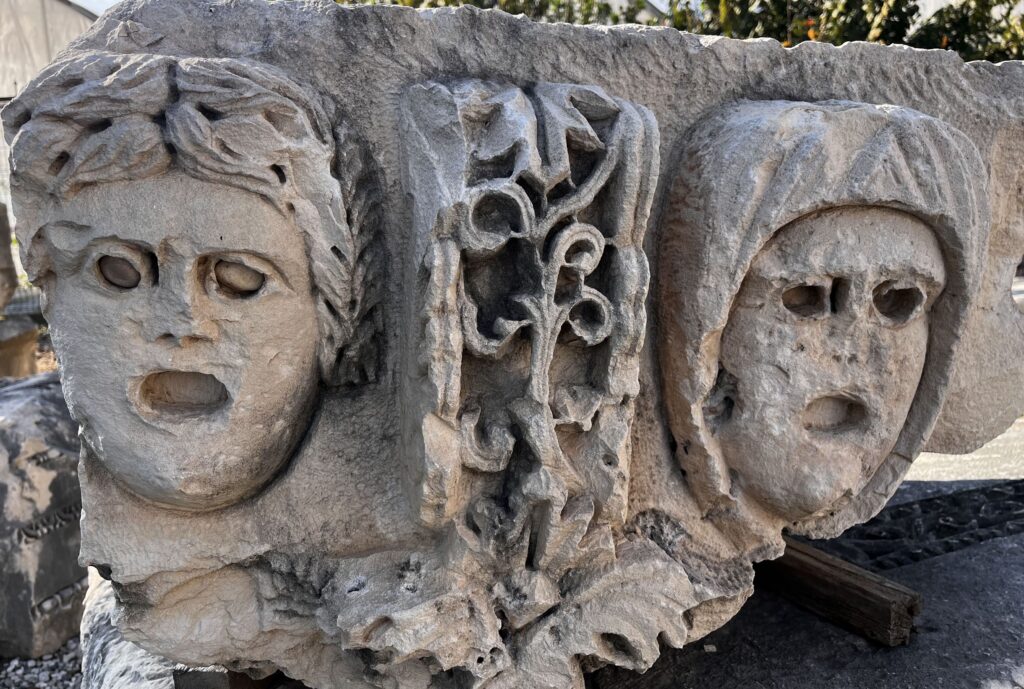
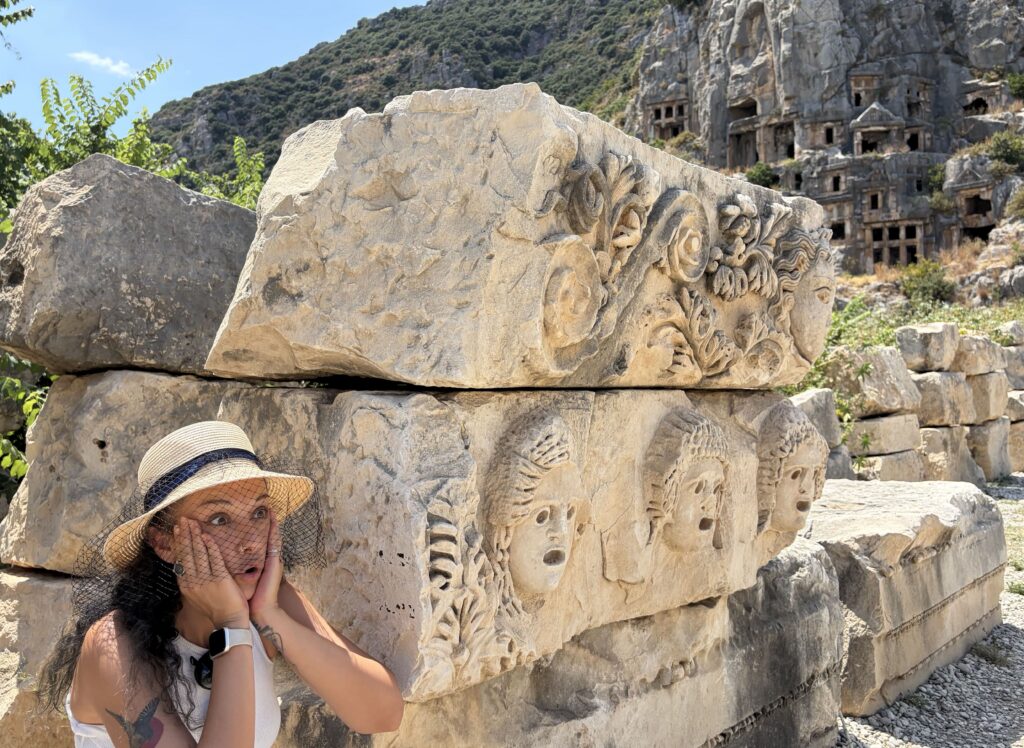
Carved theatrical mask corbels from the Roman theatre at Myra, Lycian stonework detail

It is worth pausing on who the Lycians actually were, because they are too often filed away as a footnote to Greek history. They were nothing of the kind. The Lycians were an Anatolian people with deep local roots, and their language was a direct descendant of Luwian — one of the great languages of Bronze Age Anatolia, sister to the tongue of the Hittites whose empire once ruled from central Anatolia.

When Homer’s Iliad lists the allies of Troy, the Lycians under Sarpedon and Glaukos are there, fighting for the Anatolian side. The Lycians of classical times still wrote their own non-Greek script, worshipped their own gods, and buried their dead in those unmistakable house-tombs you see at Myra — an architecture that owes nothing to Athens and everything to local tradition.

Myra Ancient Theatre (1) (1)

What makes the Lycians so compelling is how they absorbed outside influences without ever dissolving into them. They took the Greek alphabet and bent it to write Luwian-descended Lycian. They built Greek-style theatres and Roman baths, yet kept carving timber-house façades for their tombs centuries after the technique made any structural sense.

They invented one of history’s earliest federal democracies — the Lycian League, so admired by the framers of other constitutions in later ages. This is the real Anatolian genius: not imitation, but synthesis. The Lycians are a vivid case study in the same long story told by the philosophers of Anatolia and by the Museum of Anatolian Civilizations in Ankara — a peninsula where every conqueror was, in the end, partly conquered by the place itself.

Myra's Golden Age Under Rome

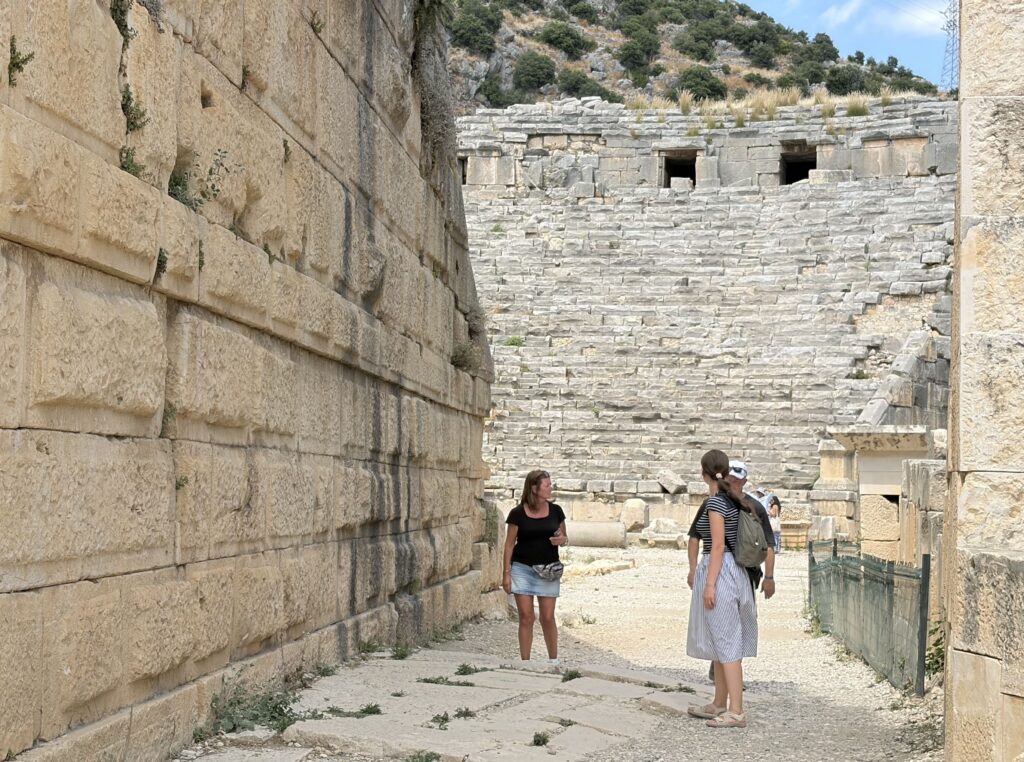
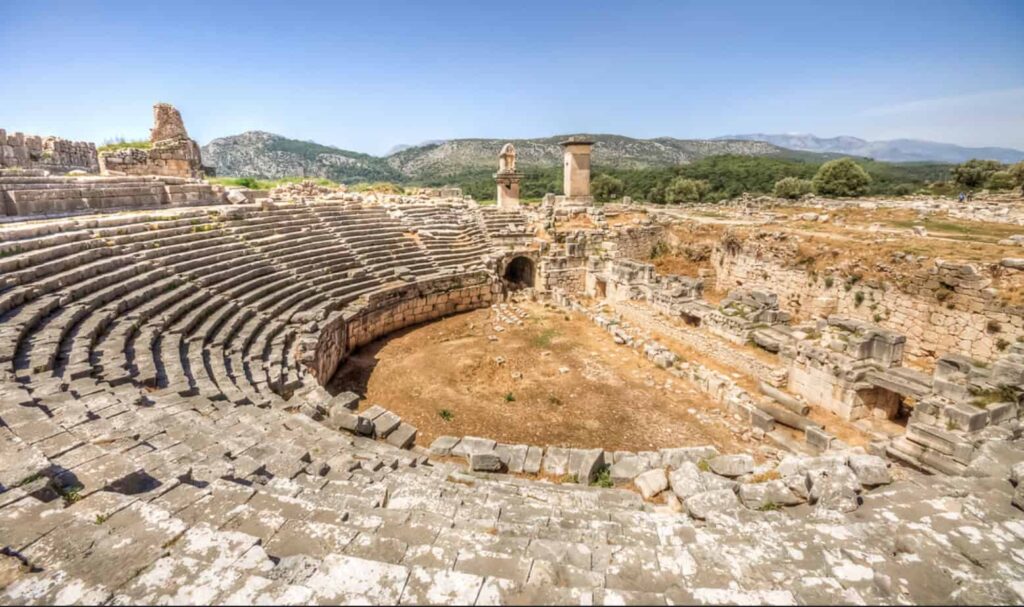
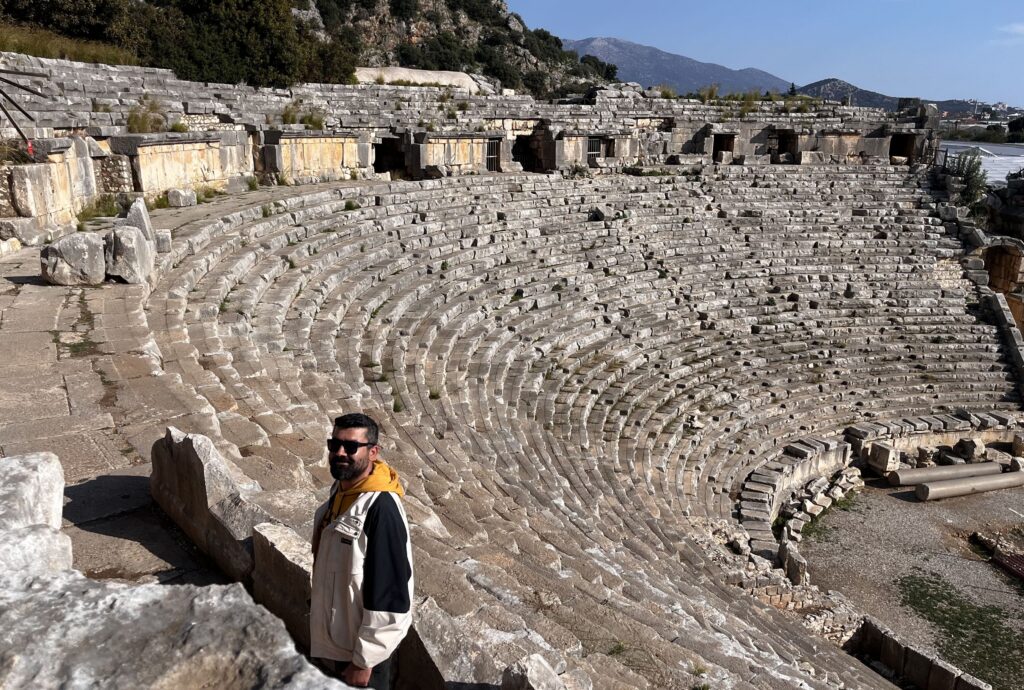
The Roman theatre at Myra from the upper cavea — one of the largest theatres on the Mediterranean coast

By the first millennium BCE the Lycians had organised themselves into one of antiquity’s most remarkable political experiments: the Lycian League, a federation of cities that pooled their votes in a shared assembly. Myra was one of only six cities granted the maximum three votes, putting it in the top tier alongside Xanthos, Patara, Pinara, Tlos and Olympos. That status tells you how wealthy and important it had become.

The earliest solid archaeological evidence at Myra dates to around the 5th century BCE, but the city truly flourished under Rome. During the 2nd century CE, the high-water mark of the Roman Empire in the region, Myra was lavishly rebuilt and expanded.

Wealthy benefactors — most famously Opramoas of Rhodiapolis, the great philanthropist of Roman Lycia — poured money into civic monuments. When an earthquake struck in 141 CE and damaged the theatre, it was repaired and made even grander. By late antiquity Myra was important enough to serve as the metropolis, or capital, of the entire Lycian province.

Then came its Christian chapter. In the 4th century a local bishop named Nicholas served the city, and after his death his cult grew until Myra became one of the most significant pilgrimage destinations of the eastern Byzantine Empire. Even the apostle Paul passed through: the Book of Acts records that he changed ships at Myra‘s harbour while being taken as a prisoner toward Rome, tying the city into the same early-Christian geography as the Seven Churches of Revelation further north.

How Myra Fell Silent

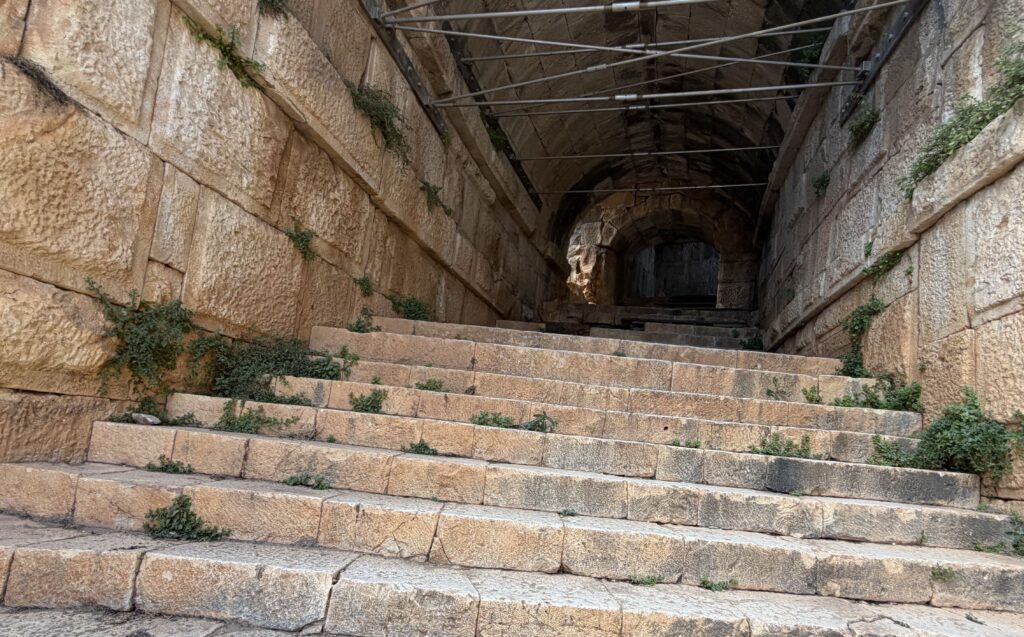
View of a Lycian hall with stairs looking abandoned

Myra‘s decline was slow and tangled with the wider fortunes of the Byzantine Empire. From the 7th century onward, Arab naval raids battered the Lycian coast, and the once-busy harbour at Andriake silted up as the Myros river deposited its load of mountain soil across the plain — the same fertile silt that makes Demre a centre of greenhouse agriculture today. The sea that once carried grain ships to Rome gradually retreated, leaving the port stranded inland.

In 1087 merchants from Bari in southern Italy carried off most of Saint Nicholas‘s relics, an event that shifted the centre of his cult westward and further drained Myra of pilgrims. By the later medieval period the great city had dwindled to a village, its monuments half-buried in alluvium, its theatre silent. That long sleep is part of why so much survives: the silt that strangled Myra also protected it.

The Roman Theatre of Myra

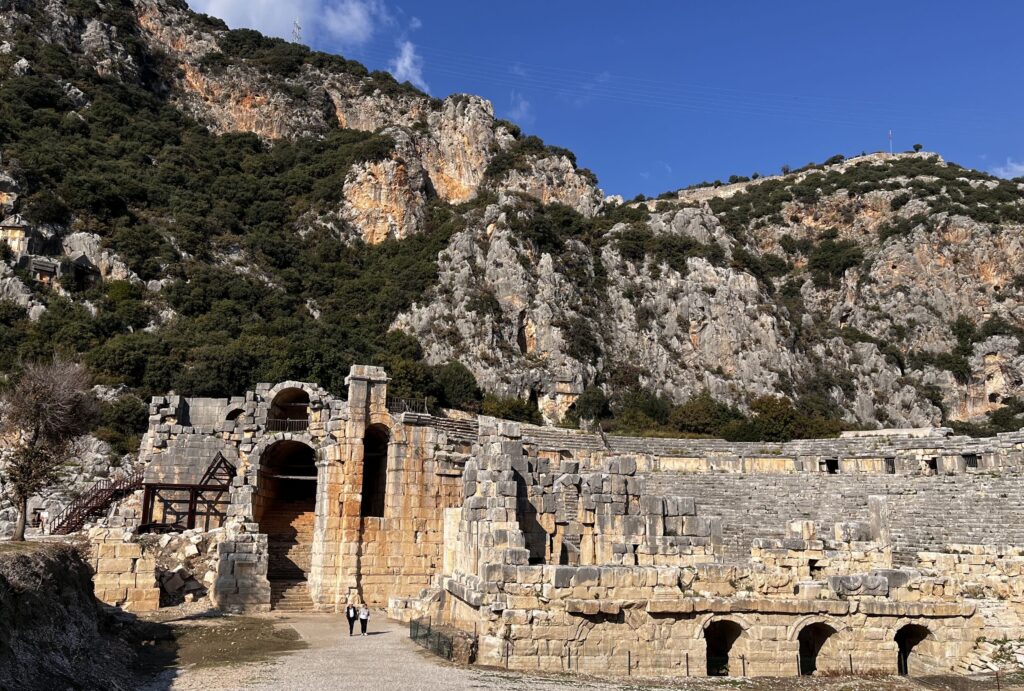
Below the cliff sprawls the largest theatre in all of Lycia, with seating for somewhere in the region of 11,000 to 12,000 spectators — comfortably more than the city’s living population, which says something about Myra‘s role as a regional hub. Built over an earlier Hellenistic theatre and rebuilt after the 141 CE earthquake, it hosted not just drama but musical competitions, civic gatherings and Roman-era spectacles. Wander into the vaulted passages beneath the seating, look for the carved theatrical masks among the tumbled stone, and climb the cavea for the classic view: the rows of seats in the foreground, the tombs hanging in the cliff behind.

Did you know? The silt that buried Myra’s harbour and ended its golden age is the very thing that preserved the painted tombs you see today.

Nearby Attractions

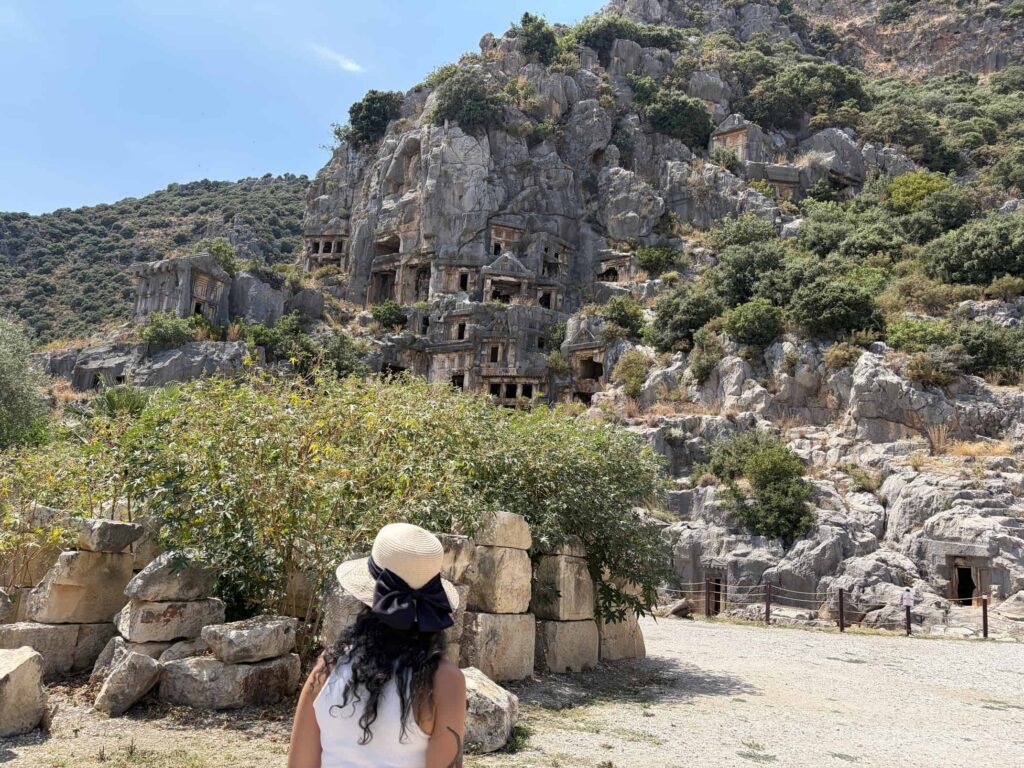
Panoramic view of Myra showing Lycian rock-cut tombs above the Roman theatre, Demre, Turkey

Give yourself a couple of unhurried hours. The core archaeological site packs its highlights close together, but they reward slow looking.

The Distinctive Rock-Cut Tombs

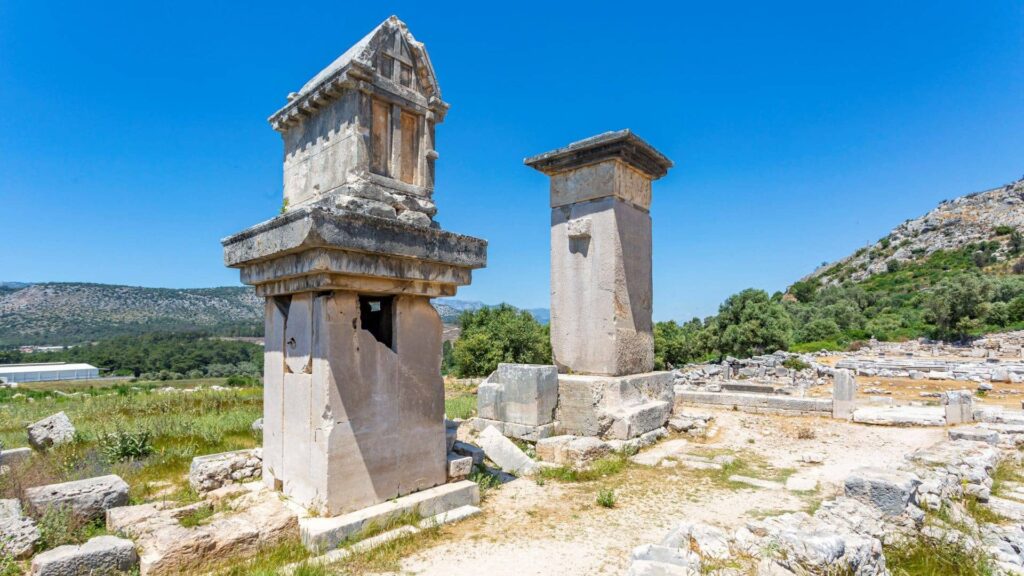
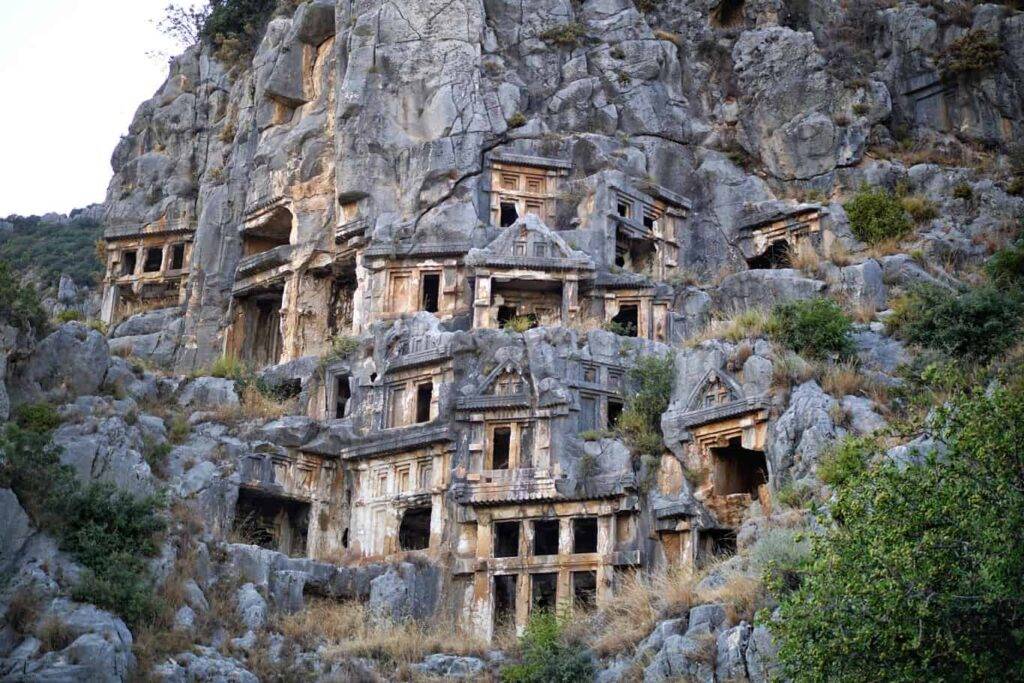
These are the reason Myra appears on postcards. Archaeologists have documented more than a hundred rock tombs here, most carved in the 4th century BCE. Almost all are of the distinctively Lycian “house-tomb” type: the stonemasons reproduced, in solid rock, the look of the timber houses the living actually inhabited — the beams, the joists, the projecting roof-ends, even the doors. To stand beneath them is to look at a frozen portrait of a vanished domestic world, an architecture of the dead modelled on the architecture of the living.

There are two main clusters. The sea necropolis, the famous tightly-packed wall of façades, rises directly above the theatre. The river necropolis, about 1.5 km up the Demre Çayı (the ancient Myros river), is quieter and contains the celebrated Lion’s Tomb, also known as the Painted Tomb, which preserved traces of the vivid colour that once covered these monuments. It is worth remembering that the tombs were not the bare grey stone we see now; in antiquity they blazed with red, blue and ochre paint.

The Nymphaeum, Baths & Andriake Harbour

Two further well-preserved Roman structures, a monumental fountain (nymphaeum) and a bath complex, round out the city centre. But to understand how Myra grew rich, head 5 km southwest to its ancient port, Andriake. This was one of the most important harbours on the Lycian coast, and its standout monument is the enormous granary built under the emperor Hadrian — the Horrea Hadriani — a state grain store that underlines Myra‘s place in the imperial supply network. Andriake today also hosts the excellent Museum of Lycian Civilizations, a fine place to put the whole region in context.

The Church of St Nicholas

A ten-minute walk from the ruins, in the centre of Demre, stands the Byzantine Church of St Nicholas — one of the most atmospheric early-Christian buildings in Turkey. This is where the historical Nicholas was buried, and where pilgrims have come for more than 1,500 years. Inside you will find beautiful frescoes, intricate stone carving, opus sectile floors and the stone sarcophagus traditionally associated with the saint.

The real Nicholas was a 4th-century bishop famous for secret gift-giving and for defending the poor; he is even said to have attended the Council of Nicaea in 325, convened under Constantine the Great in the city now called İznik. Over the centuries his legend travelled west and merged with folk traditions until it became the figure of Santa Claus. Standing at his tomb, it is genuinely strange and moving to realise you are at the source of a story now told to children all over the world.

Myra Is Still Giving Up Secrets

What makes Myra thrilling right now is that it is an active, headline-making dig — one of the most productive in Turkey. For years the excavations at Myra and its harbour Andriake have been led by Professor Nevzat Çevik of Akdeniz University, and the discoveries keep rewriting what we thought we knew.
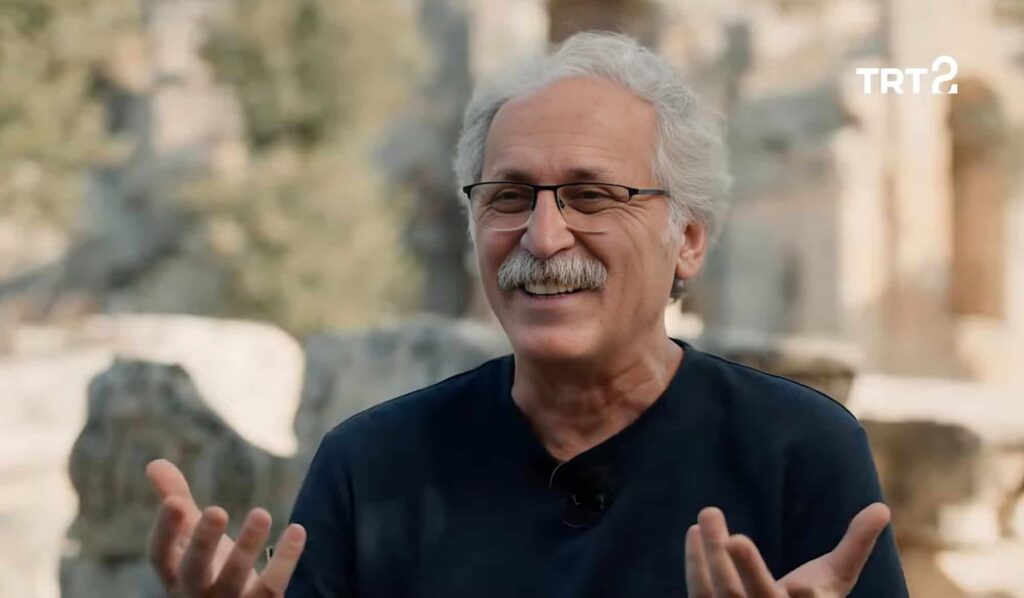
Nevzat Cevik - Passionate Head Archaeologist of Lycia

The most spectacular came when archaeologists tunnelling beneath the Roman theatre found something extraordinary: an earlier, smaller Hellenistic theatre, sealed and protected under the later Roman one.

In and around that buried layer they recovered a hoard of more than fifty painted terracotta figurines, roughly 2,000 to 2,200 years old — depictions of mortals, horsemen and animals alongside the gods Artemis, Apollo, Leto, Aphrodite and Heracles, many still carrying traces of red, blue and pink paint. Çevik has described them as votive offerings gathered in a sacred space, and they are some of the finest small sculpture ever found in Lycia.

A selection is now displayed inside a Roman-era shop within the theatre galleries, with the full collection due to anchor a permanent exhibition at the new Museum of Lycian Civilizations at Andriake — a rare chance to see freshly excavated masterpieces almost where they were buried.

Then, on Saint Nicholas Day in December 2024, came the news that travelled around the world. Working under the church’s “Legacy for the Future” project, archaeologists led by Associate Professor Ebru Fatma Fındık uncovered a limestone sarcophagus buried beneath a two-storey annex of the Church of St Nicholas — partially sunk metres below ground, with a raised, pitched-roof lid of exactly the type used for high-status Byzantine burials.
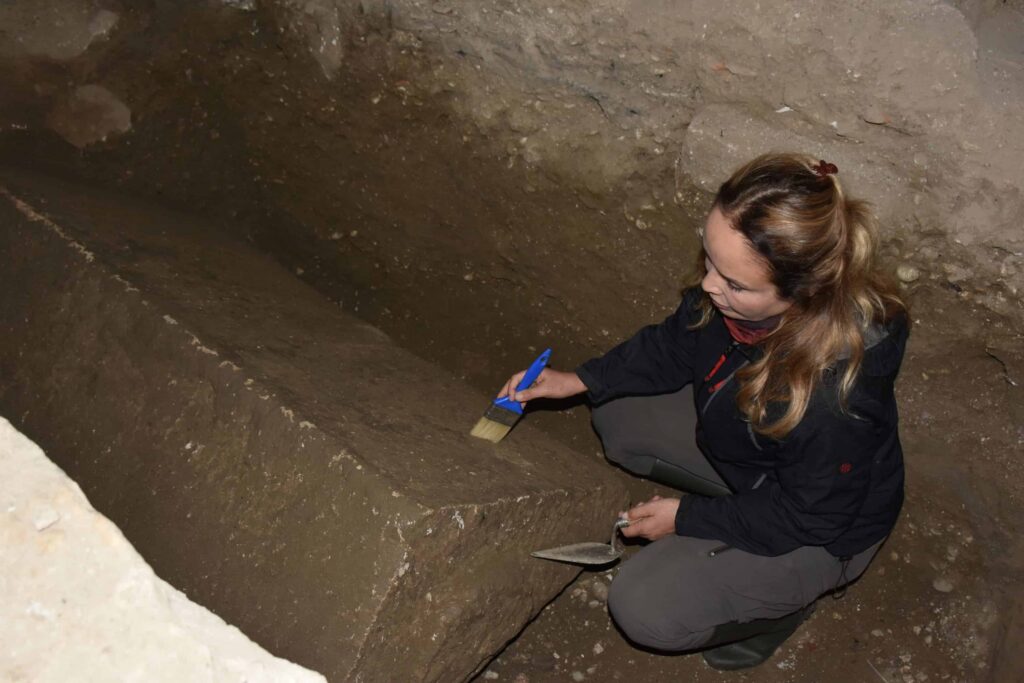
Professort Ebru Fatma Fındık

Its position, hard against the church and consistent with the historical sources, has revived the tantalising possibility that this could be the original tomb of Saint Nicholas himself. Carbon dating and further excavation are ongoing, and the team’s great hope is to find an inscription. Whatever the result, it is a reminder that at Myra the past is not finished — it is still being lifted, quite literally, out of the ground.

This is exactly why we think Lycia deserves a place at the heart of any serious trip to Turkey, not a rushed photo stop. These finds are part of a wider wave of archaeologists rewriting the story of ancient Anatolia, and there is no better moment to walk these sites with a guide who follows the digs season by season and can tell you what came out of the ground last summer.
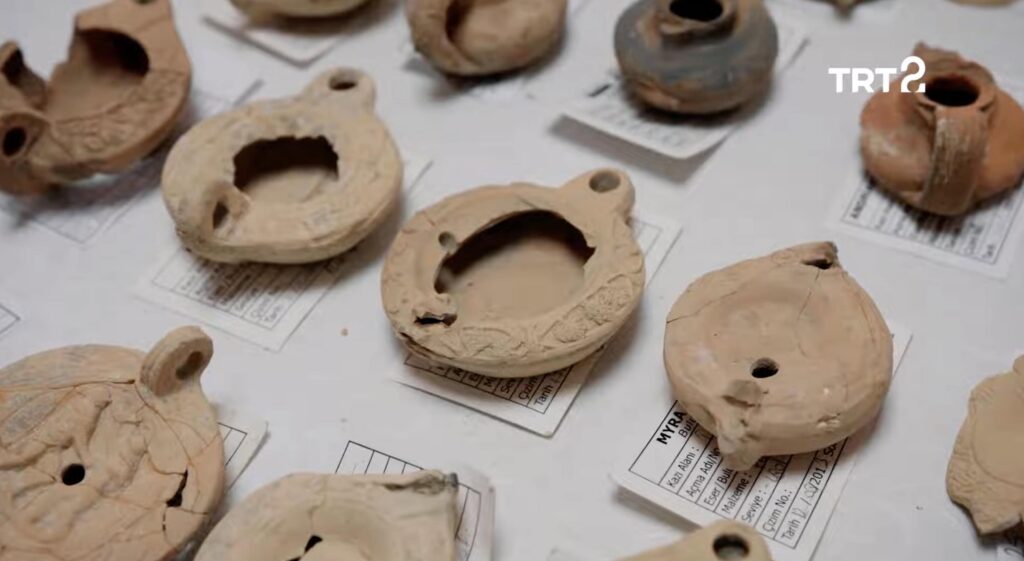
Chalcolithic Clay Discovery

Chalcolithic Ceramics Discovery - Myra Demre Antalya Turkey

One of the most startling discoveries from the theatre excavations was not monumental at all, but made of clay. During the 2020–21 seasons, archaeologists recovered pottery from Myra that was identified as Middle and Late Chalcolithic in date — material reaching back roughly 5,000 years. One especially striking fragment reportedly preserved the traces of the potter’s own fingers in its surface: a direct physical impression left by someone working clay millennia before Myra became a Lycian metropolis.
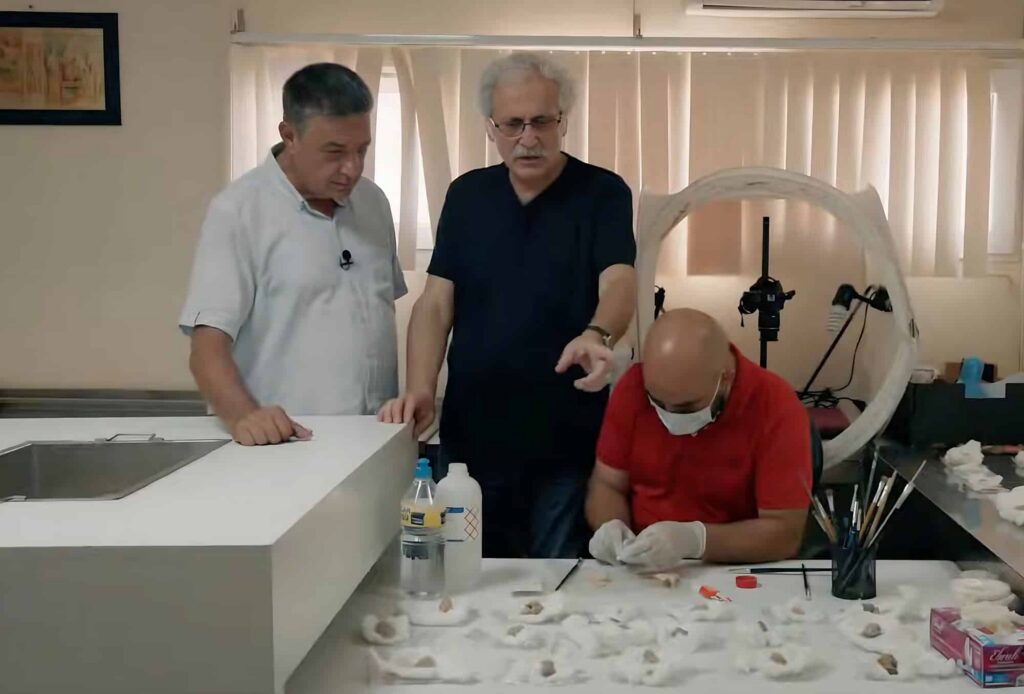
Ümit Işın and Nevzat Çevik about Myra

Tour guide/archaeologist Ümit Işın interviewing Nevzat Çevik reveals that the importance is enormous. Until these finds, Myra was generally understood through its Lycian, Hellenistic, Roman and Byzantine remains. The Chalcolithic (also known as the Copper Age or Eneolithic, is a transitional archaeological period between the Stone Age (Neolithic) and the Bronze Age) material pushes the site’s archaeological story back by around two thousand years beyond the Classical city known from tombs, inscriptions and civic monuments.

It does not yet give us a complete prehistoric Myra — the excavators and later scholarship are careful on that point — but it makes one thing impossible to ignore: this landscape had a human history far deeper than the city visible today.
Getting to Myra From the Coast

  1. Location: Myra lies just outside Demre, in Antalya Province, about 1.5 km inland from the modern town centre.
  2. By car: The most flexible option. From Antalya it is roughly 150 km along the coastal D400 highway — a scenic drive of around two and a half hours, winding above the sea past pine-clad headlands. From Kaş or Kalkan to the west it is well under an hour. Parking is available at the site.
  3. By bus & dolmuş: Regular intercity coaches and shared minibuses connect Antalya, Kaş and Kalkan with Demre‘s bus station throughout the day; from there it is a short taxi or walk to the ruins and the church.
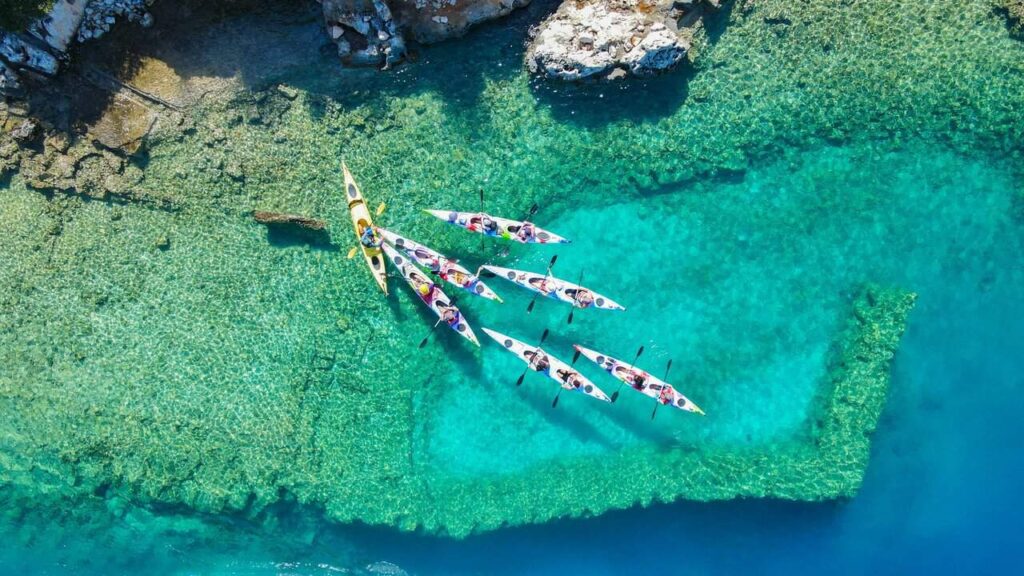
  4. By guided day tour: The easiest route of all, since most combine Myra with a boat trip over the nearby sunken city of Kekova.
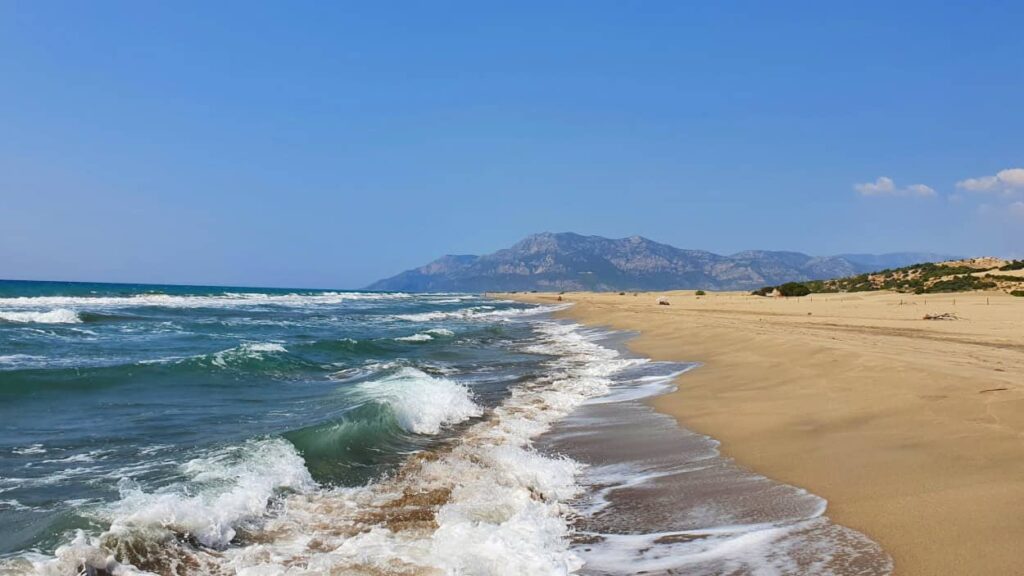
  5. Combine with the coast: Myra pairs naturally with a Kekova boat tour to see the half-submerged Lycian ruins off Simena, and with the long sweep of beach and ruins at Patara. Walkers on the Lycian Way pass through this stretch of coast too, and the region is dotted with other superb, far quieter sites such as Limyra, Tlos and the port city of Phaselis.

Hours, Tickets & What to Know

Opening hours for the Myra archaeological site are roughly 08:30–19:00 from April to October and 08:30–17:30 in winter, with last entry about half an hour before closing. The Church of St Nicholas keeps similar hours but is ticketed separately and is noticeably more expensive, so factor that in. See current 2026 museum fees before you go. The Turkish Museum Pass (Müzekart) is generally accepted at both sites, which can make it well worth buying if you are visiting several — always confirm current prices and conditions locally, as they change from season to season.

  1. Go early or late: Myra is a fixture on the Antalya day-tour circuit, and tour buses cluster around the middle of the day. Arrive at opening or in the late afternoon and you may have the theatre almost to yourself.
  2. Wear sensible shoes: The theatre steps and the ground around the tombs are uneven ancient stone. Trainers or walking shoes are ideal.
  3. Bring sun protection and water: The site is open and the Mediterranean sun is fierce in summer; shade is limited.
  4. Pick your season: Spring (April–June) and autumn (September–November) are the sweet spots, with comfortable temperatures and thinner crowds. Demre‘s famous greenhouse tomatoes mean the surrounding plain is productive year-round, but the heat of high summer is best avoided.
  5. Allow time for Andriake: If you can, build in the short hop to the harbour and the Museum of Lycian Civilizations. It turns a good half-day into a genuinely rich one.

Why Myra Rewards the Slow Visit

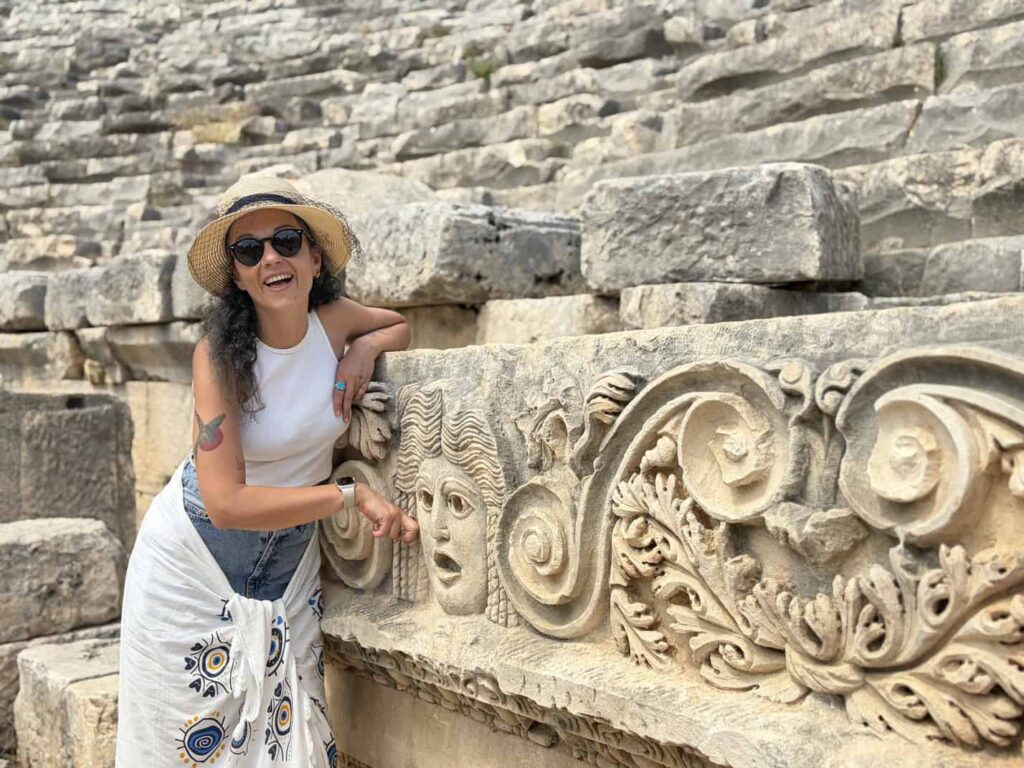
A visitor reacts to the carved stone faces at Myra — the site rewards those who take time to look closely

Plenty of travellers tick Myra off in a hurried hour between a Kekova cruise and the drive back to their resort. It deserves better. This is a place where four civilisations are legible at a single glance — the indigenous Luwian-rooted Lycians in the tombs, the Greeks and Romans in the theatre, and the Byzantine Christian world in the church of a saint who became a global myth. Few sites compress so much history into so small and beautiful a space.

At The Other Tour we are, frankly, partisans of that older Anatolian spirit — the Luwian-speaking, tomb-carving, league-building Lycians who took everything the Mediterranean threw at them and made it unmistakably their own. It is the same instinct that runs through this whole peninsula, from the Hittites to Cybele to the figurines now emerging from beneath Myra‘s theatre. Travel here the slow way, with a guide who reads Lycian house-tombs the way others read a menu, and the coast stops being a backdrop and becomes a living archive.

So skip the coach-window glance. Myra is a city to be walked through slowly: stand beneath the tombs, climb the great theatre, watch the dig in progress, and meet the real Saint Nicholas where his story began. Then keep going — into Demre, out to Andriake, and along the whole astonishing Lycian shore.

I'll be honest, I almost skipped Myra for another beach day. So glad I didn't. Our guide spent twenty minutes just on one tomb — explaining what the carved beams meant, where traces of the original paint were still hiding if you knew where to look. I'd walked past that same wall twice and seen nothing. By the end I felt like I'd actually met the people who built this place, not just photographed their ruins.
Benjamin T.United States
We came for Saint Nicholas and stayed for everything else. The theatre alone is worth the trip — we arrived early on our guide's advice and had it almost entirely to ourselves. What I didn't expect was how much the Lycian story would stay with me. A civilisation I'd never heard of, older than Greece, writing their own language, building their own democracy. Our guide connected all of it without once making it feel like a lecture.
Hendrik V.Netherlands
The excavation findings were what surprised me most. I hadn't realised Myra was an active dig — our guide explained what had been found under the Roman theatre just a few years ago, the figurines, the earlier Hellenistic layer underneath. It made the whole site feel alive rather than finished. I travel quite a lot for archaeology and this is genuinely one of the more memorable half-days I've had.
Miura S.Japan
Came as a solo traveller, slightly nervous about doing a private tour alone — completely unnecessary worry. The pace was set entirely around me, we stopped whenever something was interesting, and my guide was as happy talking about the geology of the cliff as the history carved into it. The Church of St Nicholas at the end was unexpectedly moving. I knew the Santa Claus connection vaguely but standing at the actual tomb is something else entirely.
Daniel O.Ireland

FAQ - Frequently Asked Questions

Where exactly is Myra and how far is it from Antalya?

Myra lies just outside Demre in Antalya Province, roughly 150 km west of Antalya city along the coastal D400 highway. The drive takes around two and a half hours. From Kaş it is well under an hour.

What are the opening hours for Myra ancient city?

The archaeological site is open roughly 08:30–19:00 from April to October and 08:30–17:30 in winter, with last entry around half an hour before closing. The Church of St Nicholas in the centre of Demre keeps similar hours but is ticketed and priced separately. Check current 2026 museum fees before you go, as prices change seasonally.

Is the Turkish Museum Pass valid at Myra?

Yes — the Museum Pass (Müzekart) is generally accepted at both the Myra archaeological site and the Church of St Nicholas. If you are visiting several sites along the Lycian coast, it can make the pass well worth buying. Always confirm locally before your visit, as acceptance and pricing can change.

What is the best time of year to visit Myra?

Spring (April–June) and autumn (September–November) are the sweet spots — comfortable temperatures, thinner crowds and better light for photography. High summer is very hot and the site fills with day-tour coaches around midday. If you do visit in summer, arrive at opening time or after 16:00 and you may have the theatre nearly to yourself.

What can I see at Myra — is it worth a full day?

A focused visit to Myra itself takes two to three hours. The core site contains the famous Lycian rock-cut tombs, the Roman theatre — the largest in all of Lycia — and several well-preserved Roman structures including a nymphaeum and bath complex. Add the Church of St Nicholas in Demre town centre and the harbour ruins and Museum of Lycian Civilizations at Andriake, and a full day is easily filled. Most visitors also pair it with a Kekova boat tour.

What is the connection between Myra and Santa Claus?

Myra was the home and bishopric of Nicholas, a 4th-century Christian bishop buried in what is now the Church of St Nicholas in Demre. He was famed for anonymous generosity and defending the poor, and became one of the most venerated saints of the Byzantine world. Over centuries his legend merged with northern European folk traditions — particularly after his relics were taken to Bari, Italy, in 1087 — eventually producing the figure of Santa Claus known worldwide today.

Are there active excavations at Myra?

Yes — Myra is one of Turkey's most active and productive digs. Excavations led by Professor Nevzat Çevik of Akdeniz University have uncovered a buried Hellenistic theatre beneath the Roman one, along with over fifty painted terracotta figurines dating back more than 2,000 years. In December 2024 a limestone sarcophagus was uncovered beneath an annex of the Church of St Nicholas, raising the possibility it could be the original tomb of the saint himself. These finds are part of a broader wave of archaeologists rewriting the story of ancient Anatolia.

What other Lycian sites can I visit near Myra?

Myra sits at the heart of one of Turkey's richest Lycian clusters. Within easy reach are the sunken ruins of Kekova, the beach and sanctuary city of Patara, the cliff-top site of Limyra, the acropolis of Tlos, and the harbour city of Phaselis. Walkers on the Lycian Way long-distance trail pass through this stretch of coast. The Other Tour offers a 5-Day Lycia itinerary and a dedicated Lycia Archaeology Tour that links these sites into a coherent journey.

Explore Myra with The Other Tour

The Myra you’ve just read about — tombs that blaze with painted colour once you know where to look, a theatre still giving up its Hellenistic secrets, a saint’s tomb that may yet be the real one — is the one we build every Lycia itinerary around, not the hurried photo stop most coaches allow.

Tell us roughly when you’re coming and how much time you have, and we’ll shape a private day, or a longer route through Lycia around your pace. We handle the transfers, the tickets and the timing so you arrive when the theatre is empty — and reply within a day with a plan you can adjust freely. No deposit until you’re happy with the plan, and you can adjust or cancel any time before the day.

Explore More with The Other Tour

Kekova Sunken City – Underwater Legend of the Turquoise Coast
Explore the mysteries of Kekova Sunken City – dive into ancient ruins, crystal-clear waters, and curated tours on Turkey’s Turquoise Coast.
Find Out More
Olympos – Ancient Ruins Meet Pristine Beaches
Explore Olympos – Dive into its rich history, myths, ancient ruins, beaches, local culture, and unforgettable guided cruises.
Find Out More
Patara – The Ancient Gem of Turkey’s Turquoise Coast
Explore Patara with ancient Lycian ruins, pristine beaches and rich culture, a stunning destination on Turkey’s breathtaking Turquoise Coast!
Find Out More
Epic Turkey Tour – From Istanbul to the Mediterranean
Join the Epic Turkey Tour, exploring Istanbul, Cappadocia, a Mediterranean cruise, and Pamukkale’s white terraces on a 12-day adventure!
Find Out More
Seven Churches of Revelation – Pilgrimage across Western Turkey
Discover Turkey’s Seven Churches of Revelation. Explore their deep biblical history, St. Paul’s impact, and ancient archaeological ruins.
Find Out More
Lycian Boat Tour - The Other Tour 2026
Lycian Way Tour from Fethiye
Explore Tlos, Saklıkent Gorge, and Patara in one day with a private Lycian Way tour from Fethiye. History, nature, and local lunch included.
Find Out More
Private Kekova Boat Tour from Demre
Private Kekova boat tour from Demre. Discover the Sunken City, swim in hidden bays, and visit Simena’s castle and ice cream.
Find Out More
Adventure Travel in Turkey: Trekking, Paragliding & More
Adventure travel in Turkey: trek Lycian Way, paraglide Ölüdeniz, raft Köprülü, dive Kaş, balloon Cappadocia, ski Uludağ. Plan your trip now.
Find Out More
gulet charter turkey - the other tour (1)
Private Gulet Charter in Turkey – Customized Blue Cruises
Private, crewed gulet charters on Turkey’s Turquoise Coast. Weekly from Bodrum, Marmaris, Göcek or Fethiye; bespoke routes and full board.
Find Out More
Xanthos - Lycia - Turkiye - The Other Tour
Xanthos Travel Guide: Lycian Ruins in Turkey
Step back in time at Xanthos, UNESCO sites in Lycia, Türkiye. Wander theaters, tombs, and temples where ancient Lycian myth and history meet.
Find Out More
Tags: Ancient CityArchaeologyArchitectureBronze AgeByzantine LegacyHellenisticHistoryMediterraneanNeolithic
Share130Tweet82
TheOtherTour

TheOtherTour

Established in 2011, TheOtherTour has evolved from offering alternative city tours in Istanbul to becoming a trusted travel agency that provides top-quality services and curated travel experiences throughout Turkey. With 15 years of experience exploring the nooks and crannies of Istanbul, we delight ourselves in sharing the city's hidden gems, from underground art scenes to music schools and various intimate spaces. The focus is not just on showing you the sights but also on introducing you to the city's heartbeat, its people, and its unsung tales. We have tested and curated the best of what Turkey has to offer—be it boutique hotels, unique experiences, or cultural journeys. The company is committed to sustainable tourism, partnering with local artisans, guides, and businesses to offer an authentic experience that benefits communities as much as it delights travelers. Follow and join us for insider tips, exclusive reviews, and inspirational stories that will make your next journey truly unforgettable.

Related Posts

Private Gulet Charter in Turkey – Customized Blue Cruises
5-Day Tours

Living Lycia in Demre: 5-Day Farm, Ruins & Sea Adventure

Experience 5 days in Antalya's star town Demre with farm life, turquoise bays, and ancient Lycian ruins enriched by local stories.

Lycian Way 2 - The Other Tour
Antalya Attractions

Lycian Way: Turkey’s Best Coastal Trail

Discover the Lycian Way with our direct route guide. Explore major highlights, Kate Clow’s history, and practical trekking tips.

Demre - The Other Tour
Antalya

Demre: Lycian Antalya Where Saints and Sunken Cities Meet

Demre, Antalya — home of ancient Myra, the tomb of Saint Nicholas, and the sunken city of Kekova. A slow-travel guide to Türkiye’s...

Atella Art Hotel inside a room
Antalya Hotels

Atelya Art Hotel Antalya – Class in Antalya’s Old Town

Discover Atelya Art Hotel in historic Antalya. Where heritage meets hospitality in a restored Ottoman mansion with a quiet pool.

Perge – Turkey’s Biblical City Rooted in Ancient Splendor
Pamphylia

Perge – Turkey’s Biblical City Rooted in Ancient Splendor

Perge Ancient City in Pamphylia, exploring its Hellenistic to Roman heritage, ruins, and essential travel tips.

Side – From Sunlit Beaches to Ancient Temples
Pamphylia

Side – From Sunlit Beaches to Ancient Temples

Discover Side as the ultimate Turkish Riviera destination combining history, beaches, all-inclusive resorts and vibrant local culture.

Leave a Reply Cancel reply

Your email address will not be published. Required fields are marked *

  • Is Istanbul Safe - Kadikoy - The Other Tour

    Is it safe to travel to Turkey in 2026?

    16 shares
    Share 2286 Tweet 1429
  • Istanbul Earthquake: A 2026 Update

    42 shares
    Share 1924 Tweet 1203
  • Exploring Istanbul’s Asian Side

    10 shares
    Share 824 Tweet 515
  • The Mystery of Turkish Language

    46 shares
    Share 682 Tweet 426
  • Top 10 Masterpieces of Turkish Cinema

    1594 shares
    Share 638 Tweet 399

Our Tags

Aegean Sea Ancient City Ancient Civilizations Archaeology Architecture Arts & Culture Asian side Best Tours in Turkey Bosphorus Byzantine Legacy Cappadocia Church Constantinople Cruise Culture Day trips Environment Ephesus European Side Events and Happenings Fun Hagia Sophia Historic Landmarks History Hotels Istanbul Istanbul Tours Istanbul travel Istanbul Trip Istanbul Visit Mediterranean Museums Nature Ottomans Recommendations Religion Reviews Sultanahmet The Other Tour Tour Guide Turkey Turkey Travel Turkish Cuisine Turkish Culture Water

About us

We offer a unique, immersive city tour experience in Istanbul that explores lesser-known areas, engaging participants in cultural activities like local home visits, market explorations, and Bosphorus cruises.

In addition to our signature tour 'The Other Tour', our travel agency also provides a variety of wheelchair-assisted guided tours, custom itineraries, and specialized tours covering historical, cultural, and niche interests like Jewish heritage, vegan spots, and bird-watching. We also offer transportation services with professional guides for a more personalized and flexible experience.

Newsletter

The Other Tour is an immersive way to experience Istanbul and the rest of Turkey, led by licensed local guides who take you beyond the tourist spots into the lived culture and quiet corners of Cappadocia, Antalya, Ephesus, Bodrum, and the Mediterranean. We also build personalized travel planning, private tours, and custom itineraries — crafted around what you’re actually curious about, in any region of the country.

Company

  • Explore
  • 2026 Itinerary
  • Services
  • F.A.Q.
  • Blog
  • Philosophy
  • About Us
  • Our Team
  • Clients/Past Tours
  • Contact

Our Services

  • Private Tours
  • Private Tour Guides
  • Event Planning
  • Airport Transfers
  • Made-to-order
  • Hotel Selection
  • Culinary Tours
  • Shopping Tours
  • Unique Activities
  • Accessibility-Assisted Tours

Turkey

  • Destinations
  • Istanbul
  • Cappadocia
  • Ephesus
  • Pamukkale
  • Bodrum
  • Antalya
  • Mediterranean
  • Eastern Turkey
  • Black Sea
  • Terms & Conditions
  • Privacy Policy
  • Jobs
  • Get in touch

© 2026 THE OTHER TOUR by BEFORE TRAVEL - TÜRSAB NO: 7651.

No Result
View All Result
  • Home
  • Explore!
  • The Other Tour
    • Introduction
    • 2026 Itinerary
    • F.A.Q.
    • About us
    • Reviews
  • Daily Tours
    • Istanbul
    • Cappadocia
    • Antalya
    • Aegean
  • Tour Guides
    • Our Tour Guides
    • Istanbul
    • Ephesus
    • Cappadocia
    • Mediterranean Region
  • Istanbul
    • Tours
    • Attractions
    • Neighborhoods
    • Food
    • Stay
    • The Bosphorus
  • Turkey
    • Turkey Tours
    • Destinations
    • Cappadocia
    • Ephesus
    • Pamukkale
    • Antalya
    • Bodrum
  • Services
    • Private Tours
    • Daily City Tours
    • Made-to-order Travel Planning
    • Unique Activities
    • Hire a tour guide in Istanbul
    • Layover Tours
    • Culinary Tours
    • Hotel Selection
    • Family Time
    • Event Planning
    • Corporate Group Tours
    • All Our Services
  • Blog
    • TOP 5 ISTANBUL
    • Read
    • Events
    • News
    • Turkey
    • Documentary
    • Turkish Food
    • Turkish Music
    • Istanbul Videos
    • All Categories
    • All Posts
  • Contact

© 2026 THE OTHER TOUR by BEFORE TRAVEL - TÜRSAB NO: 7651.