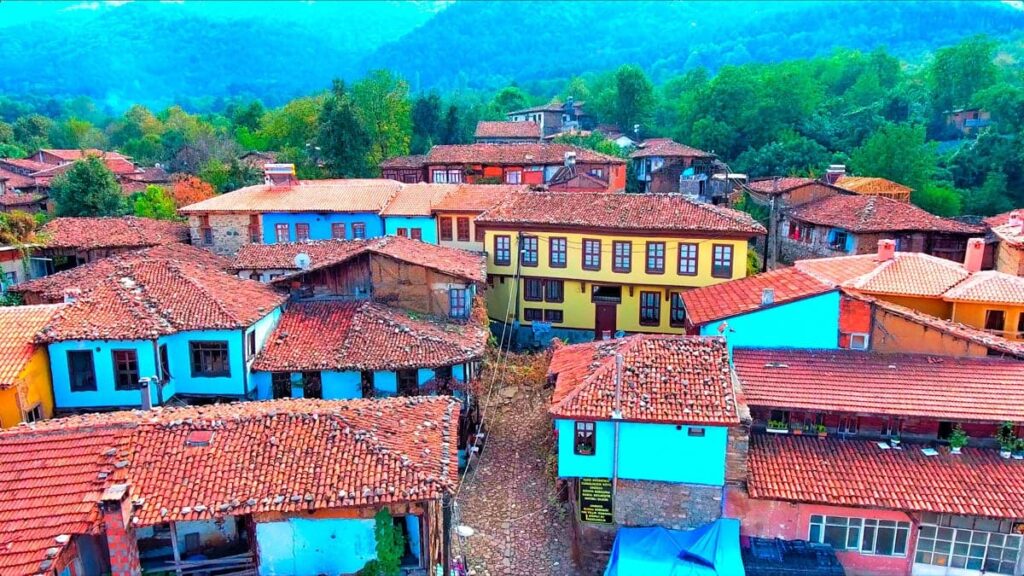
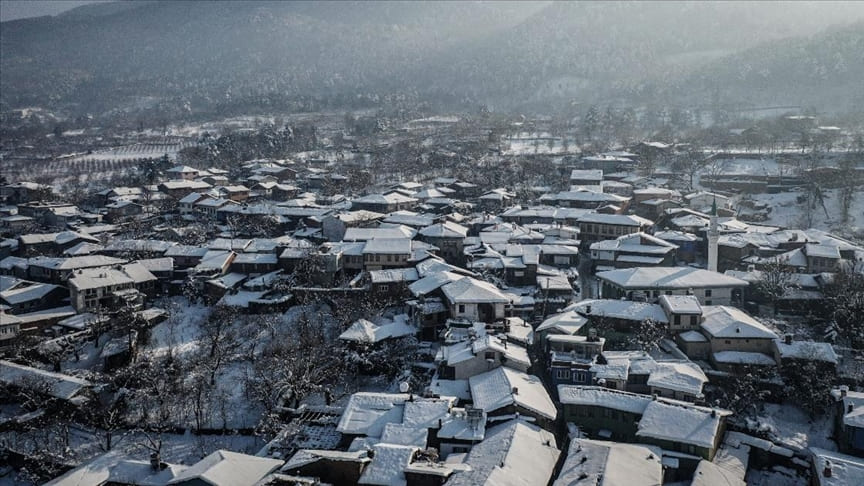
Cumalıkızık isn’t “frozen in time”—it’s the rural half of UNESCO’s “Bursa and Cumalıkızık: The Birth of the Ottoman Empire” (inscribed 2014), a 14th-century waqf village whose slate-cobbled alleys and roughly 270 timber-and-stone houses still enact the social and spatial blueprint of the earliest Ottomans.
Table of Contents
Ottoman Roots: 700 Years of Heritage
Cumalıkızık began in the early 1300s when the Kızık clan, part of the Oghuz Turks, settled near Bursa as the Ottoman Empire emerged. The name “Cumalıkızık” comes from Cuma—Friday in Turkish—because villagers from nearby settlements gathered here for Friday prayers. Among the original Kızık villages, Cumalıkızık stands as the best preserved, keeping its original structure and spirit alive.
UNESCO added Cumalıkızık and Bursa to its World Heritage List in 2014, honoring the area as the birthplace of the Ottoman Empire. When you walk through the village, you don’t just see history — you feel it beneath your feet.
Architecture on Cobblestone Lanes
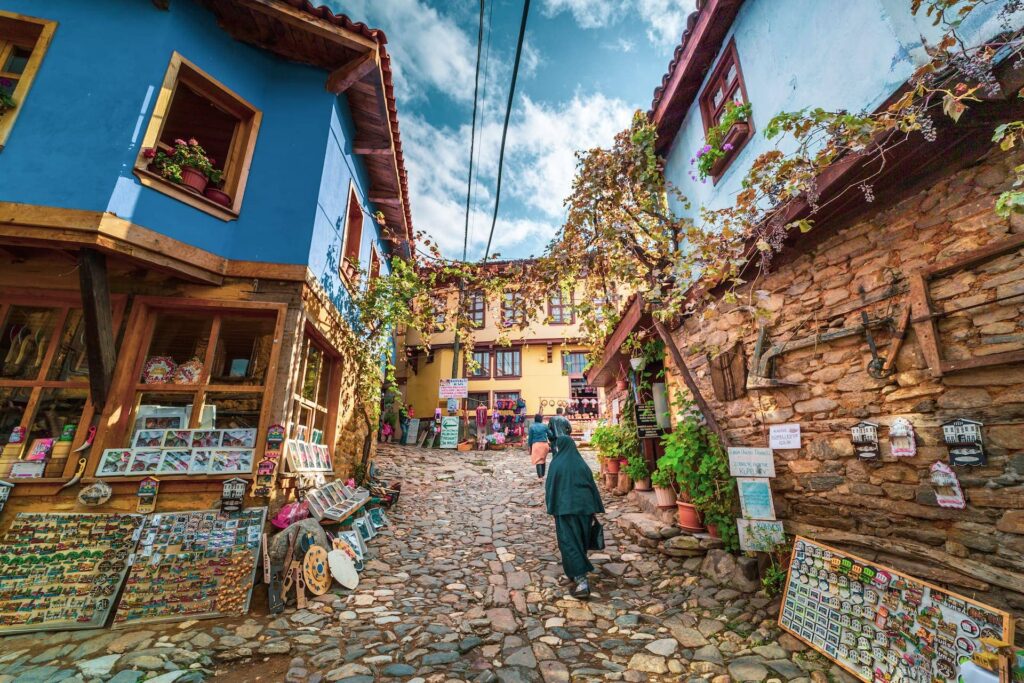
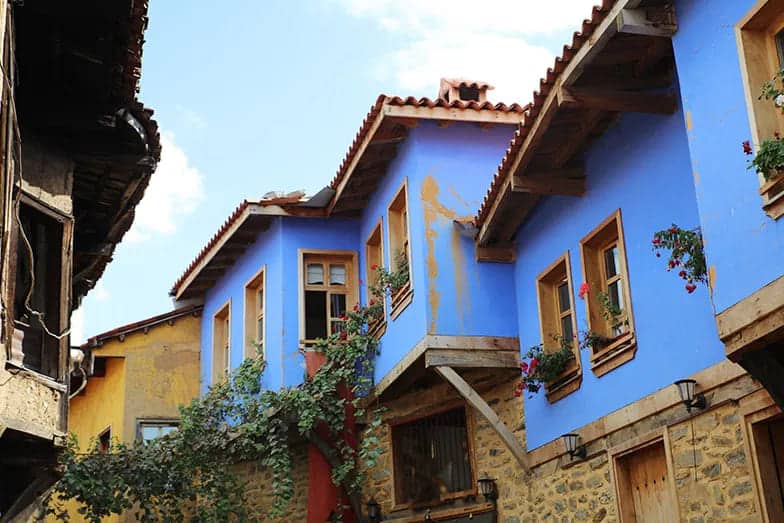
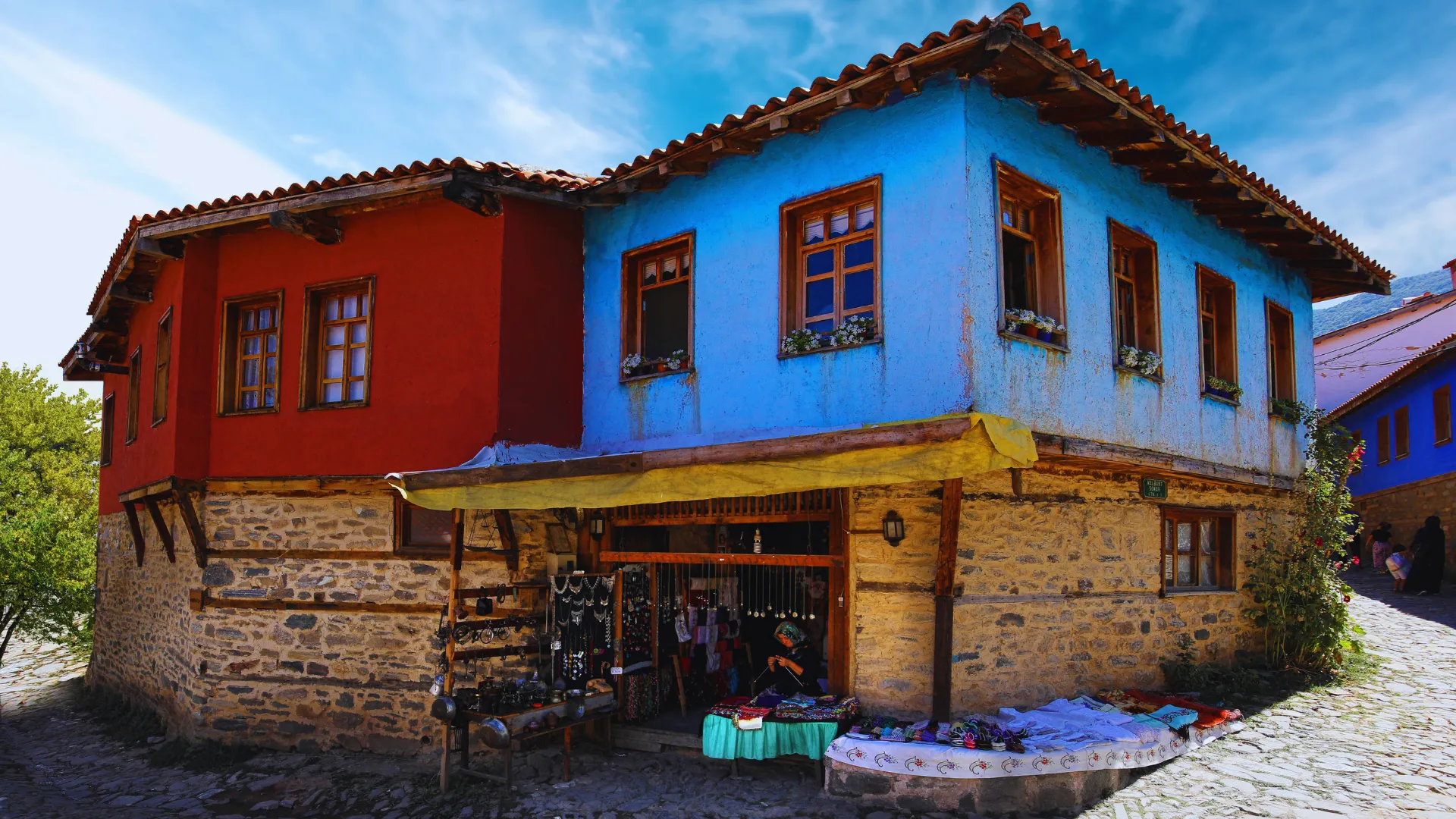
As you wander through Cumalıkızık’s narrow streets, Ottoman houses in soft blues, yellows, and earthy tones line the way. Builders crafted them with sturdy stone bases and wooden upper floors that jut over the cobbled paths.
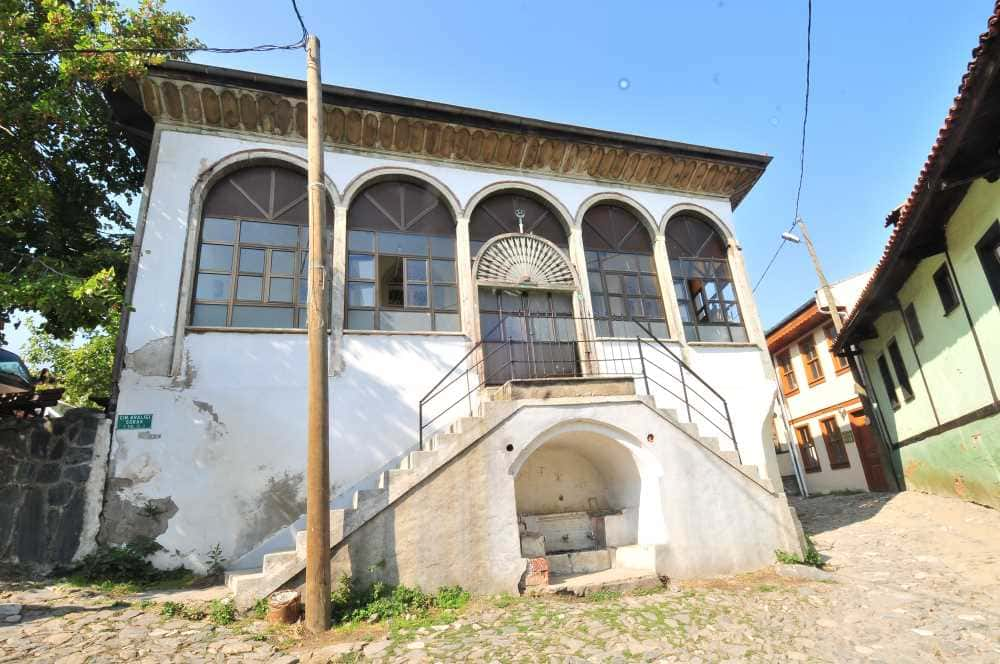
Wooden bay windows and lattice shutters create shadows that dance in the morning sun. The uneven lanes climb the hillside and twist unexpectedly, revealing secret courtyards, ivy-covered balconies, and stone fountains. Every turn connects you directly to the craftsmanship and rhythm of early Ottoman village life.
Village Atmosphere and Daily Life
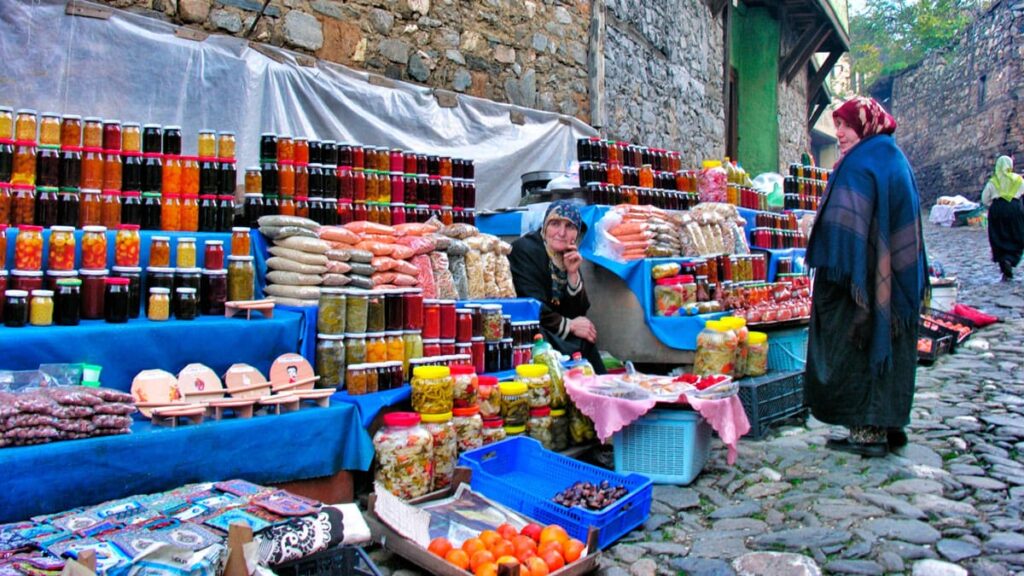
Life moves slowly in Cumalıkızık. About 700 villagers still live in nearly 270 historical homes, many of which their families have owned for generations. At the entrance, you’ll find a lively bazaar where locals sell jars of jam, grape molasses, handmade crafts, and embroidered textiles. They invite you to taste, chat, and share stories — the Turkish way of making strangers feel at home.
In the main square, villagers gather around the 14th-century Cumalıkızık Mosque for prayers and conversation. You can spot the old bread oven and the 15th-century hamam, both still standing as reminders of daily life centuries ago.
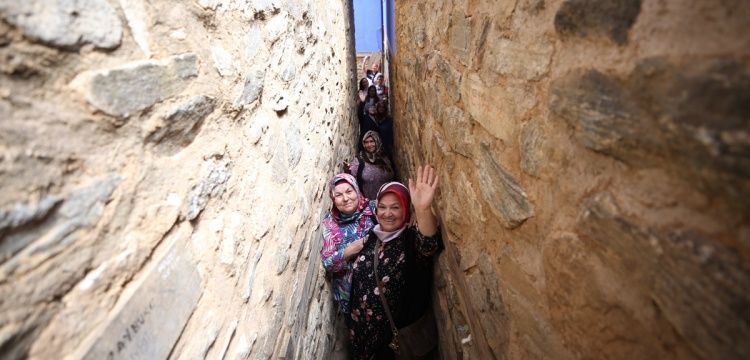
Don’t miss the narrow “Cin Aralığı,” or Passage of Jinni, a lane so tight only one person can pass at a time. Locals say their ancestors used it as an escape route during Ottoman wars. Walking through its stone walls connects you to the same stories that shaped the village long ago.
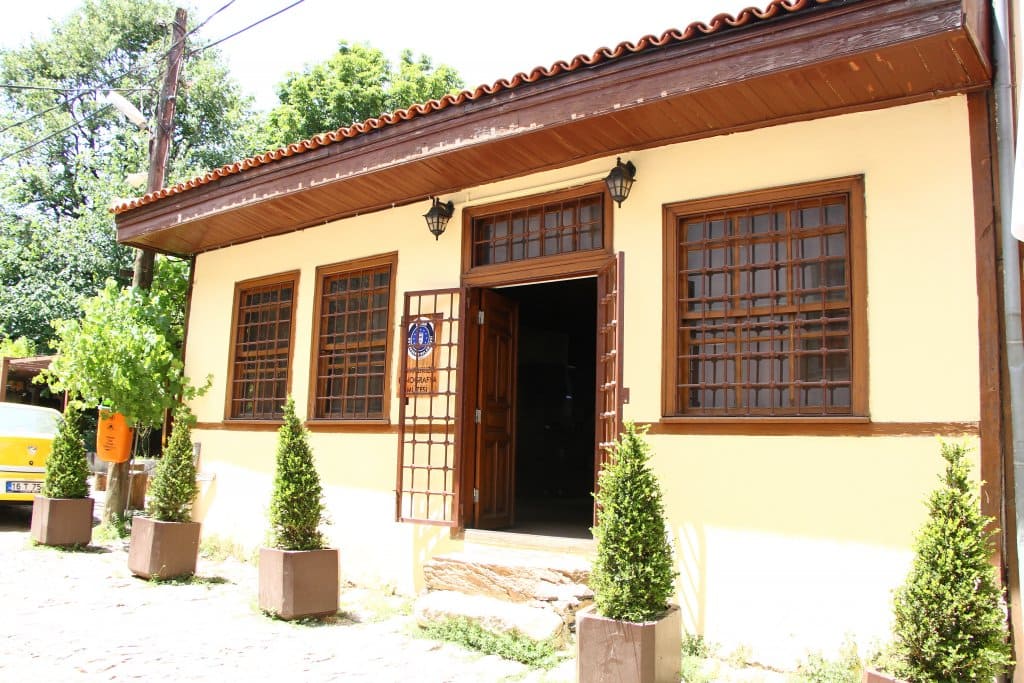
The Cumalıkızık Ethnography Museum sits inside the restored Küpeli House, displaying old tools, clothing, and household items from village life. One family has lived in the same home for 14 generations — proof that Cumalıkızık isn’t just a relic but a living, breathing community.
As you stroll through the alleys, you might hear chickens clucking, the call to prayer echoing, or laughter from neighbors sharing tea under the shade of ancient trees.
Tastes of Tradition: Village Breakfast and Local Delights
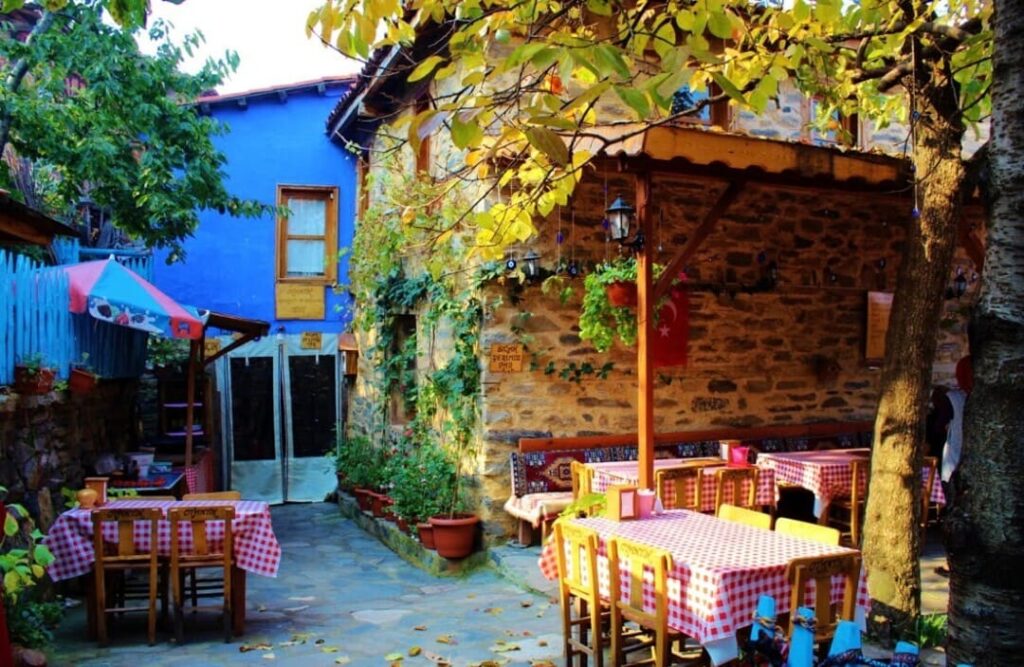
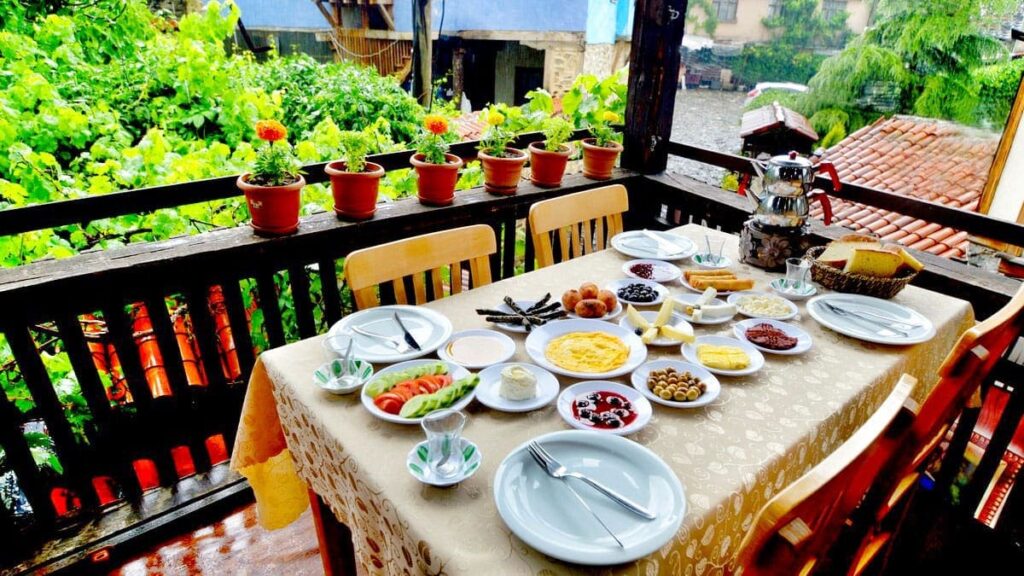
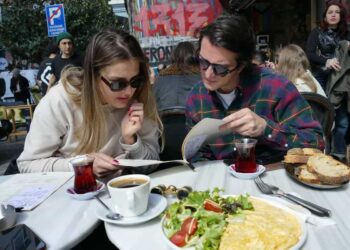
You can’t leave Cumalıkızık without enjoying a full village breakfast. Locals call it köy kahvaltısı (village breakfast), and they take it seriously. Many historic homes now serve as cozy cafés where mornings come alive with the smell of freshly baked bread and sizzling menemen (eggs with tomatoes and peppers). Tables overflow with local cheese, olives, honey, and berry jams made from the village’s own fruit.
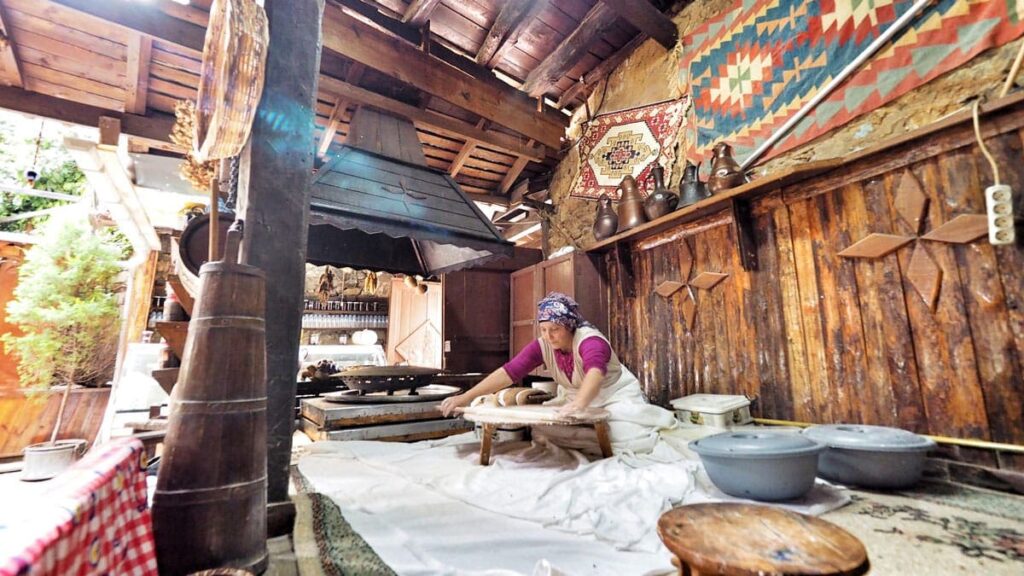
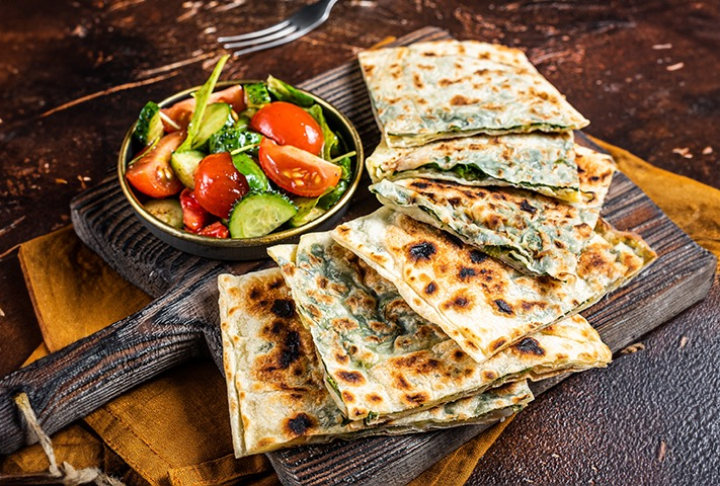
Cumalıkızık also tempts visitors with simple yet delicious dishes like gözleme (stuffed flatbread) and mantı (Turkish dumplings). Vendors sell tarhana soup and jars of homemade pekmez (grape molasses) to take home. Before you leave, grab a jar of jam or honey — and expect a few friendly offers to taste before you buy. That’s Turkish hospitality at its best.

What Awaits You in Cumalıkızık
Cumalıkızık isn’t a checklist; it’s a morning that starts with a köy kahvaltısı (village breakfast) in a stone courtyard—hot gözleme flipped on the saç (flat pan), tahin-pekmez (tahini and grape molasses) swirled on warm bazlama (flat bread), a jar of ahududu (raspberry) jam handed over by the teyze who made it.
Step into lanes lined with hımış (timber-and-mudbrick) houses and cumbalı bay windows; brush past herb bundles drying on doorways and follow the splash of a courtyard şadırvan (fountain) to the village square.
By late morning, roosters answer the call to prayer from hidden courtyards, and the shade under a plane tree turns into an open-air tea room. Order a small glass of çay (tea), watch villagers haggle over walnuts and seasonal greens, and—if it’s raspberry season—follow the pink fingerprints up the lane to a stall where breakfast never really ends.
Duck into the Cumalıkızık Köy Müzesi (the village museum) to see everyday tools—from olive presses to wooden dough troughs—that explain why kitchens still smell of wood smoke.
Then squeeze through Cin Aralığı, the famously narrow passage (barely a shoulder’s width) where damp stone cools the summer heat and kids race ahead laughing. Back outside, you’ll meet a beekeeper selling chestnut honey, a baker sliding simit from a blackened oven, and an uncle offering sour cherry or mulberry sherbet in repurposed soda bottles.
Whether you come to photograph its colorful houses, savor a traditional breakfast, or simply escape the rush of city life, Cumalıkızık promises an experience full of warmth and authenticity — a true taste of Turkey’s living history.
Questions about Cumalıkızık
Let’s answer some questions.
Are there any annual festivals or cultural events in Cumalıkızık?
Yes—Cumalıkızık has a signature annual event:
Cumalıkızık Raspberry Festival (Ahududu Festivali) — typically late June to early July. Run by Yıldırım Municipality. Expect a village parade, folk-dance groups (often international), Karagöz–Hacivat shows, concerts, raspberry-picking and tasting, best-raspberry contests, and stalls selling local products. Some years it’s billed as “International,” and a few editions have been skipped; dates shift annually.
When to go (quick box)
Best window: last 2 weeks of June or first week of July
Peak time: late morning to mid-afternoon (parade and stage shows)
What to bring: hat, sunscreen, cash for stalls, appetite for gözleme & pekmez
Getting there from Bursa center: taxi or minibus to Cumalıkızık (Yıldırım district); arrive before 10:00 to beat crowds
How do you get to Cumalıkızık?
There are several modes of transport.
From Bursa city center
Taxi / ride-hail: 15–25 minutes from Kent Meydanı / Heykel area (longer with traffic). Easiest door-to-door.
Minibus (“dolmuş”): Frequent services from Yıldırım-side hubs toward Cumalıkızık; ask for the Cumalıkızık line and hop off at the village entrance.
Self-drive: Follow “Ankara Yolu / Yıldırım” east; brown “Cumalıkızık” signs lead uphill to the main car park just below the village (private vehicles aren’t allowed into the historic core).
From Istanbul (same-day doable)
Drive: 2–2.5 hrs via the Osmangazi Bridge (O-5). Enter Bursa on the Ankara Road (D200/E90), then follow signs to Yıldırım → Cumalıkızık.
Ferry + bus/taxi: Fast ferry/sea-bus to Mudanya, then public bus or taxi to Bursa center (Şehreküstü/Kent Meydanı), and taxi/minibus up to the village.
Intercity coach: Coach to Bursa Otogarı, then city bus or taxi into the center, and taxi/minibus to Cumalıkızık.
Practical tips
Arrive early (before 10:00) on weekends/holidays—streets get crowded.
Footwear: cobblestones + slopes; wear grippy shoes.
Parking: use the lower car parks; it’s a short uphill walk to the main square.
Accessibility: surfaces are uneven; a helper is recommended for wheelchairs.
Best combo: pair with a Bursa Old Town walk (Ulu Camii, Koza Han) or a Cumalıkızık village breakfast before exploring.
Get in touch with us!
Ready to explore Cumalıkızık for yourself? Join The Other Tour for an experience that goes beyond the ordinary. Wander 700-year-old cobblestone streets, meet welcoming locals, and discover how Turkey’s rural life still thrives in this timeless Ottoman village.
We love helping travelers dive deeper into real Turkish culture — the people, the food, the stories.
📩 Get in touch today to plan your visit to Cumalıkızık or to build your own custom journey through Turkey’s most authentic corners.