Istanbul eats on the move. Between the ferries, the market stalls and the century-old bakeries, the city has turned street food into something close to a discipline — a rotating menu of dishes tied to specific docks, specific neighborhoods, even specific hours of the day. This is a walk through five of the essentials, from a floating fish sandwich to a Bosphorus village yogurt with roots reaching back to the Ottoman era.
Balık Ekmek: Istanbul’s Dockside Ritual
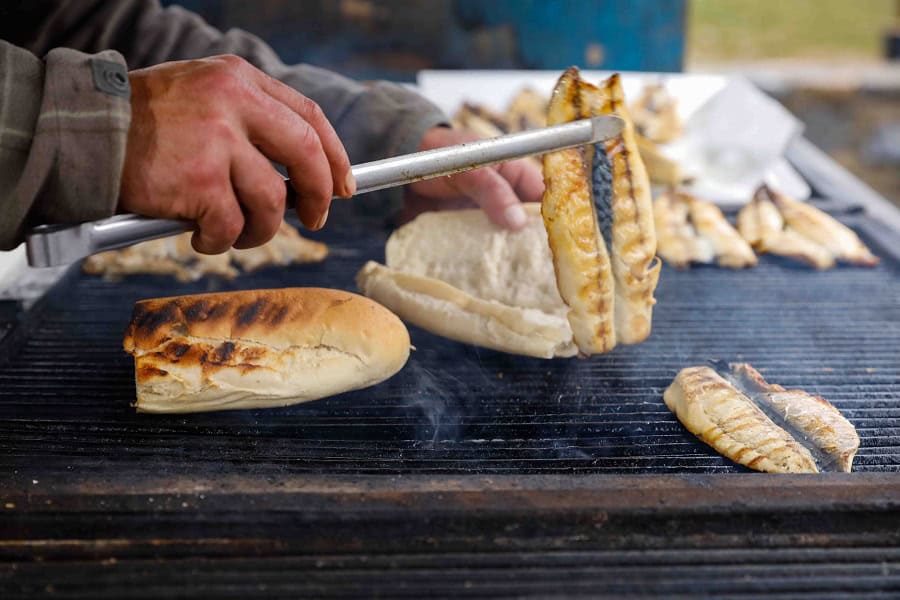
At the docks of Eminönü and Karaköy, boats bob against the pier with grills built straight into their decks, frying mackerel that’s landed the same morning. The fish goes into fresh bread with onion, lemon and a scattering of salt — no sauce, no garnish, nothing to distract from the char and the brine.
It’s eaten standing, usually within a few feet of the water, and it’s as close as Istanbul gets to a civic dish: cheap, fast, and identical whether it’s sold to a dockworker or a tourist stumbling off the tram.
Midye, Kokoreç & the Street Cart
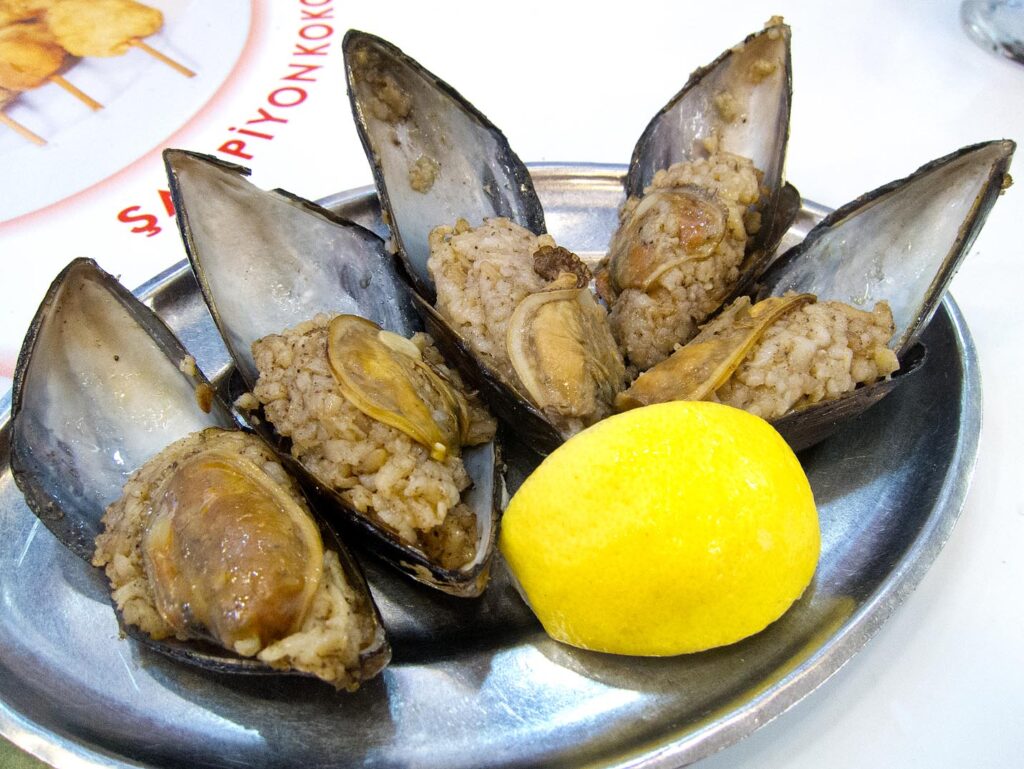
A few streets back from the water, the carts take over. Midye — mussels stuffed with spiced rice — are sold by the piece, cracked open and eaten with a squeeze of lemon straight off a tray balanced on a vendor’s palm.
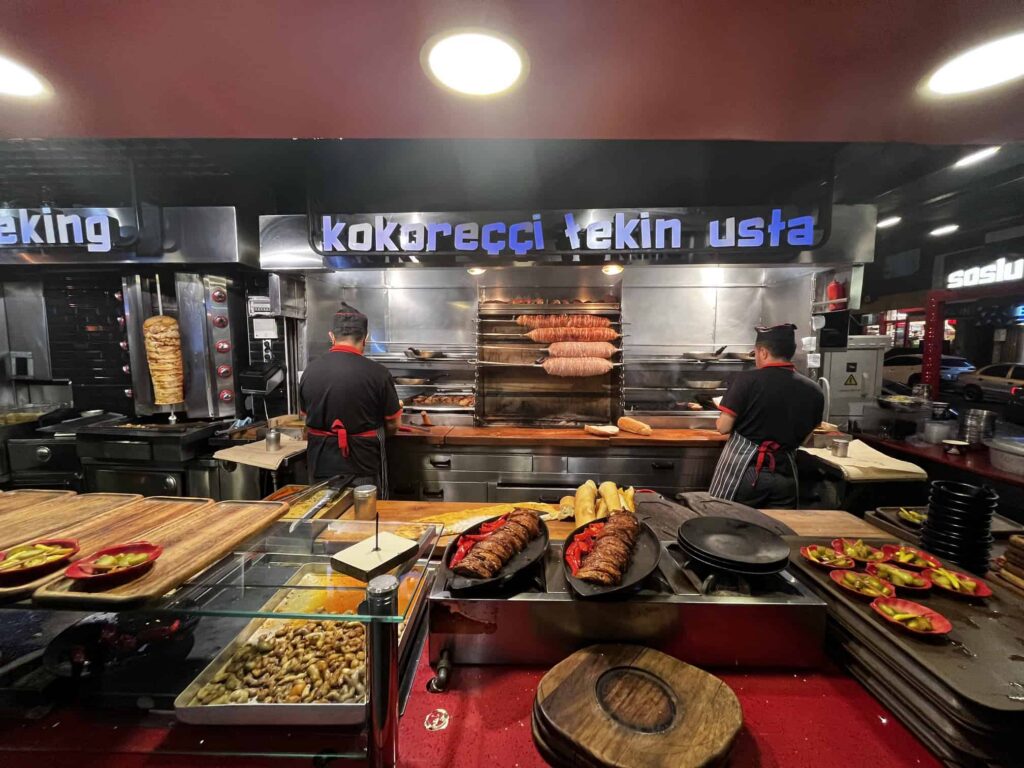
Kokoreç, seasoned lamb intestines grilled over charcoal and stuffed into bread, runs on the opposite schedule: it belongs to the late hours, after the bars close and before the first ferries start their morning routes. Between the two, Istanbul‘s late-night street food economy rarely goes quiet.
Kanlıca’s Legendary Bosphorus Yogurt
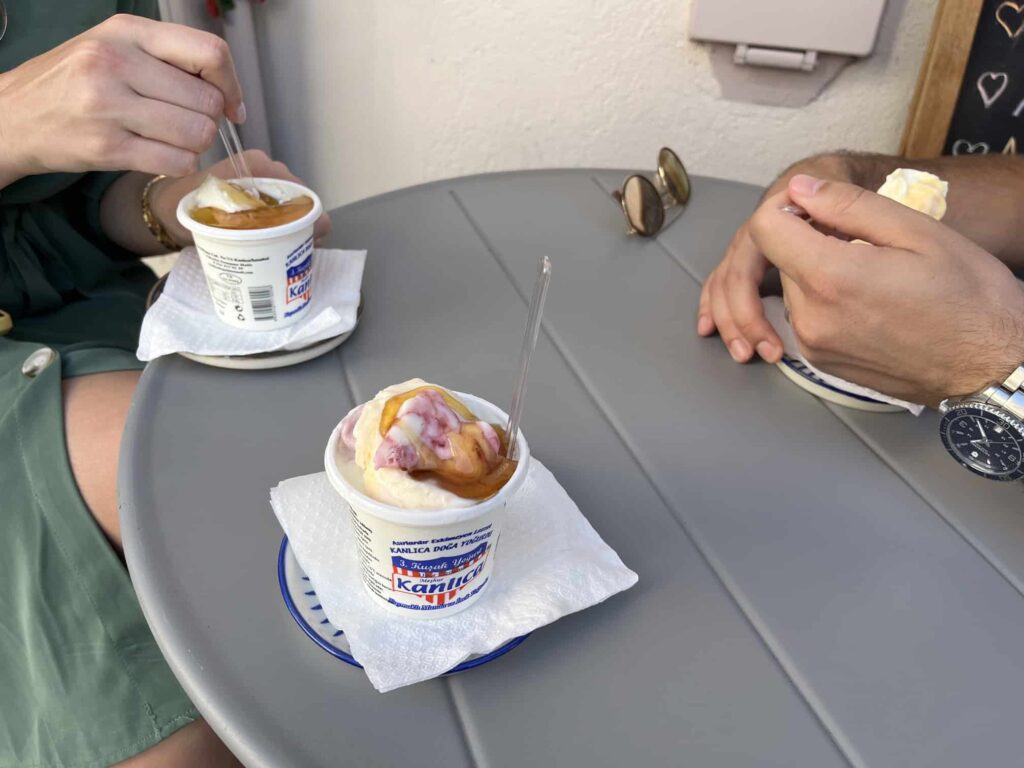
Upriver on the Asian shore, the village of Kanlıca has built its entire identity around a single dish. The tradition dates to 1893, when a Balkan immigrant named Poyraz İbrahim Ağa, displaced by the Ottoman-Russian War, settled in the village and began producing a thick yogurt from a blend of cow’s and sheep’s milk.
Unlike most Turkish yogurt, which accompanies savory food, Kanlıca‘s version is a dessert — dense enough to hold its shape, served in small glass bowls and topped with a heavy dusting of powdered sugar. Bosphorus ferries once made unofficial stops here just so passengers could buy a bowl before continuing on, and more than a century later, Istanbulites still use the village’s name and the dessert’s name interchangeably.
Spice Bazaar & the Coffee Ritual

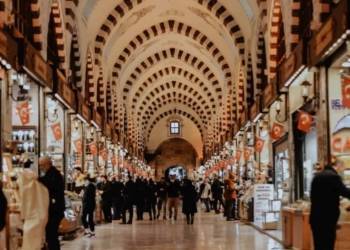
Inland from the water, the Spice Bazaar stacks cinnamon, sumac and dried peppers in pyramids under a seventeenth-century roof, and the eateries around it keep pace with equally old rituals. Turkish coffee here is brewed slowly in a copper pot, unfiltered, and served with the grounds settled at the bottom of the cup — a preparation that hasn’t changed much since it defined the city’s coffeehouses centuries ago.
Kadıköy’s Market for the Fearless
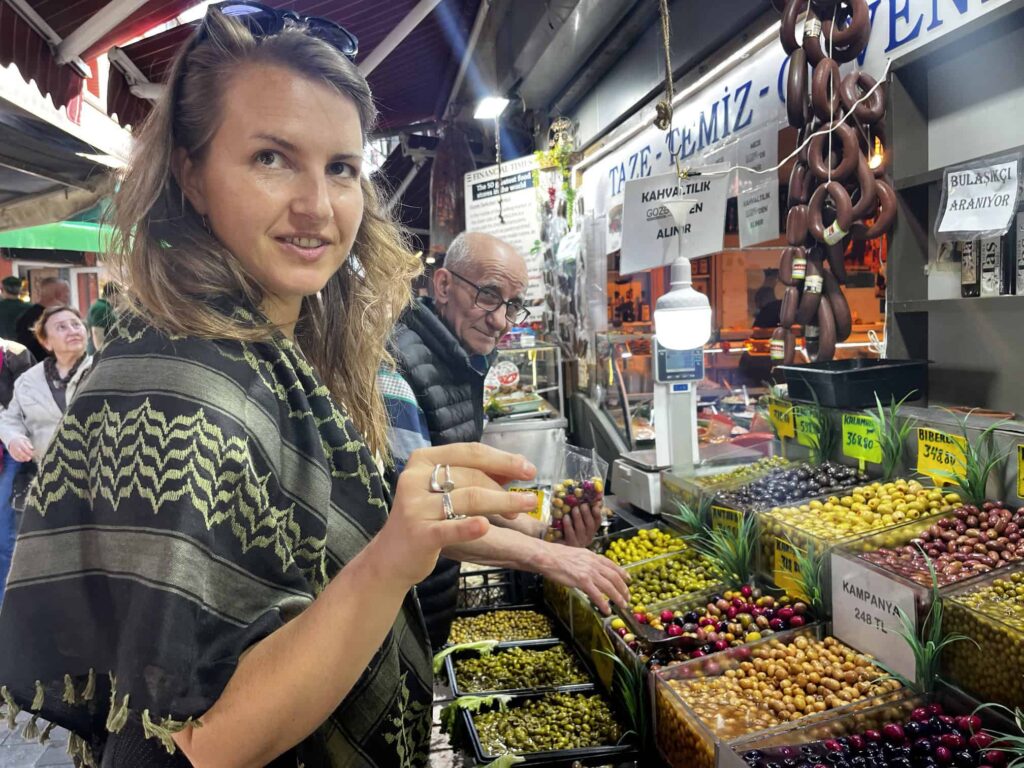
Across the water, the market streets of Kadıköy anchor Istanbul’s Asian side and push street food into more demanding territory. Stalls sell foraged herbs and fresh cheese beside butchers offering lamb’s head, tongue and other cuts that rarely make it onto a tourist menu.
It’s not food built for comfort, but for locals who grew up eating this way, and it captures a side of Istanbul’s gastronomy that the postcards leave out.
Istanbul’s street food doesn’t sit still long enough to be summarized in a single dish — it moves by dock, by neighborhood, by hour. For visitors who’d rather trace the route with a local than guess at it alone, The Other Tour‘s Istanbul food tours follow much of the same ground covered here.