The Story Unfolds
Unlike many archaeological sites set apart from their surroundings, Phaselis remains deeply connected to its landscape. Ancient streets stretch toward quiet coves, ruined walls rest beneath tall pines, and the sea is always within sight or sound. Shaped by its strategic ports yet defined today by its calm setting, the city offers a rare experience where history unfolds within nature rather than apart from it.
Phaselis Through the Ages
Founded by Rhodian settlers in the 7th century BCE, Phaselis quickly rose to prominence as a major commercial center on the Lycian coast. Its three naturally protected harbors gave the city strategic control over maritime trade routes linking Anatolia with the Aegean and the eastern Mediterranean, establishing it as both an economic hub and a key regional power.
Over the centuries, Phaselis passed through Lycian, Persian, Hellenistic, Roman, and Byzantine influence, each era leaving its mark on the city’s urban fabric. From periods of expansion and architectural growth to gradual decline as trade routes shifted and harbors silted, its history reflects the broader political and economic transformations of the eastern Mediterranean world.
Lycian and Hellenistic Growth
During the Lycian and later Hellenistic periods, Phaselis prospered through commerce and cultural exchange. Its location made it a crossroads of ideas, goods, and architectural influence, strengthening its regional prominence.
Persian Rule and Alexander’s Arrival
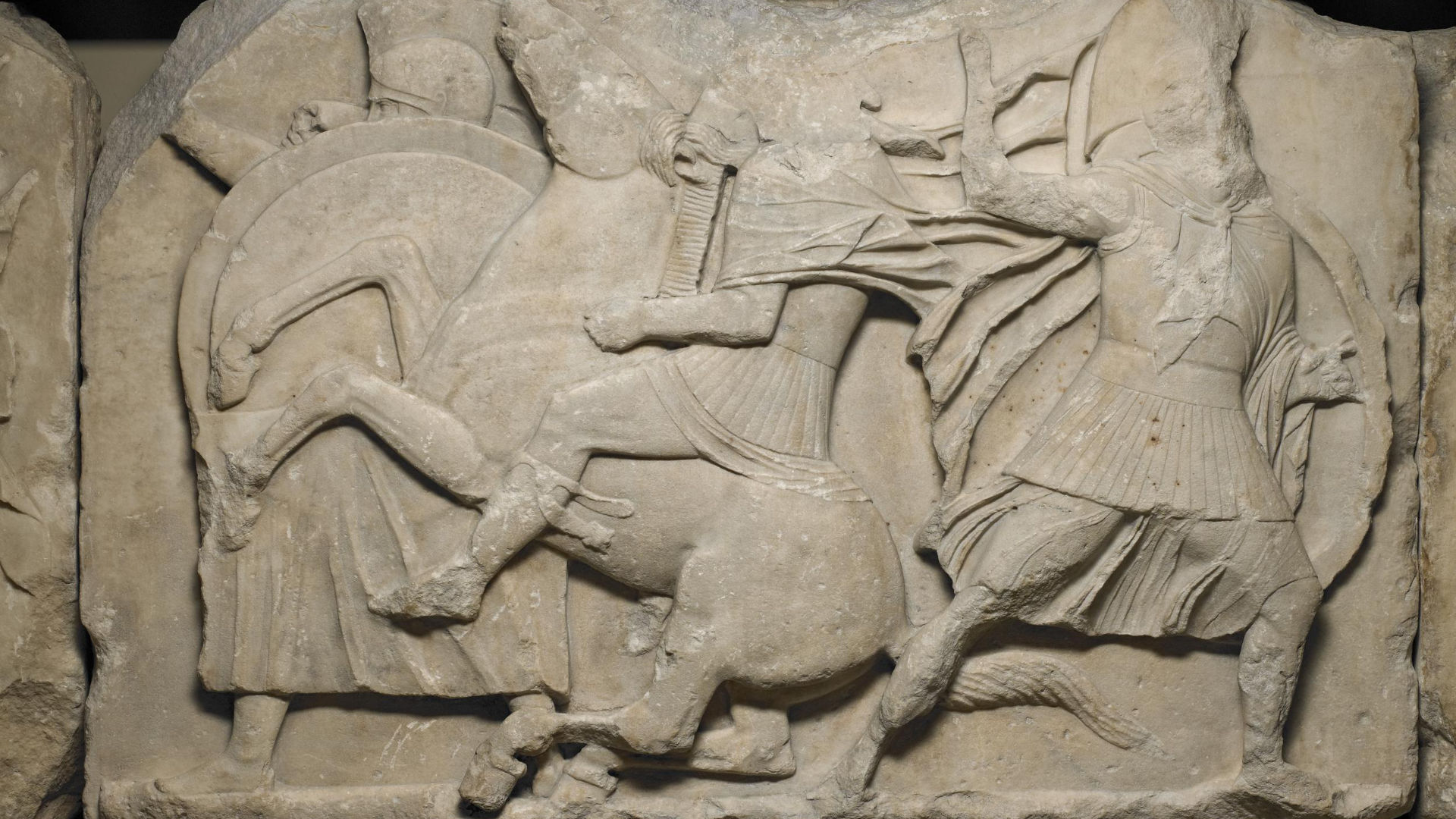
Under Persian domination, the city retained its strategic value. In 333 BCE, Alexander the Great entered Phaselis during his campaign through Anatolia, further underscoring the city’s importance along Mediterranean trade corridors.
The Roman Golden Age
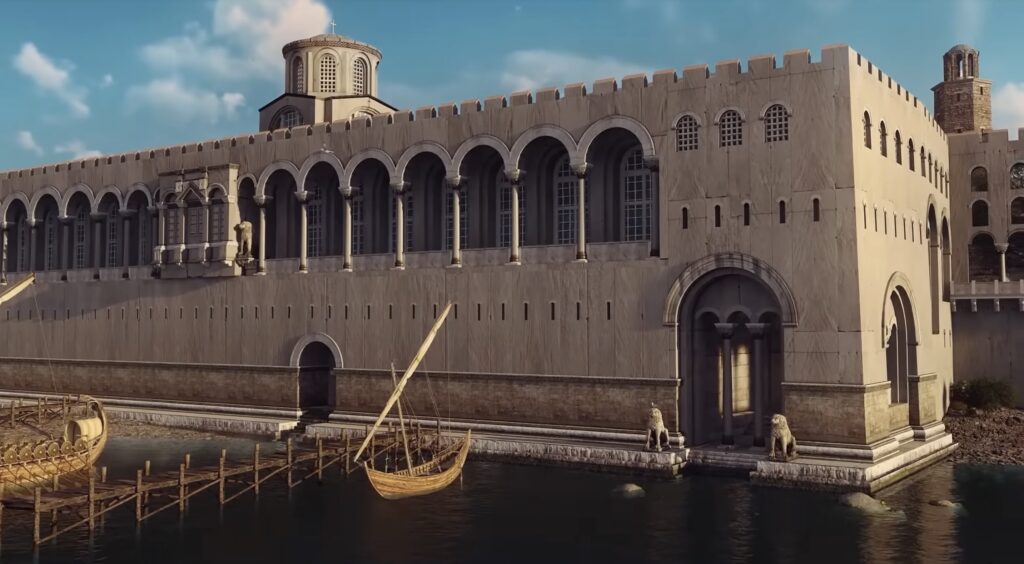
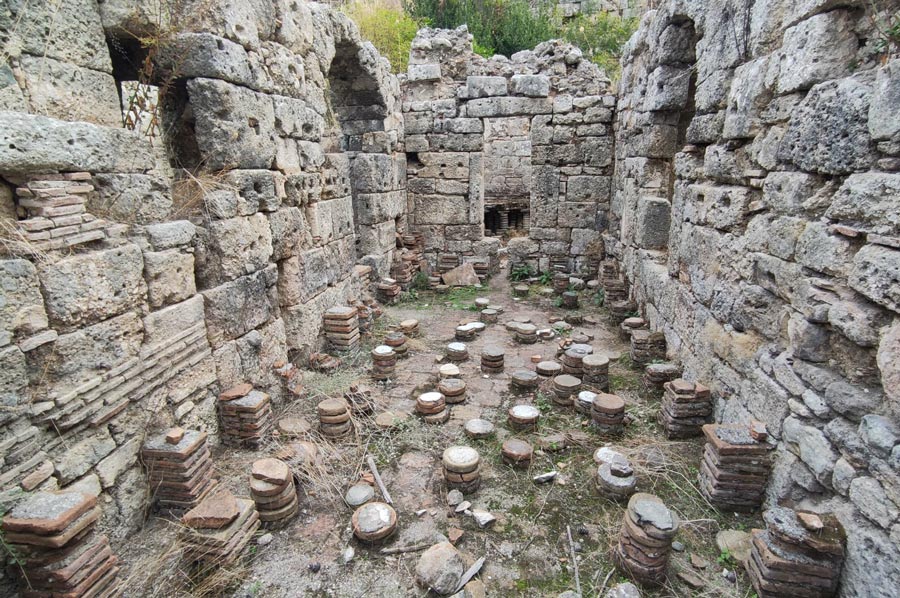
Phaselis likely reached its economic peak under Rome during the Pax Romana, especially in the 1st and 2nd centuries CE, when safer sea-lanes and steadier regional commerce helped port cities thrive. That prosperity reshaped the urban landscape: monumental baths, a grand agora, colonnaded streets, and other civic buildings gave the city a more formal, “imperial” layout—many of these remains are still visible on site today.
One telling marker of Phaselis’ Roman-era stature is the tradition linking the harbor-side monumental gateway to Emperor Hadrian, who reigned from 117 CE to 138 CE—a period when cities across the eastern Mediterranean often invested in prestige architecture and public amenities to display loyalty and attract imperial favor.
Byzantine Decline
By Late Antiquity, Phaselis was already losing momentum as regional commerce gravitated toward larger, better-connected ports, and its once-advantageous harbors began to suffer from gradual silting. In the 7th century, Arab sea raids further disrupted coastal life and maritime trade, accelerating the city’s downturn.
Yet Phaselis did not vanish overnight: under the protection of the Byzantine navy—especially from the 8th century onward, when the Cibyrrhaeot naval theme helped secure these waters—it likely experienced brief periods of stabilization.
Even so, as shipping routes continued to shift and harbor conditions worsened, maritime activity dwindled, and with it the city’s wider influence. By the 11th century the settlement was largely impoverished, and by the early 13th century it was effectively abandoned.
Phaselis’ Unique Coastal Setting
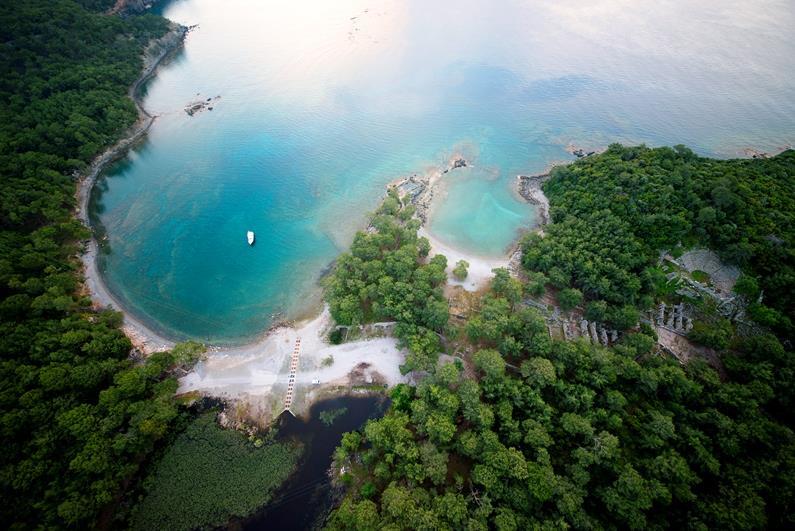
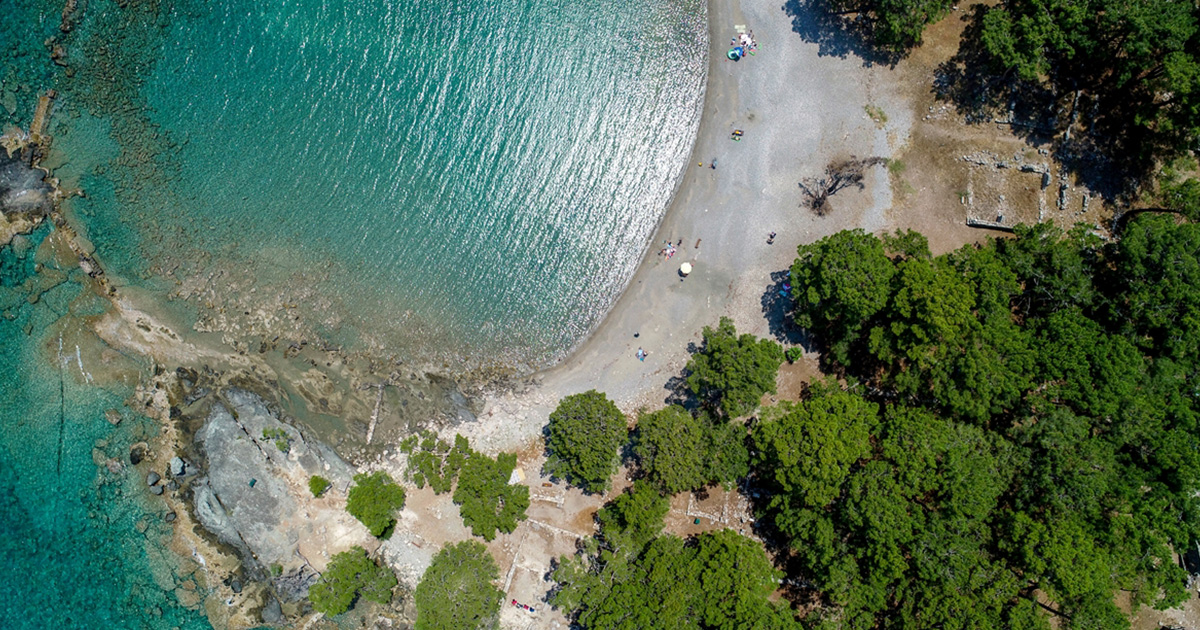
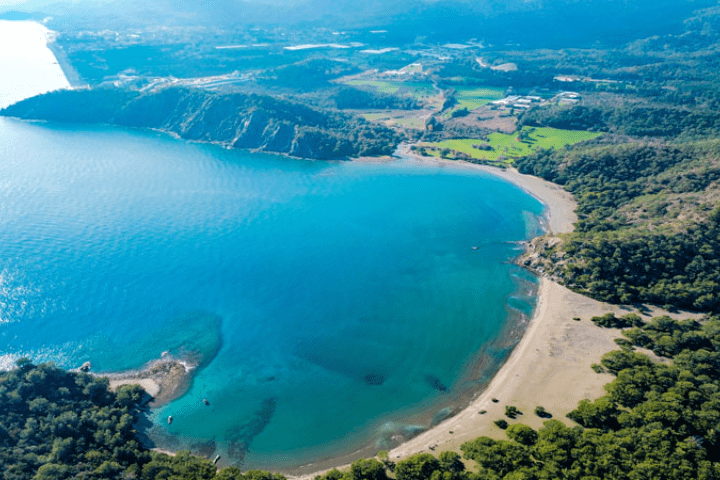
Phaselis is located between Kemer and Tekirova, framed by the dramatic slopes of Mount Tahtalı (ancient Olympos). Its position along the Mediterranean coast shaped the city’s identity as a maritime hub, with its entire urban design centered around three natural bays that defined its economy, defense, and daily life.
North Harbor
The North Harbor is the oldest and most sheltered of the three. Protected from prevailing winds, it provided safe anchorage for ships and played a crucial role in the city’s early development as a trading port.
Central Harbor
The Central Harbor once functioned as the commercial core of Phaselis. Located closest to the main urban area, it served as the primary point of exchange where merchants, goods, and travelers converged, reinforcing the city’s economic strength.
South Harbor
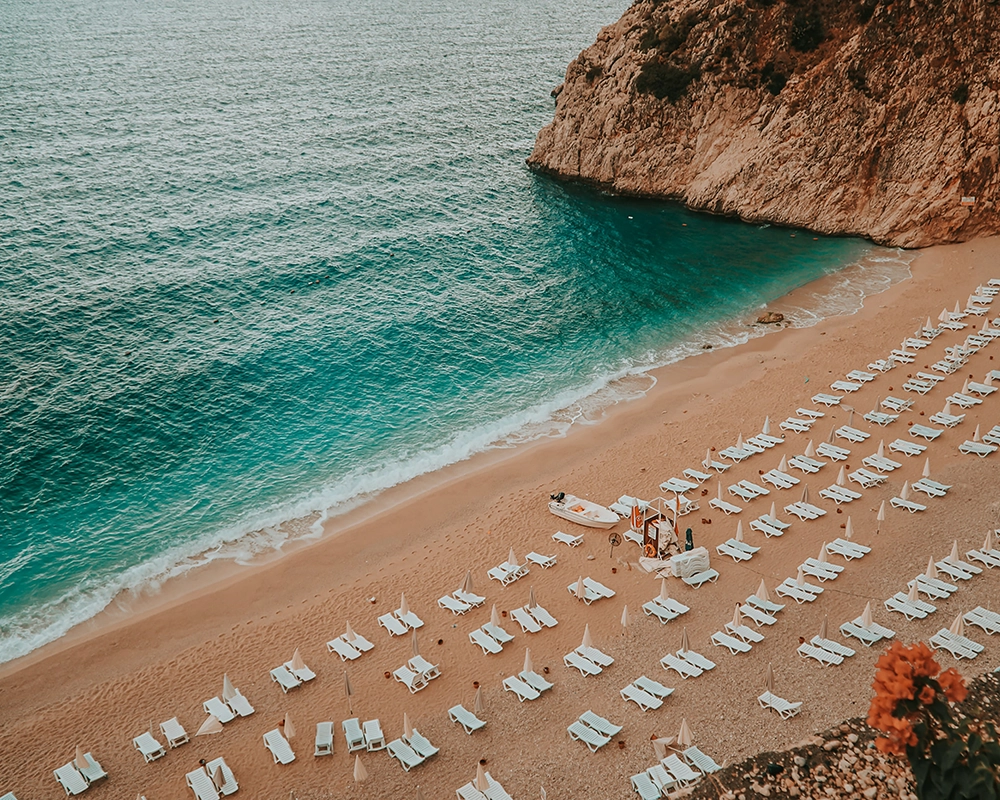
The South Harbor is the most open and scenic bay. While it once supported maritime activity, today it is known for its calm waters and natural beauty, making it a favored spot for visitors seeking a combination of history and coastal relaxation.
Legends and Legacy of Phaselis
Although not as steeped in myth as nearby Olympos, Phaselis appears in ancient sources as a strategically valued maritime hub, frequented by rulers, generals, and seafarers navigating the eastern Mediterranean. Its legacy is rooted less in dramatic legend and more in its enduring relationship with the sea.
A Harbor of Refuge
For centuries, sailors navigating the Lycian coast relied on Phaselis’ naturally protected bays as safe anchorage during unpredictable Mediterranean storms. Local tradition portrays the city as a sanctuary shaped by geography — where pine-covered slopes and curved shorelines created a natural shield against wind and waves. This practical function gradually evolved into a symbolic identity: a place of protection and pause along demanding sea routes.
Echoes in Ancient Sources
Classical writers mention Phaselis in a way that feels almost refreshingly practical: they don’t come to it looking for heroes and monsters, but for coastlines, harbors, and the kind of geography that shapes history.
Strabo, the great geographer of the early Roman era, folds Phaselis into his careful mapping of southern Anatolia. In his hands, the city isn’t a mythic stage—it’s a real point on the Mediterranean’s stitched edge, positioned where Lycia shades into Pamphylia.
The implication is clear: Phaselis matters because it sits in the right place. A good harbor isn’t just scenery; it’s access, mobility, and influence. When Strabo lists it, he’s recording a city that belongs to the working infrastructure of the sea—ports that merchants rely on, coastlines commanders measure, and routes that tie regions together.
Then there’s the Phaselis that enters the narrative of power. Quintus Curtius Rufus, writing a history of Alexander, includes Phaselis not as an exotic detour but as part of the campaign’s logic: a coastal city worth entering, a place whose allegiance and shoreline mattered in a march through Anatolia. Rufus’ Phaselis is a reminder that ancient conquest wasn’t only fought on battlefields—it was also negotiated in cities like this, where harbors offered shelter, supplies, and a gateway to the next stretch of coast.
Put side by side, Strabo and Rufus give Phaselis a distinctive kind of legacy: not a city famous for folklore, but a city remembered for function. It’s the sort of place that appears in the historical record because it helped shape outcomes—because empires and travelers alike needed what it had: water, anchorage, access, and position. In Phaselis, the story isn’t about myth. It’s about the quiet power of geography, and how a well-placed harbor can keep a city present in history long after legends fade.
Key Attractions Inside Phaselis
Exploring Phaselis means walking through a landscape where architecture and coastline exist side by side. The city’s preserved ruins, framed by pine forests and turquoise bays, offer insight into its commercial strength, civic organization, and daily life. From monumental avenues to quiet harbors, each structure contributes to a setting where history unfolds within nature rather than apart from it.
The Colonnaded Street
The Colonnaded Street forms the monumental spine of the city, stretching between the harbors and linking its most important civic spaces. Once lined with shops, marketplaces, and public buildings, this grand avenue illustrates the commercial vitality and urban planning of Roman Phaselis.
Roman Theatre
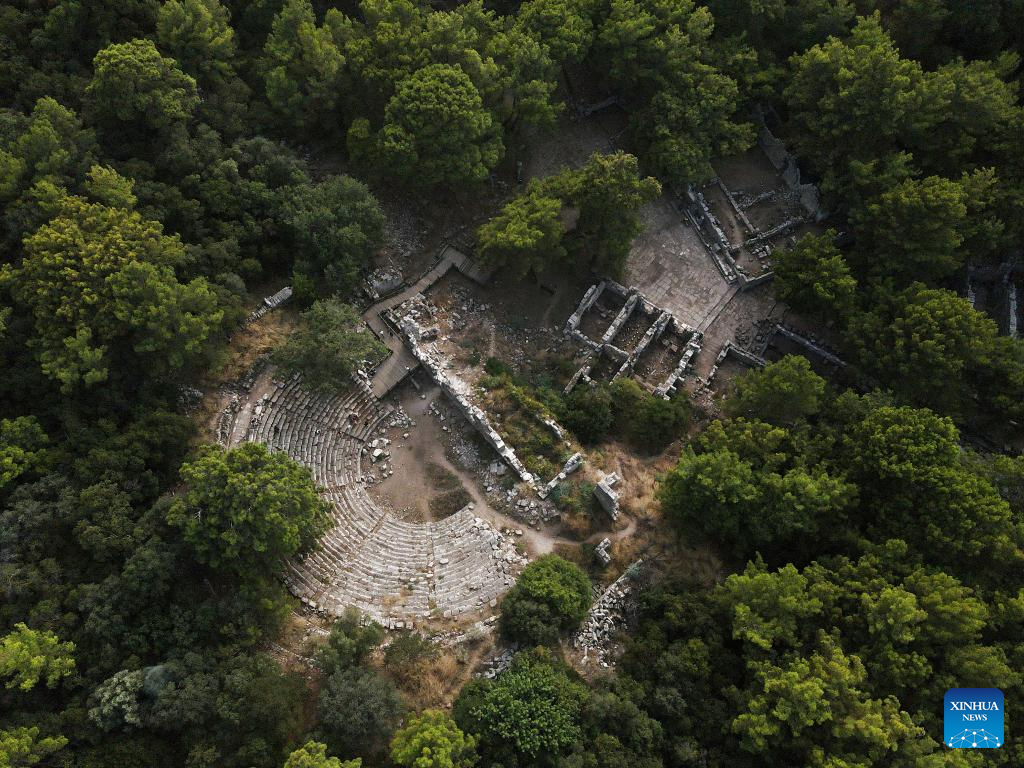
Built into the hillside, the Roman Theatre offers a quieter and more intimate atmosphere than larger Anatolian theatres. Framed by forest and overlooking the ancient city, it reflects both cultural life and architectural adaptation to the natural landscape at roughly 1,500–2,000 spectators.
Baths and Agoras
The remains of baths and agoras reveal the structured daily life of the city’s inhabitants. These public spaces served as centers of social interaction, trade, and civic activity, underscoring the prosperity Phaselis once enjoyed thanks to its strategic location as a commercial hub in the Eastern Mediterranean near Levant, Mesopotamia and Persia.
Aqueduct and Hadrianic Structures
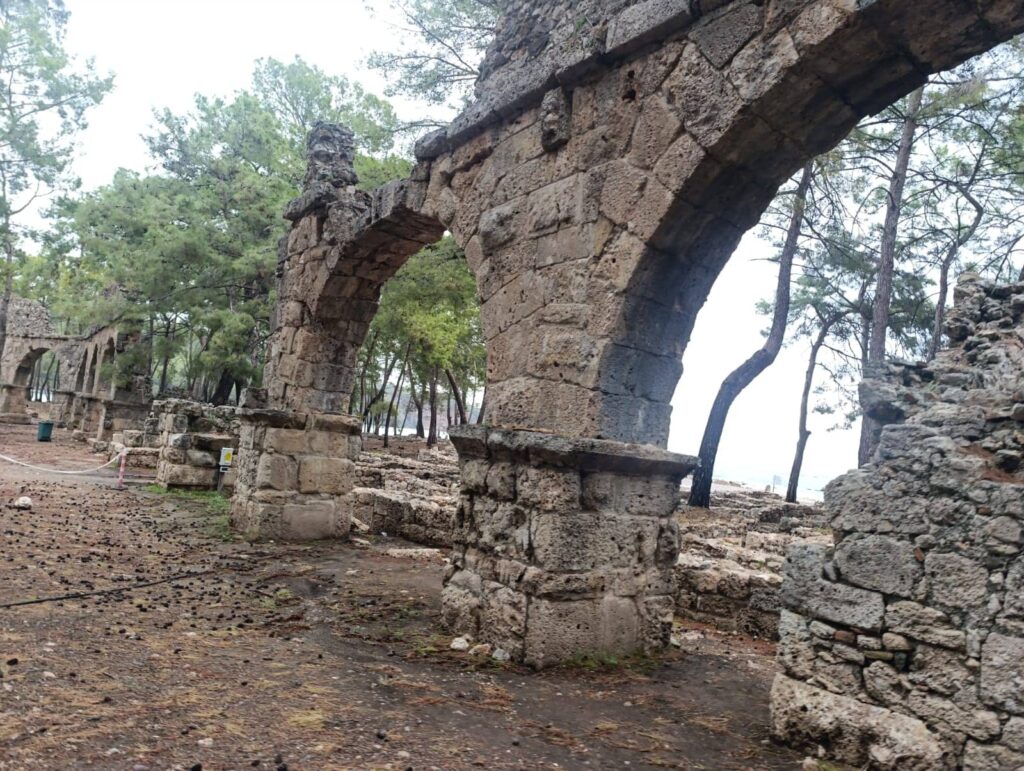
Fragments of the aqueduct and buildings associated with the reign of Emperor Hadrian (76-138 CE) demonstrate advanced Roman engineering and imperial influence. These constructions highlight the infrastructural sophistication that sustained the city during its peak.
The Three Harbors


/filters:format(webp)/post/phaselis-1-230118-093647-0560.jpg)