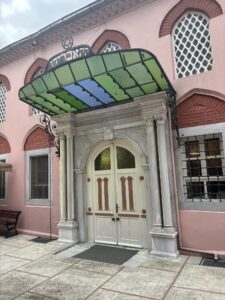

Tucked away in the colorful, historic district of Balat, the Ahrida Synagogue is one of Istanbul’s oldest and most significant Jewish landmarks. Though its modest exterior might escape notice, inside lies a rich story of migration, resilience, and cultural fusion spanning over 500 years.
Table of Contents
A Jewish Presence Long Before the Ottomans
Istanbul’s Jewish history is deeply rooted in antiquity, stretching back to the Roman and Byzantine eras. Long before the Ottoman conquest of 1453, Greek-speaking Romaniote Jews had already established vibrant, enduring communities within the region. However, life under Byzantine rule was often fraught with challenges and instability.
These early Jewish populations faced varying degrees of marginalization, legal restrictions, and occasional exile, frequently finding themselves forced to live in settlements strictly outside the main city walls.
The trajectory of this community shifted dramatically with the arrival of the Ottoman Empire. Following the conquest of Istanbul, the Jewish population entered a transformative era characterized by unprecedented tolerance and integration. Recognized under the millet system, they were granted a significant degree of religious and administrative autonomy.
The Famous Ship-Shaped Tevah
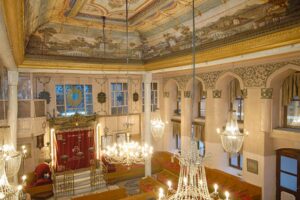
When you step inside the main prayer hall, you are immediately struck by its luminous atmosphere, created by high windows, intricately painted ceilings adorned with Ottoman floral motifs, and a distinct Baroque architectural style from the Tulip Period.
However, the true centerpiece of the Ahrida Synagogue is its remarkable tevah (the central reading platform). Unlike standard rectangular platforms, the Ahrida’s tevah is carved from varnished wood in the shape of a ship’s prow. This unique design is steeped in symbolism, representing two powerful narratives:
Noah’s Ark: A universal symbol of salvation, survival, and a covenant with the divine.
The Ottoman Caravels: A poignant tribute to the galleys dispatched by Sultan Bayezid II to rescue Sephardic Jews from the Iberian Peninsula and bring them safely to the welcoming shores of the Ottoman Empire.
Architectural Splendor and the Tulip Period
Beyond its renowned tevah, the Ahrida Synagogue is a masterpiece of historical layering. Built entirely of masonry stone and brick, the structure we see today owes much of its appearance to the Ottoman Baroque style.
In the late 17th century, a devastating fire tore through the building. An imperial decree (ferman) issued in 1694 authorized its reconstruction, which took place during the famous Tulip Period—an era of Ottoman history marked by a flourishing of arts, culture, and architecture.
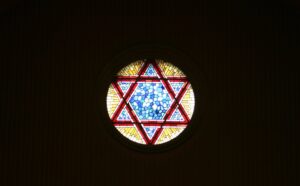
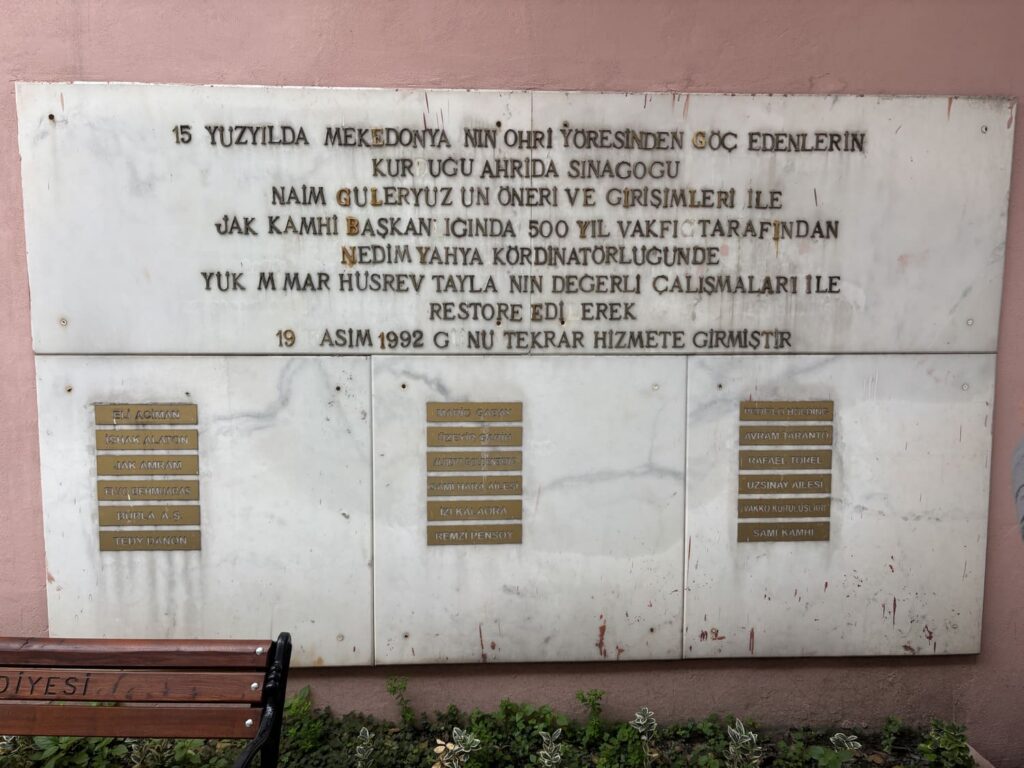
During the meticulous 1992 restoration led by architect Hüsrev Tayla and the Quincentennial Foundation, experts uncovered architectural layers from the 18th and 19th centuries, revealing how the building continuously adapted to the times. Today, the high-ceilinged prayer hall features intricate wooden balconies, vibrant stained glass windows, and delicate ceiling decorations that reflect this rich stylistic blend.
Practical Information
- Location: Kürkçü Çeşmesi Sok. No: 9, Balat, Fatih, Istanbul, Türkiye (google maps link)
- Dress Code: Modest clothing is required (shoulders and knees must be covered). Men are required to wear a head covering (kippah) out of respect for the active religious space.
- Opening/Closing Hours: By appointment only. Visits are generally scheduled on weekday mornings (typically Monday through Thursday, 10:00 AM – 2:00 PM). It is closed to visitors on Fridays, weekends, and Jewish holidays.
- Ticket: Free entrance. However, advance registration through the Chief Rabbinate or local Jewish community offices is mandatory due to strict security. You must bring a valid passport or official ID for entry, and a donation to the synagogue is highly encouraged.
Explore Our Synagogue Posts
Discover the history and architecture of the Ahrida Synagogue in Istanbul. Plan your visit to Balat’s oldest Jewish site.
Explore Istanbul’s Abrahamic faiths with your tour guide in one day—churches, synagogues, and mosques woven into a shared history.
Discover Sardis, the ancient capital of Lydia, and explore its historical ruins and cultural legacy in western Turkey.
Explore Istanbul’s synagogues, from historic gems to active houses of worship, and uncover the rich Jewish heritage across the city.
Explore sacred sites, Bosphorus gems, and Old City wonders on The Enlightening 3-Day Istanbul Tour with expert local guides.
Explore Fener, Istanbul’s gem of history and culture, with vibrant streets, iconic landmarks, and a rich blend of heritage.
Contact Us for a Guided Experience
Visiting the historic synagogues of Istanbul requires careful planning, as entry policies are strict and require advance permission from the local Jewish community. To ensure a seamless, enriching, and hassle-free visit to the Ahrida Synagogue and the vibrant streets of Balat, we highly recommend exploring the area with an expert local guide.
Our guided experiences handle all the necessary security clearances, scheduling, and logistical details so you can simply immerse yourself in the rich heritage of the city. Beyond just gaining access, our local experts provide deep historical context, bringing the stories of the Romaniote and Sephardic communities to life as you wander through the Golden Horn.
Let us help you navigate the essential protocols and provide an unforgettable exploration of this magnificent neighborhood!