Rising quietly from central Anatolia, Kaman-Kalehöyük is far more than an archaeological mound. It is a layered record of civilizations, discoveries that reshape history, and a rare cultural partnership between Turkey and Japan that continues to evolve with every excavation.
Table of Contents

A Timeless Archaeological Treasure
Set within the quiet plains of central Anatolia, Kaman-Kalehöyük stands as one of Turkey’s most quietly remarkable historical sites. Beneath its modest surface lies a continuous record of human settlement stretching back over five millennia.
Each excavation layer reveals traces of powerful civilizations, offering a rare and tangible connection to Anatolia’s deep and complex past. What sets this site apart is not only its historical depth but its ongoing story.
Excavations continue to uncover groundbreaking discoveries, from some of the earliest iron artifacts to ancient glasswork predating known timelines. Rather than a static monument, Kaman-Kalehöyük remains an active archaeological landscape where history is still being written with every passing season.
Layers Beneath the Surface
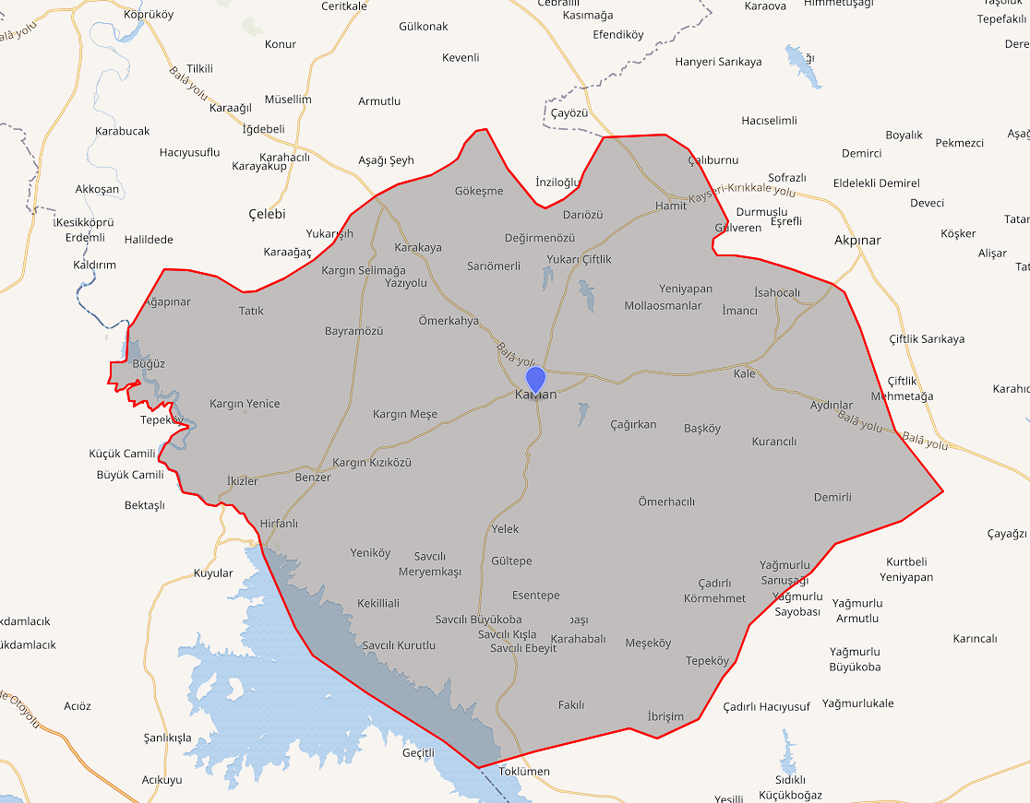
What makes Kaman-Kalehöyük exceptional is the sheer depth of history preserved within its soil. Archaeologists have identified multiple cultural layers, each representing a distinct civilization that once thrived here. From the Bronze Age to the Ottoman period, the site offers a continuous timeline rarely found in a single location, making it invaluable for understanding Anatolia’s evolving past.
The excavation is far from complete, and that is precisely what adds to its significance. Discoveries such as some of the oldest known iron artifacts and early forms of ancient glass have challenged long-held historical assumptions.
With each new layer uncovered, researchers move closer to even earlier settlements, ensuring that Kaman-Kalehöyük remains a living site of discovery rather than a finished chapter of history. What distinguishes this site even further is the methodical nature of the excavation. Each layer is carefully documented and preserved, allowing researchers to trace subtle shifts in material culture, trade, and daily life across centuries.
Deep Central Anatolian Timeline
The official excavation framework identifies four main cultural layers: Stratum IV Early Bronze Age, Stratum III Middle–Late Bronze Age, Stratum II Iron Age, and Stratum I Ottoman/Byzantine period.
Neolithic / Chalcolithic background
There are traces suggesting earlier human activity, but the excavated settlement story begins later.
This is the “shadow prehistory” of the mound: Chalcolithic and Neolithic materials have been found, although actual settlements from those periods have not yet been excavated at the site.
Early Bronze Age — Stratum IV
Roughly 3rd millennium BCE / especially c. 23rd–20th centuries BCE
This is where the excavated story really begins. Stratum IV belongs to the Early Bronze Age, and one excavation summary dates it roughly to the 23rd–20th centuries BCE.
Kaman-Kalehöyük helps us see Central Anatolia before it became “Hittite.”
This period matters because it places Kaman-Kalehöyük within the world of early Central Anatolian communities before the rise of the Hittite kingdom. We are dealing with local societies, early metallurgy, developing settlement patterns, and the pre-Hittite cultural landscape of the Kızılırmak basin.
Middle Bronze Age / Assyrian Trade Colony Period — Stratum IIIc
Roughly 20th–18th/17th centuries BCE
Kaman-Kalehöyük was part of the commercial and cultural build-up that prepared the ground for the Hittite world.
This is one of the most important phases. Stratum III includes the Middle and Late Bronze Ages, and the 2nd millennium BCE sequence includes the Assyrian Colony Period, Old Hittite, and Hittite Empire phases.
Historically, this is the age of the karum trade network, when Assyrian merchants from northern Mesopotamia were deeply active in Anatolia. Kültepe/Kanesh is the great center of this world, but Kaman-Kalehöyük belongs to the broader Central Anatolian landscape shaped by commerce, writing, metals, textiles, donkeys, credit, and long-distance exchange.
Old Hittite Period — Stratum IIIb
Roughly 17th–15th centuries BCE
This phase belongs to the early Hittite political world. Some summaries identify Stratum IIIb with the Old Hittite period, roughly around the 17th–15th centuries BCE.
This is the age when Central Anatolia begins to consolidate into a kingdom centered around Hattusa. Kaman-Kalehöyük was not the capital, of course, but it sat in the same wider cultural zone. It helps us understand how Hittite power was not just a palace phenomenon — it was tied to towns, villages, roads, production zones, and regional communities.
Hittite Empire Period / Late Bronze Age — Stratum IIIa
Roughly 15th–12th centuries BCE
This is the imperial Hittite phase. Stratum IIIa is generally associated with the Late Bronze Age / Hittite Empire period, roughly c. 1500–1200 BCE.
Interestingly, the nearby site of Büklükale becomes important here because the Hittite Empire layer at Kaman-Kalehöyük is not very thick and was damaged by later Iron Age buildings. The Japanese Institute notes that Büklükale may help fill in the gaps for this less well-preserved Hittite imperial phase at Kaman-Kalehöyük.
This is crucial. It means Kaman-Kalehöyük is important, but for the Hittite Empire phase, it should be read together with neighboring sites.
Also, some of the oldest glass finds in the region have been associated with Kaman-Kalehöyük and Büklükale, and studies have discussed Hittite and Early Iron Age glass as evidence for local production and continuity.
Early Iron Age — Stratum IId
After c. 1200 BCE
This may be one of the most intellectually exciting phases. After the collapse of the Hittite Empire around the late 13th / early 12th century BCE, Anatolia is often described as entering a “Dark Age.” But Kaman-Kalehöyük complicates that picture.
Excavations in the Early Iron Age levels, especially Stratum IId, show that life and cultural development continued at the site after the Hittite collapse.
This is big. It means Kaman-Kalehöyük is not just a Hittite site; it is a post-Hittite survival site. It helps answer the question: what happened in Central Anatolia after the empire fell?
The answer is not simple collapse and silence. It is adaptation, local continuity, new pottery traditions, changing identities, and regional reorganization.
Middle Iron Age / Phrygian and Alişar IV horizon
Roughly 9th–7th centuries BCE
In the Iron Age, Kaman-Kalehöyük was no longer simply “Hittite afterlife”; it became part of a more hybrid Central Anatolian world, open to influences from east, west, and the old Hittite heartland.
The Iron Age at Kaman-Kalehöyük is broad and complex. Stratum II covers the Iron Age, roughly from the 12th to 4th centuries BCE in one excavation summary.
The site has yielded Iron Age material such as fibulae, arrowheads, decorated bone objects, painted ceramics, and seals. It is often discussed alongside major Central Anatolian Iron Age sites such as Hattusa and Alişar.
This is the period when the region becomes a meeting ground of post-Hittite, Phrygian, local Anatolian, and wider Near Eastern influences.
Late Iron Age / Achaemenid-Persian period
Roughly 6th–4th centuries BCE
Persian power reached the region, but local Anatolian life continued underneath it.
By the 6th century BCE, Central Anatolia came under Achaemenid Persian imperial influence. At Kaman-Kalehöyük, the Iron Age sequence includes later phases linked with the Late Iron Age, and Persian-period seals have been reported.
This is not the site’s most visually famous period, but historically it matters: Kaman-Kalehöyük becomes part of the Persian-controlled Anatolian interior — a world of satrapies, roads, imperial administration, and mixed local traditions.
Hellenistic period
After Alexander, from late 4th century BCE onward
Some summaries place the upper Iron Age phases into the Hellenistic period, after Alexander the Great and his successors.
For Kaman-Kalehöyük, this is not as dominant as the Bronze and Iron Age phases. But regionally, this is the time when Central Anatolia is increasingly drawn into the Hellenistic political world: Cappadocia, Galatia, Seleucid influence, and later Roman power.
Important caution: I would not describe Kaman-Kalehöyük as a major Hellenistic city. It is better to say that the mound preserves traces of the broader Hellenistic transformation of Central Anatolia.
Byzantine period — Stratum Ib
Late Antique / Medieval, roughly 6th–11th centuries CE evidence
Stratum I includes later historical occupation, with a Byzantine subphase often identified as Ib. Byzantine coins from the site have been noted from the 6th to 11th centuries, and Byzantine pottery has been specifically studied.
The key is not to exaggerate it. There is no major church, monastery, mosaic program, or fortification at Kaman-Kalehöyük itself that defines the site as Byzantine. The evidence is more like: pottery, coins, burial traces, and the continued use or memory of the mound in the medieval landscape.
Ottoman period — Stratum Ia
Especially 15th–17th centuries CE
The uppermost major layer is Ottoman. One excavation summary identifies Stratum I as the Ottoman period, roughly 15th–17th centuries CE, though Stratum I also includes Byzantine material in its lower level.
This is the final historical occupation layer before the site becomes an archaeological mound. The Ottoman period is important because it shows how these ancient höyüks did not simply disappear. They remained useful as elevated, recognizable places in the rural landscape.
Japan’s Role in Unearthing History

One of the most compelling aspects of Kaman-Kalehöyük is the unique international partnership behind its excavation. Unlike most sites in Turkey, this project has been led by Japanese researchers, made possible through the vision of Prince Mikasa, whose scholarly interest in Anatolia helped initiate a rare collaboration.
This relationship evolved into a meaningful cultural bridge between Japan and Turkey, extending beyond archaeology into education and local engagement. Japanese teams have worked alongside Turkish experts for decades, contributing research, funding, and training while supporting the preservation of the region’s heritage.
Over time, this connection grew into a multi-generational legacy supported by the Japanese imperial family. Continued involvement has reinforced the site’s importance, ensuring that Kaman-Kalehöyük remains both an active excavation and a lasting example of cultural exchange.
Key Attractions
A compact cultural circuit brings together archaeology, history, and landscape design in one region. From active excavation grounds to curated museum collections and a Japanese-style memorial garden, Kaman offers a layered experience that reflects both ancient Anatolia and modern international collaboration.
Kaman-Kalehöyük Archaeological Site
At the core of the region lies Kaman-Kalehöyük, an active archaeological mound that preserves a continuous sequence of human occupation spanning several millennia. Excavations here have revealed layered remains from Bronze Age settlements through classical and later periods, offering a rare, uninterrupted record of Anatolian history in a single site.
Visitors can still observe ongoing excavation work and examine sections where ancient structures, tools, and domestic remains have been uncovered in situ. The site functions as both a research center and an open-air historical record, illustrating how successive civilizations adapted to and rebuilt upon the same landscape over time.
Kaman Archaeology Museum
Adjacent to the excavation site, the Kaman Archaeology Museum, opened in 2010, preserves and presents artifacts recovered from Kaman-Kalehöyük and surrounding areas. Its collection spans multiple historical periods, including Bronze Age layers (c. 3000–1200 BCE), Assyrian trade activity (c. 2000–1600 BCE), Phrygian presence, Roman provincial settlements (c. 1st century BCE–4th century CE), and Byzantine to Ottoman material culture.
The museum operates as an extension of the excavation process, where discoveries are systematically documented, conserved, and exhibited. Its displays allow visitors to follow long-term cultural development in central Anatolia through ceramics, tools, coins, and imported goods, including evidence of long-distance trade networks that connected the region to broader Eurasian routes over several millennia.
Prince Mikasa Memorial Japanese Garden
The Prince Mikasa Memorial Japanese Garden, completed in 1993, was established alongside the Kaman-Kalehöyük excavation site as a symbol of long-term cultural collaboration between Japan and Turkey. Designed in traditional Japanese style, it reflects landscape principles associated with classical garden architecture, including water features, stone arrangements, and carefully structured planting.
Covering a significant area adjacent to the archaeological mound, the garden incorporates elements such as ponds, bridges, and seasonal plantings, including cherry trees introduced from Japan. It was created not only as a commemorative space for Prince Mikasa’s involvement in the project beginning in 1986, but also as a public landscape intended for local recreation and cultural exchange.
Japanese Royalty to Kaman-Kalehöyük in 2024

In December 2024, Japan’s Crown Prince Akishino Fumihito and Crown Princess Kiko visited Kaman-Kalehöyük in Kırşehir Province, as part of the 100th anniversary of diplomatic relations between Japan and Turkey (1924–2024). The visit included a tour of the excavation site, which has been continuously researched since 1986 under the Japanese Institute of Anatolian Archaeology.
During the visit, the royal delegation inspected active excavation areas and reviewed findings from multiple cultural layers spanning approximately 5,000 years of occupation, including Bronze Age, Iron Age, Classical, and later historical periods.
The project at Kaman-Kalehöyük is among the longest-running foreign-supported archaeological excavations in Turkey, carried out through cooperation between Japanese researchers and Turkish archaeological authorities. The 2024 visit highlighted the continuity of this collaboration, which has been sustained for nearly four decades.
Contact Us To Book Now!
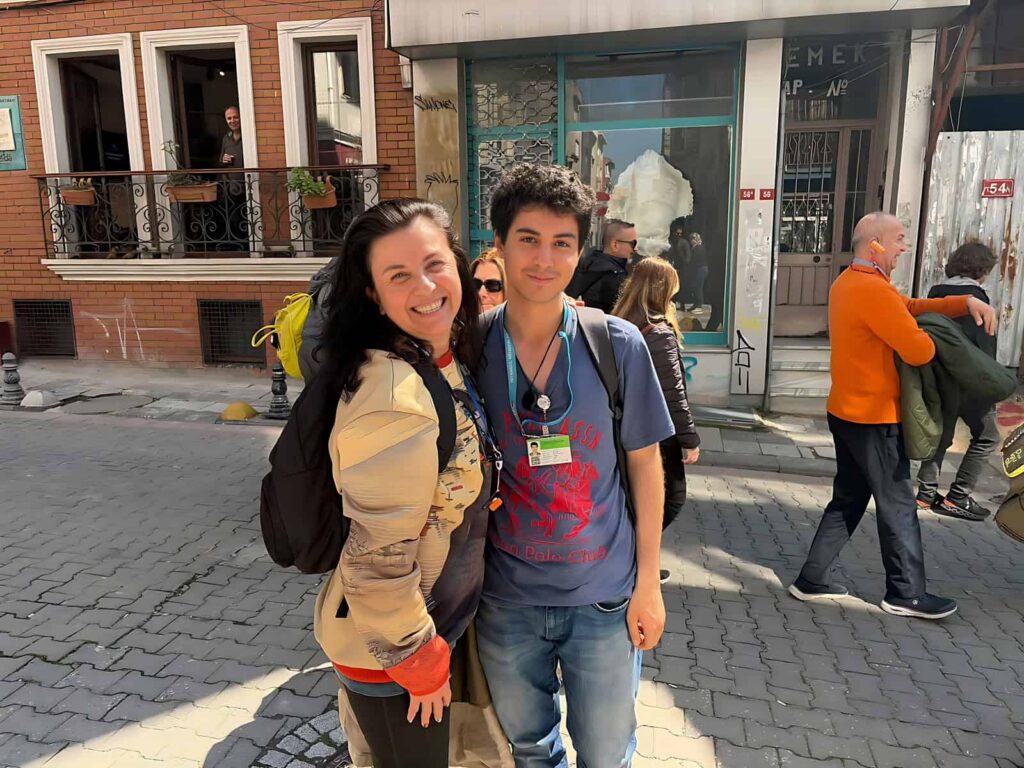
If you are planning a visit to Kaman-Kalehöyük or want to learn more about its ongoing excavations and historical significance, our team is here to guide you with accurate information and travel support. This unique archaeological site offers a rare opportunity to witness living history, where research and discovery continue every season.
Fill out the form below to connect with us for guided tours, travel assistance, and curated cultural experiences around Kaman and its archaeological landscape. Whether you are a history enthusiast or a cultural traveler, we will help you explore the site in the most informed and meaningful way.