

Before Hagia Sophia stole the spotlight, another giant ruled the Aegean. Basilica of St. John, born of legend and imperial ambition, still shakes the ground with its untold story.
St. John’s Basilica in Ephesus: Legacy of an Apostle and a Byzantine Marvel
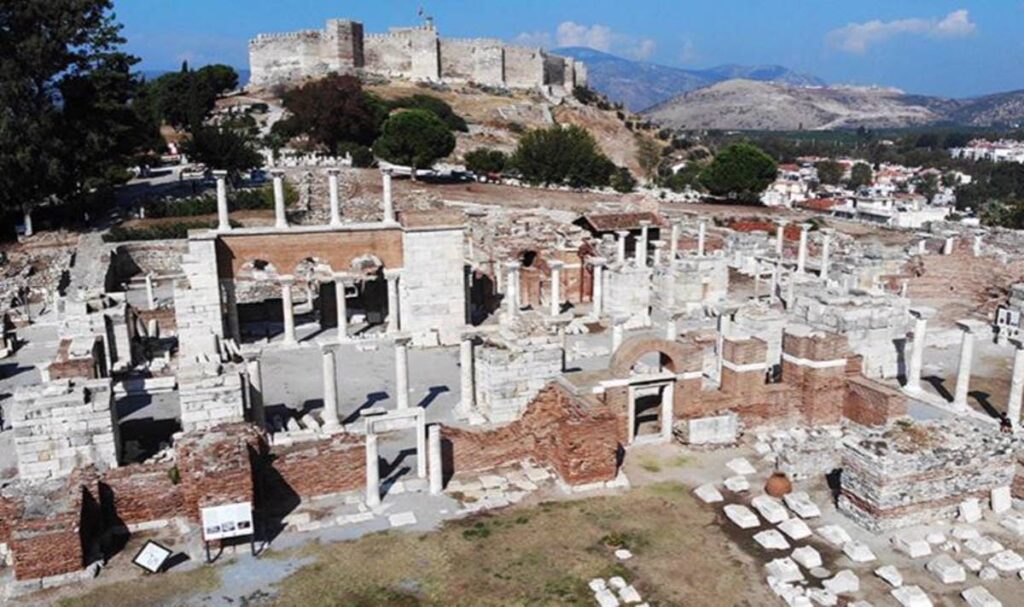
St. John’s Basilica in Ephesus stands on Ayasuluk Hill in Selçuk, Turkey, where it overlooks one of the most historically charged landscapes in the ancient world. The ruins invite visitors into a story where early Christianity, Byzantine ambition, and centuries of cultural memory meet.
The Apostle John in Ephesus: From Tradition to Legacy
Ancient tradition holds that John the Apostle spent his final years in Ephesus. Early Christians believed he cared for the Virgin Mary here, wrote his Gospel in the city, and returned after exile on Patmos before dying around 100 AD.
His followers honored him with a simple grave on Ayasuluk Hill. By the 4th century, Christians built a small chapel over his burial place, which soon grew into a respected pilgrimage site. As its fame spread, the hill became known as “Hagia Theologos,” meaning “Holy Theologian,” a title associated with John.
Justinian’s Grand Vision: Building a Byzantine Masterpiece
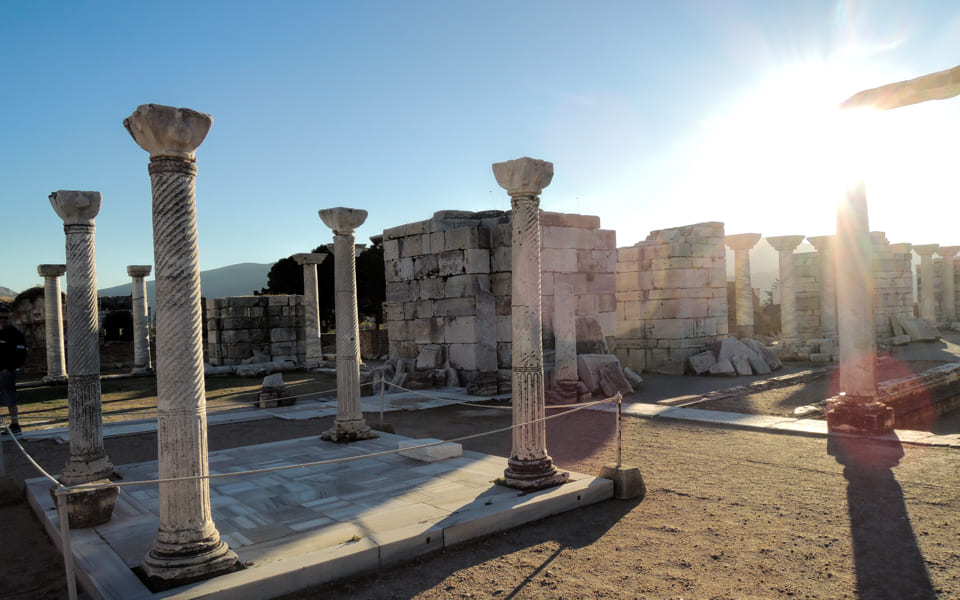
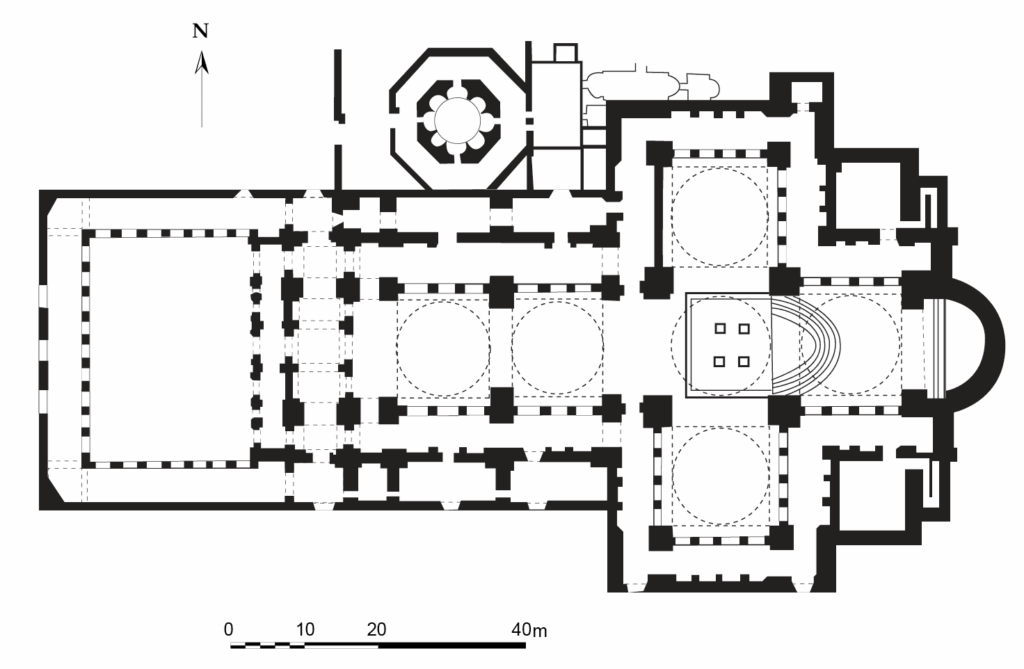
Emperor Justinian I transformed the sanctuary into a monumental cruciform basilica between 548 and 565 AD, creating a 130-by-65-meter church crowned by six domes supported by marble columns—many taken from the nearby Temple of Artemis—and marked with the monograms of Justinian and Theodora.
Rich with frescoes, mosaics, and colored marble, the basilica centered on St. John’s tomb, raised on a marble platform beneath the central dome and inscribed with Psalm 132: “This is my resting place forever; here will I dwell,” underscoring the site’s enduring spiritual importance.
Pilgrimage and the “Manna of St. John”
For centuries, the basilica attracted pilgrims from across the Christian world. One of the most intriguing traditions was the annual miracle of the “manna of St. John.” Medieval believers claimed that a fine, holy dust rose from the apostle’s tomb every year on May 8. Pilgrims gathered this dust during an all-night vigil and carried it home as a healing relic.
A Fortress and a Sacred Hill Through the Ages
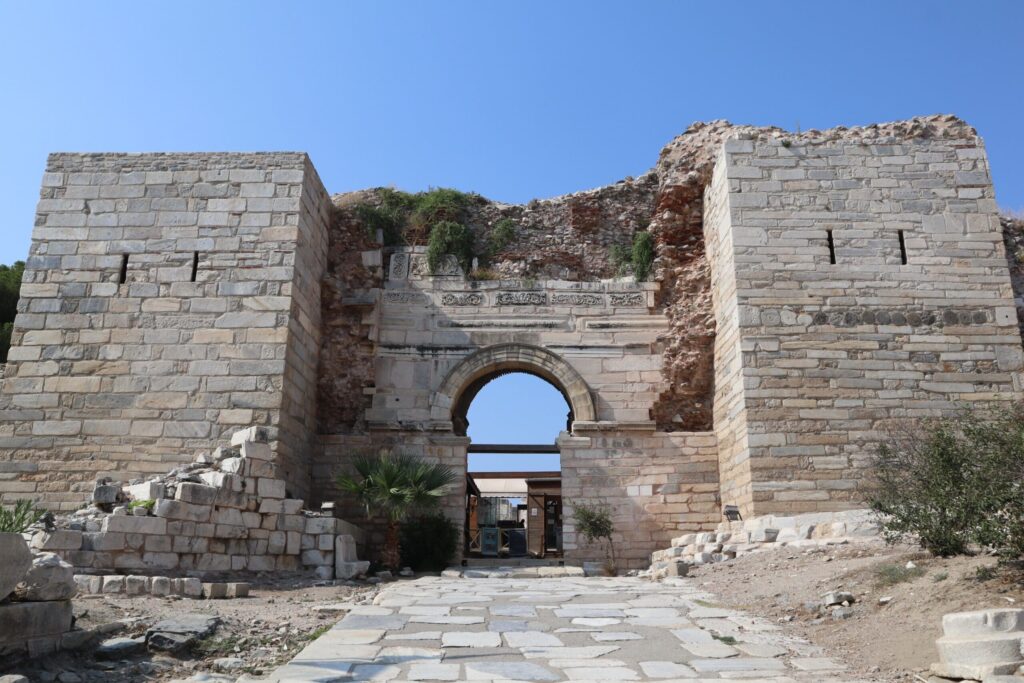
As Arab raids threatened the Aegean coast in the 7th century, Byzantines fortified Ayasuluk Hill. They built defensive walls and a strong fortress overlooking the basilica. These protections shifted the local population upward from ancient Ephesus to the safer hilltop settlement, laying the foundation for modern Selçuk.
In the 14th century, the Seljuk Turks converted the basilica into a mosque, yet the site retained its sacred aura. Later, in 1402, Tamerlane’s armies devastated the region and left the basilica in ruins. For centuries, it lay abandoned, its stones reused in local buildings.
Rediscovery and Archaeological Insights
Archaeological work in the 20th century revived the basilica, with researchers clearing the site, mapping its floor plan, and restoring key elements, including the tomb of St. John.
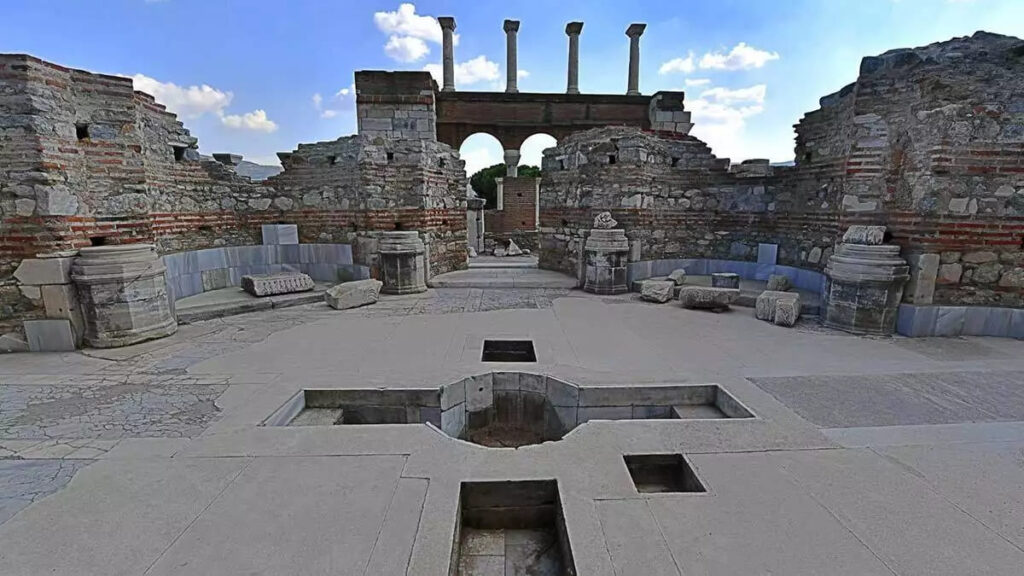
Excavations uncovered fresco fragments, marble flooring, an octagonal baptistery with a cruciform pool, and evidence of a Justinian-era aqueduct that once supplied the hilltop settlement. Ongoing conservation efforts now stabilize the ruins and preserve their features, allowing visitors to clearly imagine the basilica’s original scale and design.
A Timeless Experience for History Lovers
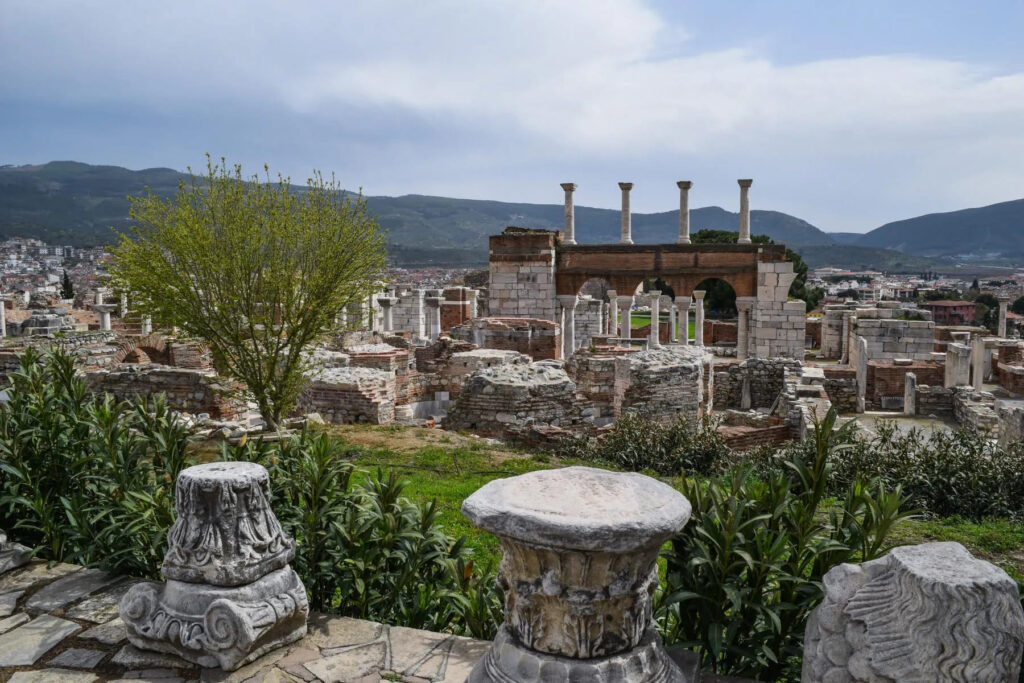
Even in ruin, St. John’s Basilica remains one of western Turkey’s most atmospheric sites, offering sweeping views of Selçuk, Ephesus, the İsa Bey Mosque, and the distant remains of the Temple of Artemis, while embodying layers of pagan, Christian, and Islamic history on a single hill.
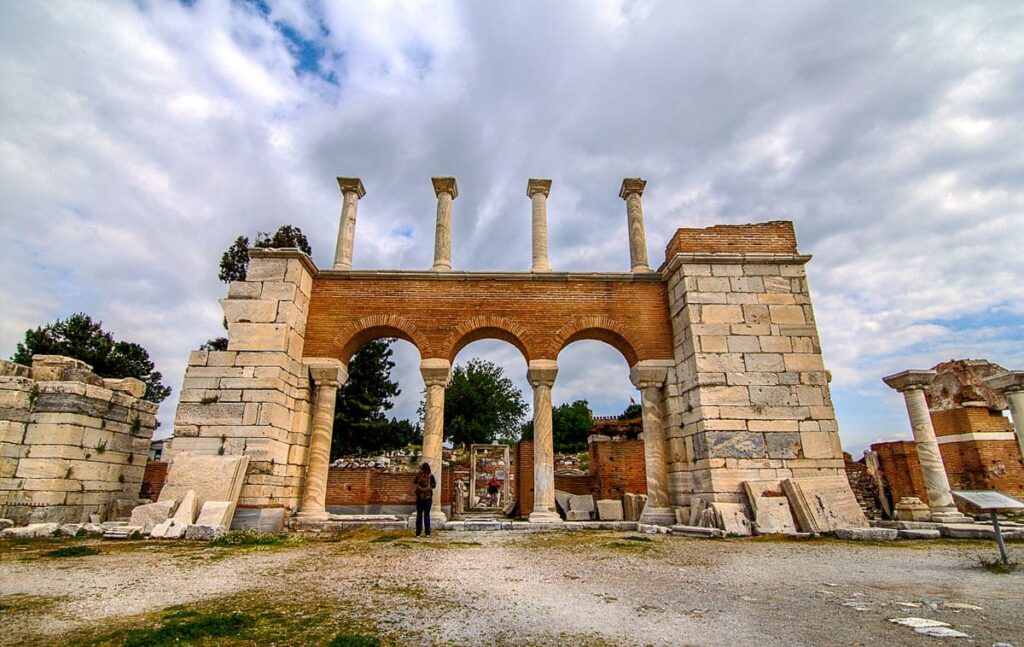
Described by one travel historian as “one of the great man-made wonders of its age,” its fallen arches and re-erected columns still convey the weight of that legacy.
Get In Touch With Us📩
Ready to dive deeper into the legends of Ephesus or walk the paths where apostles and emperors once stood? Reach out to us and let’s turn your curiosity into an unforgettable adventure in the Basilica of St. John.





hey guys. please make sure my ephesus tour definitely stops by this incredibly importance christian monument. thanks! cant wait 🙂
Duely noted! 🙂