Visit Istanbul on the first of May, and you’ll find its loudest, busiest square strangely empty. While the world celebrates workers, the bustling heart of Taksim Square sits locked behind police barricades. Why the heavy security? The answer lies in a decades-old fight for memory, labor rights, and a tragic day that changed the city forever.
Table of Contents
Live Report: Istanbul Brought to a Standstill
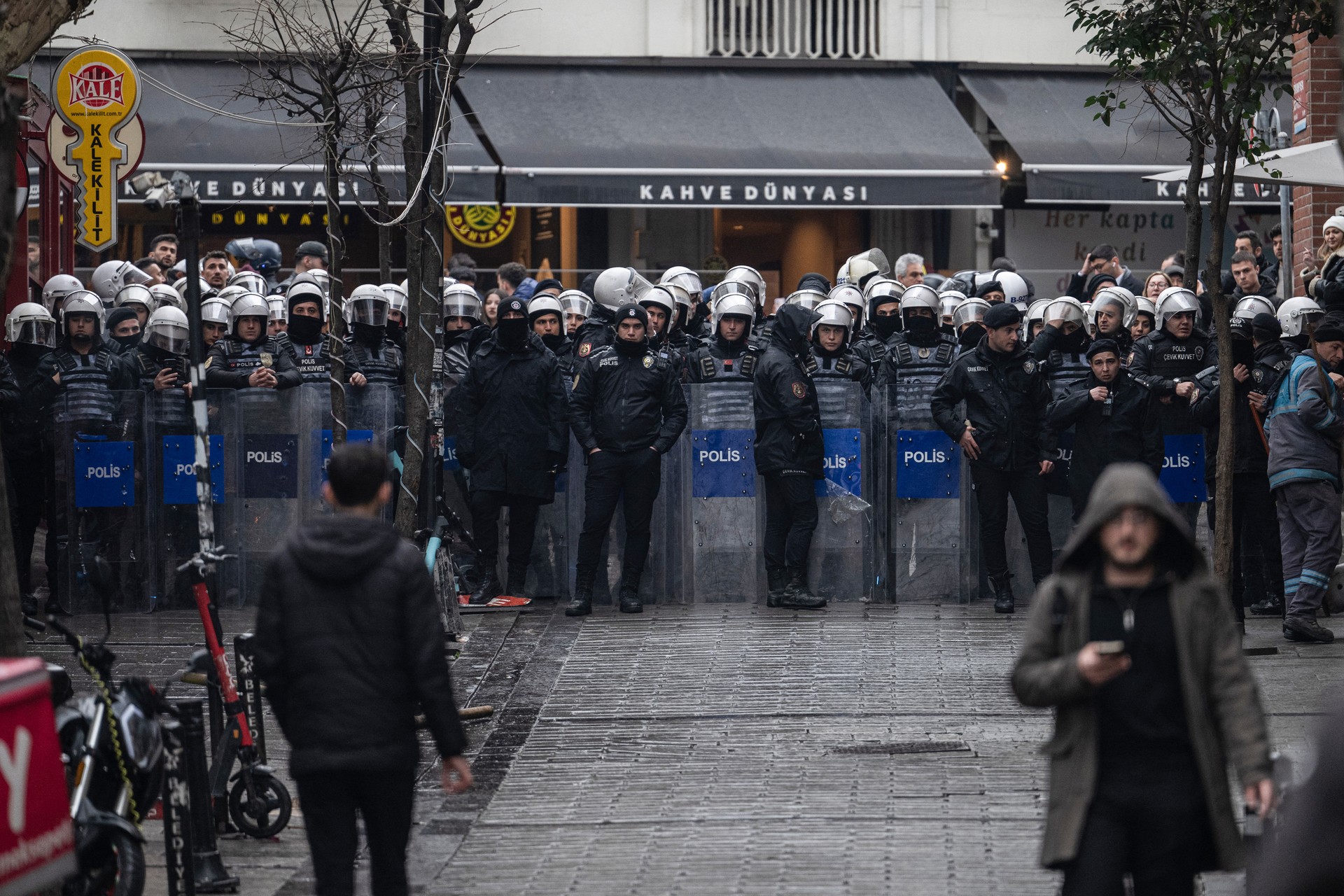
A blanket ban on marches, sit-ins, and press statements now covers the entire neighborhoods of Beyoğlu, Şişli, Fatih, and Beşiktaş. At the absolute center of this massive, city-wide cordon is an empty piece of pavement. Taksim Square has been entirely cleared. And that emptiness—enforced almost every spring for nearly half a century—is the loudest thing the space has to say.
Why paralyze a metropolis of 15 million people just to keep one square clear? The answer lies not in present-day security, but in the state’s enduring fear of organized labor and the memory of a tragedy they are desperate to suppress. To understand why the authorities treat the first day of May as a threat rather than a holiday, you have to trace the profound history, the bloodshed, and the undeniable importance of Taksim Square.
The Historical Evolution of Taksim Square
Historical Foundations of Taksim
Long before it became a political battleground, Taksim was simply a piece of infrastructure. Taksim literally means “distribution” in Ottoman Turkish. In the 18th century, a stone reservoir was built here to distribute water from the Belgrade Forest down to the surrounding districts.
By the late Ottoman period, the open ground around that reservoir had become a military parade square. After the founding of the Republic, the space was entirely reimagined. It was redesigned around the Republic Monument, unveiled in 1928, which cast Mustafa Kemal Atatürk and his comrades in bronze, flanked by ordinary people.
The symbolism was deliberate. This was designed to be the new nation’s grand stage, a place for official parades and state-sanctioned patriotism. What the state planners did not anticipate, however, was who else would eventually step up to claim it.
The Emergence of the Labor Movement in 1976
For decades, International Workers‘ Day was heavily suppressed in Turkey, forced into the shadows and deliberately pushed to the margins. This silence broke in 1976 when the Confederation of Revolutionary Trade Unions, or DİSK, called workers to the heart of Istanbul.
The response was unprecedented. Over 100,000 factory workers, students, and intellectuals poured into Taksim Square, halting the city’s commercial center. The gray pavement disappeared beneath a vibrant sea of red flags and marching bands. It was a bold, undeniable display of strength, transforming the space into the new home of the nation’s organized labor movement.
This peaceful and historic success changed everything. Taksim was no longer just a state monument; it was the undisputed address of the working class. Empowered by their massive turnout, DİSK and the labor unions immediately began preparing for an even larger demonstration the following spring.
Massacre of Kanlı 1 Mayıs
What began as a massive celebration on May 1, 1977, ended as one of the darkest days in the Republic’s history. By late afternoon, an estimated half a million workers, students, and families had flooded into the heart of Istanbul. The massive crowd was peaceful and celebratory, standing shoulder to shoulder in Taksim Square, entirely unaware of the violence that was about to unfold.
Without warning, gunshots cracked through the air from the upper floors of the surrounding buildings, with witnesses pointing toward the Water Administration building and a nearby hotel. Panic swept the square instantly. As police responded with stun grenades and armored vehicles, thousands of terrified people surged toward the narrow, steeply sloping Kazancı Yokuşu alleyway.
The fleeing crowd found their escape blocked by a heavy truck parked across the narrow street. In the terrifying crush that followed, 34 people were officially killed, mostly from suffocation or trampling, while over 130 were wounded. Decades later, no one has ever been convicted. The shooters vanished into the shadows of the deep state, leaving behind an open wound.
The Era of Prohibition and the Brief Thaw
Following the tragedy, the state chose to silence the square entirely. After the 1980 military coup, the ban on May Day in Taksim became absolute. For nearly thirty years, the first of May was no longer defined by labor anthems, but by the presence of water cannons and mass detentions in the heart of Istanbul.
A brief window of hope opened between 2010 and 2012 when legal pressure forced a thaw. For three historic years, peaceful and enormous rallies returned to the pavement. However, in 2013—just weeks before the Gezi Park protests—the government sealed the square once again. It has remained a restricted zone for workers almost every spring since.
In 2023, the Constitutional Court ruled that blanket bans on Taksim violate fundamental rights, citing the square’s “symbolic value.” Yet, this landmark decision has been largely ignored by authorities. Today, while the law defends the right to assemble, the reality on the ground remains one of barricades and an enforced, heavy silence.
Verdict of 2026: A Memory Under Lock and Key
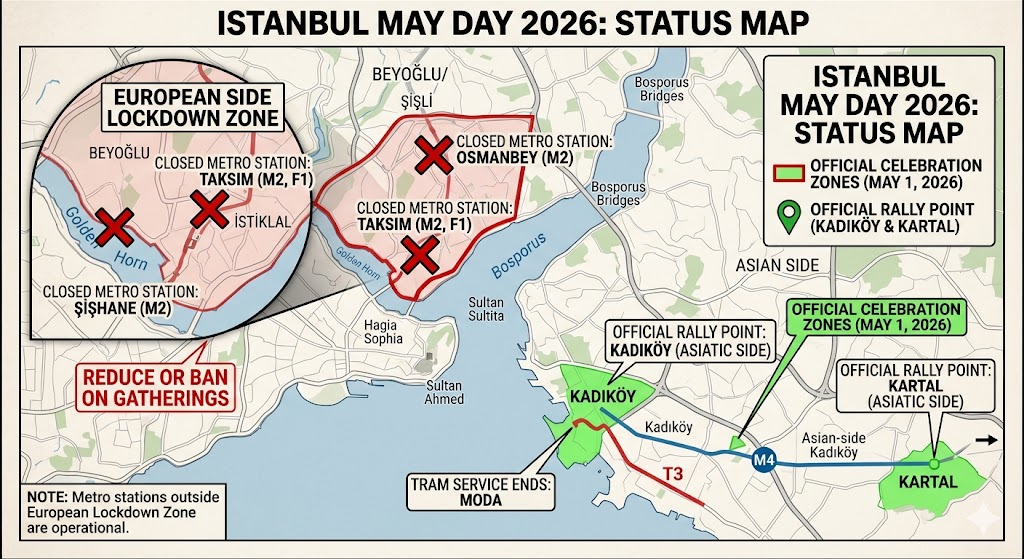
As reported by BBC News Türkçe this morning, May 1, 2026, the cycle of suppression remains unbroken. Despite the court rulings and the passage of time, groups attempting to march toward Taksim were once again blocked by lines of riot police. While official “celebration zones” were designated far away in Kadıköy and Kartal, any attempt to reach the symbolic heart of the city was met with immediate dispersal.
This year’s decision to shut down the metro stations and seal the streets of Beyoğlu and Şişli is a physical manifestation of a deeper fear. As the BBC’s updated explainer on the square’s significance asks: Why is this one piece of pavement such a persistent battleground? The answer is found in the very history we have traced. Taksim is where Turkish labor first stood up in mass—and where it was first cut down in mass.
Navigating May Day: The Do’s and Don'ts
- Check Transit Apps Constantly
- Pay Quiet Respects
- Support Local Businesses
- Attempt to Enter Taksim Square
- Rely on the M2 Metro Line
- Panic if You See Riot Gear
Meaningful Ways to Observe May Day
To truly celebrate Labor Day in Istanbul, look beyond the barricades. The holiday’s essence isn’t confined to Taksim Square, but lives in the enduring spirit of the working class.
To experience the movement’s collective energy, take a ferry to the official rallies in Kadıköy or Kartal. Standing alongside locals and union bands is a powerful reminder that while a physical square can be closed off, a movement cannot be silenced.
Ultimately, our best advice is to simply walk the city with your eyes open. Notice the artisans in Galata, the ferry workers, and the independent shop owners. Understanding a destination means honoring the people who keep it running—celebrate them today by witnessing the real city.
Celebrate May Day With Us

To truly understand a city’s present, you have to walk through its past. This Labor Day, we invite you to celebrate the enduring spirit of Istanbul by witnessing the real city beyond the barricades.
Join one of our guided walks to honor its complex history and share the untold stories of the everyday people who keep this metropolis moving. Please fill out the form below to get in touch with our team and join us on the ground.
If you are reading this from afar, you can still continue the journey by exploring our other articles. Dive deep into the history and culture woven throughout the country. Read on, travel deep, and celebrate the history that shapes us.