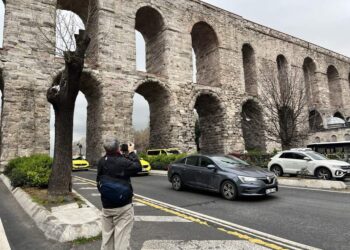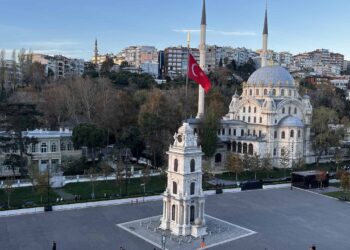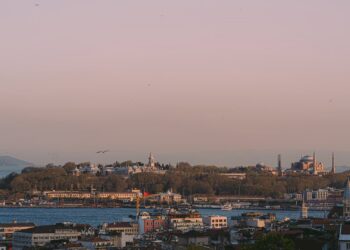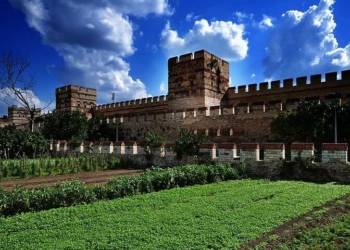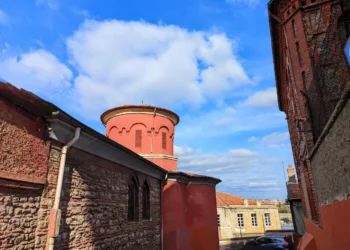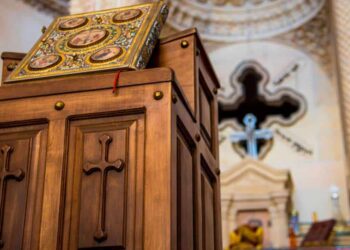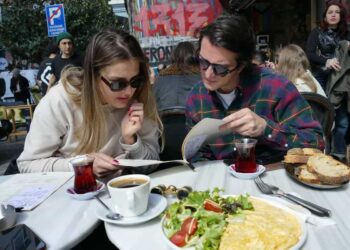
Istanbul is not just a city of empires—it is a meeting point of faiths. This journey explores how Judaism, Christianity, and Islam have shaped its streets, stories, and communities over centuries, revealing a shared spiritual heritage that continues to define the city in subtle and powerful ways today.
Table of Contents
A City of Faiths: Walking Through Sacred Histories
Istanbul is one of the rare cities in the world where three major faiths have not only existed but evolved side by side over centuries. From Byzantine churches to Ottoman mosques and hidden synagogues, the city reflects layers of belief shaped by empire, migration, and coexistence.
What began as Constantine’s New Rome—and what many later understood as a kind of Second Rome in sacred and imperial terms—gradually became something even broader: a Second Jerusalem, a city where competing revelations, spiritual ambitions, and holy memories converged. In that sense, Istanbul did not merely inherit empires; it absorbed and reinterpreted entire religious worlds, becoming a lasting crossroads of Christianity, Judaism, and Islam.
This experience invites you to explore those layers not as isolated monuments, but as part of a living narrative. Moving through neighborhoods, waterfronts, and historic quarters, you trace how communities formed, adapted, and endured over time. It is a journey through stories of faith, resilience, and shared space—revealing a side of Istanbul that goes beyond architecture, offering insight into how different traditions have shaped a single, extraordinary city.
Detailed Itinerary
This full-day journey begins in Beyoğlu, where you explore İstiklal Avenue and visit St. Anthony of Padua Church, tracing Istanbul’s Catholic connections.
Descending into Galata and Karaköy, the focus shifts to Jewish and Armenian heritage, uncovering stories of migration and continuity. The route continues along the Golden Horn into Fener and Balat, where Orthodox Christianity and historic Jewish neighborhoods reveal centuries of coexistence.
In the afternoon, a Bosphorus crossing leads to Üsküdar, where Ottoman mosques and peaceful streets offer a reflective close to a day shaped by shared faith and layered history.
Beyoğlu: Western Echoes and Living Catholic Heritage
The journey begins in Beyoğlu, where Istanbul’s cosmopolitan spirit is immediately felt. Walking along İstiklal Avenue, you move through a district shaped by embassies, European merchants, and diverse communities that once defined late Ottoman life.
The architecture, passageways, and atmosphere reflect a strong connection to Western Europe, offering a different perspective from the traditional image of the city. This setting introduces the Christian presence in Istanbul not as distant history, but as a continuing cultural layer embedded in everyday life.
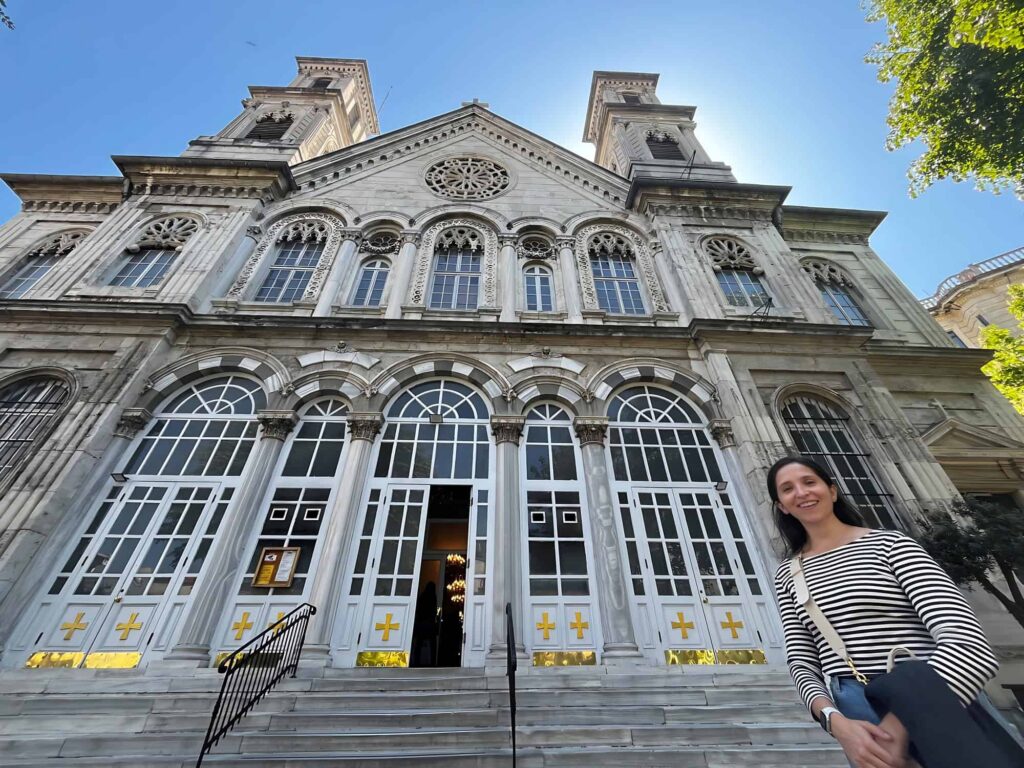
At the heart of this district stands the Church of St. Anthony of Padua, the largest Catholic church in the city. Its Neo-Gothic façade and active congregation highlight Istanbul’s long-standing ties to the Catholic world.
Inside, the calm and symmetry contrast with the busy street outside, creating a moment of reflection. Here, the narrative begins to unfold—showing how faith, diplomacy, and culture intersected in shaping a community that still exists quietly within the modern city.
Galata & Karaköy: Jewish Legacy and Armenian Continuity
Descending into Galata, the story shifts toward Istanbul’s Jewish heritage, particularly the Sephardic communities who arrived after their expulsion from Spain in 1492.
The area once thrived as a center of Jewish life, trade, and culture, and traces of that legacy remain visible today. Walking through its streets, you uncover how the Ottoman Empire became a place of refuge, allowing traditions, language, and identity to survive and flourish over generations.
In nearby Karaköy, the narrative expands to include the Armenian community, one of the city’s oldest and most resilient groups. Churches such as Surp Krikor Lusavoriç stand as quiet yet powerful reminders of continuity.
Surrounded by a modern and rapidly changing district, these spaces reflect endurance rather than dominance, showing how faith communities adapted to shifting political and social landscapes while maintaining their identity across centuries.
Fener & Balat: Orthodox Power and Shared Neighborhoods
Following the Golden Horn, you arrive in Fener, the historical center of Eastern Orthodox Christianity. Here stands the Ecumenical Patriarchate and the Church of St. George, a site of immense spiritual importance.
The interior, filled with icons and relics, carries centuries of devotion and authority, representing a tradition that has shaped not only Istanbul but the wider Orthodox world. This part of the journey highlights the depth and continuity of Christian life within the city.
Moving into Balat, the atmosphere becomes more intimate and layered. Once home to vibrant Jewish and Armenian communities, the neighborhood reflects a history of coexistence shaped by daily life rather than grand institutions.
Synagogues, churches, and homes sit within walking distance of one another, creating a unique urban fabric. Here, the focus shifts from power to community, revealing how different faiths shared space, adapted, and built lasting connections over time.
Bosphorus to Üsküdar: Islamic Identity and Living Harmony
This final section brings the narrative full circle, showing that Istanbul’s story is not just about succession of empires, but about shared spaces, evolving identities, and the enduring possibility of living together across belief systems.
Crossing the Bosphorus to Üsküdar marks a transition not just in geography, but in atmosphere. The pace slows, and the city reveals a more contemplative side rooted in Ottoman Islamic tradition. Mosques, fountains, and historic streets create a setting where faith is woven into daily life. This part of the journey highlights how Islam shaped the city’s identity after the Ottoman conquest, while also preserving spaces of reflection and continuity along the Asian shore.
Nearby neighborhoods like Kuzguncuk offer a powerful conclusion to the experience, where multiple faiths exist within close proximity. A synagogue, churches, and a mosque stand within minutes of each other, representing a lived example of coexistence.
What's Included
- Professional guide: In-depth storytelling and historical context throughout the day.
- Private transfers: Comfortable transport between districts for a seamless experience.
- Ferry or Bosphorus crossing: Scenic transition between Europe and Asia.
- Lunch: A relaxed break in a carefully selected local restaurant.
- Curated experience: A thoughtfully designed route connecting faith, history, and neighborhoods.
Get in Touch With Us Now to Book
If the Abrahamic Faiths Tour resonates with your interests, the next step is to get in touch with The Other Tour team and begin shaping your experience.
Our goal is to make the process effortless for you, so you can arrive fully prepared to explore Istanbul’s layered spiritual heritage with clarity, depth, and genuine engagement.
Share your preferred dates, group size, and any particular areas of curiosity—whether you are drawn more to theology, architecture, or the human stories behind each community.
Fill out the form below to start the conversation.