• About
    • Introduction
    • Explore The Other Tour
    • 2025 Itinerary
    • Common Questions Answered
    • The Other Tour Reviews
    • About Us
    • Contact
  • Istanbul
    • Tour Guides
    • Attractions
    • Tours
    • Neighborhoods
    • Eat & Drink
    • Stay
    • Shop
  • Turkey
    • Turkey Tours
    • Destinations
    • Istanbul
    • Cappadocia
    • Ephesus
    • Pamukkale
    • Antalya
    • Bodrum
  • Services
    • Private Tours
    • Daily City Tours
    • Made-to-order Travel
    • Hire a tour guide
    • Unique Activities
    • Airport Transfers
    • Hotel Selection
    • Vacation Booking
    • Corporate Group Tours
    • Culinary Tours
    • Event Planning
    • Istanbul Layover Tours
    • Family Time
  • Blog
    • TOP 5 ISTANBUL
    • Events
    • Documentary
    • History
    • News
    • All
No Result
View All Result
  • About
    • Introduction
    • Explore The Other Tour
    • 2025 Itinerary
    • Common Questions Answered
    • The Other Tour Reviews
    • About Us
    • Contact
  • Istanbul
    • Tour Guides
    • Attractions
    • Tours
    • Neighborhoods
    • Eat & Drink
    • Stay
    • Shop
  • Turkey
    • Turkey Tours
    • Destinations
    • Istanbul
    • Cappadocia
    • Ephesus
    • Pamukkale
    • Antalya
    • Bodrum
  • Services
    • Private Tours
    • Daily City Tours
    • Made-to-order Travel
    • Hire a tour guide
    • Unique Activities
    • Airport Transfers
    • Hotel Selection
    • Vacation Booking
    • Corporate Group Tours
    • Culinary Tours
    • Event Planning
    • Istanbul Layover Tours
    • Family Time
  • Blog
    • TOP 5 ISTANBUL
    • Events
    • Documentary
    • History
    • News
    • All
No Result
View All Result

The Ecumenical Patriarchate of Constantinople

The Greek Orthodox Church

Ömer Çelik by Ömer Çelik
December 7, 2025
in 2026, Byzantine Empire, History, Istanbul Travel Blog, Read, Specials
Reading Time: 16 mins read
A A
2

A handful of Greek-speaking, Jesus-loving Romans and their descendants still walk the streets of Istanbul today, a once-mighty community now reduced to a fragile remnant — yet from Istanbul’s Fener neighborhood, their ancient Patriarchate still dares to speak with the voice of an empire that refuses to die.

Table of Contents

Introduction to the Greek Orthodox Church

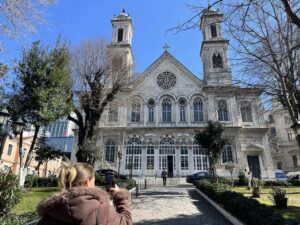
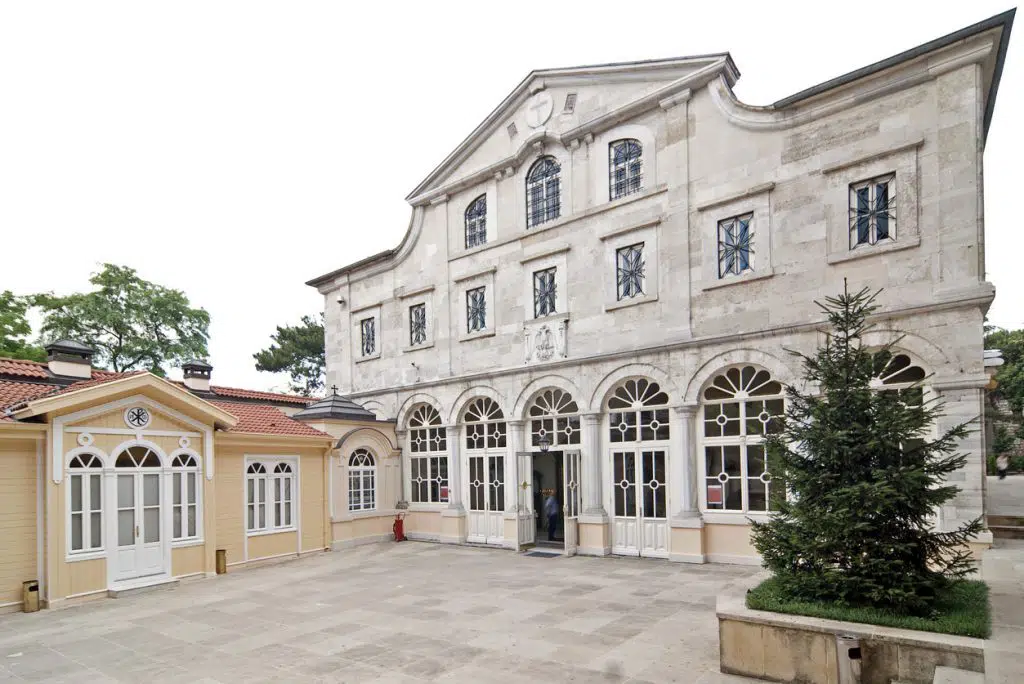
Hidden within the quiet backstreets of Fener, along the Golden Horn, stands one of the most historically significant religious institutions in the world: the Ecumenical Patriarchate of Constantinople. Though modest in appearance, the Patriarchal Cathedral of St. George serves as the spiritual heart of Eastern Orthodoxy — a tradition followed by more than 300 million believers worldwide.

Its story stretches from the earliest days of Christianity to its modern role as a global voice for peace, dialogue, and environmental ethics. This is the deep, complex, and fascinating story of the Patriarchate of Constantinople.

But before all of that, it begins with one man:

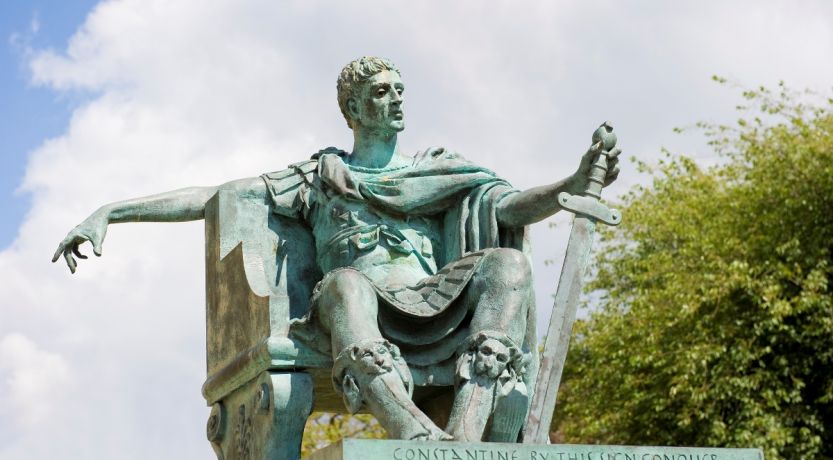
Constantine the Great, the emperor who reshaped the world.

Constantine’s Footsteps: The Emperor Who Rebuilt the Roman World

Few rulers have shaped world history as profoundly as Constantine. His rise not only reunited a fractured empire but also forever changed the relationship between Christianity and the Roman state.

Reuniting a Broken Empire

After issuing the Edict of Milan in 313 and restoring unity to a battered empire, Constantine discovered that the Roman world’s new religion was anything but unified. Rival bishops, theological factions, and competing interpretations of Christ’s nature were tearing the Christian communities apart — none more rapidly than the controversy ignited by Arius, the Alexandrian presbyter whose catchy hymns and sailor-style street songs spread across the Mediterranean like wildfire.

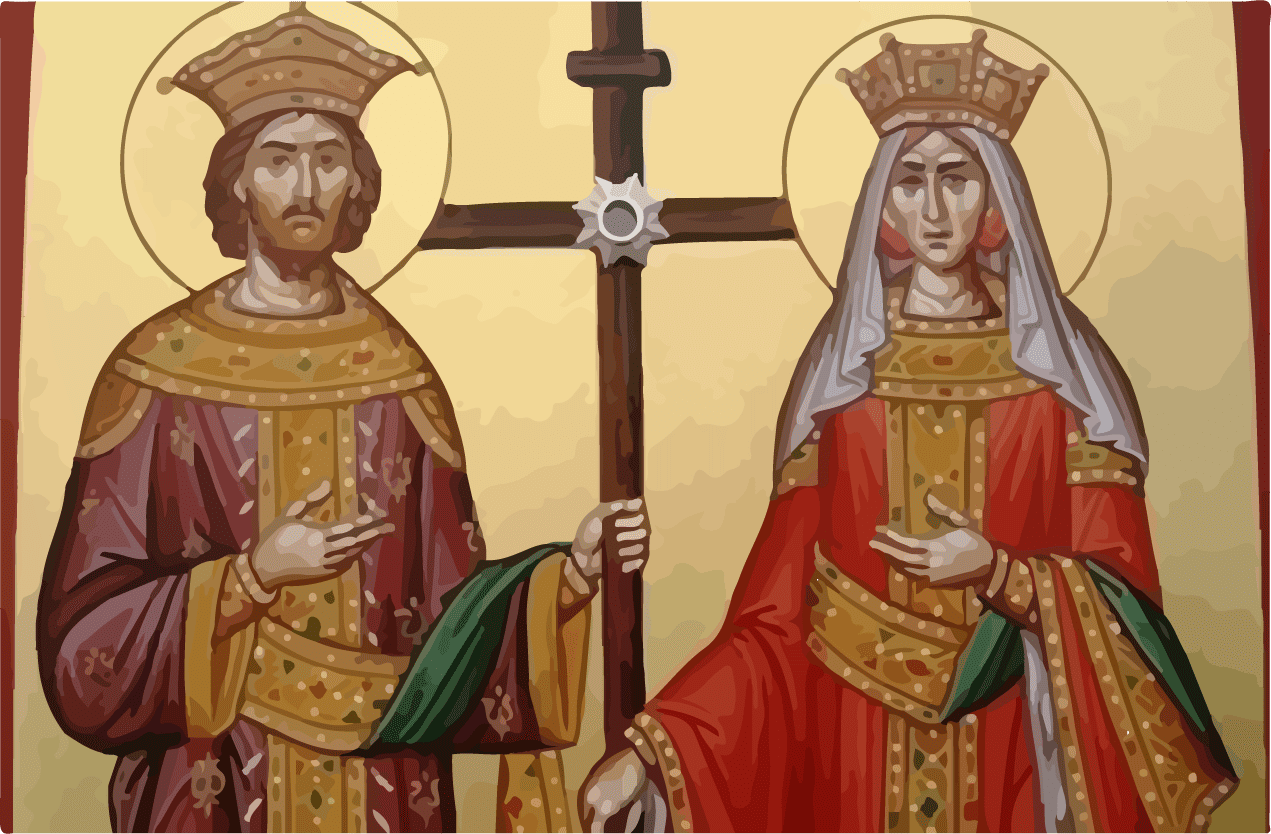
Saint Helena's Son: Constantine

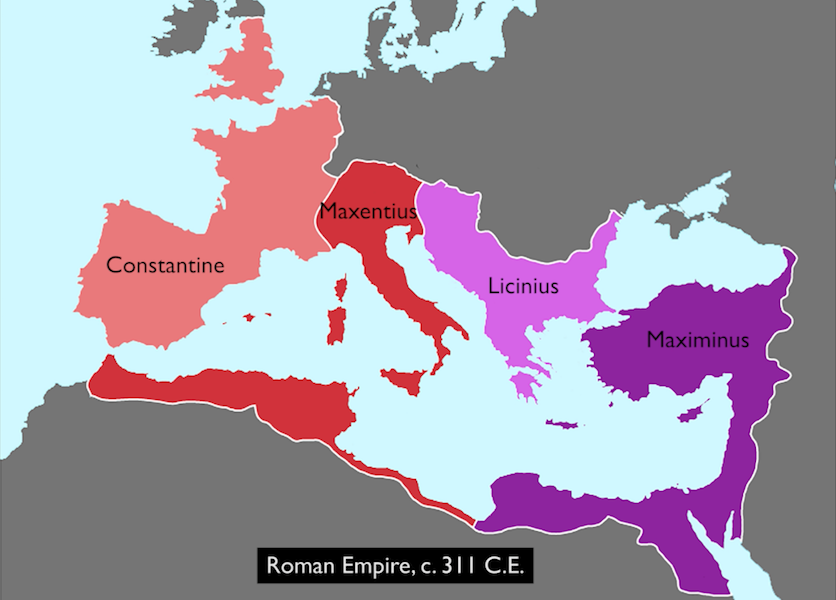
After the end of the Pax Romana, the Roman Empire entered a long period of crisis. By the early 4th century, it remained fractured by rival emperors and recurring civil wars.
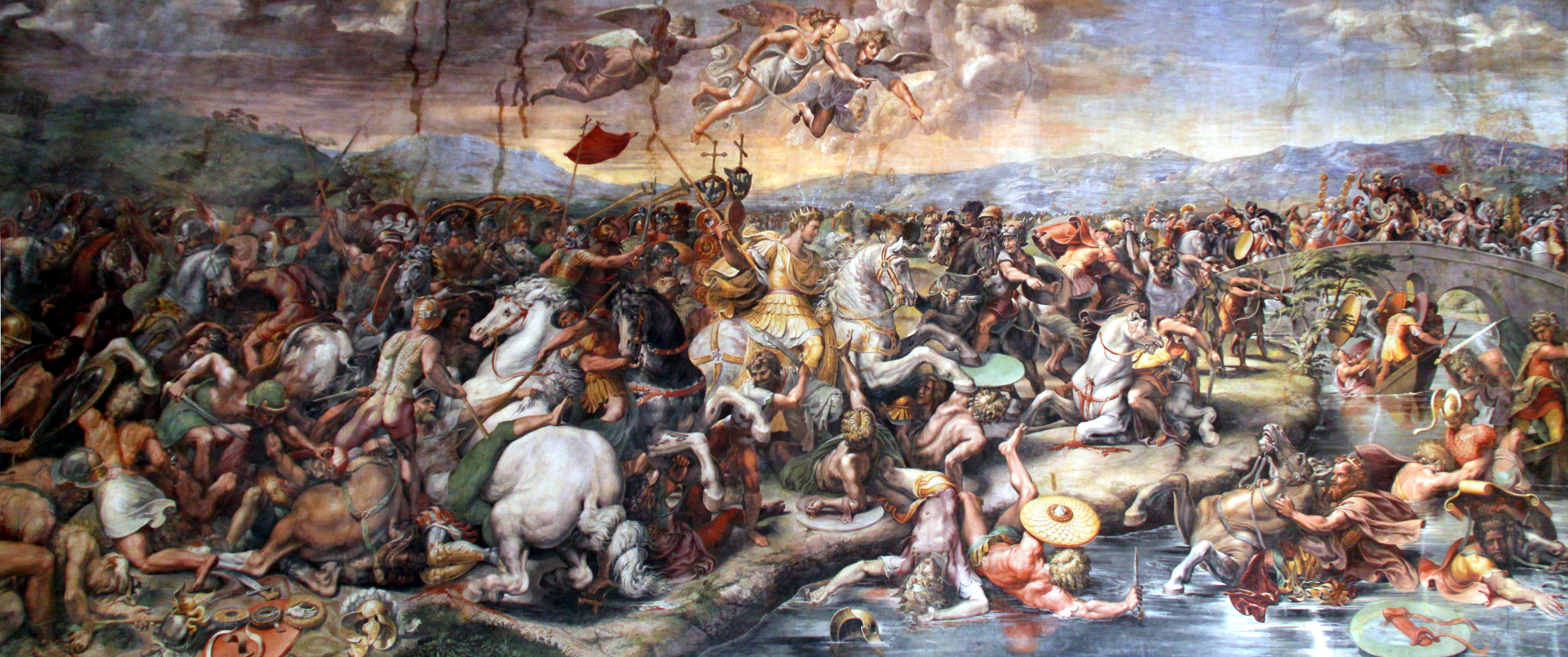
Constantine’s ascent began with his dramatic victory at the Battle of the Milvian Bridge (312), where he marched under a Christian symbol revealed, he believed, in a divine vision.

A year later, in 313, came a turning point for world religion:
the Edict of Milan, issued jointly by Constantine and his co-emperor Licinius.

For the first time in history:

  • Christianity became legal and protected,

  • Persecution ended,

  • Confiscated churches were restored,

  • Christians gained the freedom to worship openly.
The Edict did not make Christianity the state religion — that would come later (that would happen under Theodosius I exactly 67 years later) — but it allowed the Church to flourish, organize, debate, and build.

Over the next decade, Constantine consolidated power in the West.
Then, in 324, he confronted his final rival: Licinius, emperor of the East.

The Battle of Chrysopolis (324)

On the Asian shore of the Bosphorus, Constantine defeated Licinius and reunited the entire Roman Empire under a single ruler — the first in many decades.

With political unity achieved, he turned toward securing unity of faith.

The Arian Controversy and The First Council of Nicaea (325)

Arius’ teachings — especially the provocative claim that

“there was a time when the Son was not”

— were being sung by dockworkers, merchants, soldiers, and even children in the marketplaces of Alexandria, Antioch, and Nicomedia. His popularity turned a local dispute into a crisis that threatened the very unity Constantine had just fought to restore.

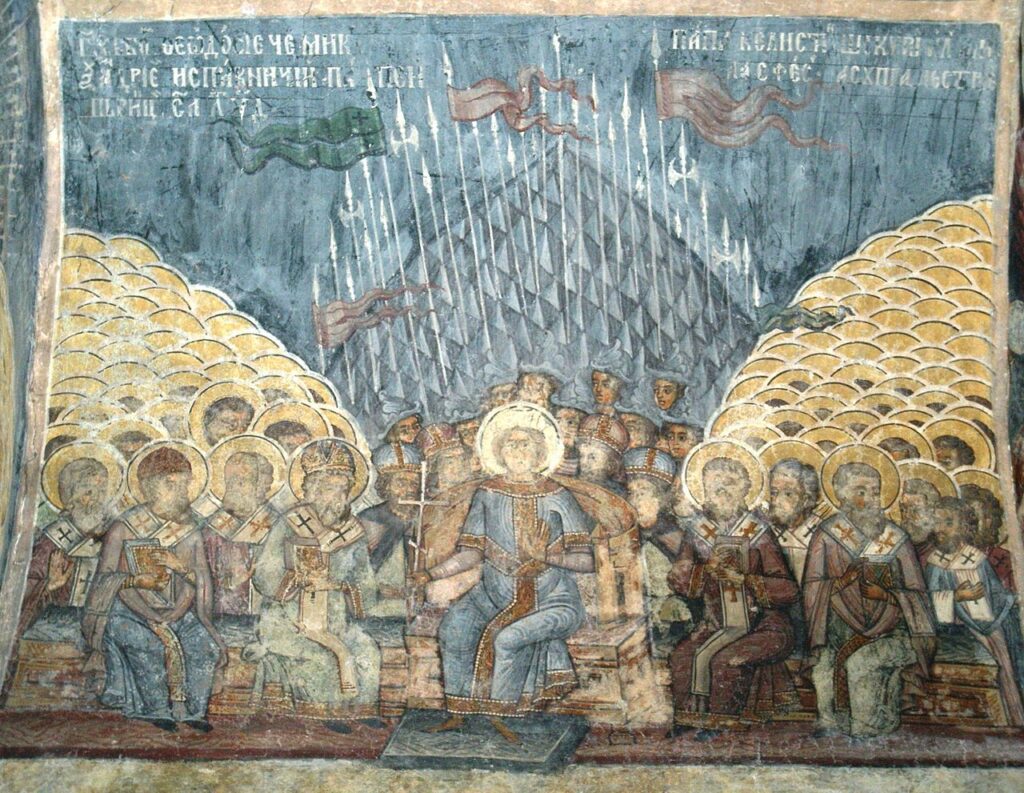
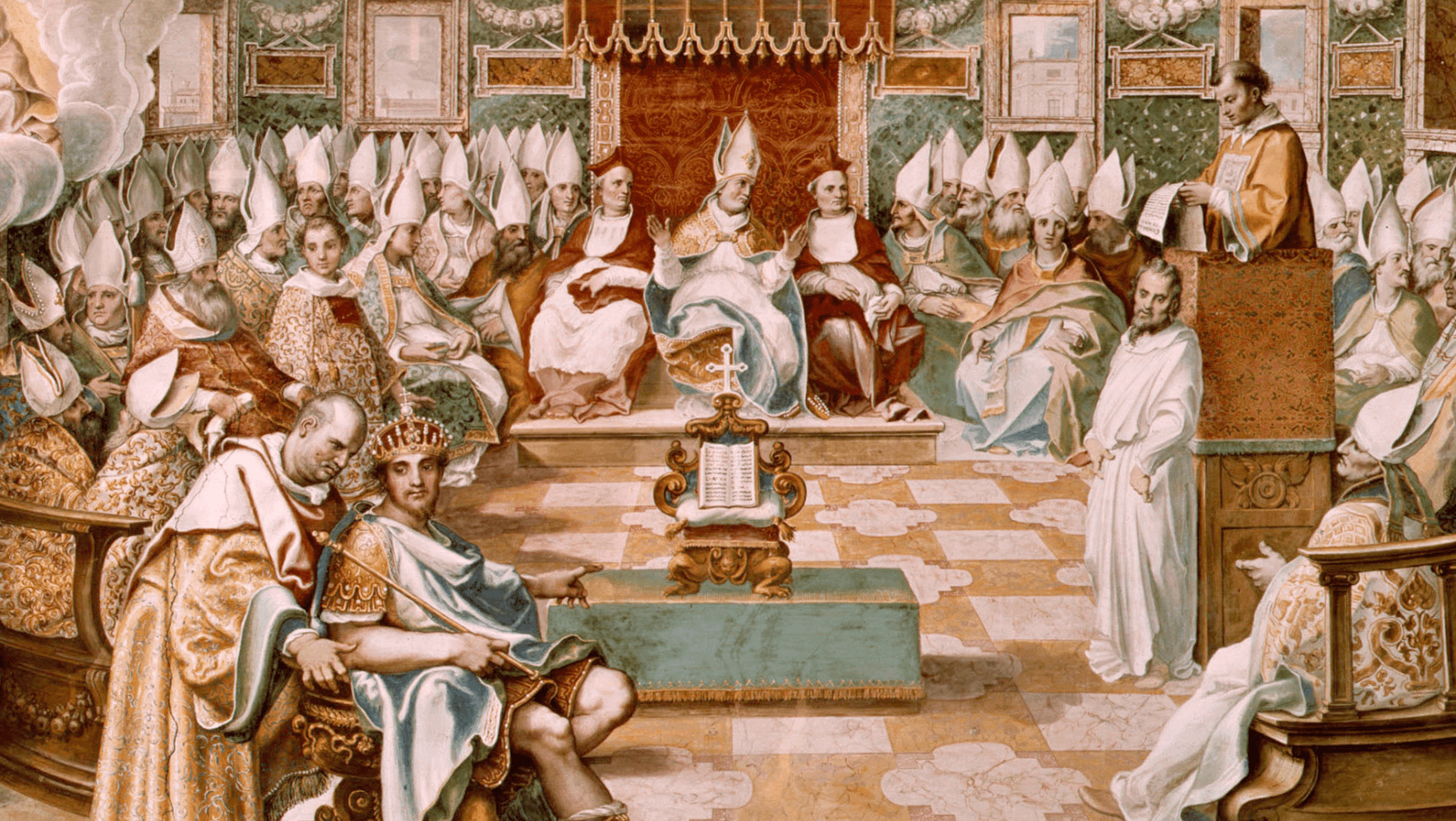
The emperor, desperate to prevent a religious civil war inside his newly Christianizing empire, intervened. To restore harmony, Constantine convened the First Ecumenical Council in Nicaea (İznik). This gathering produced the Nicene Creed, the foundational declaration of Christian orthodoxy still recited around the world.

Nicaea marked the moment when Church and Empire became inseparable partners, shaping one another for centuries.

Founding the New Capital: Constantinople

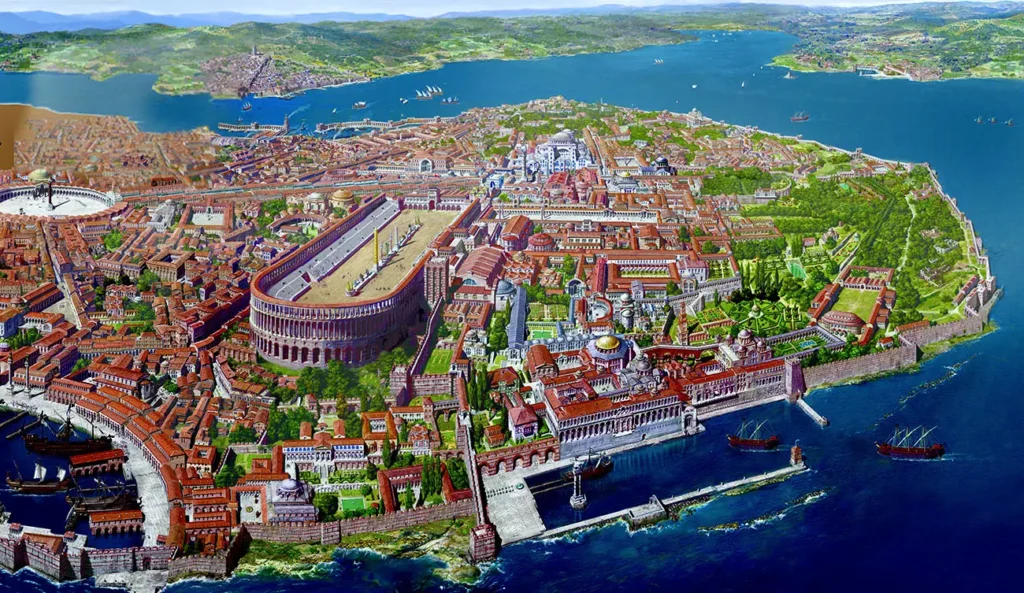
Two years after Nicaea, Constantine made perhaps his most influential decision: he founded a new imperial capital on the ancient site of Byzantium.

In 330, he inaugurated Constantinople — “New Rome.”

A Christian Capital for a Christian Age

Constantine transformed the city with a grand imperial palace, forums and ceremonial squares, monumental gates and defensive walls, new administrative centers, and, crucially, the first major Christian churches.

Among the earliest were:

  • The Church of the Holy Apostles — destined to be Constantine’s burial place

  • The original Hagia Irene — one of the oldest surviving churches in the city

  • Early basilicas that laid the groundwork for the future Patriarchal seat

Constantinople was not simply a political project. It was the architectural and spiritual blueprint for a Christian empire — the stage on which the drama of Byzantine Orthodoxy would unfold.

The Rise of the Patriarchate

When Constantine founded his new capital, the bishop of Byzantium was still a minor figure. But a city as important as “New Rome” naturally demanded a prominent ecclesiastical leader.

  • In 381, the Second Ecumenical Council declared that the bishop of Constantinople held second place after Rome, “because it is New Rome.”
  • In 451, the Council of Chalcedon elevated Constantinople to a full Patriarchate, granting broad jurisdiction over the empire’s key regions.

The Ecumenical Patriarchate was born — an institution rooted in Constantine’s political and spiritual vision.

The Byzantine Era: Fortress of Orthodoxy

For over a millennium, the Patriarchate became the beating heart of the Eastern Roman (Byzantine) world — shaping theology, guiding emperors, and preserving Christian tradition.

Doctrinal Battles That Defined Christianity

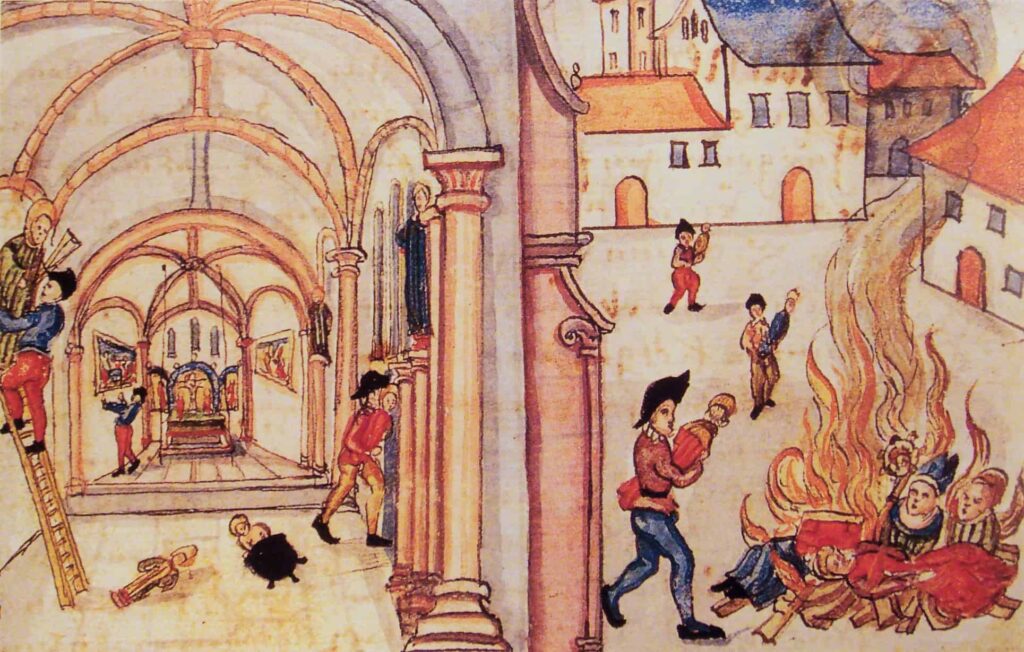
Iconoclasm - Constantinople

Patriarchs played decisive roles in the greatest theological debates of Late Antiquity:

  • The struggle against Arianism

  • The Christological controversies of the 5th century

  • The Iconoclastic Crisis (726–843), which nearly tore the empire apart

  • The ultimate triumph of icon veneration

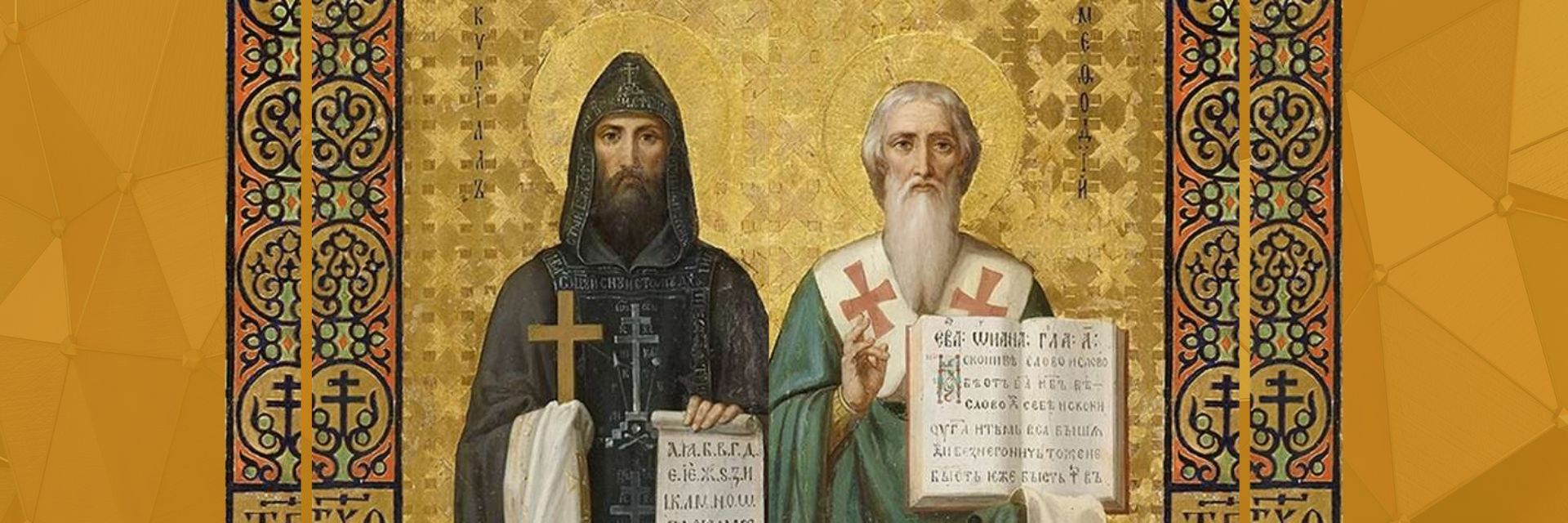
Mission to the Slavs

From Constantinople, missionaries like Saints Cyril and Methodius traveled northward, bringing Christianity to the Slavic world — influencing Bulgaria, Serbia, Russia, Ukraine, and beyond, shaping the spiritual map of Eastern Europe.

The Islamic Reordering of the East

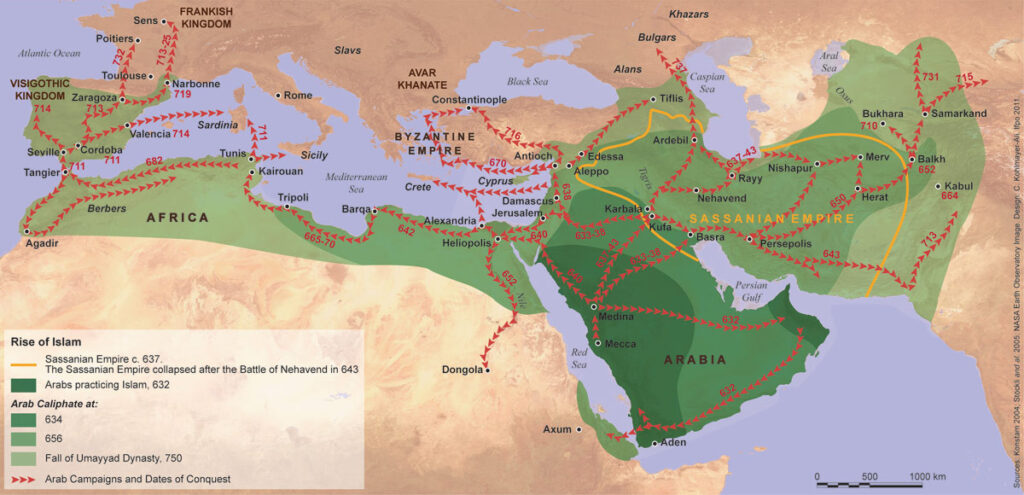
Through the 7th and 8th centuries, Islamic rule expanded rapidly across Syria, Palestine, Egypt, North Africa, and eventually much of eastern Anatolia. Subsequently,  the Mediterranean world was transformed by the rise of Islam.

The Byzantine Empire felt the impact almost immediately, as Arab armies inspired by the new faith pressed hard against its borders, even bringing war to the very walls of Constantinople and coming perilously close to capturing the city.
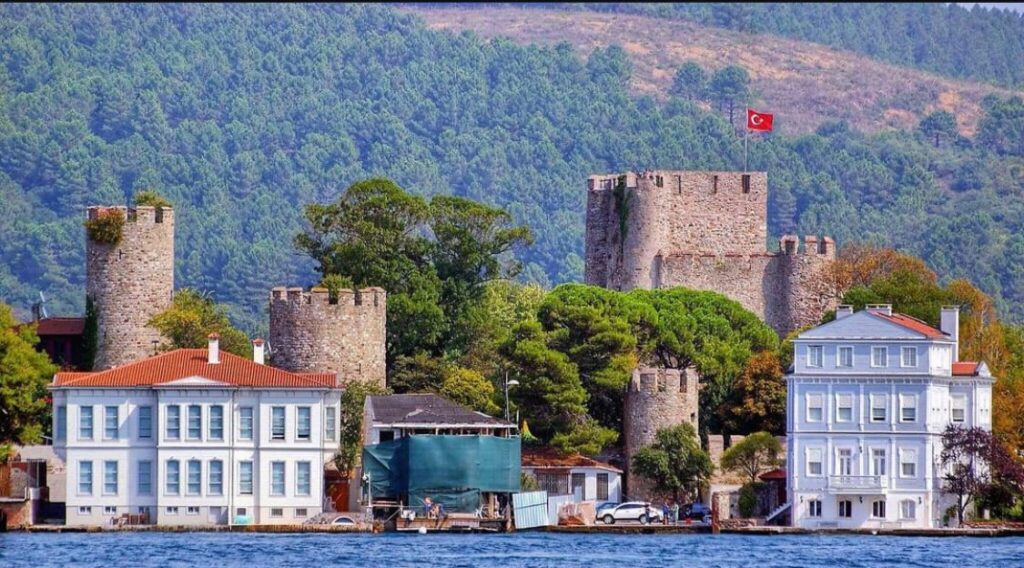
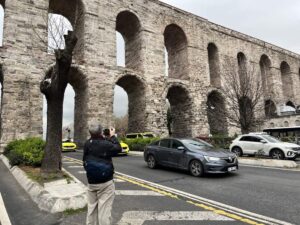
Anatolian Fortress from 1395

It’s staggering to imagine how different world history might look if Constantinople had fallen that early — seven or eight centuries before the Renaissance.

This had far-reaching effects:

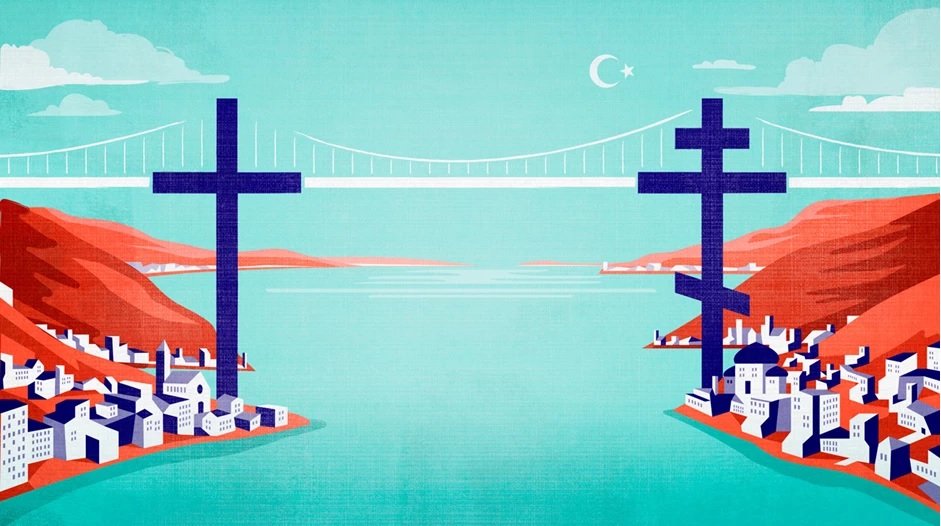
  • Rome and Constantinople drifted apart culturally and politically

  • Byzantium faced relentless military pressure

  • The empire increasingly saw itself as the last bastion of ancient Christianity

Iconoclasm and the Influence of Islamic Aniconism

Islam’s strict rejection of religious images influenced several Byzantine emperors during the Iconoclastic Crisis. Some saw early Islamic military victories as a sign of divine favor for aniconism.

Rome, which defended the veneration of icons, strongly opposed this movement — deepening theological tensions between East and West.

Arab Sieges and a Renewed Imperial Identity

The two great sieges of Constantinople (674–678, 717–718) reinforced a distinctive Byzantine identity — resilient, theological, and increasingly different from the Latin West.

The Great Schism (1054): A Divide Centuries in the Making

By the 11th century, the Greek East and Latin West had grown into two distinct civilizations, divided by language, liturgy, philosophy, and political pressures.

The mutual excommunications of 1054 simply formalized a separation centuries in the making, marking the beginning of the Great Schism between Eastern Orthodoxy and Roman Catholicism.

The fracture deepened after the Byzantine defeat at Manzikert in 1071, which left the empire vulnerable and pushed it to seek help from the Pope — a move that helped spark the First Crusade (1095). But the deepest wound came in 1204, when Latin Christian armies of the Fourth Crusade sacked Constantinople.

For the Orthodox world, this was more than political betrayal; it was a spiritual trauma, a desecration of its holiest city. Even today, the memory of 1204 remains one of the most painful and enduring scars between East and West.

The Ottoman Era: Survival and Reinvention

When the Ottomans conquered Constantinople in 1453, they chose to preserve — rather than abolish — the Ecumenical Patriarchate, integrating it into the imperial system.
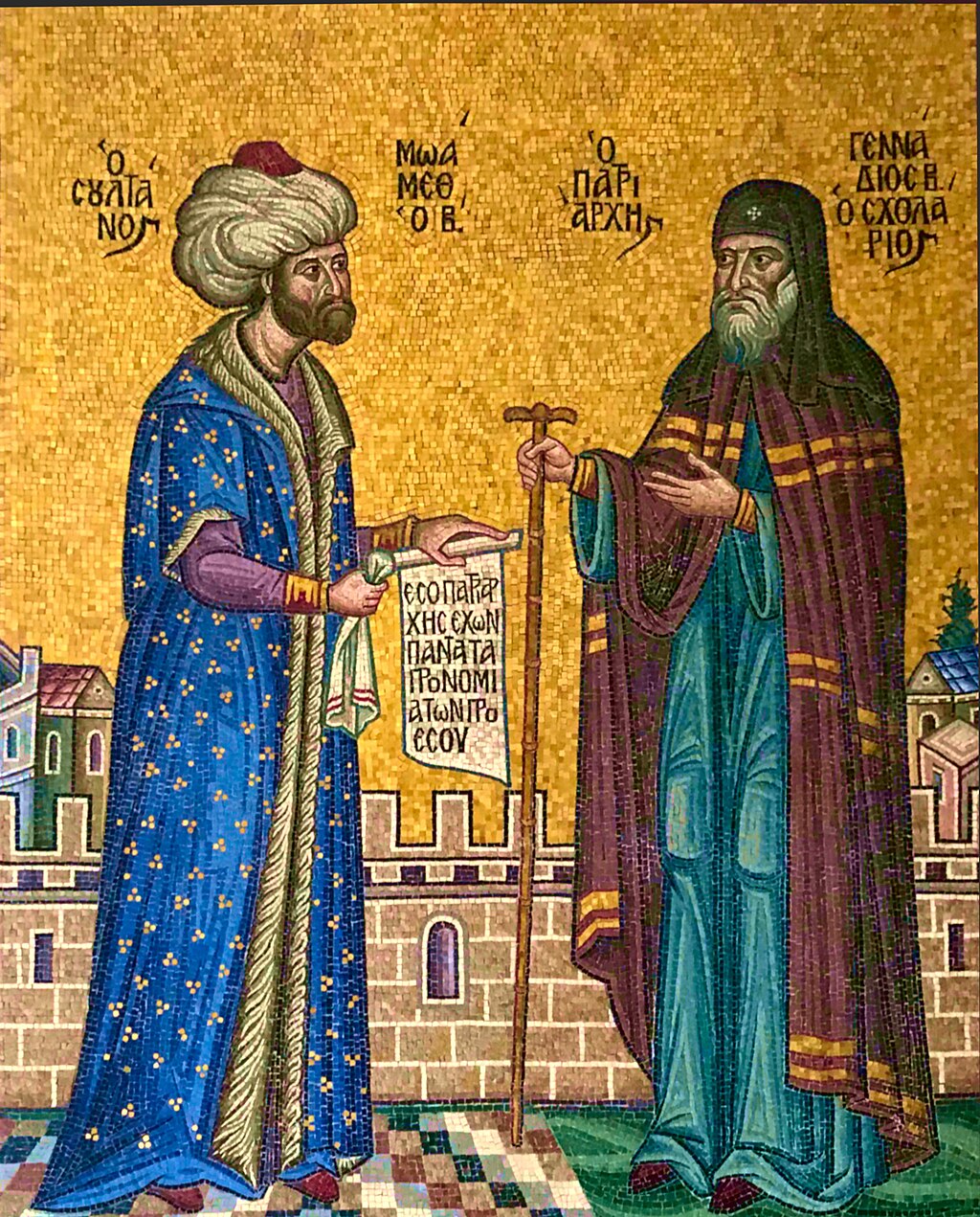
Under the Rum Millet established by Sultan Mehmed II, the Patriarch was recognized not only as the spiritual head of the Orthodox community but also as its civil leader, granting the office significant authority.

By around 1600, the Patriarchate settled permanently in the Church of St. George in Fener, which, despite fires, political pressures, and demographic shifts, became the enduring center of Ottoman Greek (Rum millet) life.

From this environment emerged the Phanariots, influential Greek families closely tied to the Patriarchate who served as diplomats, administrators, and intellectuals, helping shape Ottoman governance from within.
Modern Transformations

The 19th and 20th centuries brought dramatic transformations for the Patriarchate: national independence movements reshaped the Orthodox world, new autocephalous churches emerged, the population exchange between Greece and Türkiye emptied entire communities, and Istanbul’s Greek population sharply declined, shrinking the Patriarchate’s territorial influence. Yet even as its local presence diminished, its global spiritual role expanded, especially among growing diaspora communities.

This era also witnessed the emergence of the Turkish Orthodox Patriarchate (1922–present), a nationalist movement seeking to establish a distinct Turkish Orthodox identity within the early Republican context.

In recent years, the Russia–Constantinople break (2018–2022) further underlined the continuing geopolitical weight of the Ecumenical Patriarchate, as Moscow severed communion after Constantinople granted autocephaly to the Orthodox Church of Ukraine.

Contemporary Debate: Sevan Nişanyan’s Perspective

You can watch the video the auto-translate function on YouTube.

Writer and historian Sevan Nişanyan offers a provocative alternative interpretation of the Patriarchate’s role and legacy. His perspective is not mainstream, but it provides context for understanding modern Turkish attitudes toward the institution.

The writer argues that the Ecumenical Patriarchate today is best understood as a political heir of Byzantium, having inherited the empire’s sophisticated culture of diplomacy, strategy, and institutional complexity.

He also emphasizes that its continued residence in Istanbul — despite the city’s now-tiny Rum population — makes it a demographic anomaly, a universal patriarchate operating in a place where its traditional community has all but disappeared.
In his view, much of its historical authority stemmed from its role as the head of the Rum Millet, meaning its influence was always intertwined with imperial structures rather than rooted solely in spiritual leadership.

If you want to stay clear of the Ottoman Empire‘s influence, you distant yourself from the Istanbul Patriarchate. (Sevan Nısanyan)

At the same time, he describes a weakened center struggling with limited resources, staffing challenges, and an often-delicate relationship with the Turkish state. This stands in contrast with the worldwide Orthodox network, which he believes remains vast and culturally influential, yet insufficiently utilized as a potential asset for Türkiye. 

The Ecumenical Patriarchate Today

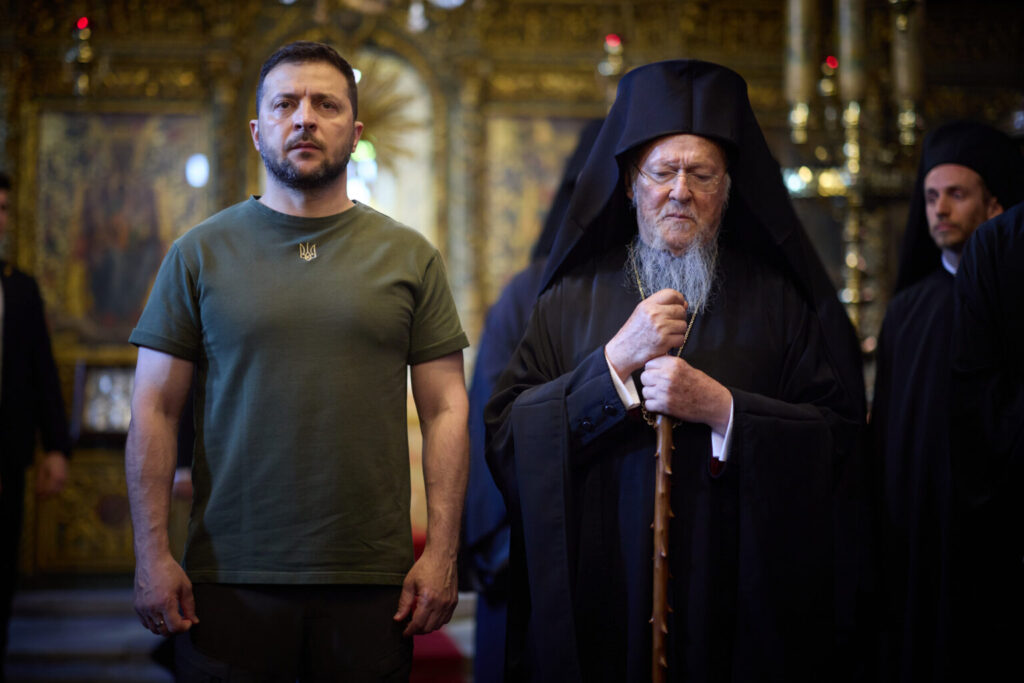
The current Ecumenical Patriarch, Bartholomew I (since 1991), is known worldwide as:

  • A pioneer of environmental advocacy (“The Green Patriarch”)

  • A leading voice in interreligious dialogue

  • A global representative of Orthodox Christianity

  • A bridge between ancient tradition and contemporary challenges

Despite a small local flock, the Patriarchate’s international influence remains profound, especially among diaspora communities in Europe, Africa (Ethiopia in particular), North America, and Australia.

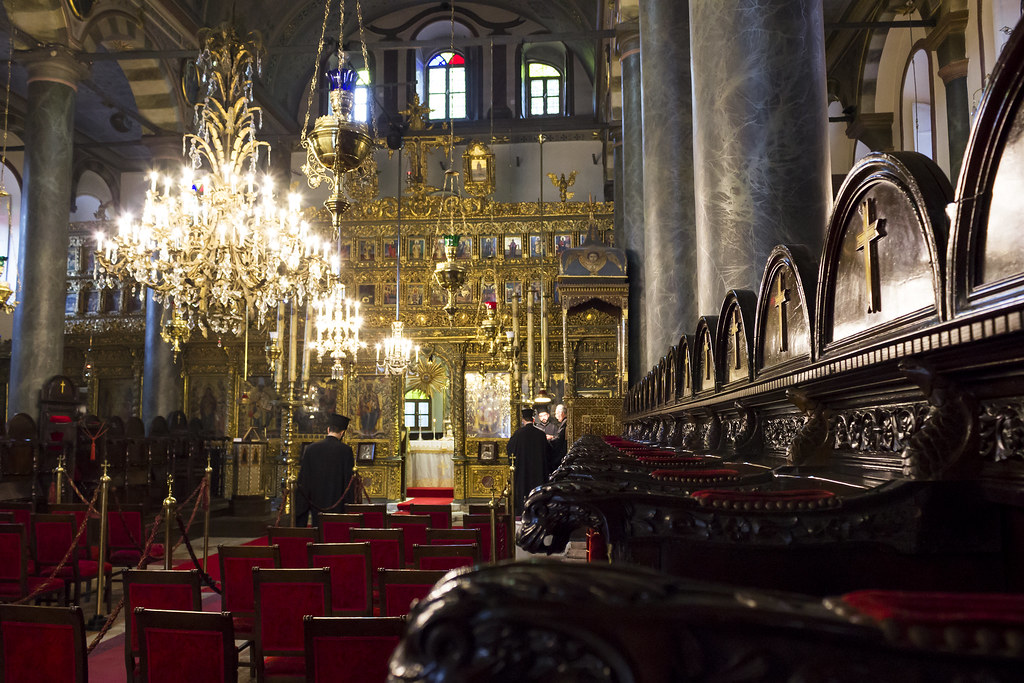
Inside the Patriarchal Cathedral of St. George

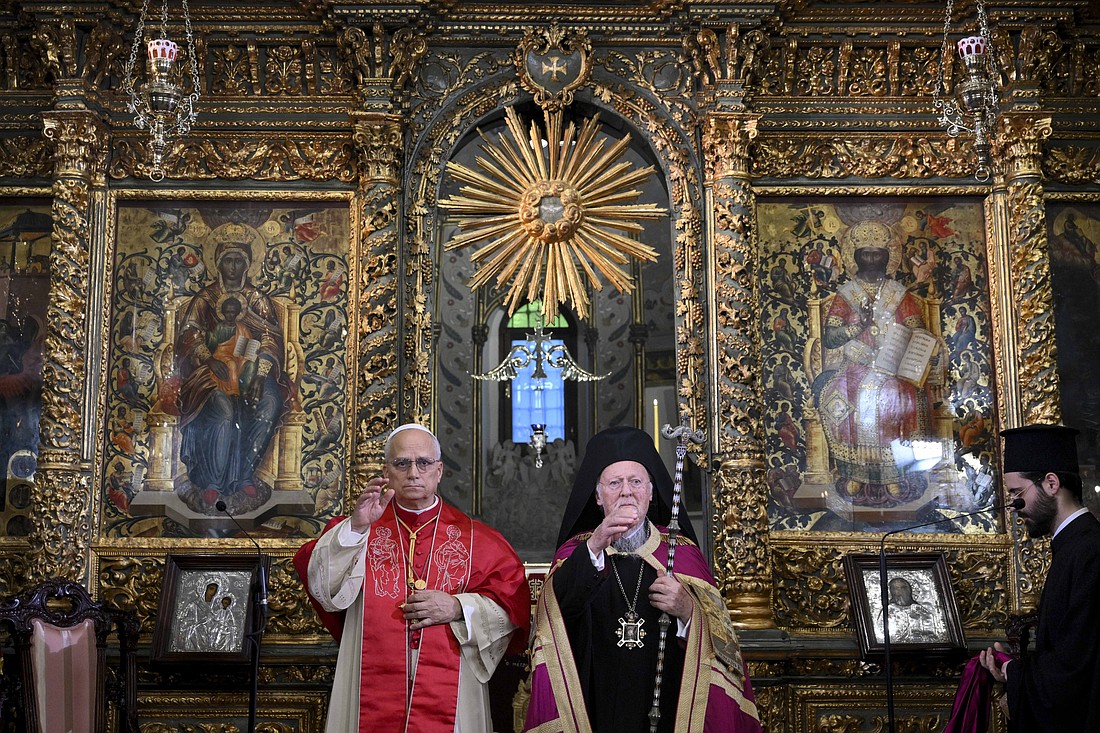
Recent visit of The Pope

Despite its modest exterior, St. George’s Cathedral houses treasures of extraordinary spiritual and historical significance:

  • Relics of St. John Chrysostom and St. Gregory the Theologian

  • A magnificently carved wooden iconostasis

  • The ancient patriarchal throne

  • Miraculous icons venerated for centuries

  • And one of its most moving relics: a fragment of the column believed to be the one where Jesus was tied before the Flagellation

Quiet, intimate, and filled with living history, St. George’s remains one of the holiest sites in the Orthodox Christian world.
Why the Ecumenical Patriarchate Matters

Today, the Ecumenical Patriarchate – and the Greek Orthodox Church more broadly – stands as:

  • A living link to the apostolic age, preserving forms of worship, theology, and church life that reach back to the earliest Christian communities.

  • The historic “First Throne” of Orthodoxy, carrying the primacy of honor among the ancient patriarchates of the Christian East.

  • A guardian of the old Hellenistic–Roman Christian tradition, keeping alive the language, liturgy, and intellectual world of the Eastern Roman Empire – a kind of holy “relic” of late antiquity that still breathes.

  • A church that prays and thinks in Greek, where the spirit of Jesus is proclaimed, sung, and contemplated in the very language of the New Testament and the early councils.

  • A symbol of resilience, peace, and dialogue, surviving empire, conquest, nationalism, and modern secularism while engaging other churches, religions, and states with surprising patience.
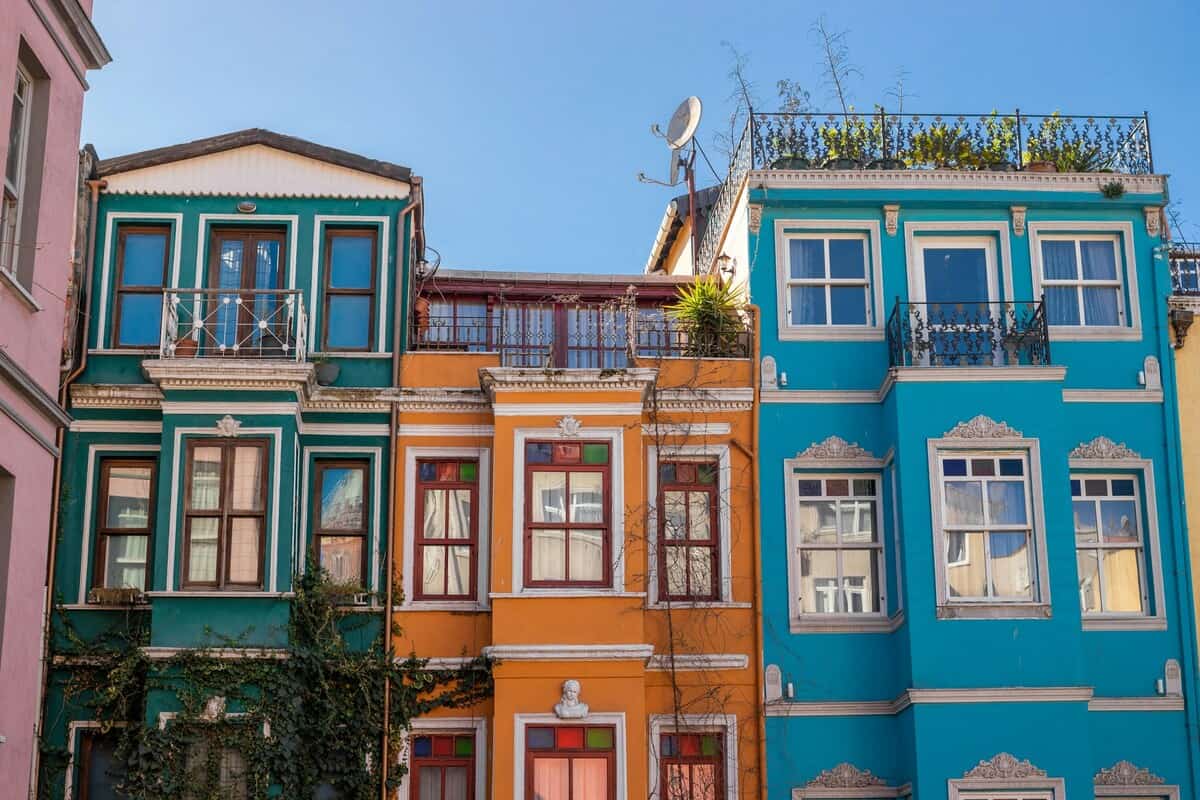
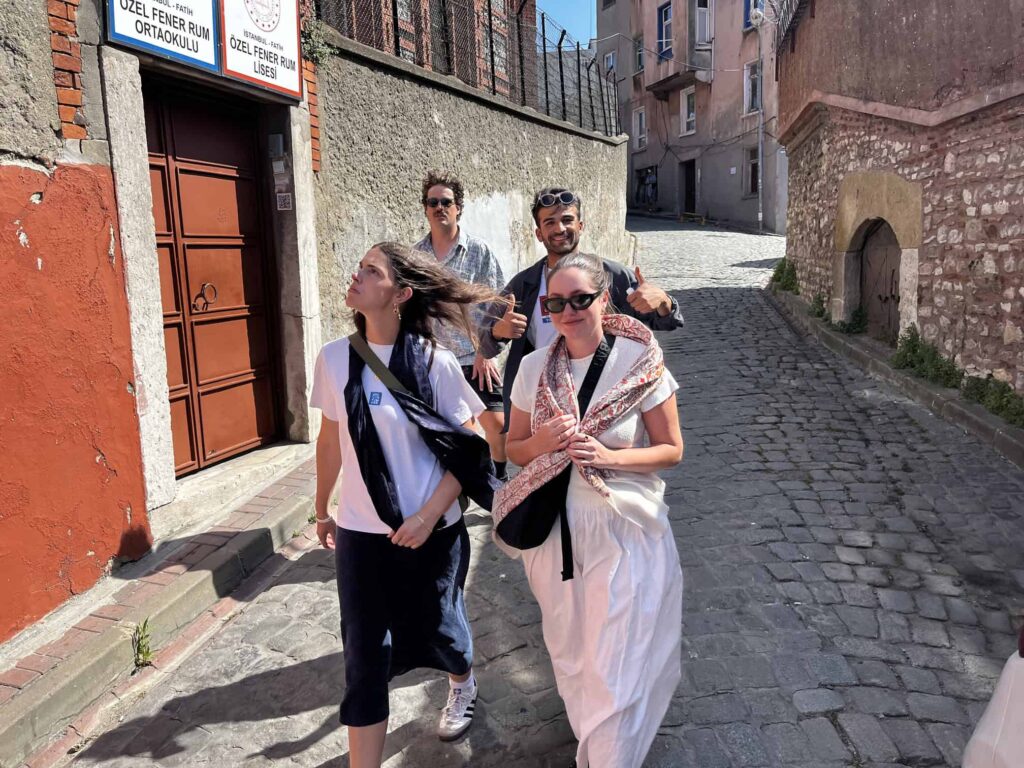
  • A reminder of Istanbul/Constantinople’s role as a crossroads of civilizations, where Greek, Roman, Jewish, Armenian, Slavic, Arab, and Turkish histories intersect – and where that layered story is still told every time the Divine Liturgy is celebrated at the Phanar.

Get in touch with us & Visit the Patriarchate

Visiting the Ecumenical Patriarchate is like stepping into a living chapter of world history.

Whether you are drawn to theology, architecture, liturgy, or simply the hidden corners of Istanbul, Fener offers a journey into a world that shaped continents.

Let’s explore Fener, Balat, and the Golden Horn together — discovering stories most travelers never hear.

Related Articles about 'Byzantine Heritage'

Cappadocia Tour Guides - Said and Onurcan

5 Best Tour Guides in Cappadocia for 2026

Read More »
Ecumenical Patriarchate - Pope Leo 14 (1)

The Ecumenical Patriarchate of Constantinople

Read More »

Pope Leo XIV’s Historic Visit: Nicaea (İznik) 

Read More »

Southwest Antalya 2-Day Tour through the Lycian Coast:

Read More »

Priene: The Hill-Top City of Ancient Ionia

Read More »
Rum People 1964 pogrom

Greek Speaking Romans of Anatolia: Rum

Read More »
Tags: Byzantine LegacyChurchConstantinopleCultureGolden HornHistoryMinoritiesOttomansReligion
Share132Tweet83
Ömer Çelik

Ömer Çelik

Ömer Çelik is a professional tour guide and art history student from Sivas, Turkey. He holds a degree in Tourist Guidance from Erzincan University and is currently studying Art History at Sivas Cumhuriyet University. With over six years of experience in the tourism industry, including guiding in Istanbul, Ömer brings a deep passion for cultural exploration and storytelling to his work. His academic background and personal experiences enrich his insights into Turkey's rich heritage, with a particular focus on the history of Sivas and the legacy of the Seljuk Empire. Through his blog posts for The Other Tour, Ömer shares his extensive knowledge and enthusiasm, offering readers a unique perspective on Turkey's historical and cultural treasures.

Related Posts

Favorite shots from Summer ’24
TOP 5 ISTANBUL

Private Istanbul Tours

Explore the world of private tours in Istanbul in 2024, from private guided tours to cruises on the Bosphorus, and everything in between.

Our Tour Guides
Istanbul Travel Blog

Our Tour Guides

We match each traveler with the perfect professional tour guide based on their interests, style, language, and even their mood.

Private Gulet Charter in Turkey – Customized Blue Cruises
Blue Cruises

Gulet Kamala – Luxury Private Yacht Charter

Gulet Kamala is a private 3-cabin gulet for small groups exploring Fethiye, Göcek and Kekova. Weekly crewed charter for a relaxed blue cruise.

Southwest Antalya 2-Day Tour through the Lycian Coast:
2-Day Tours

Southwest Antalya 2-Day Tour through the Lycian Coast:

Lycian heritage: Phaselis, Demre–Kekova, Kaş, Xanthos–Letoon–Tlos: ancient harbors, rock-cut tombs, the Sunken City by boat, and UNESCO classics.

Aphrodisias, Turkey 2025 - Furkan Emre Capkur - The Other Tour
Anatolia Archaeology

Phrygia: The Iron Age Anatolian Kingdom

Explore ancient Phrygian with our guided tours. Visit rock-cut monuments, King Midas' tomb, and hidden valleys in the Phrygian Highland.

Cappadocia Tour Guides - Said and Onurcan
Cappadocia Tour Guide

5 Best Tour Guides in Cappadocia for 2026

At The Other Tour we’ve hand-picked five stellar professional tour guides who will turn your Cappadocia trip into an unforgettable adventure.

Next Post
Aphrodisias, Turkey 2025 - Furkan Emre Capkur - The Other Tour

Phrygia: The Iron Age Anatolian Kingdom

Comments 2

  1. Justin says:
    3 weeks ago

    Just came across your article in my google feed and i gotta say that i’m really thankful as my family family has roots in istanbul and i plan to visit next summer. so this fits like a glove! i’ll be sure to check out your tours as well. looking forward to visiting the patriarchate when i’m there.

    Reply
    • Ömer Çelik says:
      3 weeks ago

      Thank you so much for your kind words! I’m really glad the article reached you and even happier that it resonated with your family’s connection to Istanbul. Whenever you’re in the city next summer, feel free to reach out — I’d love to show you around and help you explore the Patriarchate and the neighborhood’s hidden stories. Safe travels and hope to meet you soon!

      Reply

Leave a Reply Cancel reply

Your email address will not be published. Required fields are marked *

  • Ömer Çelik — Istanbul’s Lead Tour Guide in 2026

    Is it safe to travel to Turkey in 2026?

    16 shares
    Share 2214 Tweet 1384
  • Istanbul Earthquake: A 2025 Update

    42 shares
    Share 1823 Tweet 1139
  • Exploring Istanbul’s Asian Side

    10 shares
    Share 788 Tweet 493
  • The Mystery of Turkish Language

    46 shares
    Share 641 Tweet 401
  • Top 5 Bookshops in Istanbul

    15 shares
    Share 674 Tweet 421

Our Tags

Aegean Sea Ancient City Ancient Civilizations Archaeology Architecture Arts & Culture Asian side Best Tours in Turkey Bosphorus Byzantine Legacy Cappadocia Church Constantinople Cruise Culture Day trips Environment Ephesus European Side Events and Happenings Fun Hagia Sophia Historic Landmarks History Hotels Istanbul Istanbul Tours Istanbul travel Istanbul Trip Istanbul Visit Mediterranean Museums Nature Ottomans Recommendations Religion Restaurants Reviews Sultanahmet The Other Tour Turkey Turkey Travel Turkish Cuisine Turkish Culture Water

Watch The Other Tour’s video

https://youtu.be/hCPhlFh9N8Q

About us

The Other Tour is an alternative city experience in Istanbul that immerses visitors in local culture through unique activities, personal interactions, and off-the-beaten-path explorations.

Newsletter

The Other Tour is an immersive Istanbul experience, taking you beyond tourist spots to explore local culture with activities like home-cooked meals, school visits, and Bosphorus cruises. As a travel agency, we also offer personalized travel planning in Istanbul and Turkey, crafting custom itineraries and unique experiences tailored to each traveler.

Company

  • Explore
  • 2025 Itinerary
  • Services
  • F.A.Q.
  • Blog
  • Philosophy
  • About
  • Contact

Our Services

  • Private Tours
  • Private Tour Guides
  • Airport Transfers
  • Made-to-order
  • Hotel Selection
  • Culinary Tours
  • Shopping Tours
  • Unique Activities

Turkey

  • Destinations
  • Istanbul
  • Cappadocia
  • Ephesus
  • Pamukkale
  • Bodrum
  • Antalya
  • Mediterranean
  • Terms & Conditions
  • Privacy Policy
  • Jobs
  • Get in touch

© 2025 The Other Tour - Istanbul by Eren Nergiz Travel.

No Result
View All Result
  • Home
  • The Other Tour
    • Introduction
    • 2025 Itinerary
    • F.A.Q.
    • About us
    • Reviews
    • Contact
  • Istanbul
    • Tours
    • Tour Guides
    • Attractions
    • Neighborhoods
    • Food
    • Stay
    • The Bosphorus
  • Turkey
    • Turkey Tours
    • Destinations
    • Cappadocia
    • Ephesus
    • Pamukkale
    • Antalya
    • Bodrum
  • Services
    • Private Tours
    • Daily City Tours
    • Made-to-order Travel Planning
    • Unique Activities
    • Hire a tour guide in Istanbul
    • Layover Tours
    • Culinary Tours
    • Hotel Selection
    • Family Time
    • Event Planning
    • Corporate Group Tours
  • Blog
    • TOP 5 ISTANBUL
    • Read
    • Events
    • News
    • Turkey
    • Documentary
    • Turkish Food
    • Turkish Music
    • Istanbul Videos
    • All Categories
    • All Posts

© 2025 The Other Tour - Istanbul by Eren Nergiz Travel.