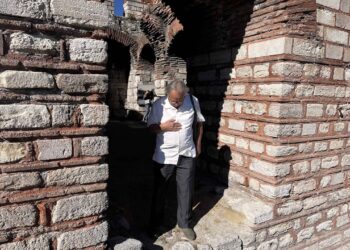
Cappadocia is defined by what was carved, not built: rock-cut churches and underground cities like Derinkuyu hollowed from volcanic tuff. Sobessos completely breaks the mold. Rather than burrowing into the earth, this fourth-century Roman settlement was raised in cut stone and mortar instead.
Table of Contents
A City Cappadocia Wasn't Supposed to Have

Sobessos sits near the village of Şahinefendi, south of Ürgüp, in a landscape better known for cave churches and underground refuges than street plans and civic buildings.
For centuries, historians assumed Cappadocia’s Roman-era population had left almost no conventional architectural trace, hiding instead inside the soft rock that made the region famous. Sobessos is the exception that undid that assumption.
Archaeologists at the site have excavated a bath complex, an agora, and a council chamber — the ordinary furniture of a functioning Roman town, not a refuge carved in secret.
Excavation director Bilsen Özdemir, of Nevşehir Hacı Bektaş Veli University, has said the site “offers a very different glimpse into Cappadocia,” precisely because it looks like nowhere else nearby.
Found by Accident, Twice
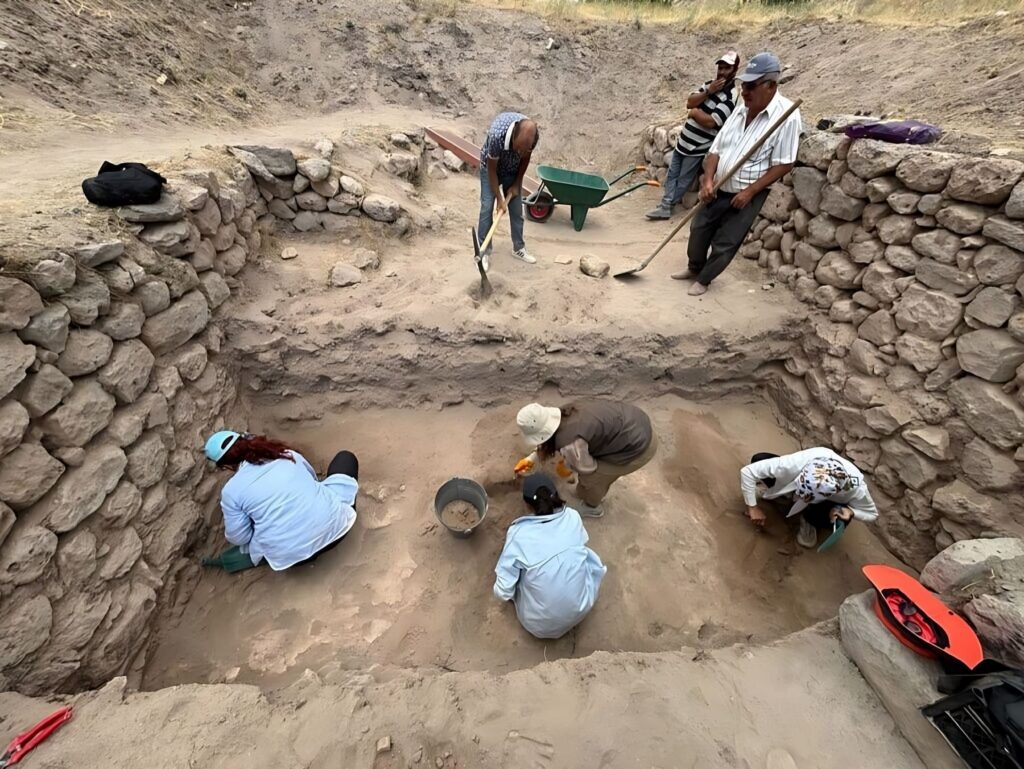
Sobessos surfaced the way a surprising number of major sites in Turkey do: by accident. Locals in Şahinefendi had noticed mosaic fragments in their fields for years, but formal excavation only began in 2002, after a chance discovery — accounts differ on whether it was treasure hunters or the landowning farmer — finally brought archaeologists to the spot.
What they found dated primarily to the fourth century AD, with the settlement continuing to develop well into the Byzantine period. Its full boundaries are still unknown; every excavation season has expanded, rather than closed, the question of how large Sobessos actually was.
The Baths & Agora of Sobessos
The first structure most visitors encounter is the bath complex, uncovered roughly two and a half metres below the surface. It follows a standard Roman layout: an apoditerium, or dressing room, decorated with mosaic flooring, and a caldarium, or heated room, whose stone seating has survived along with sections of the cistern that fed it.
A hypocaust system — a network of channels beneath the floor that circulated hot air — kept the whole complex warm, the same engineering used in bathhouses across the Roman world.
Next to the baths lies the agora, the open marketplace where the town’s daily commerce would have taken place. Together, the bath and agora reconstruct the basic rhythm of Roman civic life in a region where almost no other physical evidence of that rhythm survives above ground.
A Chapel Built on a Roman Floor
Sometime around the middle of the sixth century, a small Christian chapel went up directly on top of the council chamber’s mosaic floor, built from rough stones and materials pulled from the surrounding structure.
Rather than clearing the Roman room away, its builders simply built into it — apse, column bases, and a holy water font, set on the same tesserae a wealthy Roman household had once walked across.
Some researchers believe Sobessos went on to become an episcopal seat during the Byzantine period, which would make this modest chapel a physical hinge between two very different chapters of the same town: a Roman civic building quietly absorbed into a Christian one, stone by stone, without ever being torn down.
A Site Still Being Uncovered
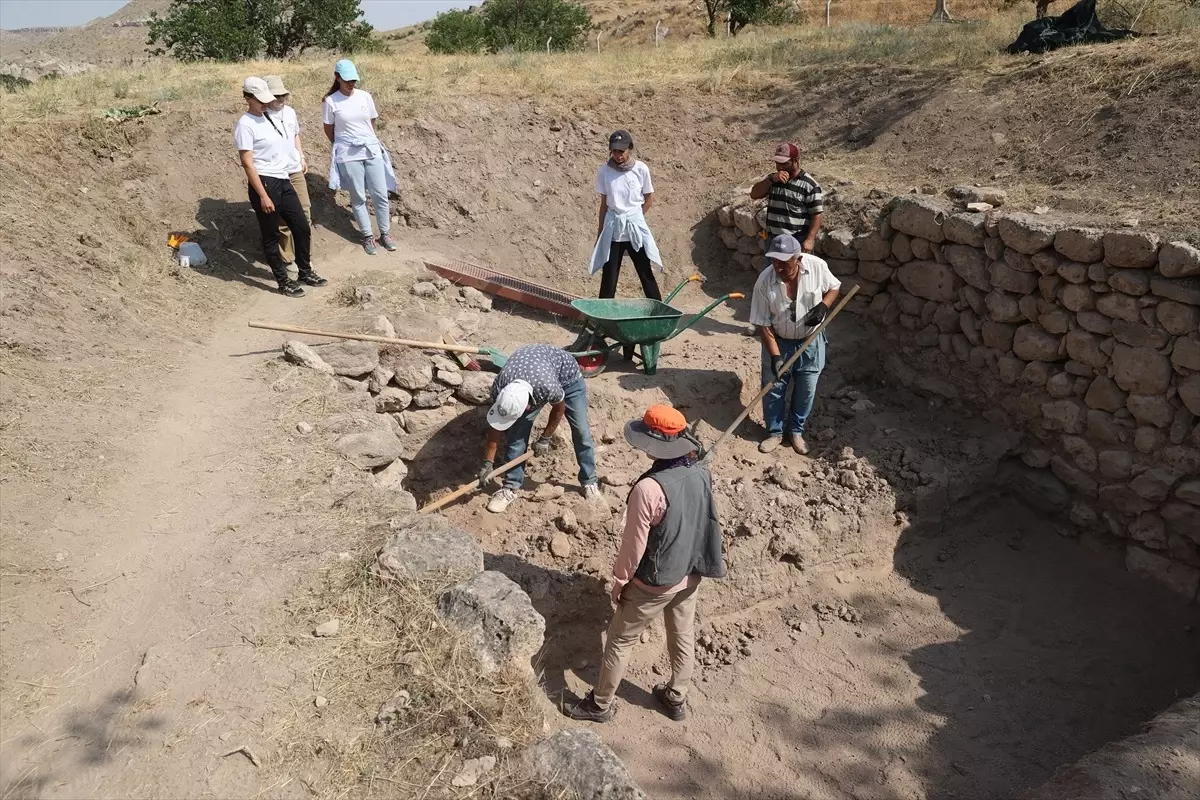
Sobessos remains an active dig, but not a well-funded one — budget constraints currently limit fieldwork to about three months every two years.
Even so, surface surveys around the settlement have turned up Neolithic and Bronze Age material, leading Özdemir’s team to suspect Sobessos is not a single Roman city but one layer inside a much larger, multi-period archaeological zone that has barely been mapped.
Archaeologists point to Tyana, in Niğde, and Mokissos, in Aksaray, as the closest regional parallels — other rare examples of conventional, above-ground Roman urbanization in central Anatolia. Within the Cappadocia region specifically, though, Sobessos still stands alone.
Visiting Sobessos in Cappadocia
Sobessos is open daily with free admission, though there is little on-site signage, and the crowds that fill Derinkuyu or Göreme rarely make it here — the site draws only a fraction of the visitors its neighbours do.
That quiet is part of its appeal: a Roman bath, a mosaic-floored council chamber, and a sixth-century chapel, largely to yourself, a short drive from Ürgüp and the old Greek streets of Mustafapaşa.
The Other Tour can build Sobessos into a private Cappadocia itinerary alongside Ürgüp, Mustafapaşa, and the underground cities, so the region’s rock-cut world and its one conventionally built city sit side by side in the same day. Get in touch with a guide who knows the region to plan the route.