

Cities do not become legendary by accident. They become legendary because someone, at some point, decided to draw a line—a boundary worth defending, expanding, challenging, or sometimes erasing entirely.
Table of Contents
Introduction to Istanbul's Many Walls
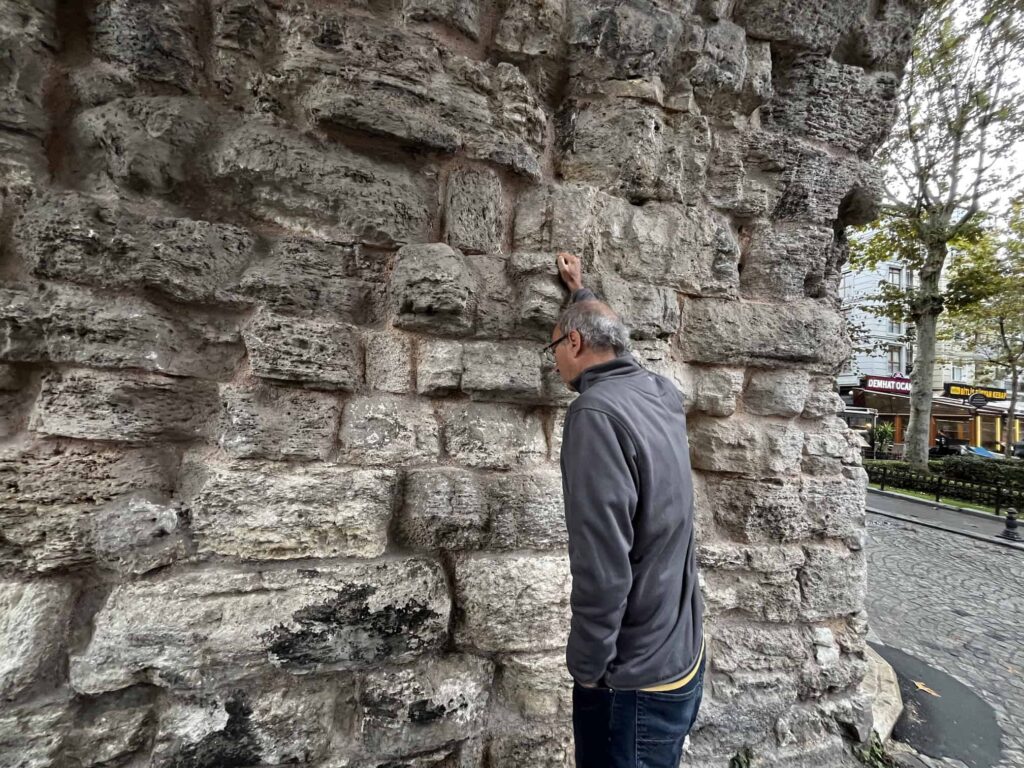
Istanbul, formerly known as Constantinople, has always lived behind — and beyond — its walls. For nearly two thousand years, the city drew lines of stone to protect itself from the world while shaping a world of its own. These fortifications—Roman, Byzantine, Genoese, and Ottoman—did more than guard a city; they created one.
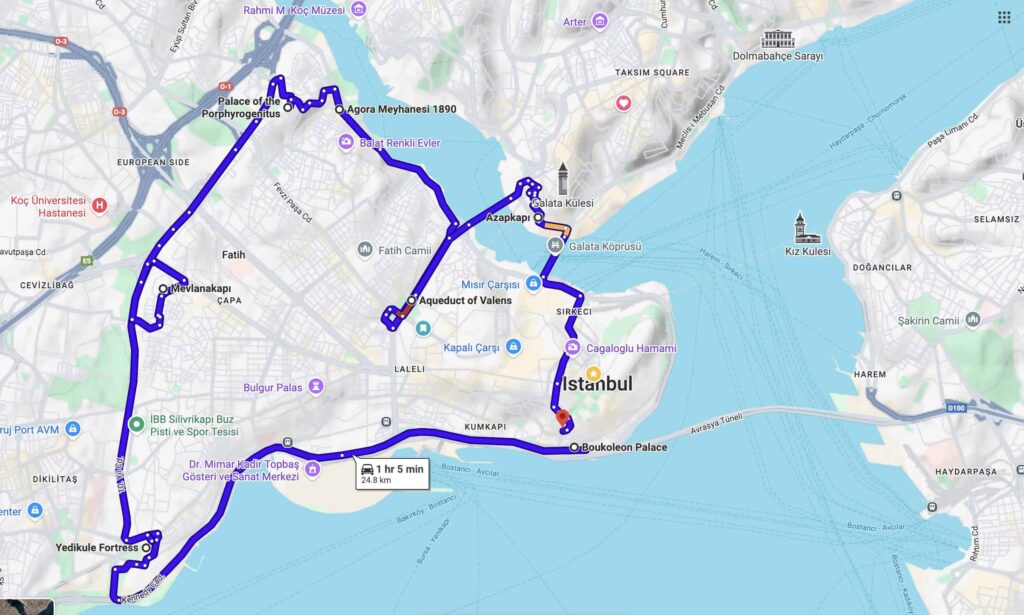
On this journey, we follow those boundaries: the Hippodrome’s ancient Sphendone, the Sea Walls and Bukoleon Palace, the Golden Gate and the mighty Theodosian Walls, the cisterns and the Valens Aqueduct of Zeyrek, the Golden Horn defenses of Fener and Balat, and finally the Genoese stronghold of Galata before crossing to Kadıköy, ancient Chalcedon.
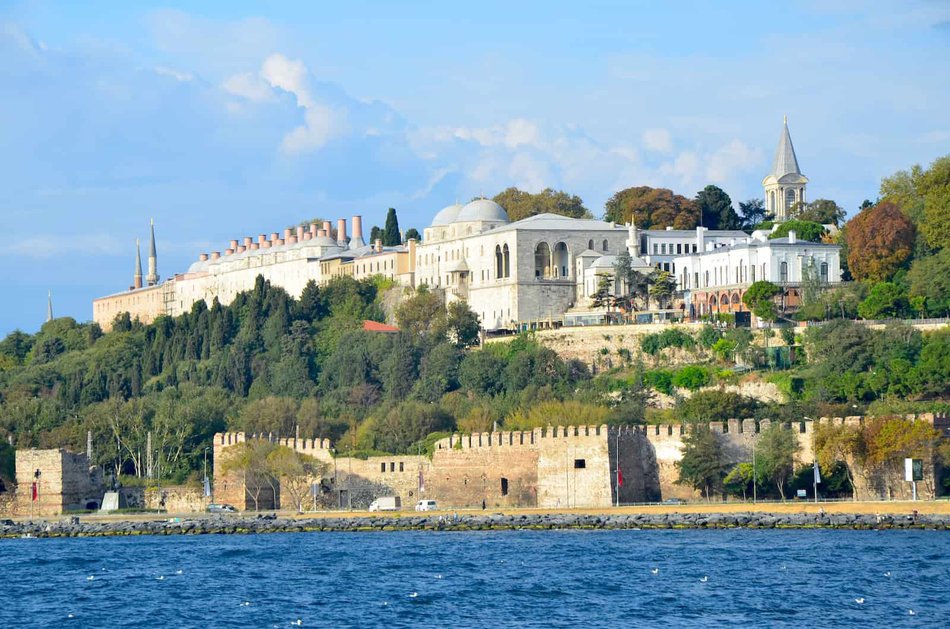
As we trace the edges of the old city, we uncover something deeper: The walls do not show us where Constantinople ends— they show us why it endured.
Full-Day Itinerary
A full-day unique itinerary that highlights Istanbul’s ancient walls and wall-like Roman-era aqueducts and fortress towers!
Istanbul old town, Sultanahmet has many great walls if you’d like check them out quickly because we have a long day ahead of us!
The Walls of the Hippodrome — Sphendone
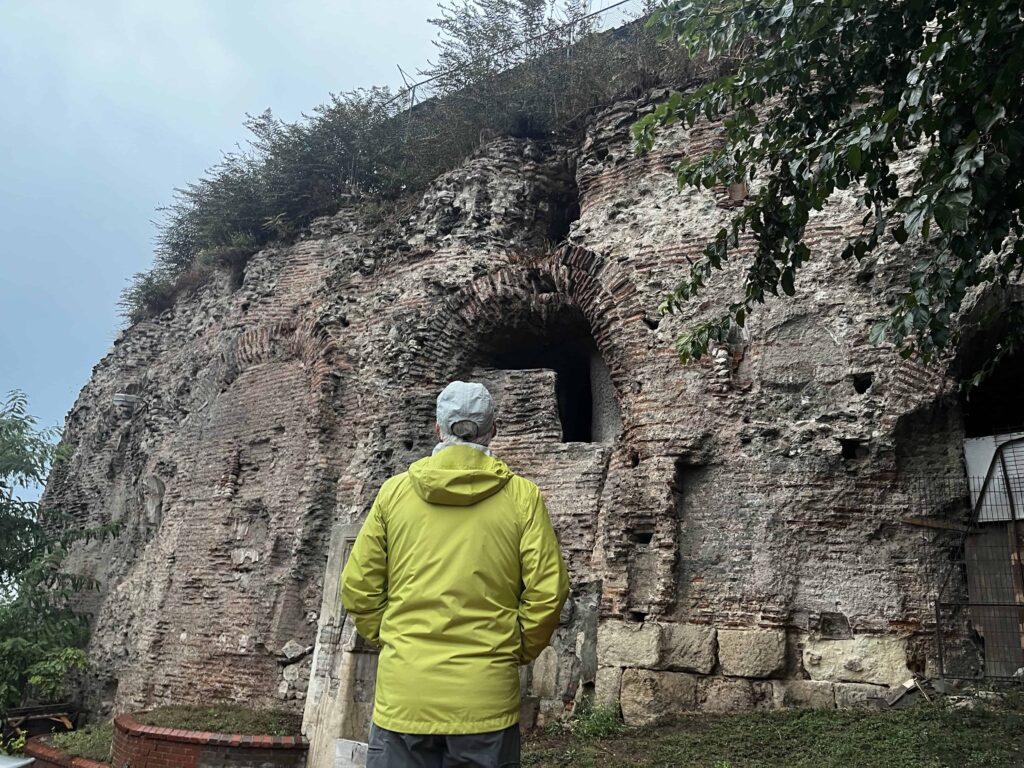
We begin at the Sphendone of the Hippodrome, the ceremonial backbone of ancient Constantinople. It looks like an open square today, but once it was a place where the city learned her myths and rhythms: cheers, rebellions, coronations, executions, triumphs, collapses.
The Hippodrome was more than entertainment. It was the first boundary between order and chaos. Here we set the tone: Istanbul is a city shaped as much by what it keeps out as by what it invites in.
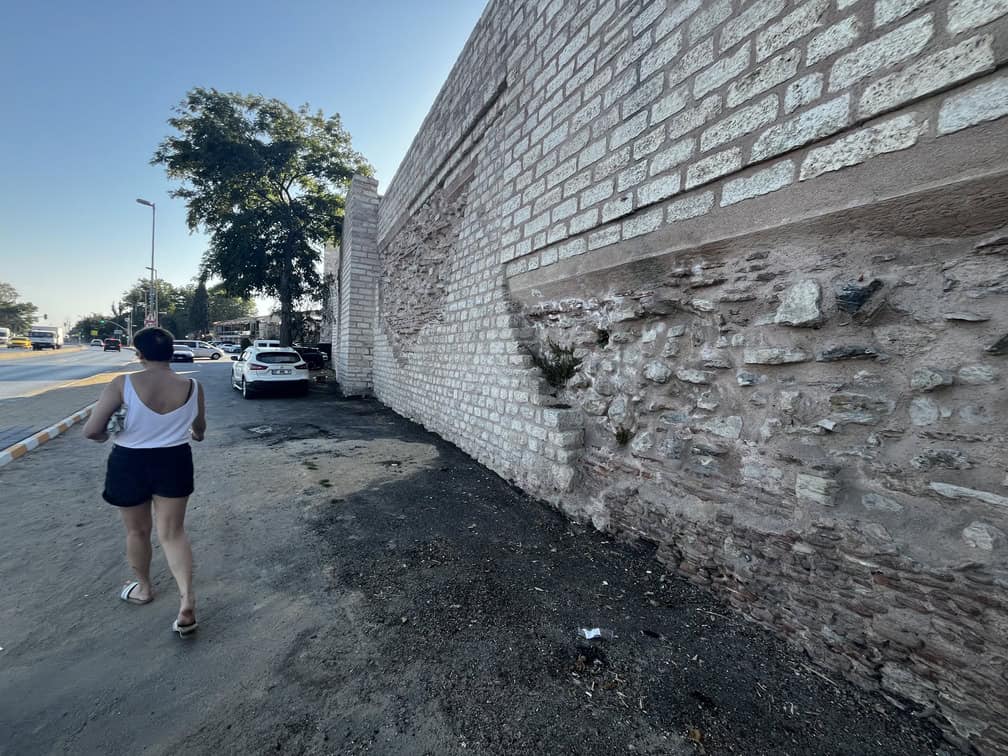
We descend toward the Marmara, to the forgotten edge of the old city. The Sea Walls rise quietly beside the railway, ignored by most who pass them. But these stones once held back the world.
Then, almost unexpectedly, the Bukoleon Palace appears—what remains of a palace that once hung above the waves, where emperors woke to the sound of oars and gulls.
Here the empire was intimate—soft—standing in contrast to the hardness of the walls below. The ruins still glow with that delicate contradiction.
Another great option is to talk through the Gülhane Park while observing the walls of the Topkapi Palace first and the Sea Walls of Constantinople.
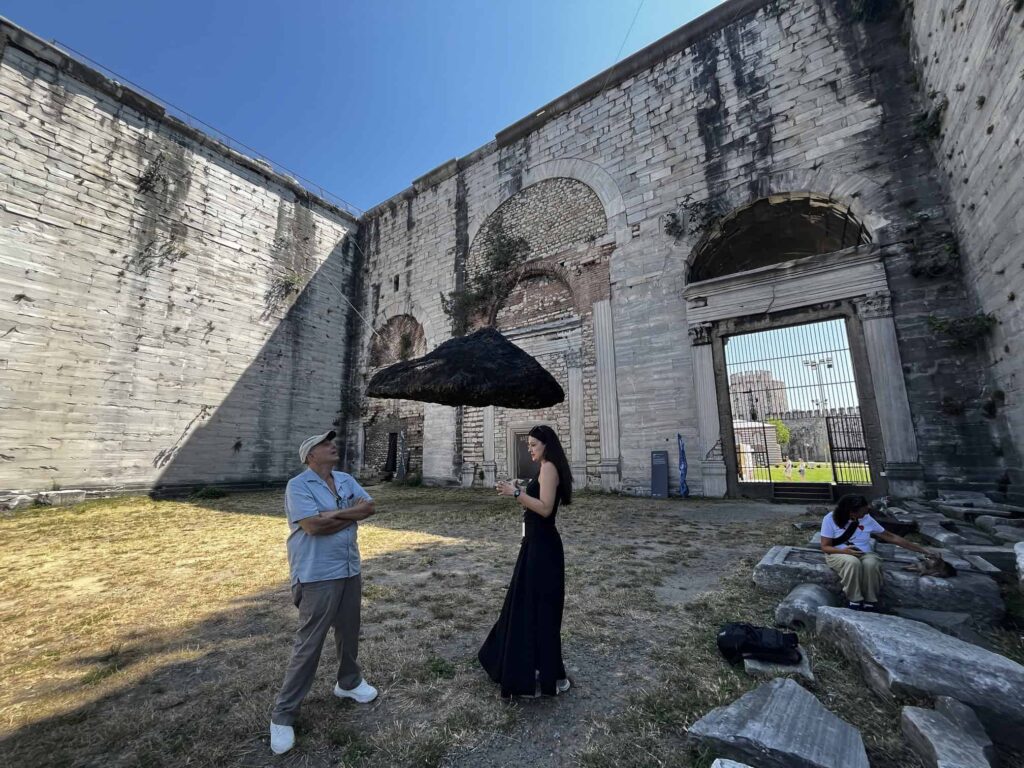
The Golden Gate & The Theodosian Walls - The City at Its Most Defiant
We travel to Yedikule, where triumph first entered the city. The Golden Gate, once clad in marble, was the ceremonial portal of emperors returning from victory.
Beside it stretch the Theodosian Walls, the most sophisticated fortification system of the medieval world—triple layers, perfectly spaced towers, moats like scars across the earth.
For a thousand years, the world tried to break these walls. For a thousand years, they answered: Not yet.
Lunch at Agora Meyhanesi — Between Two Bastions
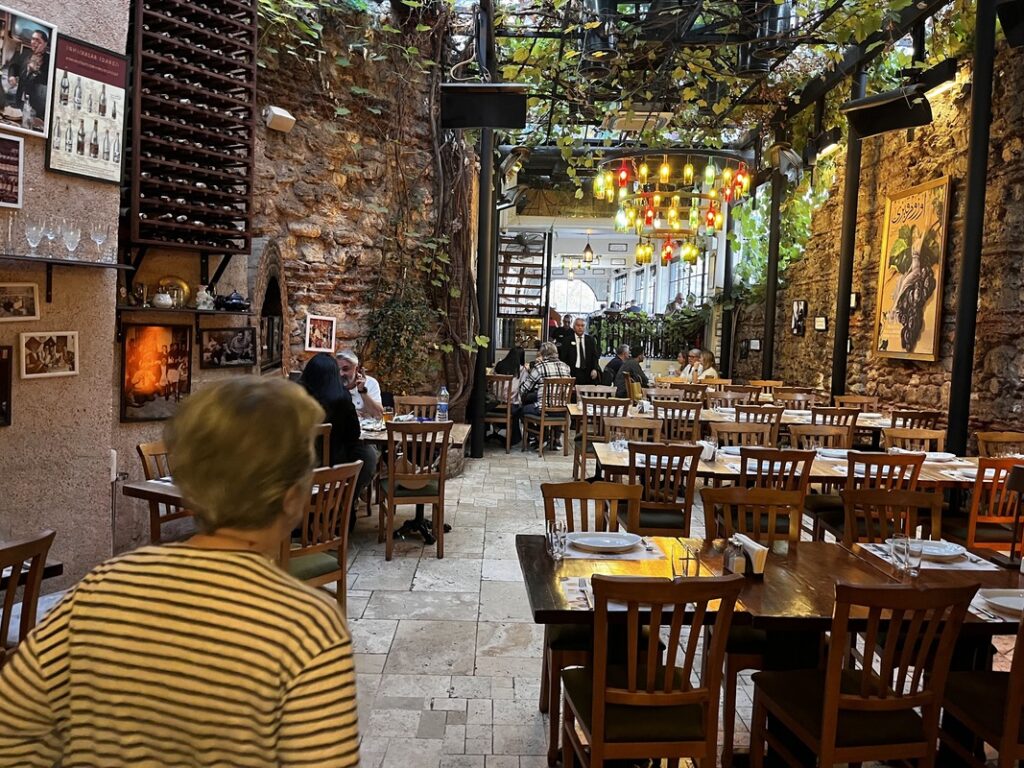
We pause in a place where past and present sit at the same table. Agora Meyhanesi lies between the bastions of the Golden Horn walls. You are seated between a part of the 5th century Roman wall and the back wall of a Jewish temple complex that’s been long gone – its wall is the only part that remains.
Meze arrives. Glasses clink. Conversations drift. This is the Istanbul that walls could never contain.
Fener & Balat — The Golden Horn Walls
We reach the Golden Horn Walls, thinner yet vital, watching over shipyards and neighborhoods of merchants, patriarchs, refugees, and rebels.
We can visit the epicenter of Greek Orthodox Church in the Ecumenical Patriarchate and the Venerable Patriarchal Church of St. George.
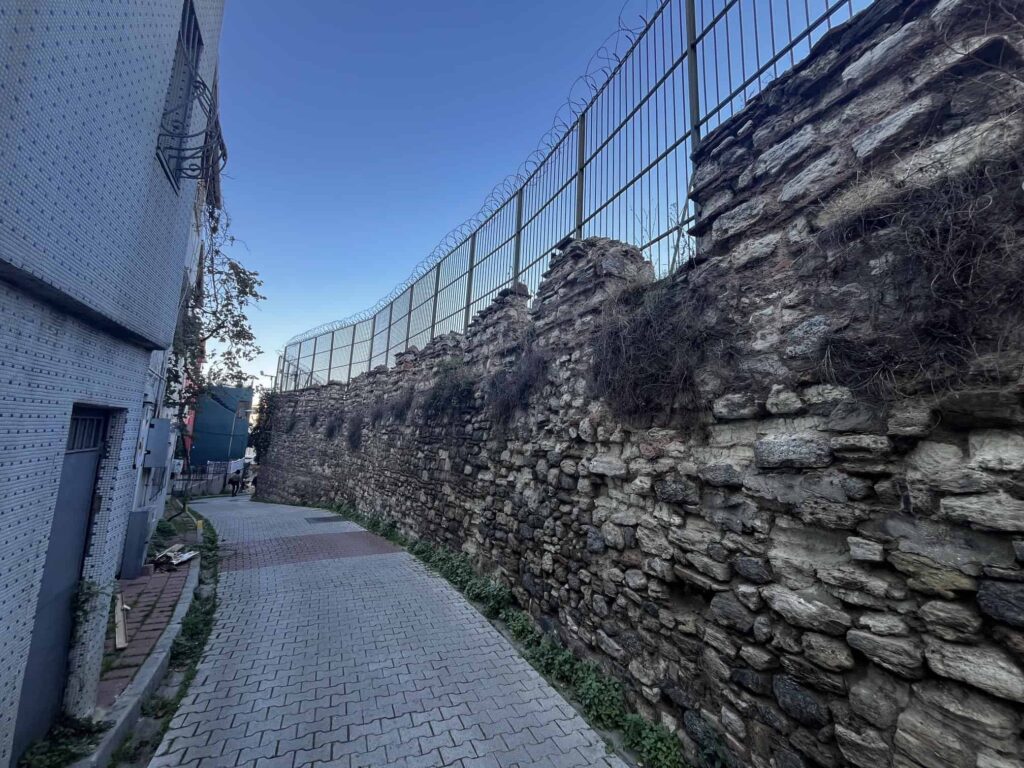
There’s even a chance to observe the walls on the back side of the Greek Patriarchate.
In Balat and Fener, history is not frozen. It breathes. Here, walls were not only barriers—they were conversations.
If we want to extend our time around the Golden Horn, we also have amazing options like the Tekfur Palace (Palace of the Porphyrogenitus) and its late 13th century walls.
An aqueduct is not exactly a wall in a strict sense of the word. However, considering following reasons, we believe you might play along:
- The building material of the Valens Aqueduct came from the city walls of Chalcedon which was demolished after the people from the land of the blind bet on the wrong horse and Emperor Valens had to make an example out of them in the year 375 AD.
- Trust me, it would have been treated just like a wall when Istanbul expanded its roads and Bozdoğan Kemeri as it’s called in Turkish didn’t give way to car and bus traffic exquisitely and became a part of Istanbul’s traffic 🙂
So we include this incredible Roman era water supply line and we ascent toward the Valens Aqueduct, not just engineering but symbolism—a dividing line between districts, classes, and ideas. A reminder that cities survive only when water, thought, and people flow through them.
The Zeyrek Cistern — The Unique Cistern Above Ground
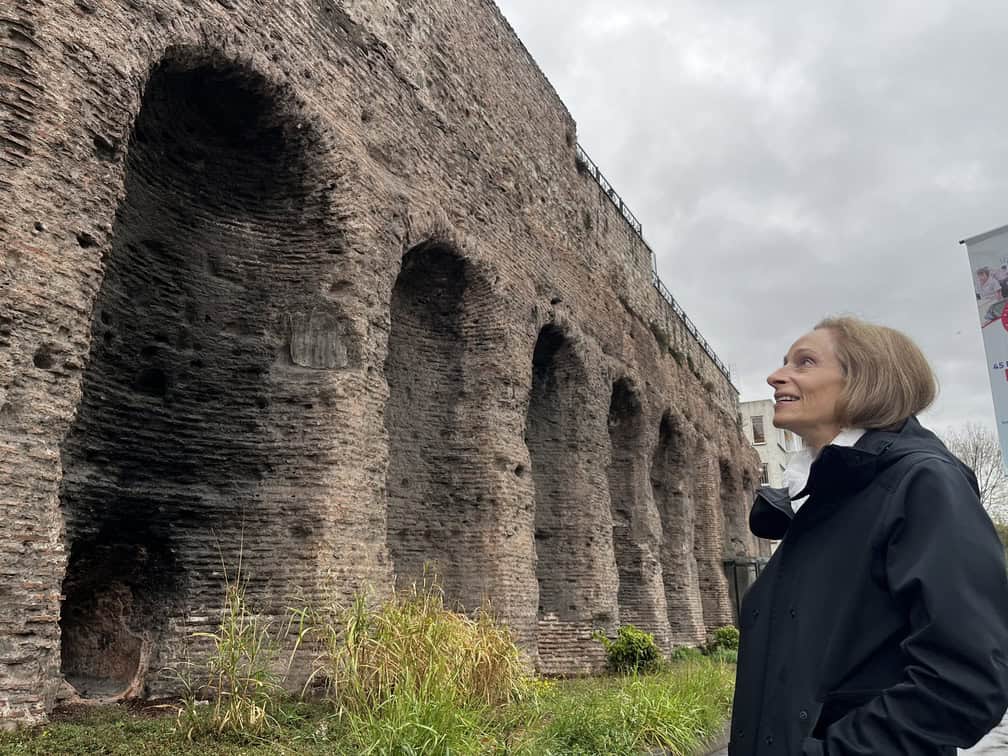
When we use the word ‘cistern’, we usually mean a subterranean water reservoir but this 12th century late Byzantine cistern showcases that things can change in 6 centuries since Basilica Cistern was built.
Zeyrek Cistern is special because it’s mostly above ground and you can clearly see its long brick exterior with niches along Atatürk Boulevard – unlike most Istanbul cisterns which are fully underground. Above ground, Zeyrek’s exterior offers a screen into one of Istanbul’s unsung eras.
The Galata Walls — A Different Kind of Border
Across the Golden Horn, the Genoese built their own walled republic: Galata, a mirror and a satellite to Byzantine Constantinople.
The Genoese built a series of towers and walls to fortify their colony at Galata (across the Golden Horn from Constantinople) in the 14th and 15th century. In addition to Galata Tower, much more survives than is commonly known.
Near the Haliç Metro Bridge we find what remains of their medieval walls. Not all walls keep enemies out. Some keep neighbors apart.
The Galata Tower — Watching Centuries Unfold
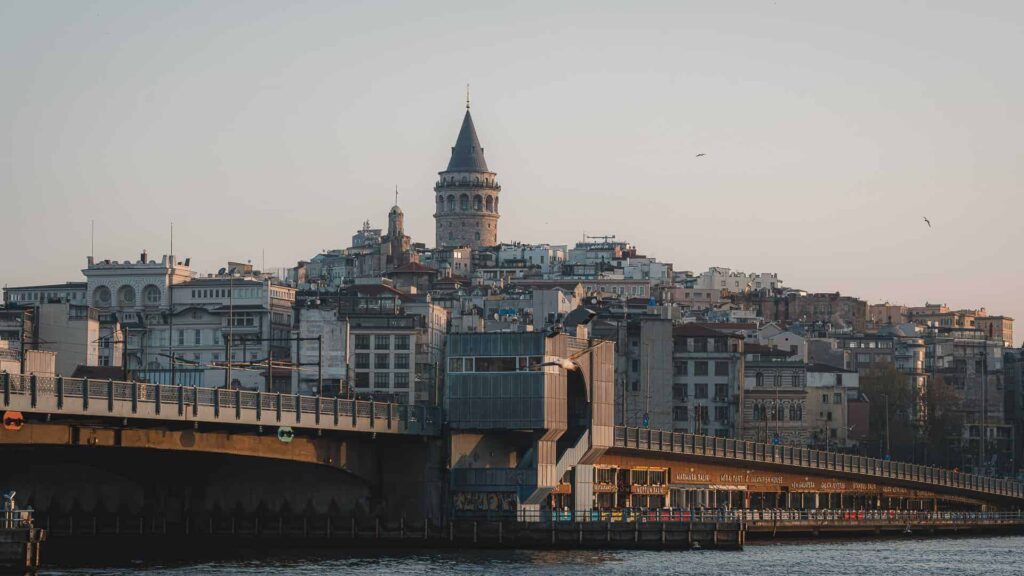
We ascend the Galata Tower, a survivor of Genoese ambition. Lighthouse, watchtower, fire tower, storyteller—this tower has seen the city change more than any human ever could.
From here, Istanbul reveals itself fully: two continents, thousands of years, endless reinventions.
Optional after 5pm: Ferry to Kadıköy — Crossing the Ancient Frontier

We cross the Bosphorus, the softest “wall” the city ever had. A boundary that divides, but also connects.
Kadıköy (Ancient Chalcedon) — The City Before the City
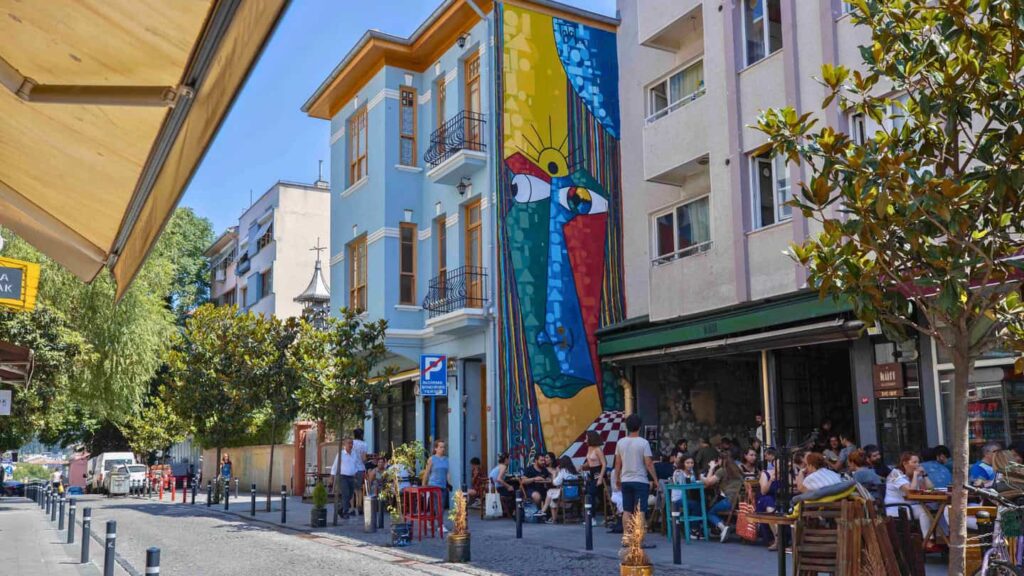
We end in Kadıköy, ancient Chalcedon—the so-called “city of the blind.” Yet blindness is perspective. Chalcedon hosted one of Christianity’s defining councils and thrived long before Constantinople’s rise.
Here we close the circle: the story of Istanbul begins before Istanbul.
Book a Guided Tour of Istanbul's Walls
By evening, you will have walked through fortifications built by Romans, Byzantines, Ottomans, and Genoese. You will have crossed boundaries—physical, cultural, spiritual—that shaped a city unlike any other.
Some walls protected. Some divided. Some collapsed. Some became foundations for new lives.
A city is only as strong as what it chooses to defend—and as beautiful as what it chooses to let in.





Love this tour! Reading this, I kept thinking that Istanbul’s walls aren’t really “edges” — they’re a biography written in stone. The jump from the Hippodrome’s Sphendone to the Sea Walls and Bukoleon, then out to the Golden Gate and the Theodosian line, makes the city feel less like a postcard and more like an organism that kept adapting to survive. I also loved the little provocation of treating Valens Aqueduct as a kind of wall — not defensive, but still dividing districts, power, and daily life through something as basic as water.
One question: on the Marmara side, do you ever stop to point out how the modern railway basically became a new “boundary” layered right on top of the old Sea Walls? That contrast feels like the perfect Istanbul lesson.
Thank you for this — “a biography written in stone” is exactly the lens we try to bring to the day. And yes, we deliberately follow the Sphendone → Sea Walls / Bukoleon → Golden Gate → Theodosian line sequence so the walls stop feeling like “one monument” and start feeling like layers of survival.
On your question: we do talk about that modern “new boundary” effect on the Marmara side — how the railway (and later the coastal road) reshaped movement and visibility right on top of older edges. And there’s a bigger 20th-century layer behind it too: after WWII, Turkey’s shift toward car-centric infrastructure was accelerated in part by the broader Western aid-and-alignment era (often discussed in the same breath as the Marshall Plan and its ripple effects). So in a way, you’re literally walking through a timeline where imperial walls, industrial transport, and postwar modernization all redraw the city’s edges — one on top of another.