Imagine walking through the very ruins where history and prophecy collided. The Seven Churches of Revelation aren’t just ancient text; they are real, breathtaking archaeological sites waiting for you in western Turkey. Ready to retrace the steps of the early saints? Let’s embark on the ultimate biblical road trip through the Aegean.
Table of Contents
Walking Through Biblical History
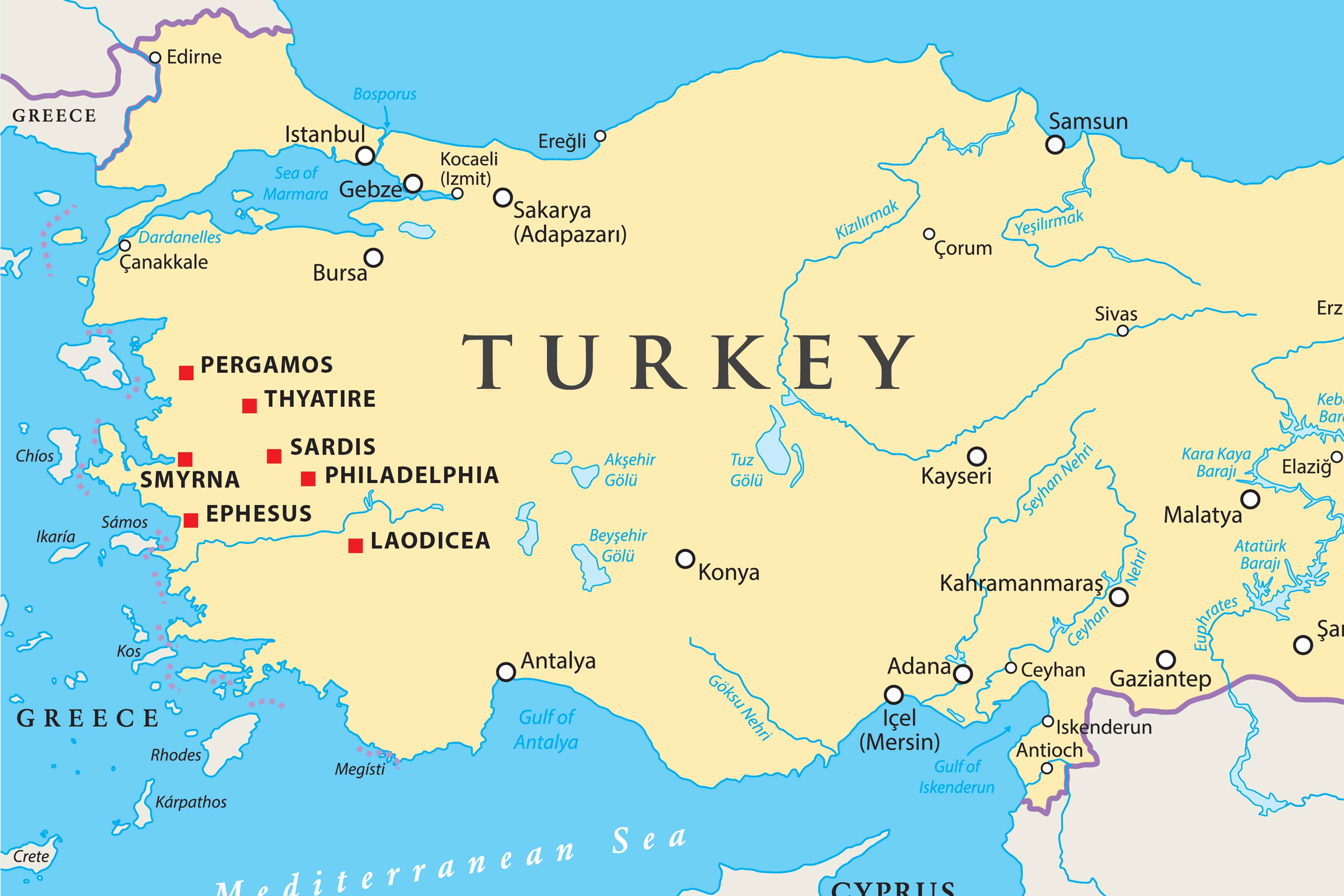
The Book of Revelation opens with a series of letters addressed to seven distinct Christian communities in the Roman province of Asia. Today, those ancient cities reside in the stunning Aegean region of modern-day Turkey. For history buffs, archaeology enthusiasts, and spiritual travelers alike, visiting these sites is like watching the pages of the New Testament come to life.
Far from being mere symbolic concepts, these were bustling metropolitan hubs, Roman capitals, and wealthy trade centers. Traveling to them allows you to walk down the same marble streets, stand in the same grand theaters, and explore the very ruins where early Christian communities faced immense cultural and political pressures.
Whether you are looking to understand the deep historical context of the text or simply want to experience some of the most remarkable archaeological preserves in the world, this journey offers an unforgettable glimpse into the past.
Historical Timeline
Established as an Ionian Greek colony, it quickly grew into a major port city and the center of worship for the multi-breasted fertility goddess Artemis (Diana).
Sardis was the ultra-wealthy capital of the Lydian Kingdom, ruled by King Croesus (the man who invented gold coinage). Because the city sat atop an impregnable cliff, the citizens grew complacent. Cyrus the Great of Persian conquered it by finding a secret, unguarded path up the rock face.
This historical failure directly mirrors John’s later warning to the church of Sardis to “wake up“ because their enemy would come like a thief in the night.
Following the death of Alexander the Great, Pergamon became the capital of a brilliant Hellenistic kingdom. It was a city of intellectuals, boasting a library of 200,000 parchment scrolls.
Founded by King Attalus II Philadelphus of Pergamon as a cultural outpost to spread Greek language and architecture into the rugged Anatolian interior.
King Attalus III of Pergamon died without an heir and willed his entire kingdom to the Roman Republic, which turned western Turkey into the wealthy province of Asia.
A catastrophic earthquake leveled twelve major cities in a single night, including Sardis, Philadelphia, and Laodicea. Philadelphia was plagued by aftershocks for years, causing residents to constantly flee the city walls in fear of collapsing stone. This directly inspired the biblical promise to the faithful in Philadelphia that they would be made unshakeable “pillars in the temple of God“ and would “never leave it.“
Another massive earthquake destroyed Laodicea. While other cities begged Rome for financial aid, the wealthy bankers of Laodicea proudly refused imperial help and rebuilt the entire city out of their own pockets. John uses this exact historical pride to expose them spiritually, writing that they claim, “I am rich; I have acquired wealth and do not need a thing,” while being spiritually blind and naked.
During the harsh reign of Emperor Domitian—who aggressively enforced emperor worship—the Apostle John is exiled to the nearby island of Patmos. It is here that he receives the apocalyptic visions and writes the letters to the seven churches, sending them via a circular postal route starting at Ephesus and ending at Laodicea.
Christianity becomes the official religion of the empire. The massive Church of Mary in Ephesus hosts the Third Ecumenical Council, cementing the city’s role in early church orthodoxy.
Emperor Justinian builds a colossal monumental church in Philadelphia. The giant brick-and-stone pillars that remain standing today are the iconic landmarks of the modern Alaşehir site.
Over centuries, changing trade routes, devastating Arab raids, and the silting up of harbors (which left landlocked harbors at Ephesus and Pergamon) caused residents to gradually abandon the ancient sites. Modern Turkish cities (like İzmir, Bergama, and Akhisar) eventually grew over or alongside the old Roman settlements.
Exploring the Seven Sites
To truly understand the letters sent to these communities, one must look at the geography and culture of the Roman Empire. These seven cities were not chosen at random; they were located along a well-traveled Roman postal road that formed a natural circuit through western Anatolia.
Today, this ancient route serves as the perfect blueprint for a modern road trip. As you travel from the coastal ports to the fertile inland valleys, you will see how each city’s unique wealth, politics, and local industries directly influenced the biblical messages they received.
1. Ephesus (Selçuk): The Loveless Church
As the most famous and influential metropolis of Roman Asia, Ephesus was the natural first recipient of the letters. In the Book of Revelation, the church here was praised for its hard work and perseverance but admonished for losing its “first love.” It is also a site deeply tied to the Apostle Paul and the Virgin Mary.
Today, Ephesus is one of the most spectacularly preserved classical cities in the Mediterranean. Walking down its marble streets, you can marvel at the iconic Library of Celsus, the massive Great Theater where the riots against Paul took place, and the nearby Basilica of St. John, where the apostle is believed to be buried.
2. Smyrna (İzmir): The Persecuted Church
Smyrna was one of the few communities in the Book of Revelation to receive only praise, with no criticism. Warned that they were about to face intense testing and tribulation, the believers here were urged to “remain faithful, even to the point of death.” It was also the home of Polycarp, a famous early Christian bishop and martyr who was a direct disciple of John.
Unlike the other sites on this list, ancient Smyrna did not fade away into history—it evolved directly into the bustling, modern metropolis of İzmir. Because of this, much of the ancient city is buried beneath modern buildings, but the heart of it has been beautifully excavated. You can walk through the ancient Agora of Smyrna, featuring grand colonnades, vaulted basements, and graffiti from the Roman era.
3. Pergamon (Bergama): The Compromised Church
Pergamon was a powerful center of culture, science, and pagan worship, described in Revelation as the place “where Satan has his throne.” This likely referred to the towering Altar of Zeus or the city’s status as a seat of Roman imperial cult worship. While praised for holding fast to their faith, the believers here were rebuked for tolerating false teachings.
Perched dramatically on a steep hill overlooking the modern town of Bergama, the Acropolis of Pergamon is an architectural marvel. It features the steepest ancient theater in the world, the foundations of the Altar of Zeus, and the ruins of a legendary library that once rivaled Alexandria. Down in the valley lies the Asclepion, an ancient medical complex and healing center dedicated to the god of medicine.
4. Thyatira (Akhisar): The False-Teaching Church
Thyatira was a busy commercial hub famous for its thriving trade guilds, particularly its production of luxury purple dye and textiles (the New Testament figure Lydia was a purple fabric merchant from here). In Revelation, the church was commended for its growing love and faith but heavily rebuked for tolerating a false prophetess referred to as “Jezebel,” who led believers into compromise with pagan guild practices.
Like Smyrna, ancient Thyatira is completely interwoven with a modern city—the bustling town of Akhisar. While much of the sprawling ancient city remains hidden beneath modern blocks, a central archaeological park known as the Tepe Mezarlığı (Hill Tomb) site has been excavated. Here, you can view a monumental Roman portico, ancient pillars, and the ruins of a complex that later served as a Byzantine basilica.
5. Sardis (Sart): The Spiritually Dead Church
Once the legendary capital of the ancient Kingdom of Lydia, Sardis was famously wealthy—it was here that King Croesus minted the world’s very first gold and silver coins from the gold found in the nearby Pactolus River. Despite its glorious past, the message in Revelation was stark: the church had a reputation for being alive, but was spiritually “dead.” They were urged to wake up and strengthen what little remained.
Today, the ruins of Sardis are breathtakingly grand and highly unique. The standout highlight is the beautifully restored Roman Gymnasium and Bath complex with its towering, intricate marble facade.
Right next to it sits the massive Sardis Synagogue, one of the largest and most impressive ancient synagogues ever discovered, featuring stunning geometric floor mosaics. A short drive down the road leads to the colossal Temple of Artemis, set against a dramatic mountain backdrop.
6. Philadelphia (Alaşehir): The Faithful Church
Philadelphia was a relatively young city, founded as a cultural outpost to spread Greek language and culture into the Anatolian interior. Frequently shaken by violent earthquakes, its citizens often lived in fear of collapsing buildings.
In Revelation, the church here received nothing but praise and encouragement. Described as having “little strength” yet keeping the faith, they were promised that they would be made a permanent, unshakeable “pillar in the temple of my God.” Today, the ancient city is almost completely covered by the modern town of Alaşehir.
However, the site’s biblical metaphor comes alive in a striking way at the excavated St. Jean Church. Here, you can stand beside three colossal, towering brick-and-stone pillars that once supported a massive 6th-century Byzantine basilica. These surviving columns dominate the local landscape and serve as a powerful visual reminder of the city’s ancient promise.
7. Laodicea (Denizli): The Lukewarm Church
Laodicea was a spectacularly wealthy banking hub, renowned across the Roman Empire for its premium black wool textiles and a famous medical school that produced healing eye salves. Because the city lacked its own natural water source, it had to pipe in water via a system of stone aqueducts.
By the time the water arrived from nearby hot springs, it was neither hot nor refreshingly cold—it was lukewarm. This directly inspired the famous biblical rebuke that the church was “neither cold nor hot” but spiritually “lukewarm,” blinded by its material wealth. Today, Laodicea is an absolute paradise for archaeology lovers.
Decades of meticulous, world-class restoration have turned it into one of Turkey’s most impressive ancient sites. You can walk down the perfectly restored Syria Street, admire two massive ancient theaters, explore a colossal stadium, and marvel at the beautifully reconstructed 4th-century Laodicea Church, which features an intact glass floor allowing you to look down at the original intricate mosaics underneath.
St. Paul’s Footsteps in the Seven Cities
While the Book of Revelation was recorded by the Apostle John, St. Paul laid the spiritual groundwork for early Christianity in the region. His most profound impact was in Ephesus, where he lived and preached for nearly three years, establishing a thriving community and famously sparking a massive riot in the Great Theater against the local cult of Artemis.
Further inland, Paul maintained a close connection to Laodicea; though it is debated whether he physically visited, he explicitly commanded the neighboring Colossians to exchange and read a letter he had sent directly to the Laodiceans. For Smyrna and Thyatira, Paul’s influence was felt through proximity.
The Book of Acts notes that during his time in Ephesus, his teachings spread so effectively that “all who dwelt in Asia heard the word.” These churches were likely founded by believers traveling the Roman trade routes—such as Lydia, a purple-dye merchant from Thyatira who became Paul’s first convert in Europe. The remaining cities of Pergamon, Sardis, and Philadelphia would flourish slightly later under the apostolic oversight of John.
Our Recommended Tour Guide
An Excellent Guide from Selçuk who blends rigorous knowledge with magnetic storytelling to make marble streets and basilicas feel immediate.
Get in Touch for Guided Tour
Uncovering the rich history of the Seven Churches of Revelation is a deeply rewarding experience, but navigating the vast geography of western Anatolia requires local expertise and flawless coordination.
We specialize in crafting seamless, high-end travel experiences that bring ancient history to life. From arranging private airport transfers and premium transport to securing expert local guides who know these ruins inside and out, we ensure your pilgrimage is both comfortable and profoundly inspiring.
Get in touch with us today to start planning your custom journey across these historic lands.