• About
    • Introduction
    • Explore The Other Tour
    • 2026 Itinerary of The Other Tour Istanbul
    • Common Questions Answered
    • The Other Tour Reviews
    • About Us
  • Tour Guide
    • Istanbul
    • Cappadocia
    • Ephesus
    • Mediterranean
  • Daily Tours
    • Istanbul
    • Cappadocia
    • Antalya
    • Izmir
  • Istanbul
    • Attractions
    • Tours
    • Neighborhoods
    • Eat & Drink
    • Stay
    • Shop
  • Turkey
    • Turkey Tours
    • Destinations
    • Istanbul
    • Cappadocia
    • Ephesus
    • Pamukkale
    • Antalya
    • Bodrum
  • Services
    • Private Tours
    • Daily City Tours
    • Made-to-order Travel
    • Hire a tour guide
    • Unique Activities
    • Airport Transfers
    • Hotel Selection
    • Vacation Booking
    • Corporate Group Tours
    • Culinary Tours
    • Event Planning
    • Istanbul Layover Tours
    • Family Time
  • Blog
    • TOP 5 ISTANBUL
    • Events
    • Documentary
    • History
    • News
    • All
  • Contact
No Result
View All Result
  • About
    • Introduction
    • Explore The Other Tour
    • 2026 Itinerary of The Other Tour Istanbul
    • Common Questions Answered
    • The Other Tour Reviews
    • About Us
  • Tour Guide
    • Istanbul
    • Cappadocia
    • Ephesus
    • Mediterranean
  • Daily Tours
    • Istanbul
    • Cappadocia
    • Antalya
    • Izmir
  • Istanbul
    • Attractions
    • Tours
    • Neighborhoods
    • Eat & Drink
    • Stay
    • Shop
  • Turkey
    • Turkey Tours
    • Destinations
    • Istanbul
    • Cappadocia
    • Ephesus
    • Pamukkale
    • Antalya
    • Bodrum
  • Services
    • Private Tours
    • Daily City Tours
    • Made-to-order Travel
    • Hire a tour guide
    • Unique Activities
    • Airport Transfers
    • Hotel Selection
    • Vacation Booking
    • Corporate Group Tours
    • Culinary Tours
    • Event Planning
    • Istanbul Layover Tours
    • Family Time
  • Blog
    • TOP 5 ISTANBUL
    • Events
    • Documentary
    • History
    • News
    • All
  • Contact
No Result
View All Result

Perge – Turkey’s Biblical City Rooted in Ancient Splendor

A Portal to Ancient Pamphylia

Soner Dursun by Soner Dursun
July 3, 2026
in Anatolia Archaeology, Antalya Attractions, Pamphylia, Turkey Attractions, Turkey Travel Blog
Reading Time: 13 mins read
A A
2

Table of Contents

Introduction to Perge

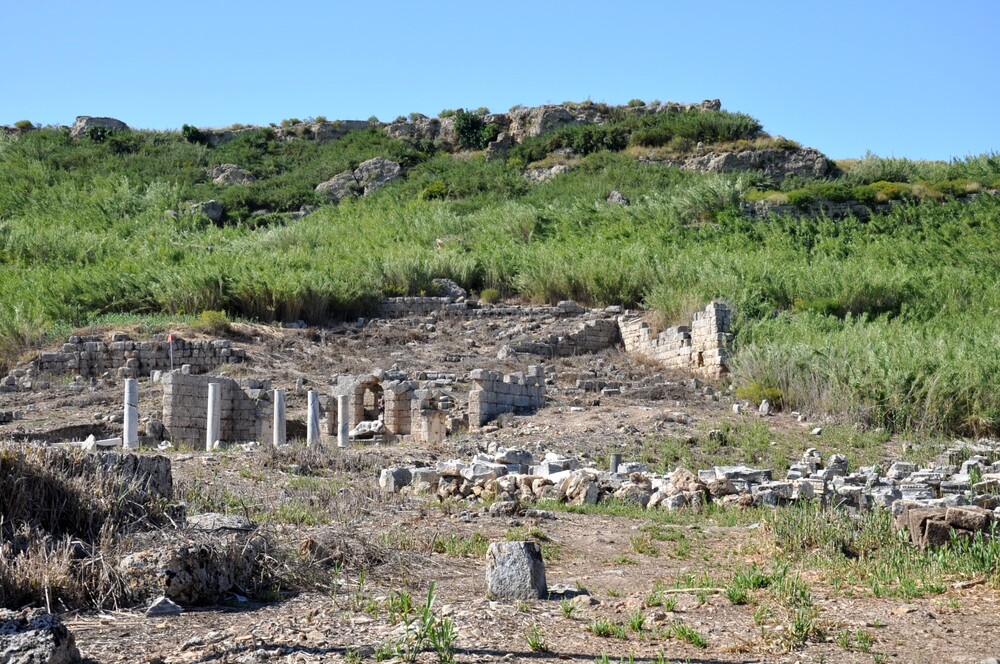
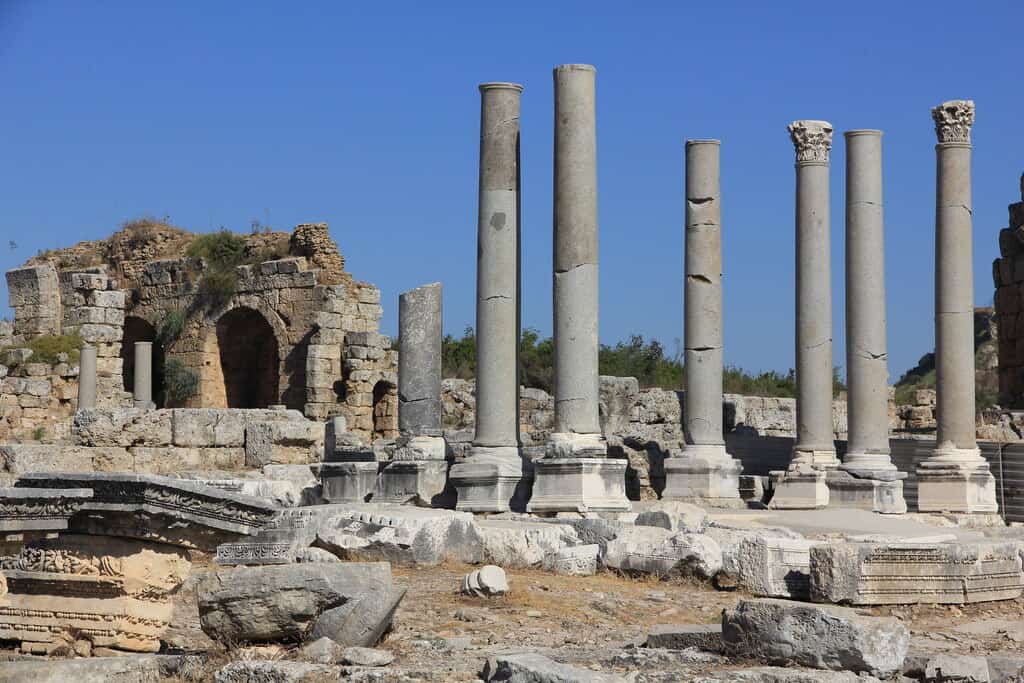
Situated 18 kilometers east of Antalya in Aksu district, Perge offers visitors an immersive journey through time. The site boasts monumental theaters, stadiums, baths, and city structures that reflect its prestigious past, making it a must-visit for history enthusiasts and travelers alike.

East Antalya Day Tour
Perge, Side, Aspendos and Kaleici

The Ultimate Full-Day Itinerary Tracking the Wealth, Grandeur, and Empires

Learn more

Historical Timeline and Political Context

PeriodKey Events and Developments
Late 3rd century BC – Early 2nd century BCPerge builds defense systems under Seleucid and Ptolemaic pressures; new agreements in lower city begin.
Roman Imperial Period (1st – 3rd centuries AD)Perge develops significantly due to aristocratic ties with Rome; granted imperial cult rights and neocorate status by Emperor Vespasian.
Mid 3rd century AD onwardsPerge becomes militarily important amid internal Roman strife and wars against Parthians, Sasanians, and Goths; serves as logistical base for Roman armies.
4th – 5th centuries ADMaintains importance under Roman and Eastern Roman (Byzantine) rule.
7th – 10th centuries ADIntegrated into Byzantine theme system; initially under Anatolikon, later K theme.
1207 – 1422 ADControlled sequentially by Seljuks, Hamitoğulları, and finally Ottomans.

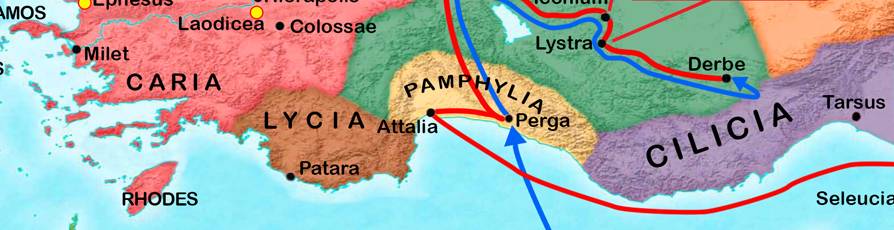
Perge, once the capital of the Pamphylia region near Antalya, is a remarkable ancient city that has witnessed countless civilizations. Its rich history from the Bronze Age through the Roman Empire is preserved in its sprawling ruins.

East Antalya Day Tour
Perge, Side, Aspendos and Kaleici

The Ultimate Full-Day Itinerary Tracking the Wealth, Grandeur, and Empires

Learn more

History

The history of Perge is intertwined with that of the wider Pamphylia region. Archaeological finds, such as obsidian and flint tools, indicate that the acropolis was inhabited as early as 4000–3000 BCE. The area contains prehistoric caves like Karain and Öküzini, which underscore its long-standing appeal as a settlement. Early settlers chose the high plateau of the acropolis for its defensive advantages and fertile surroundings, laying the foundation for what would become one of the region’s most illustrious cities.

Hittite Empire Period

During the Hittite era, Perge—known as Parha—played a notable role. A bronze tablet from Hattusha dating to around 1235 BCE mentions Perge, indicating its significance in the empire’s political landscape.
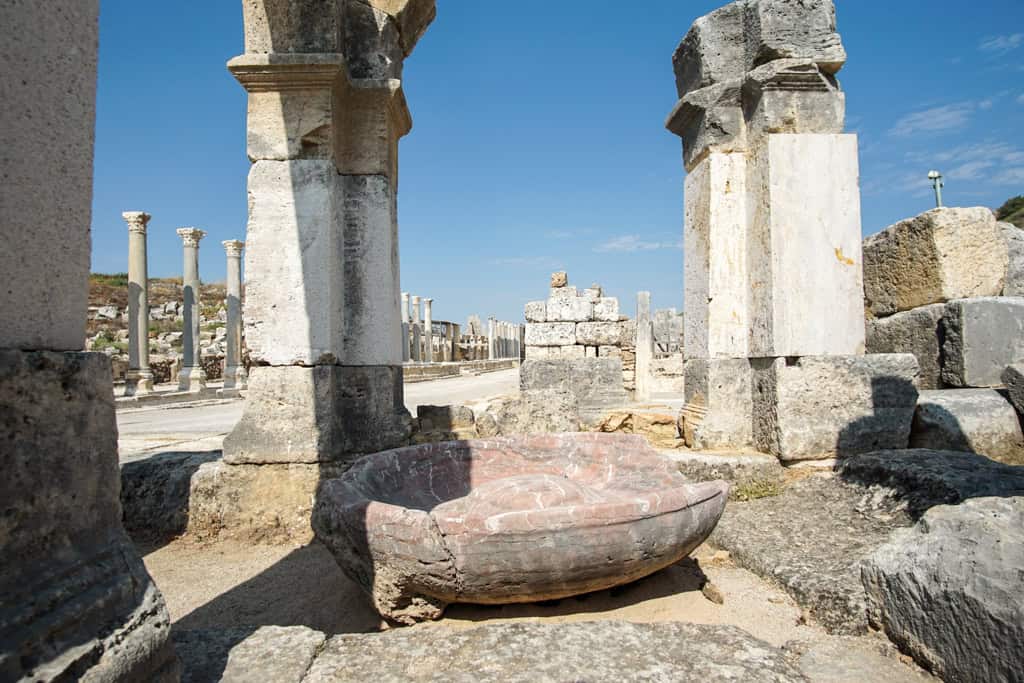
Despite pressures from larger powers, Perge maintained a degree of independence and likely continued as a modest settlement on its acropolis throughout the Late Hittite period.

Early Hellenistic Influence

Soon after the Late Bronze Age Collapse and the decline of Hittite power due to Sea Peoples‘ invasions of East Mediterranean in 1200 BC, Perge began experiencing early Greek influences. Legendary Greek heroes such as Mopsus and Calchas are said to have led settlers who founded Perge along with other cities in the region.
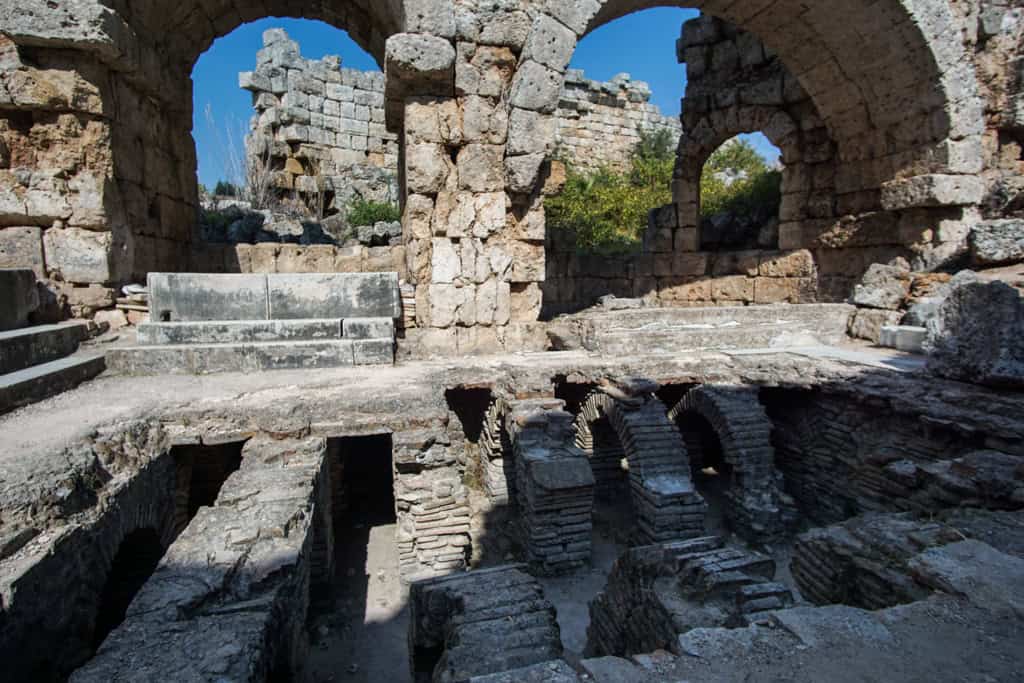
The city embraced Hellenistic culture, blending native traditions with new architectural and artistic styles, which laid the groundwork for its later prosperity.

The City’s Name and Language

Coined after its chief goddess, Artemis Pergaia, early coinage of Perge often bears the inscription “Wanassa Preiis.” This suggests that the city may have originally been known by a name linked to its divine protector. While Perge, Syllion, and Aspendos spoke the Pamphylian dialect alongside Greek, neighboring cities like Side preserved their own linguistic traditions longer, highlighting the cultural diversity of ancient Pamphylia.
Entry of Alexander the Great

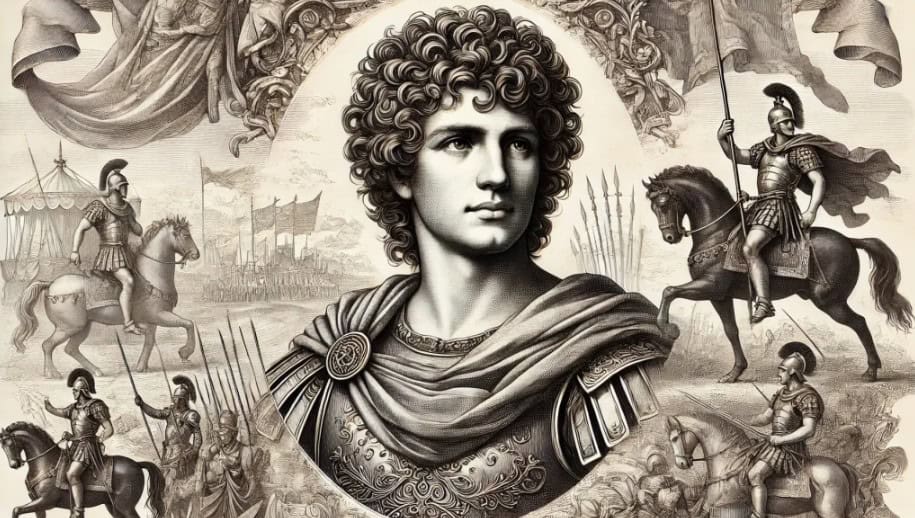
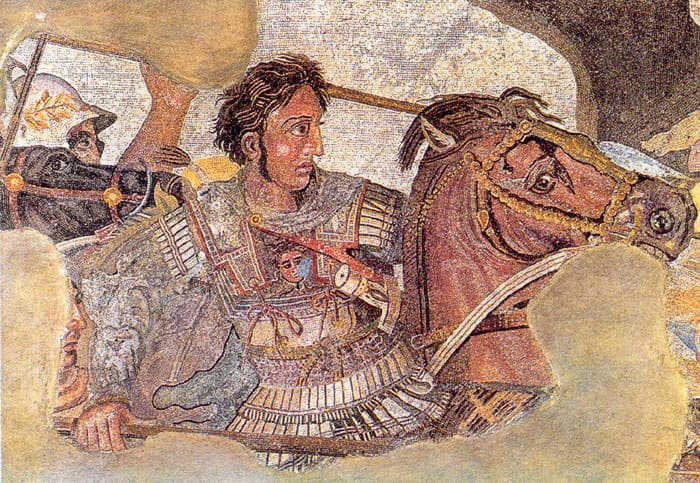
In 334 BCE, following the Battle of the Granicus, Alexander the Great entered Perge peacefully. The city, though fortified, chose not to resist the massive Macedonian army, acknowledging Alexander‘s power. This event marked Perge’s integration into the Hellenistic world under the guidance of one of history‘s greatest conquerors, setting the stage for future Roman influence.
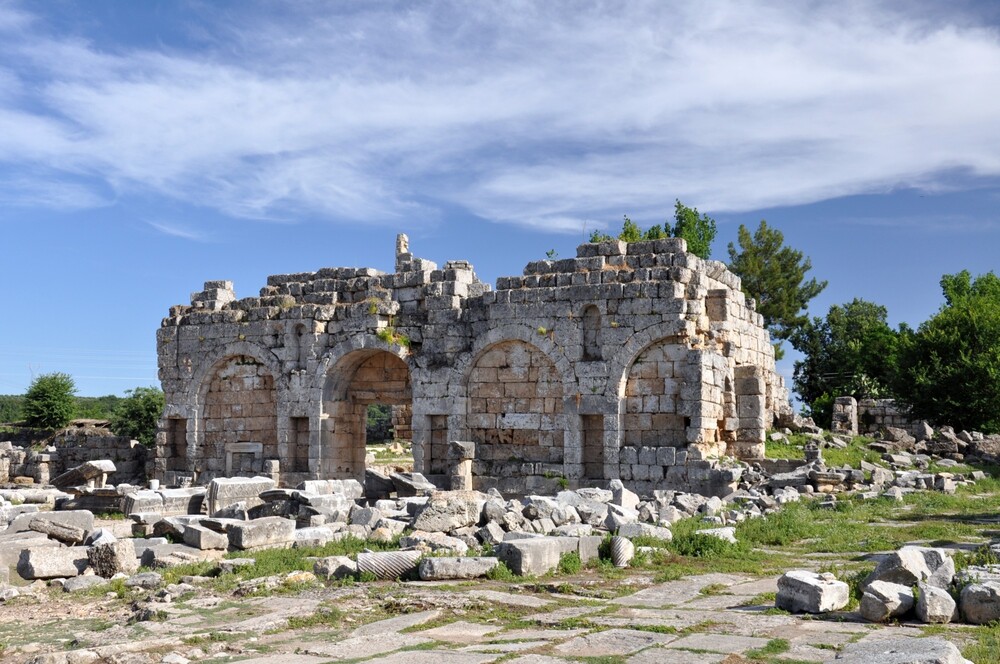
Perge After Alexander

After Alexander‘s campaign, the region of Pamphylia was divided among successors. Perge likely fell under the influence of the Kingdom of Pergamon, forming part of Western Pamphylia.
Despite the political turbulence, the city maintained a level of independence and continued developing until it eventually came under Roman control.

Roman Era

By 133 BCE, the Kingdom of Pergamon donated its territories to Rome, placing Perge within the Roman sphere. Under Roman rule, Perge flourished. It saw extensive urban planning with colonnaded streets, grand theaters, stadiums, an agora, and public baths.
The city thrived culturally, economically, and architecturally, taking full advantage of the Pax Romana to build and beautify its public spaces.

Gymnasium and Palaestra Construction

In the mid-1st century CE, Gaius Julius Cornutus initiated the construction of a gymnasium and palaestra in Perge. These facilities were central to Roman social life, serving as places for physical training, socializing, and civic gatherings, reflecting the integration of Greek athletic traditions into Roman culture.
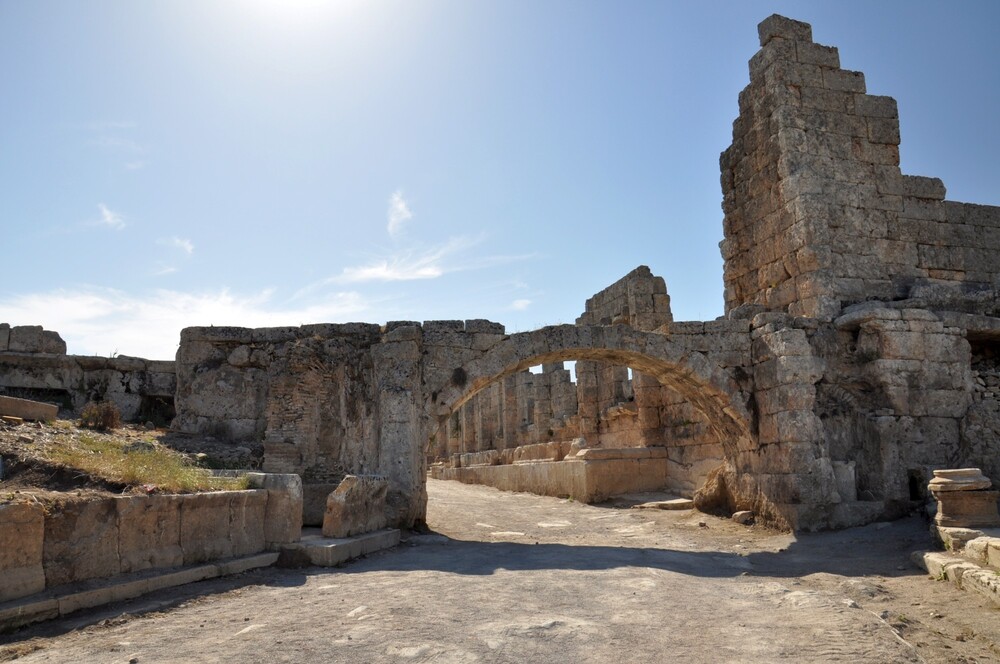
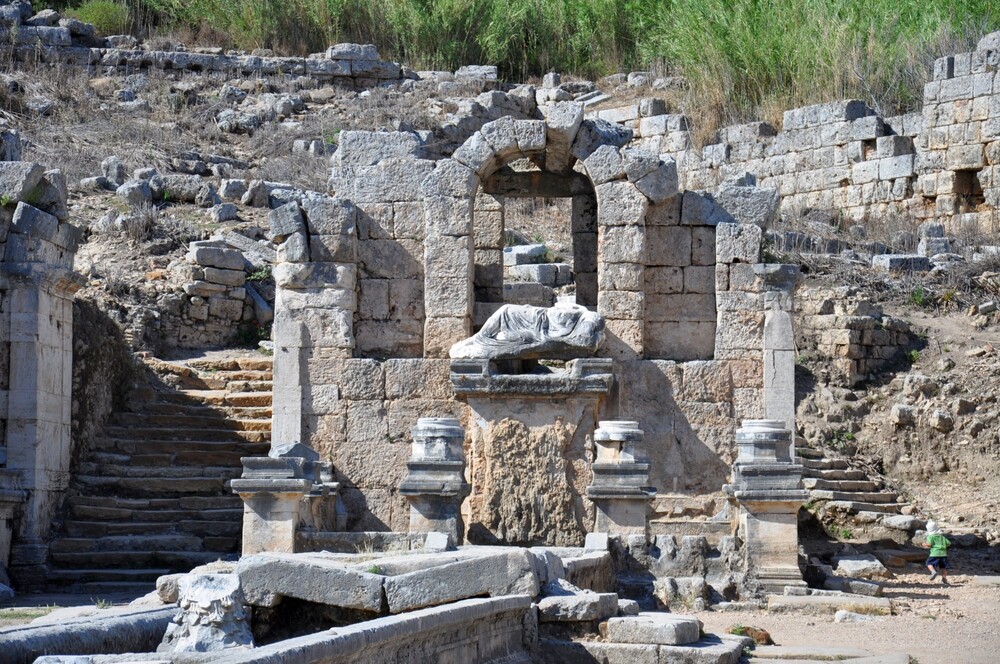
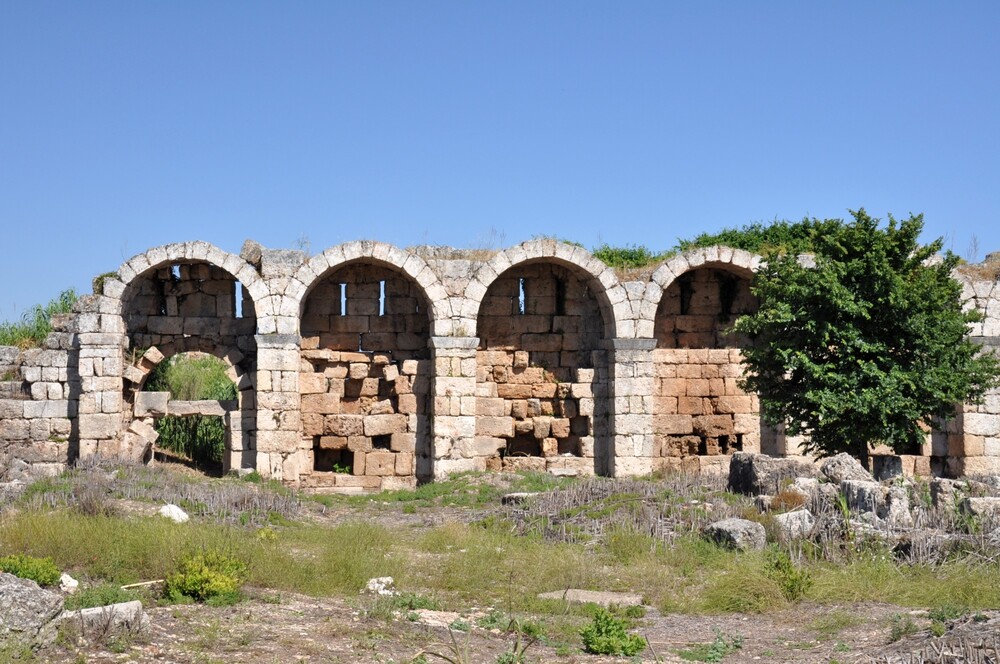
Hadrianic Era and Later Developments

During Emperor Hadrian‘s reign, Perge benefited from significant urban renewal and extensive patronage by influential families such as the Plancii. Plancia Magna, a prominent figure of this era, spearheaded large-scale city improvements, turning the entrance of Perge into a propaganda center adorned with statues and monuments that celebrated its mythic origins and ties to Hellenistic culture.

Isaurian Attacks and Decline

In the later centuries, particularly during the 3rd and 4th centuries CE, Perge faced numerous challenges from Isaurian raids that disrupted trade and weakened the region. Despite periods of prosperity under emperors like Tacitus and Probus, repeated attacks, political instability, and economic hardship gradually led to the city’s decline.

Byzantine Period and Abandonment

During the Byzantine era, Perge remained an important episcopal center second only to Side. However, from the 7th century onwards, Arab raids and shifting political powers led to its gradual abandonment. By the Byzantine and early Ottoman periods, the once-great city lay in ruins, with its population dispersing to nearby settlements.

Religious History

According to the New Testament, Paul and Barnabas visited Perge twice, using it as a base for their missionary journeys. These visits underscore Perge’s role in early Christianity, adding another layer to its rich religious history. The city eventually became a center of Christian thought, evident in early church remains and inscriptions found on site.

The Ruins of Perge

The first archaeological excavations of Perge began in 1946 under A.M. Mansel from Istanbul University, unveiling numerous important structures:

Theater

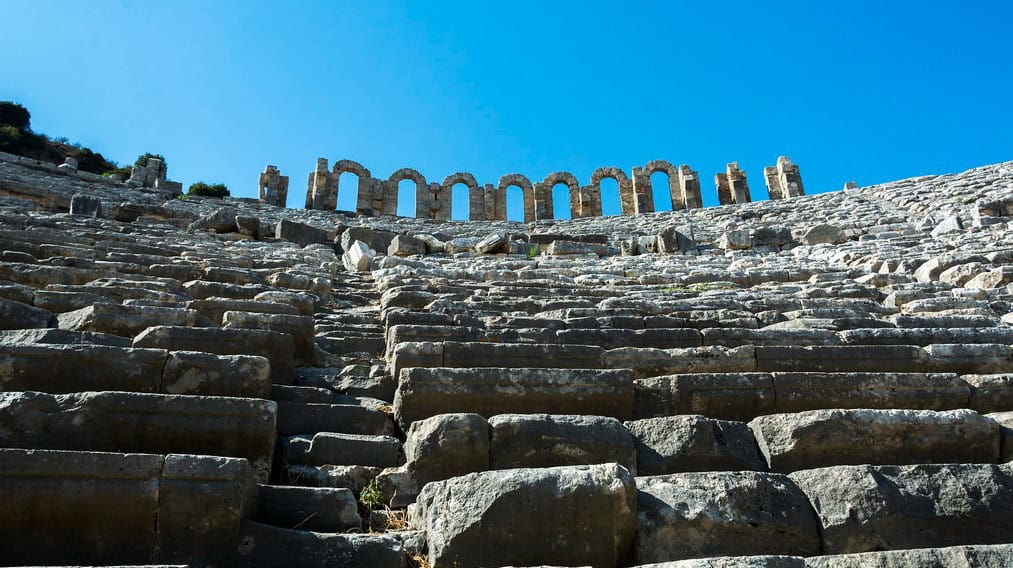
The Perge theater, divided into the cavea (seating area), orchestra, and stage, could seat approximately 13,000 spectators. Its stage building features intricate marble reliefs depicting the life of Dionysus, providing insights into ancient theatrical productions and gatherings.

Stadium

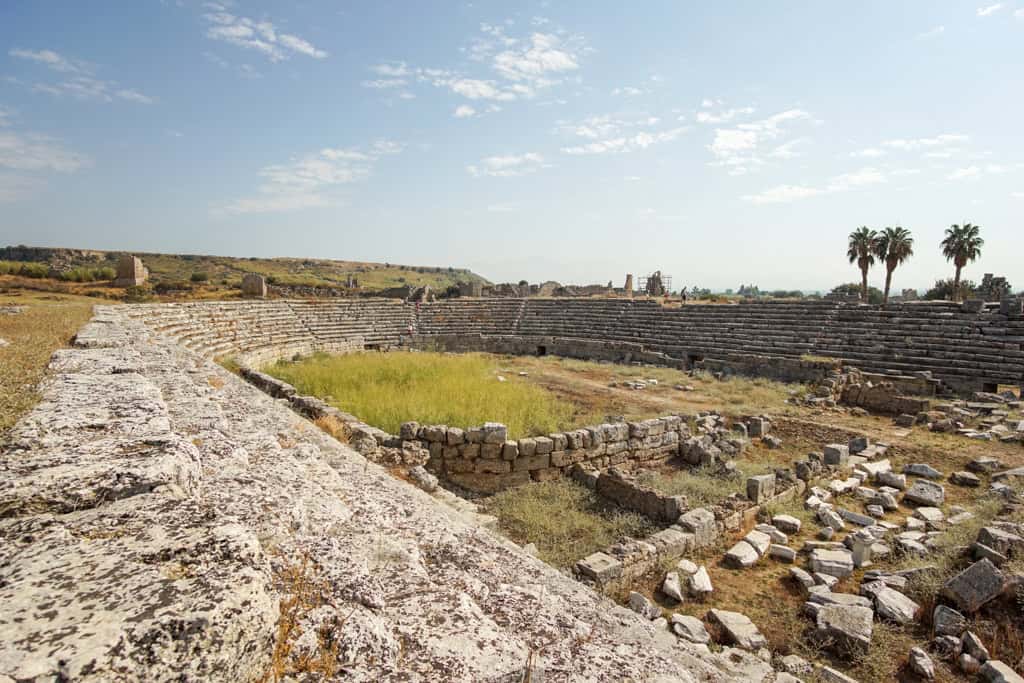
Renowned as one of the best-preserved stadiums from antiquity, the Perge stadium measures 234 by 34 meters (768 feet by 112 feet) and could host around 12,000 people. Built from local conglomerate stone, its well-preserved seating and arches reveal details of ancient sports and commerce.

Agora

The agora was the city’s commercial and political hub. Surrounded by shops, some with mosaic floors, it showcases the bustling marketplace where citizens interacted, conducted business, and exchanged ideas.

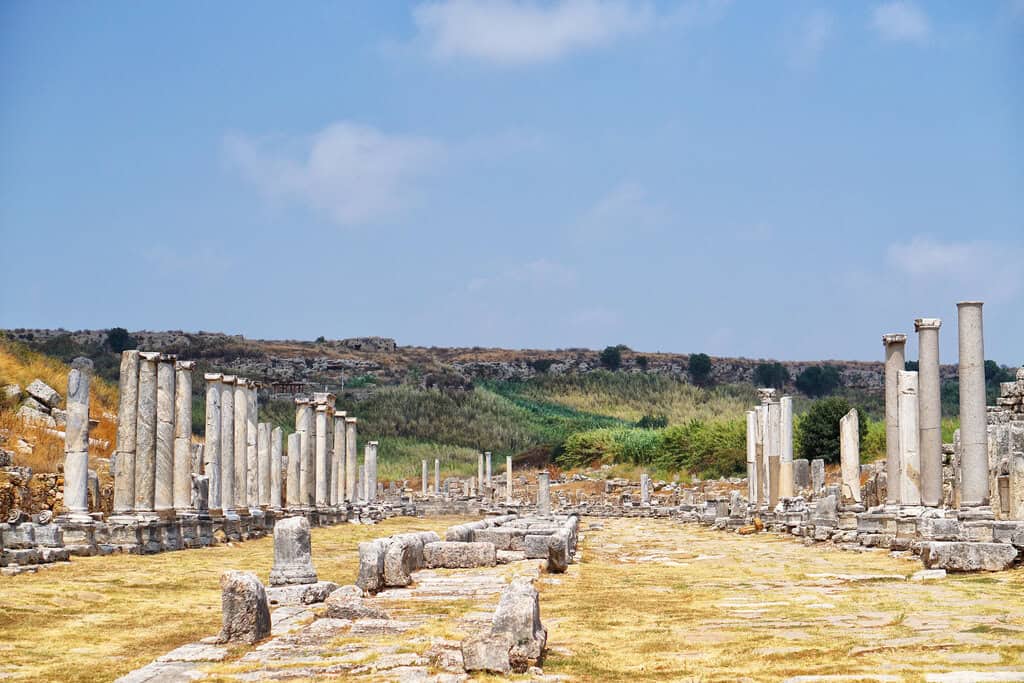
Columned Street

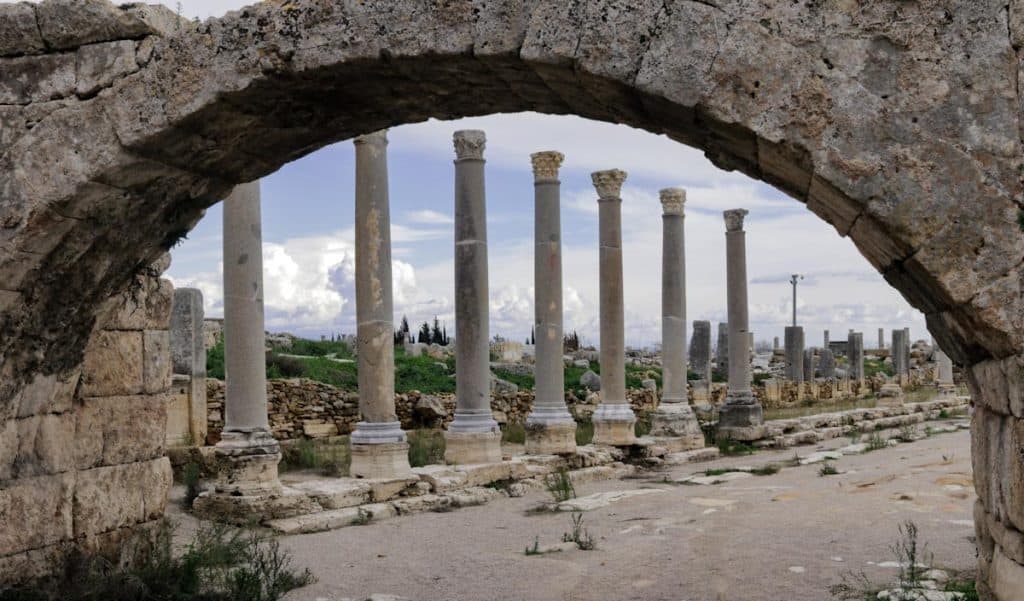
Running from the acropolis to the city center, the columned street features a central water channel dividing it. This impressive avenue once served as a major boulevard for processions, trade, and daily life.

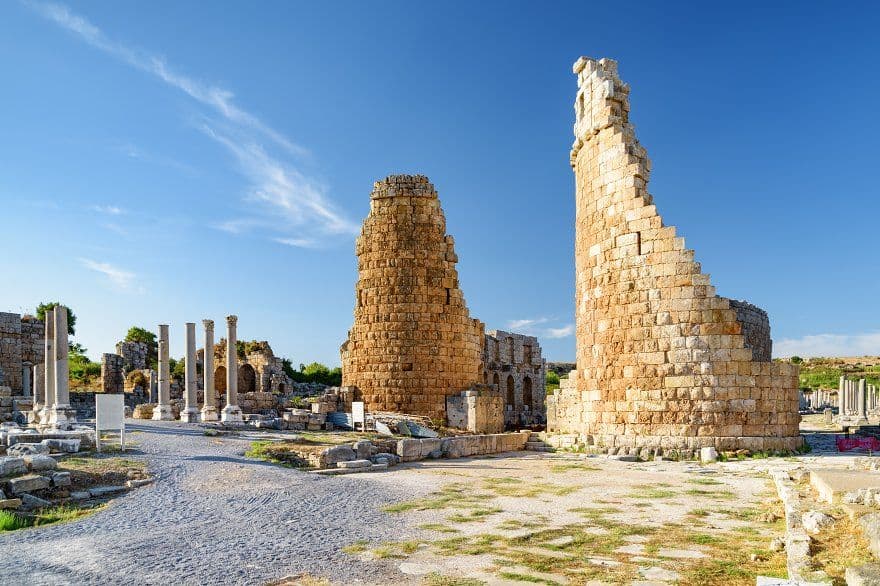
Hellenistic Gate

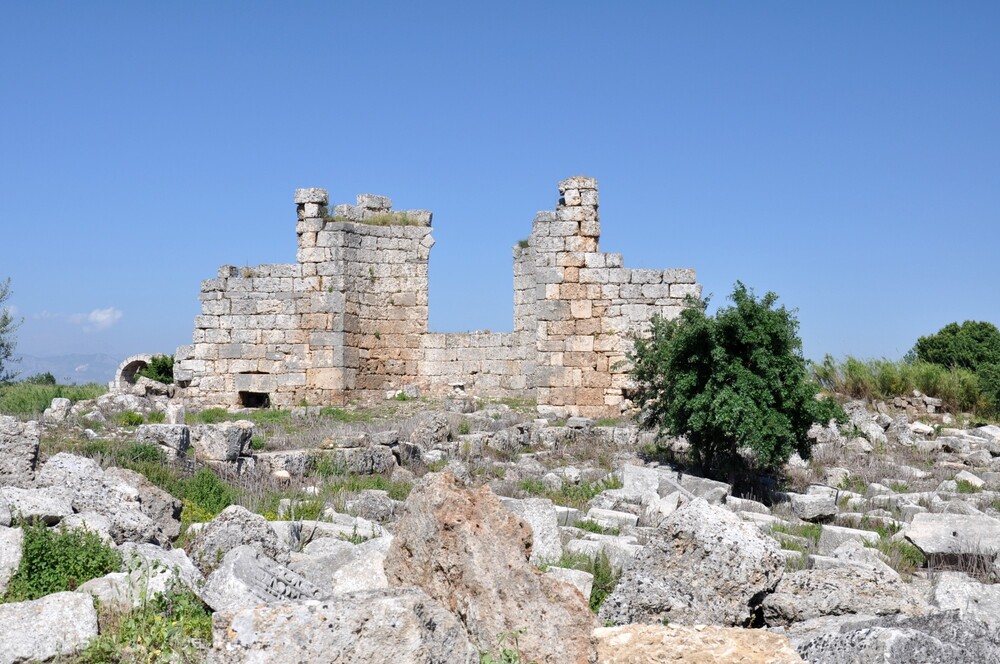
Dating to the 2nd century BCE, the Hellenistic Gate, with its four-story twin towers and oval courtyard, served as a grand entrance. Later modifications in 121 CE transformed it into an honor court, decorated with colorful marble and statues of gods and legendary founders.

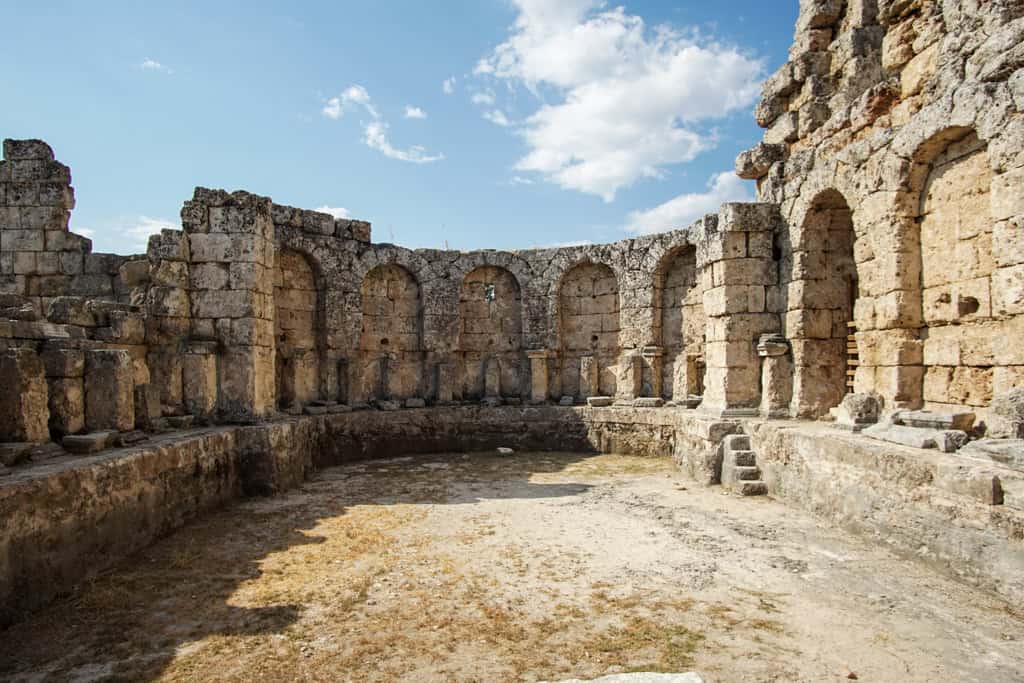
South Bath

One of the best-preserved structures in Perge, the South Bath complex includes various rooms for different bathing temperatures and activities. Its advanced hypocaust system underlines Roman engineering prowess and highlights the importance of baths in daily Roman life.

Other significant structures include necropoleis, defensive walls, a gymnasium, and monumental fountains.

Pro Tour Guide in Antalya
Kağan Özşakacı

He grew up running these streets and now spends his days bringing ancient history to life. With a surname meaning “The Hardcore Joker,” expect deep archaeological knowledge delivered with a sharp sense of humor. Get ready to see the ruins differently.

LEARN MORE

Tips for Visiting Today

When planning a visit to Perge, it is best to go early in the morning or late in the afternoon to avoid crowds and the midday heat. Wear comfortable shoes, bring sunscreen, a hat, and ample water as you explore the extensive ruins on uneven terrain.

The entrance fee for Perge Ancient City is approximately €11 for international visitors, while Turkish Museum Pass holders can enter for free. Hiring a knowledgeable guide or joining a guided tour can greatly enhance the experience by providing historical context and fascinating anecdotes about the site. Please contact us for more details.

Official website
2026 Turkey Museum & Site Entrance Fees

If you’re planning a trip in 2025, here’s a comprehensive guide to the entrance fees of Turkey’s top museums and archaeological sites, ensuring you can plan your visit efficiently.

Learn more

Nearby Attractions, Tours & Blue Cruises

While in the Antalya region, consider exploring nearby ancient cities such as Aspendos, renowned for its well-preserved Roman theater, and Side, known for its beautiful harbor and archaeological treasures. The modern city of Antalya also offers beaches, dining, and cultural experiences that complement your historical journey.

Kabak Valley: Where the Lycian Coast Slows Down

Ali Kütük - Lycia Turkey

Ali Kütük: Lycian Way Trekking & Archaeology Guide, Turkey

Eren Nacak Professional Guide 3 - The Other Tour

Eren Nacak: The Analytical Tour Guide Across Mediterranean

Myra: Rock Tombs and the Real Santa Claus in Lycian Turkey

Load More

Discover with Us

At The Other Tour, we invite you to uncover the wonders of Perge with expert guides who bring history to life. Our tailored tours provide exclusive insights, seamless logistics, and insider tips to enhance your visit.

Whether you are a history enthusiast or a curious traveler, discovering Perge with us guarantees an enriching and memorable adventure through one of Anatolia’s most storied ancient cities.

Tags: Ancient CityAncient CivilizationsArchaeologyArchitectureArts & CultureChurchHellenisticHistoric LandmarksHistoryMediterraneanReligionTurkeyTurkey Travel
Share144Tweet90
Soner Dursun

Soner Dursun

Soner Dursun, co-founder of The Other Tour, has been shaping its unique approach since 2011. With a strong background in hotel management, he ensures seamless operations and top-tier hospitality, bringing a keen eye for detail and a deep understanding of guest satisfaction. Born and raised in the Black Sea region, he carries its renowned resourcefulness and charm, making every experience with The Other Tour feel warm and welcoming. A lifelong football enthusiast, Soner’s passion for the game matches his energy for crafting meaningful connections. Whether on the pitch or sharing stories over tea, his competitive spirit and love for teamwork shine through. His lifelong friendship with Fethi, built since childhood, is the foundation of their collaboration. Together, they have grown The Other Tour into a travel agency known for organizing unique tours in Istanbul and across Turkey, driven by authenticity, adventure, and Soner’s vibrant leadership.

Related Posts

Sagalassos Ancient City - The Other Tour
Tours from Antalya

Sagalassos: The Ancient Cloud-City of Pisidia

Discover Sagalassos, Pisidia's breathtaking cloud-city. Explore imperial Roman ruins and Alexander's Hill with expert archaeologist Ümit Işın.

The Deep Layers of Ephesus beneath the Marble
Ephesus

The Deep Layers of Ephesus beneath the Marble

Uncover Ephesus beyond the postcard. Explore 2,500 years of hidden history, trench lines, and ancient mysteries with The Other Tour.

The Soul of Turkey – Anatolia
History

The Soul of Turkey – Anatolia

Anatolia is a land so varied in history, culture and ethnicity that it almost makes modern day melting pots like America look homogeneous.

Islandman: Istanbul’s Neo-Psychedelic Trio
Turkish Music

Islandman: Istanbul’s Neo-Psychedelic Trio

Discover how Istanbul’s Islandman turns Anatolian folk into a live electronic ritual, bridging psychedelic traditions and modern beats.

Tour guide gesturing to explain the layout of Yedikule Fortress to two visitors, with the main Ottoman round tower and crenellated walls behind them
Istanbul Attractions

Yedikule Fortress: Istanbul’s Seven Towers and Three Empires

Yedikule Fortress, Istanbul: the Golden Gate, a 1,500-year-old Byzantine sidewalk, and a sultan's prison cell in one walled complex.

Pandeli: A Century of Ottoman-Greek Cooking Above the Spice Bazaar
Istanbul Restaurants

Pandeli: A Century of Ottoman-Greek Cooking Above the Spice Bazaar

Pandeli restaurant Istanbul: Ottoman-Greek cooking above the Spice Bazaar since 1901. Michelin Bib Gourmand. Order the hünkar beğendi.

Next Post
Aspendos Antalya - The Other Tour 2026

Aspendos: The Best-Preserved Roman Theater in the World

Comments 2

  1. William says:
    1 year ago

    Roman ruins always impress me, but this one looks next level. Walking through those streets must feel like time travel!

    Reply
  2. Daniel says:
    7 months ago

    coming in a month!!

    Reply

Leave a Reply Cancel reply

Your email address will not be published. Required fields are marked *

  • Is Istanbul Safe - Kadikoy - The Other Tour

    Is it safe to travel to Turkey in 2026?

    16 shares
    Share 2289 Tweet 1431
  • Istanbul Earthquake: A 2026 Update

    42 shares
    Share 1928 Tweet 1205
  • Exploring Istanbul’s Asian Side

    10 shares
    Share 825 Tweet 516
  • The Mystery of Turkish Language

    46 shares
    Share 683 Tweet 427
  • Top 10 Masterpieces of Turkish Cinema

    1623 shares
    Share 649 Tweet 406

Our Tags

Aegean Sea Ancient City Ancient Civilizations Archaeology Architecture Arts & Culture Asian side Best Tours in Turkey Bosphorus Byzantine Legacy Cappadocia Church Constantinople Cruise Culture Day trips Environment Ephesus European Side Events and Happenings Fun Hagia Sophia Historic Landmarks History Hotels Istanbul Istanbul Tours Istanbul travel Istanbul Trip Istanbul Visit Mediterranean Museums Nature Ottomans Recommendations Religion Reviews Sultanahmet The Other Tour Tour Guide Turkey Turkey Travel Turkish Cuisine Turkish Culture Water

About us

We offer a unique, immersive city tour experience in Istanbul that explores lesser-known areas, engaging participants in cultural activities like local home visits, market explorations, and Bosphorus cruises.

In addition to our signature tour 'The Other Tour', our travel agency also provides a variety of wheelchair-assisted guided tours, custom itineraries, and specialized tours covering historical, cultural, and niche interests like Jewish heritage, vegan spots, and bird-watching. We also offer transportation services with professional guides for a more personalized and flexible experience.

Newsletter

The Other Tour is an immersive way to experience Istanbul and the rest of Turkey, led by licensed local guides who take you beyond the tourist spots into the lived culture and quiet corners of Cappadocia, Antalya, Ephesus, Bodrum, and the Mediterranean. We also build personalized travel planning, private tours, and custom itineraries — crafted around what you’re actually curious about, in any region of the country.

Company

  • Explore
  • 2026 Itinerary
  • Services
  • F.A.Q.
  • Blog
  • Philosophy
  • About Us
  • Our Team
  • Clients/Past Tours
  • Contact

Our Services

  • Private Tours
  • Private Tour Guides
  • Event Planning
  • Airport Transfers
  • Made-to-order
  • Hotel Selection
  • Culinary Tours
  • Shopping Tours
  • Unique Activities
  • Accessibility-Assisted Tours

Turkey

  • Destinations
  • Istanbul
  • Cappadocia
  • Ephesus
  • Pamukkale
  • Bodrum
  • Antalya
  • Mediterranean
  • Eastern Turkey
  • Black Sea
  • Terms & Conditions
  • Privacy Policy
  • Jobs
  • Get in touch

© 2026 THE OTHER TOUR by BEFORE TRAVEL - TÜRSAB NO: 7651.

No Result
View All Result
  • Home
  • Explore!
  • The Other Tour
    • Introduction
    • 2026 Itinerary
    • F.A.Q.
    • About us
    • Reviews
  • Daily Tours
    • Istanbul
    • Cappadocia
    • Antalya
    • Aegean
  • Tour Guides
    • Our Tour Guides
    • Istanbul
    • Ephesus
    • Cappadocia
    • Mediterranean Region
  • Istanbul
    • Tours
    • Attractions
    • Neighborhoods
    • Food
    • Stay
    • The Bosphorus
  • Turkey
    • Turkey Tours
    • Destinations
    • Cappadocia
    • Ephesus
    • Pamukkale
    • Antalya
    • Bodrum
  • Services
    • Private Tours
    • Daily City Tours
    • Made-to-order Travel Planning
    • Unique Activities
    • Hire a tour guide in Istanbul
    • Layover Tours
    • Culinary Tours
    • Hotel Selection
    • Family Time
    • Event Planning
    • Corporate Group Tours
    • All Our Services
  • Blog
    • TOP 5 ISTANBUL
    • Read
    • Events
    • News
    • Turkey
    • Documentary
    • Turkish Food
    • Turkish Music
    • Istanbul Videos
    • All Categories
    • All Posts
  • Contact

© 2026 THE OTHER TOUR by BEFORE TRAVEL - TÜRSAB NO: 7651.