Before empires stabilize, they often fracture—and in that fracture, something unexpected can emerge. The Timurid world is one such case: a realm born in conquest, shaken by rivalry, yet luminous in culture. This article explores how conflict and creativity coexisted, and how a Central Asian renaissance quietly shaped broader Islamic history.
Table of Contents
A Renaissance Forged in Rivalry
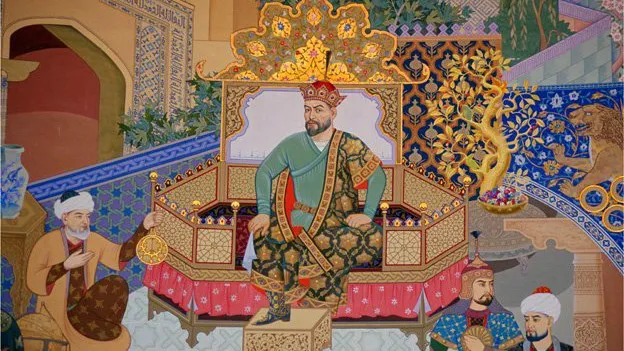
History tends to associate cultural brilliance with stability, yet the Timurid world disrupts that assumption in striking ways. Born from the conquests of Timur, this empire quickly unraveled into competing courts, ambitious princes, and shifting loyalties. And still, amid this instability, something extraordinary took shape.
Cities like Samarkand and Herat did not merely survive the chaos—they turned it into an engine for artistic and intellectual achievement, producing some of the most refined works of the Islamic world. What makes this story compelling is not just the beauty it produced, but the conditions that made it possible.
The Timurid Renaissance was not a pause between conflicts; it was deeply embedded within them. Rival rulers sought legitimacy not only through military success, but through patronage, architecture, and scholarship. In doing so, they transformed competition into creativity—proving that even in fractured political landscapes, culture can flourish with remarkable intensity.
A World Built by Conquest and Inheritance
At its height, the Timurid Empire stretched across an immense and diverse landscape, linking Central Asia with Persia, the Caucasus, and parts of the Middle East. This was not a neatly administered state, but a network of powerful cities tied together by military authority and personal loyalty. Timur’s campaigns brought not only territory, but also artisans, scholars, and intellectual capital into his orbit.
In this sense, conquest functioned as a mechanism of cultural accumulation, concentrating talent in urban centers that would later define the Timurid Renaissance. Yet the very structure that enabled rapid expansion also planted the seeds of fragmentation. Authority was distributed among princes, governors, and military elites, each with their own regional base of power.
When Timur died in 1405, there was no uncontested system of succession to stabilize the empire. Instead, rival claimants asserted control over key cities, turning the political landscape into a competitive arena. This fragmentation did not immediately collapse the system—but it reshaped it into a world where legitimacy had to be constantly negotiated.
Phases of the Timurid Renaissance

The Timurid Renaissance did not unfold as a single, continuous golden age. Instead, it developed across distinct phases shaped by shifting political control, regional rivalries, and evolving centers of patronage. Each period reflects a different balance between conflict and consolidation, where cultural production adapted to changing power structures.
From the immediate aftermath of Timur’s death to later transformations beyond Central Asia, the Timurid world remained dynamic—its intellectual and artistic energy constantly reshaped by those who sought to rule it.
Fragmentation and Foundation (1405–1409)
The years following Timur’s death were marked by uncertainty and intense competition among his heirs. Without a firmly established system of succession, princes and regional commanders moved quickly to secure their own territories. Samarkand, the symbolic heart of the empire, became a focal point of rivalry. Despite the instability, these early struggles did not halt cultural activity; instead, they preserved the networks of scholars and artisans that Timur had gathered during his campaigns.
Amid this fragmentation, the foundations of the Timurid Renaissance quietly held. Courts continued to function as centers of patronage, even if their political futures were unclear. The presence of skilled craftsmen, manuscript producers, and scholars ensured that artistic and intellectual life did not collapse. Rather than a complete rupture, this phase represents a transition—where inherited cultural capital survived the initial shock of political disunity.
Consolidation under Shah Rukh (1409–1447)
A more stable phase emerged under Shah Rukh, Timur’s son, who managed to reassert a degree of central authority while ruling from Herat. His reign is often seen as the high point of Timurid cultural life, not because conflict disappeared, but because it was more effectively managed. Under his patronage, Herat flourished as a major intellectual and artistic hub, attracting poets, scholars, and painters who defined the aesthetic standards of the period.
This era saw the refinement of Persian miniature painting, the expansion of manuscript production, and continued architectural innovation. Patronage became more structured, allowing institutions like libraries and workshops to thrive. Shah Rukh’s court demonstrated how relative political stability could amplify cultural output, turning Herat into one of the most sophisticated centers of the Islamic world during the 15th century.
Diffusion and Transformation (Late 15th–Early 16th Century)
Following the decline of centralized Timurid authority after the mid-15th century, the cultural energy of the renaissance did not disappear—it dispersed. Competing principalities continued to sponsor art and scholarship, but without a dominant center like Herat. External pressures from rising powers such as the Uzbeks and Safavids further fragmented the political landscape, gradually ending Timurid control over its core territories.
Yet this phase is equally important for understanding the Timurid legacy. As scholars, artists, and elites moved across regions, they carried their knowledge and aesthetic traditions with them. This diffusion extended Timurid influence far beyond Central Asia, shaping emerging courts and empires. In this sense, the final phase of the Timurid Renaissance was not an end, but a transformation—where its cultural achievements found new life in different political and geographic contexts.
The Lasting Legacy of the Timurid Renaissance
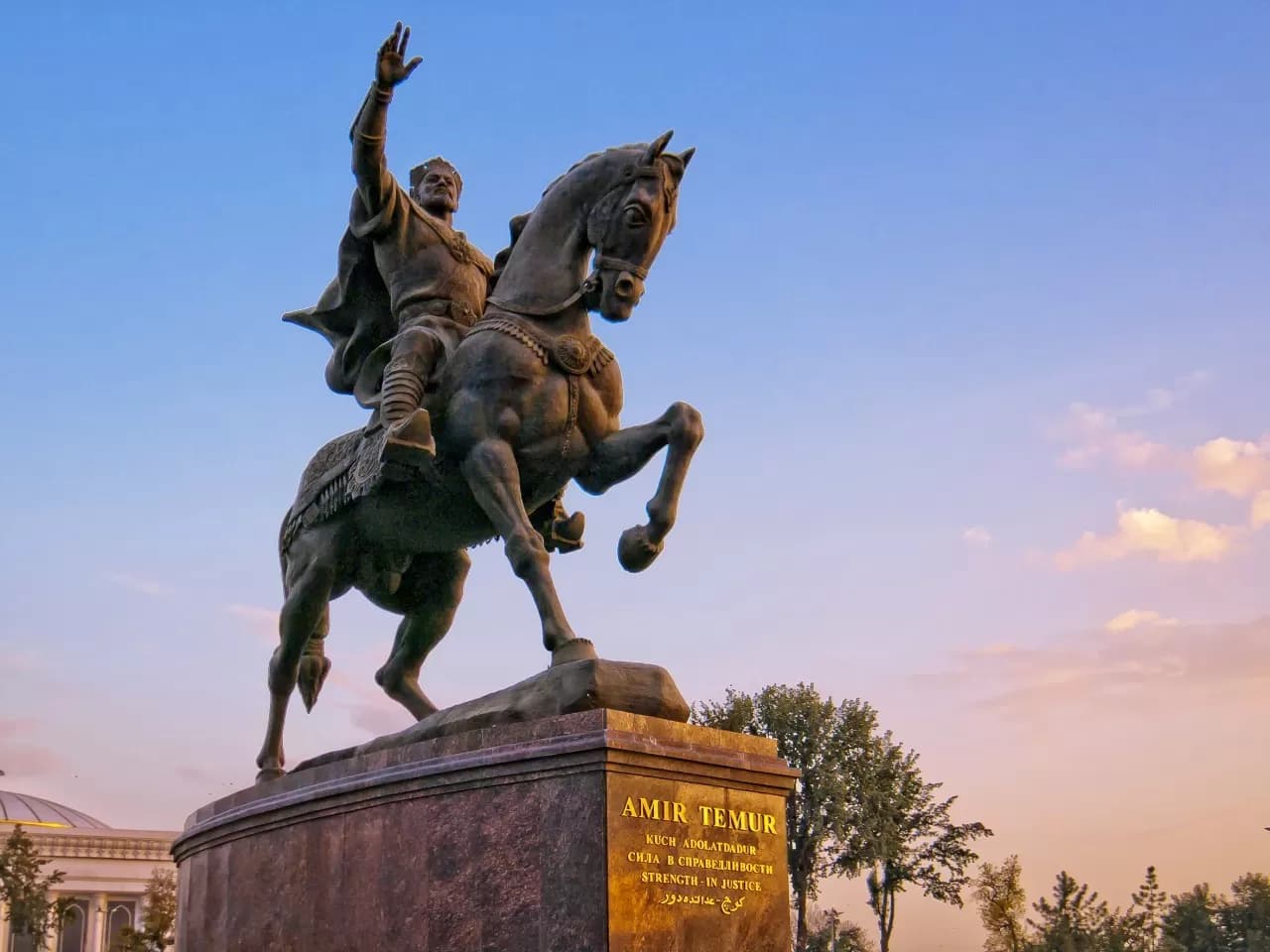
The Timurid Empire may have fractured politically, but its cultural and intellectual legacy proved far more resilient than its borders. What emerged from this turbulent period was not a fleeting moment of brilliance, but a deeply influential model of courtly culture—where power, art, and knowledge were inseparable.
The achievements of Timurid cities like Herat and Samarkand set enduring standards in architecture, manuscript production, and scientific inquiry, shaping expectations of what a “great court” should look like across the Islamic world. Perhaps more importantly, the Timurid legacy did not remain confined to its original geography. As political authority weakened, its scholars, artists, and traditions migrated, embedding themselves in new imperial contexts.
This transfer is most visible in the rise of the Mughal Empire, where Timurid heritage was consciously revived and expanded. At the same time, Ottoman intellectual and artistic life absorbed elements of this broader Persianate world. In this way, the Timurid Renaissance did not end—it evolved, extending its influence across regions and generations long after the empire itself had disappeared.
Get In Touch with us!
We’d love to hear from you! Whether you have questions about the Timurid Renaissance, want to explore more historical insights, or are planning a tailored cultural tour, our team is here to help. Sharing your thoughts and inquiries allows us to provide detailed guidance, recommendations, and resources that match your interests. Don’t hesitate to reach out and start a conversation with our experts who are passionate about history and travel.
Fill out the form below, and we’ll respond promptly to your message. Let us help you dive deeper into the stories, places, and experiences that bring history to life. Your curiosity drives the conversation, and we’re ready to guide you through every step—whether it’s more reading, virtual exploration, or arranging a personalized journey through the legacies of the Timurid world and beyond.