Pandeli restaurant has stood in Istanbul for over a century, and the kitchen never tried to evoke the city’s Ottoman past. It simply never left it.
Table of Contents
Introduction to Pandeli
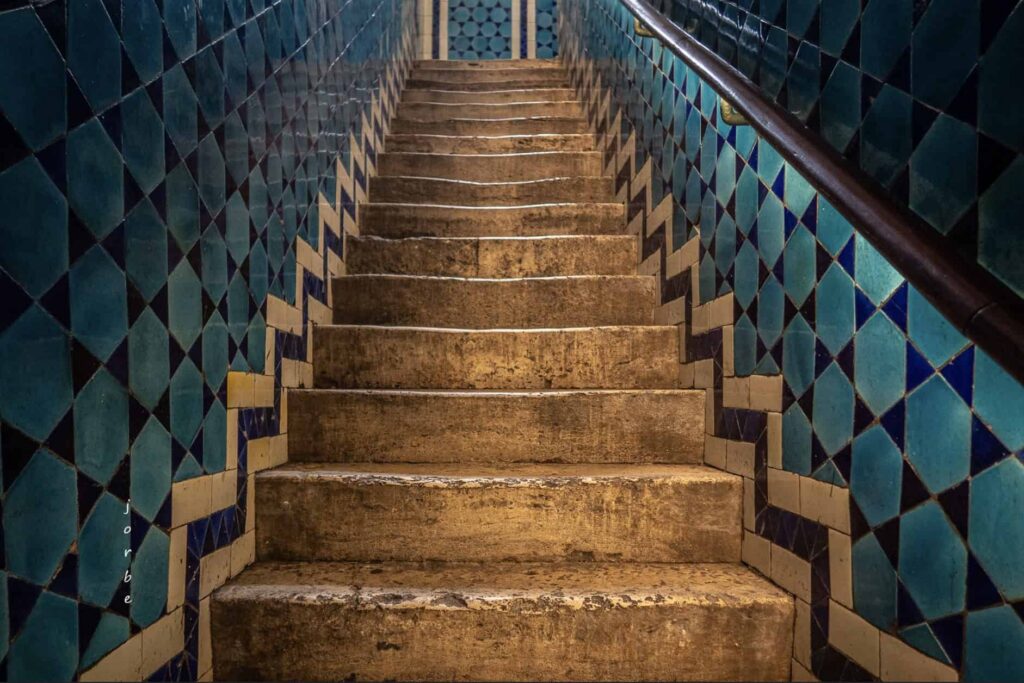
The turquoise tiles begin before you reach the door.
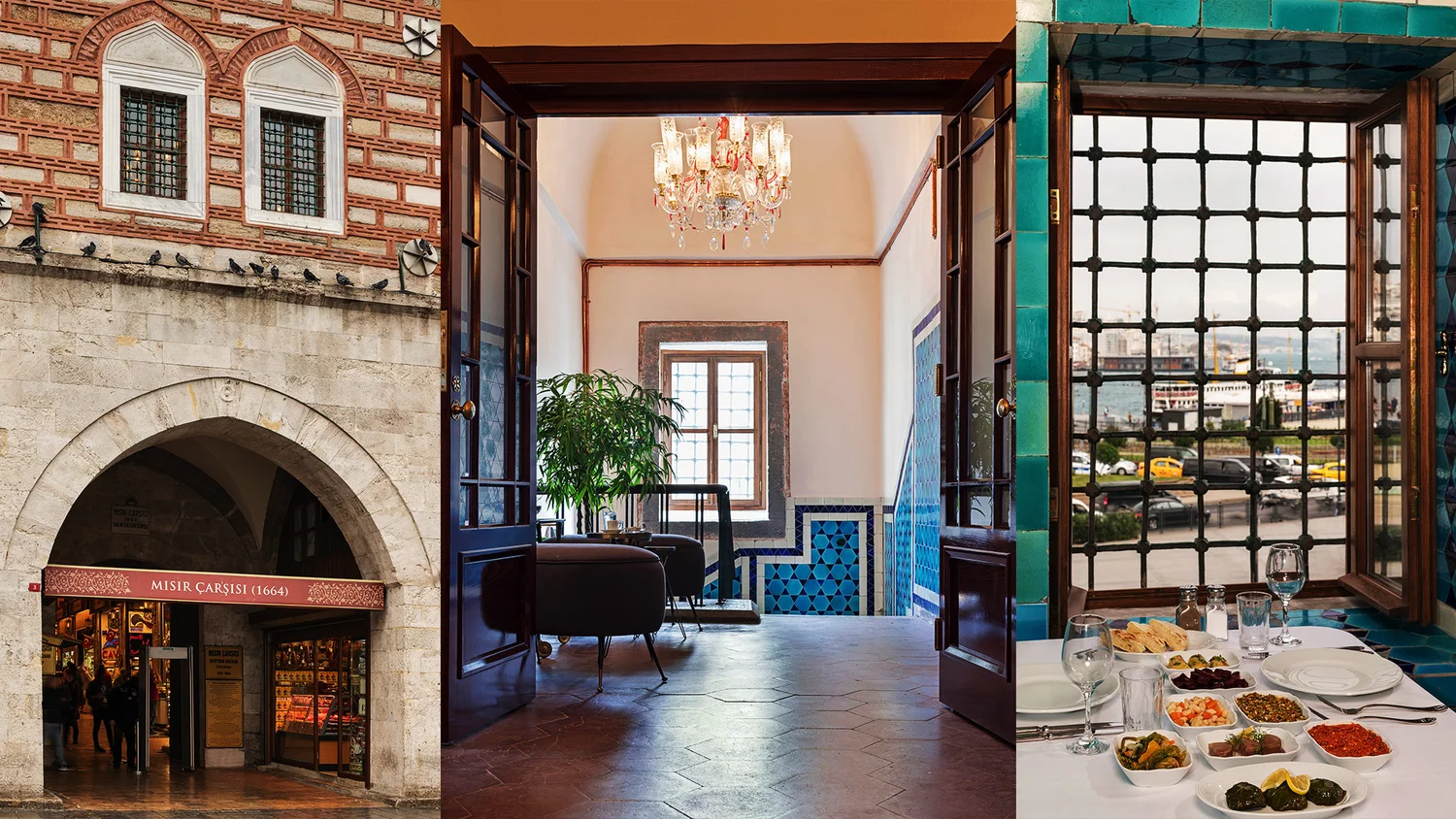
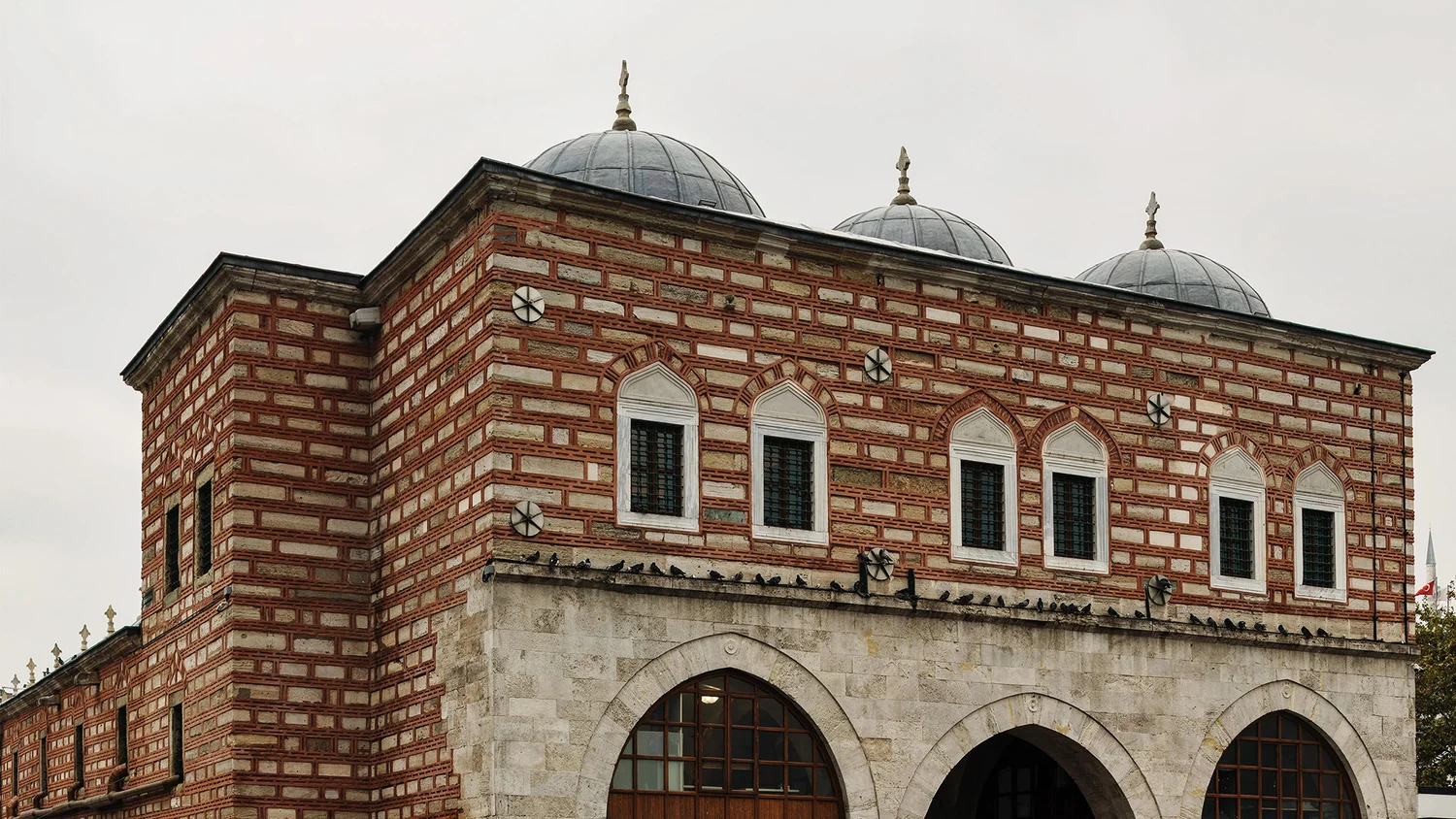
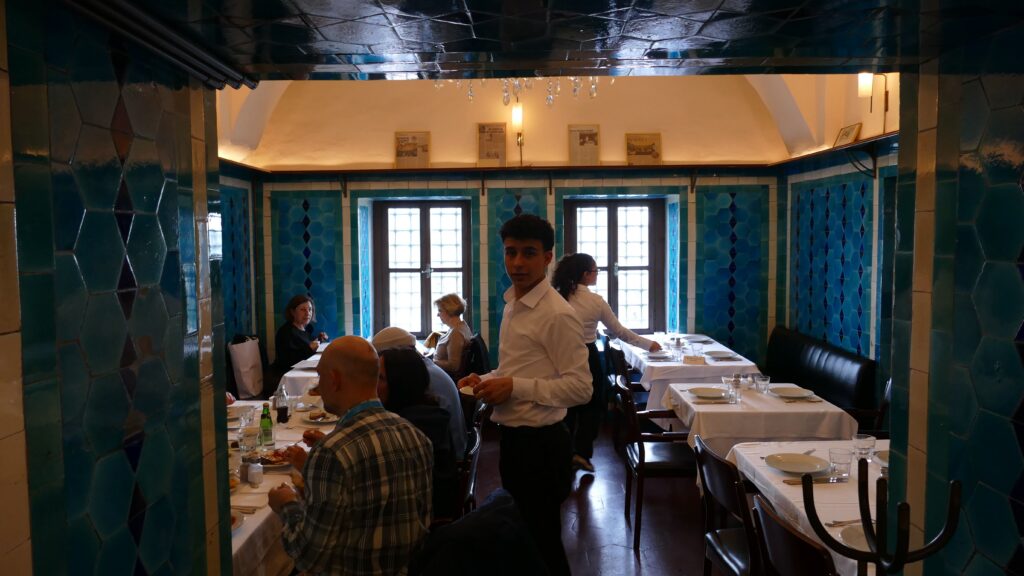
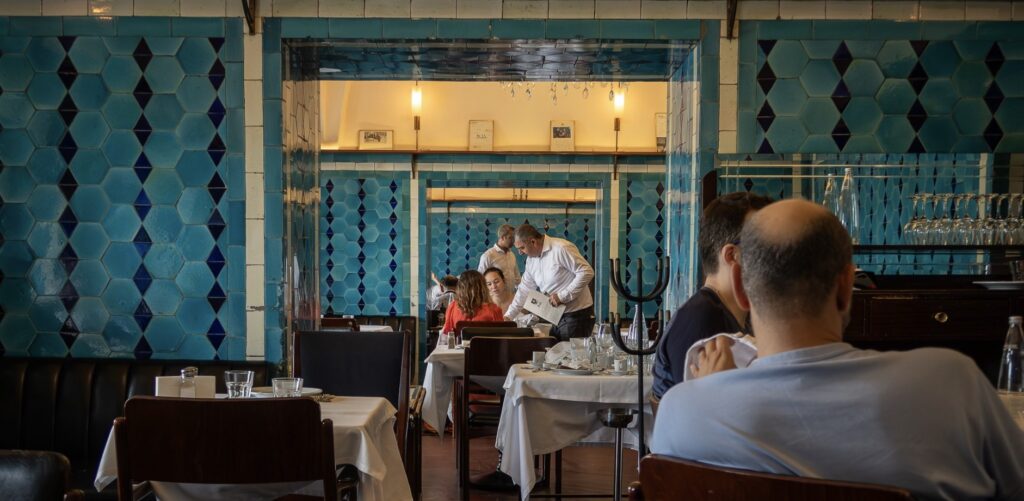
You climb a narrow staircase above the entrance of the Egyptian Spice Bazaar in Eminönü, and when the dining room opens above you — arched ceilings, brass chandeliers, walls sheeted in hand-painted blue-green tile from floor to cornice — the bazaar noise below seems to drop away entirely.
This is Pandeli, one of Istanbul’s great old restaurants: part dining room, part living museum, and for generations a dependable stop for politicians, writers, artists, visiting celebrities and ordinary Istanbulites marking an occasion.
Founded by Pandeli Çobanoğlu in the early twentieth century, it became famous for refined Turkish-Ottoman home cooking served with ceremony but without unnecessary fuss. Its classics include hünkar beğendi, lamb dishes, stuffed vegetables, rice pilaf and the restaurant’s celebrated eggplant preparations — comforting, elegant food that feels inseparable from the city around it.
Even visitors who come mainly for the interior soon understand why Pandeli has survived for so long: few restaurants capture Istanbul’s mixture of grandeur, nostalgia and everyday appetite quite so perfectly.
The Rise of a Bazaar Legend
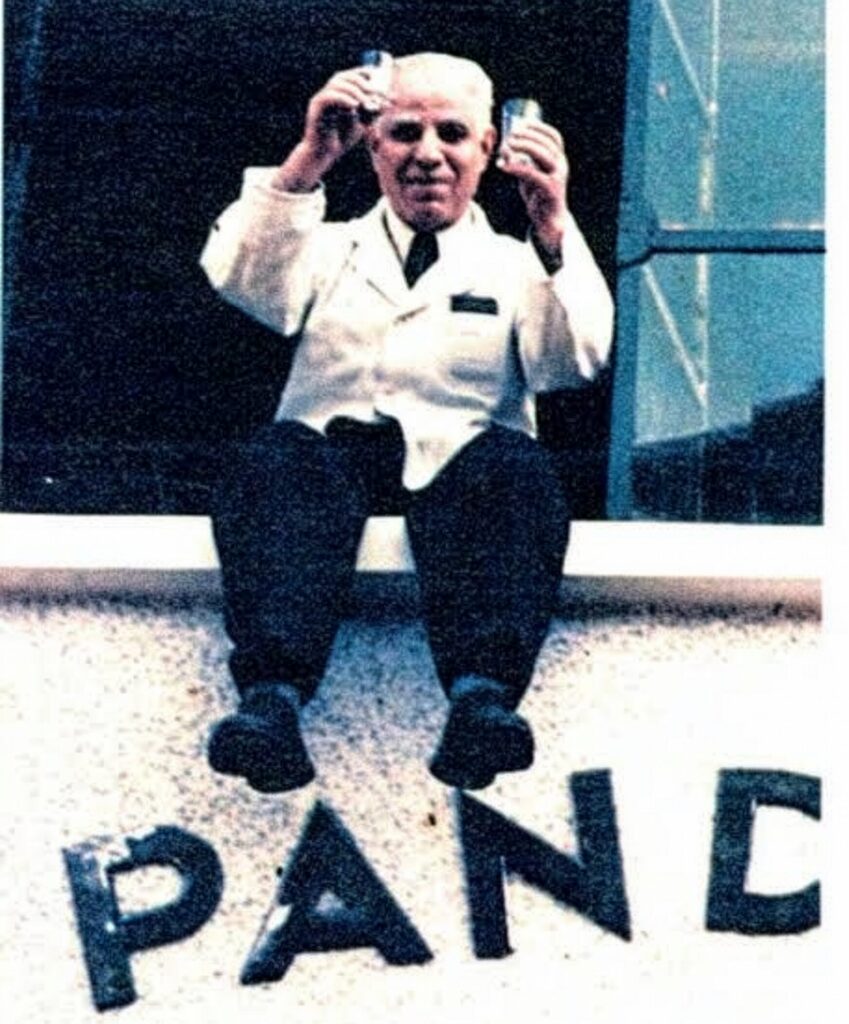
Pandeli Çobanoğlu arrived in Istanbul young — an Anatolian Greek with an entrepreneur’s eye and not much else. Around 1901, he set up a wooden shack in Çukur Han, near the waterfront at Eminönü, selling piyaz and köfte from a simple counter.
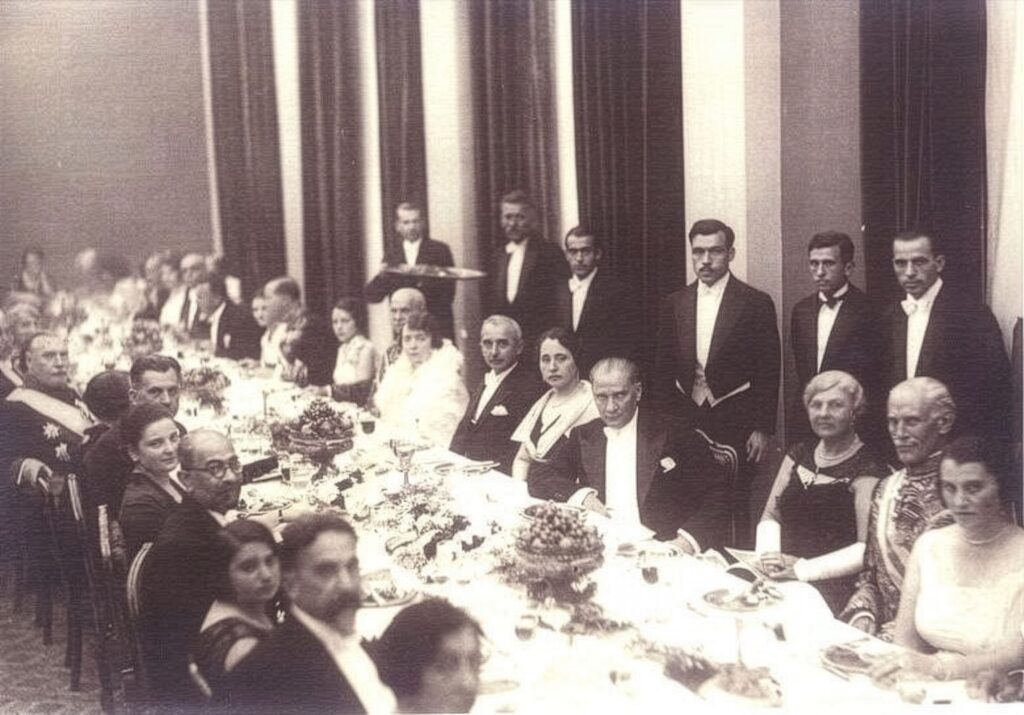
What followed was neither luck nor novelty: the food was exceptionally good, and within years intellectuals, poets, and politicians had made Pandeli’s their regular table — among them Mustafa Kemal Atatürk, the poet Ahmed Haşim, and a generation of figures shaping the early Turkish Republic. The restaurant became a meeting ground for the city’s most restless minds.
Word spread through the 1920s and 1930s, and Pandeli outgrew the wooden shack — journalists, diplomats, and businessmen crowded in alongside the poets and statesmen who had already claimed it. In September 1955, riots tore through the neighbourhood and destroyed the original shack; the family salvaged the name and the recipes and kept going.
In 1956, President Celal Bayar and Prime Minister Adnan Menderes granted the Çobanoğlu family a new location by state decree: the second floor above the Egyptian Spice Bazaar gate. The family moved in, laid the tiles, and kept cooking.
That room — and that family — are still there. The third generation of the Çobanoğlu family runs Pandeli today, under head chef Abdullah Sevim. In 2022, the Michelin Guide awarded the restaurant a Bib Gourmand, recognising exceptional food at a price that still feels honest.
The same Michelin organisation stars Istanbul‘s grandest tables — here, it rewards something plainer and harder to fake: a full meal that still costs what it should. On any given weekday, they still know half the room by name — the kind of welcome no reservation app can manufacture.
A Tile Room Above the World
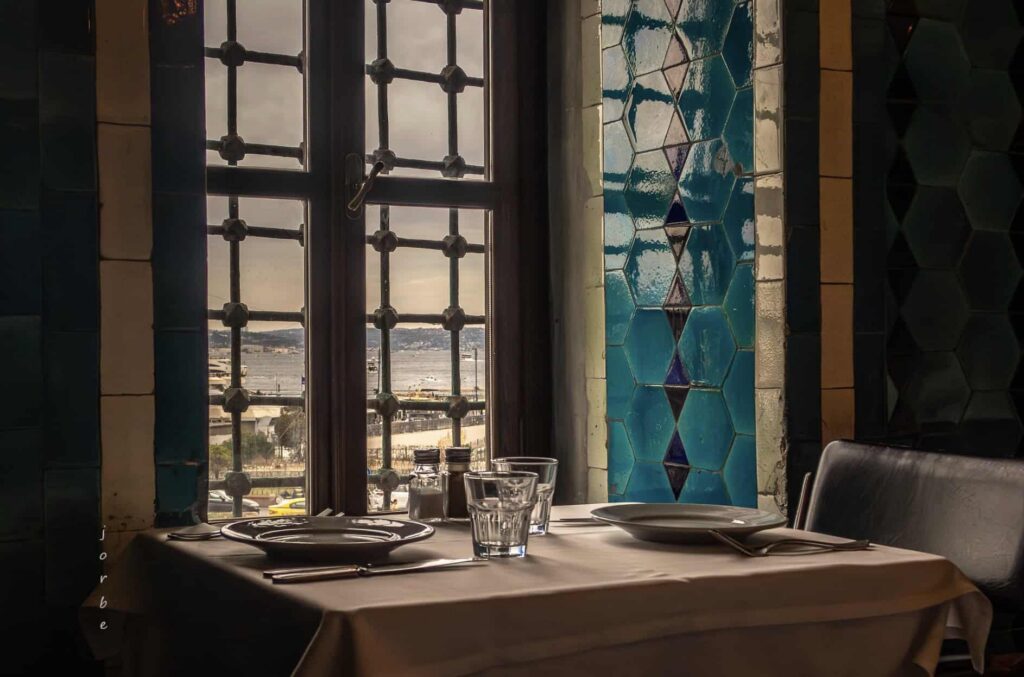
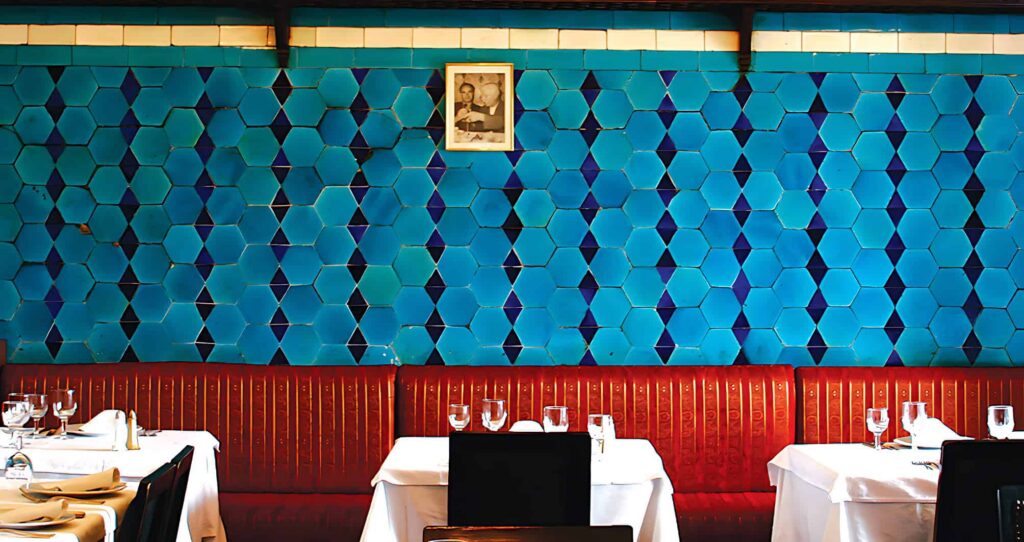
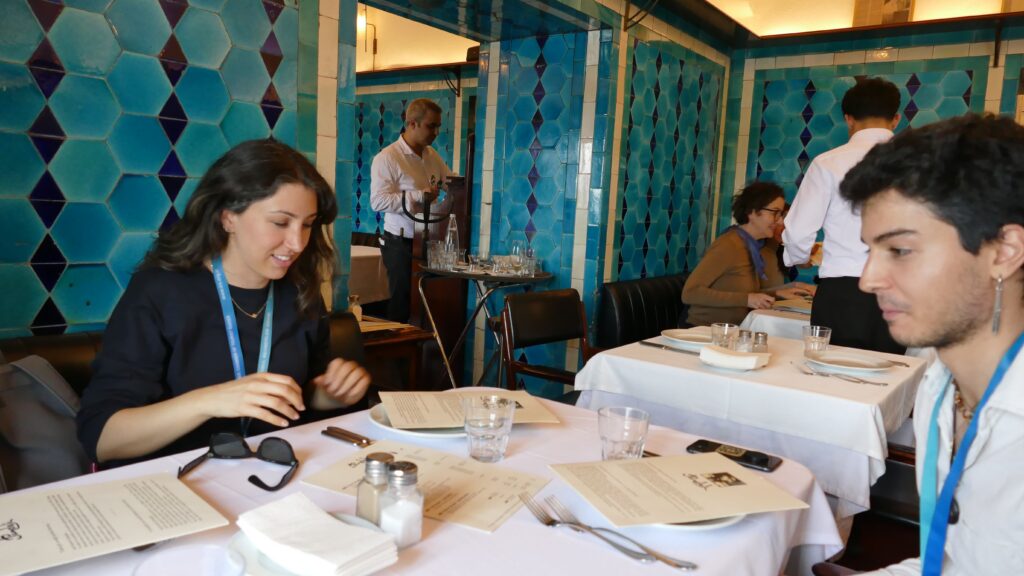
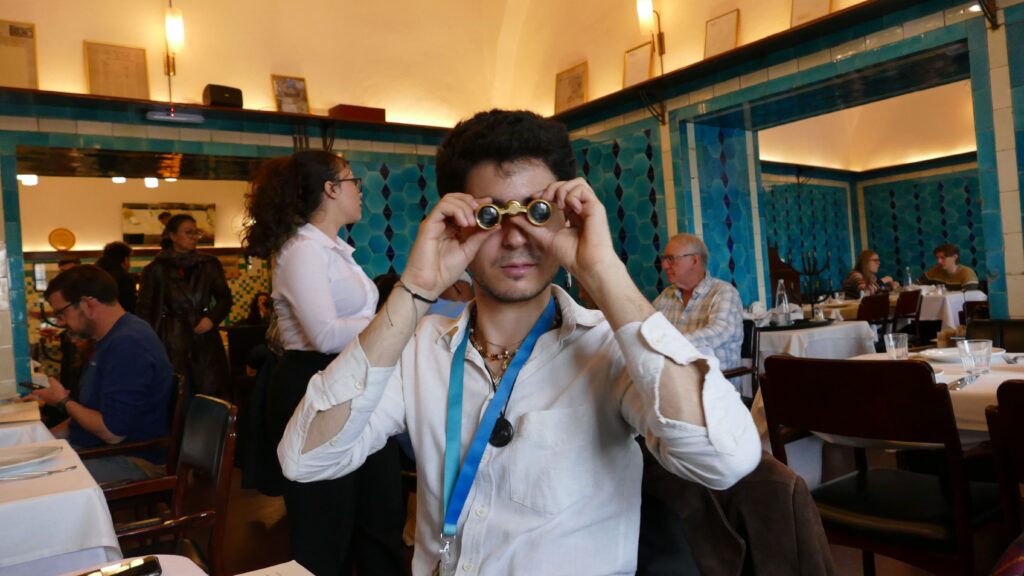
The room itself earns the climb. Turquoise-blue İznik-style tile cases every surface — walls, arches, columns — in a mosaic that shifts from cobalt to aquamarine as the afternoon light moves across it. High domed ceilings amplify the quiet.
Brass chandeliers hang low enough to catch that amber light through the windows. Below, the Spice Bazaar churns — the shout of vendors, the heave of the crowd, the smell of saffron and dried chilli rising from the stalls. Up here, it is a different city.
The tables sit close together in the manner of old Istanbul restaurants, the kind where the conversation at the next table becomes part of your meal. Regulars and first-time visitors share the room without friction — on a weekday lunch, the clientele runs from local professionals to a table of Japanese food writers comparing notes.
The maître d’ speaks English without fanfare, the menu arrives in several languages, and the staff navigate a foreign guest with the ease of long practice. Walking in alone, or arriving without a word of Turkish, is entirely comfortable — nobody here is thrown by an outsider.
Most visitors photograph the tile and leave. The ones who sit down long enough to order the hünkar beğendi understand why Atatürk kept coming back.
What the Sultan Would Have Ordered
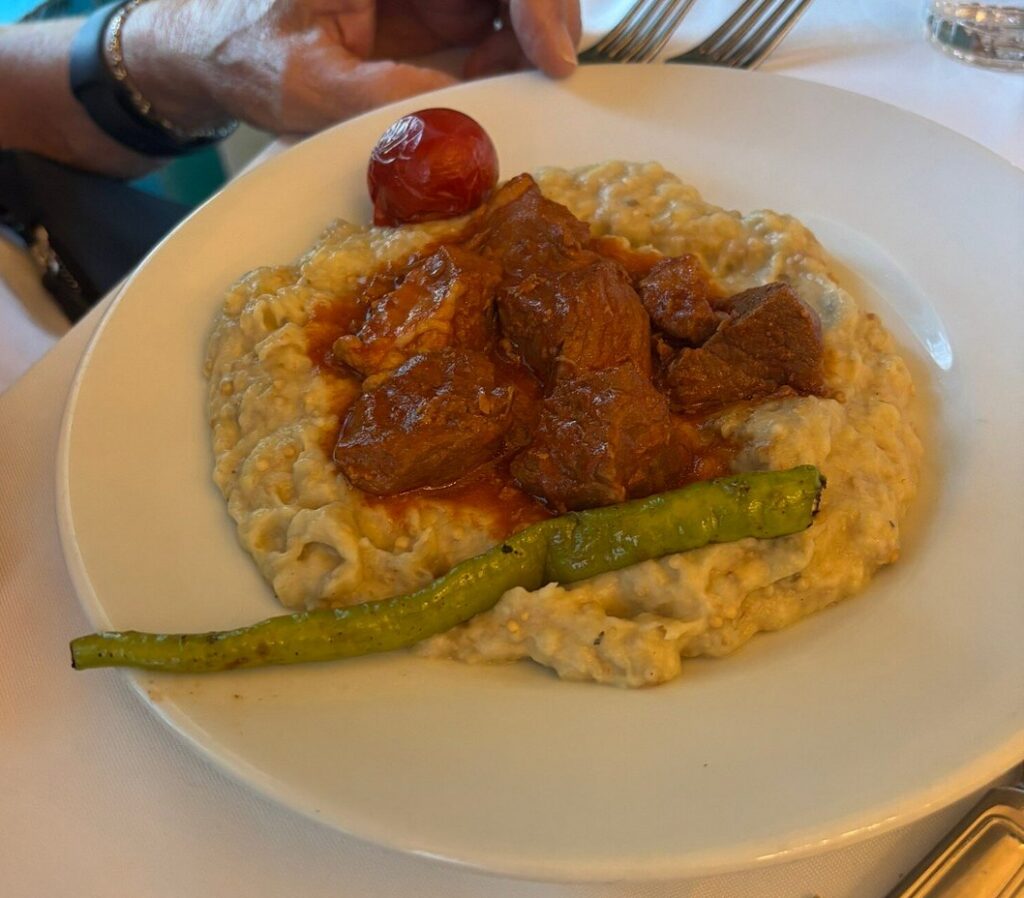
When the hünkar beğendi arrives, the kitchen has braised the lamb shoulder until it dissolves. It sits on a bed of charred eggplant purée still lifting smoke as the plate lands, the char faintly bitter against the sweetness of the lamb.
You understand immediately why this dish has defined the restaurant for over a century — these are Ottoman-Greek recipes sharpened across decades of daily repetition. The dish that arrives today is the same one cooks here have made ten thousand times before.
The eggplant pie is the other house icon: a pastry shell filled with layered aubergine, crowned with a single curling leaf of döner kebab that melts into the filling as it cools. Order both and you have the Pandeli that locals know.
The menu extends to Kastamonu pastrami with keşkek wheat stew — a northern Anatolian combination that rarely appears on Istanbul menus — and hamsi pilav, pilaf threaded through with Black Sea anchovies, tasting specifically of winter on that coast.
For dessert: kazandibi, caramelised-bottom milk pudding with a scorched crust giving way to a cold, trembling interior, or ayva tatlısı — slow-roasted quince turned amber as it bakes, served under a cloud of clotted buffalo cream.
- Must Order: Hünkar beğendi and the eggplant pie — the two dishes that define what this kitchen is. Order these before anything else.
- For Dessert: Kazandibi, the caramelised-bottom milk pudding, over the quince if you can only choose one.
- Also Worth Trying: Kastamonu pastrami with keşkek, and hamsi pilav — both rare on Istanbul menus, both firmly in this kitchen’s comfort zone.
- Skip: The grilled meat section. It is fine, but the same food is available anywhere in the city — the Ottoman-Greek core is what this kitchen actually does well.
Left alone, most diners split their order evenly across the whole menu, and half the table ends up eating something forgettable. A guide who knows this kitchen does one thing instead: puts the hünkar beğendi, the eggplant pie, the Kastamonu pastrami, and the hamsi pilav on the table, and steers the order away from everything else.
The Tables That History Kept
Sit long enough in this room and you feel the weight of who has sat here before you. Atatürk had a regular table. Celal Bayar and Adnan Menderes came after the move.
In later decades: Queen Elizabeth II, Audrey Hepburn, Sean Connery, Robert De Niro, Roman Polanski, Sarah Jessica Parker. The photographs lining the entry corridor tell the story plainly — word of mouth, not tourism, held it together across a hundred years.
Historic restaurants in Istanbul often trade on heritage while the food grows stale and the tiles crack. Pandeli has done the opposite — the Bib Gourmand nod confirms what regulars have always known: that the kitchen still earns its room.
What survives here is a living record of a cuisine — Ottoman-Greek, multicultural Istanbul — passed down whole, recipe by recipe, for more than a century. The room does most of the work on its own; knowing the full story is what turns the meal into something you carry home.
The tile room above the Spice Bazaar does not ask you to imagine the past — you sit in the actual room, sixty feet above one of the loudest markets in Europe, and the weight of that is slow to arrive, but it does.
Good to Know Before You Go
- Address: Mısır Çarşısı No.1, Eminönü, Istanbul — second floor above the main gate of the Egyptian Spice Bazaar. Climb the staircase immediately inside the arch to the left as you enter from the Eminönü waterfront side.
- Hours: Monday to Saturday, lunch service only — typically 11:30 to 16:00. Pandeli does not serve dinner and is closed on Sundays. Arrive by noon for the full menu; the kitchen runs down popular dishes by mid-afternoon.
- Reservations: Strongly recommended for parties of four or more, and for any Saturday visit. Phone reservation is standard, and the staff speak English. The restaurant accepts walk-ins when tables allow, but the room fills quickly on weekday lunches.
- Getting There: Eminönü is a five-minute tram ride from Sultanahmet on the T1 line (stop: Eminönü). From Galata or Beyoğlu, cross the Golden Horn by ferry or on foot over the Galata Bridge — the Spice Bazaar entrance sits directly off the bridge ramp. From the Grand Bazaar, it is a twelve-minute walk downhill through the covered bazaar lanes.
- Price Range: Mid-range by Istanbul standards — a full meal with appetiser, main, and dessert typically falls between ₺400–600 per person. The restaurant accepts cards. The Michelin Bib Gourmand listing reflects value as much as quality: this is not an expense-account restaurant.
What Our Guests Say
FAQ - Frequently Asked Questions
Where is Pandeli restaurant in Istanbul?
Pandeli is located on the second floor above the main gate of the Egyptian Spice Bazaar (Mısır Çarşısı No.1) in Eminönü. Climb the staircase immediately inside the arch on the left as you enter from the Eminönü waterfront side.
Is Pandeli a Michelin-starred restaurant?
Pandeli holds a Michelin Bib Gourmand (awarded 2022), which recognises exceptional food at honest prices. It is not a Michelin-starred restaurant, but the Bib Gourmand designation from the Michelin Guide is a meaningful marker of quality and value.
What should I order at Pandeli?
The two house icons are the hünkar beğendi (braised lamb on charred eggplant purée) and the eggplant pie. Both have been on the menu for decades and are what the kitchen does best. For dessert, the kazandibi (caramelised-bottom milk pudding) is the one to choose. Avoid the grilled meat section — it is fine but generic; the Ottoman-Greek dishes are why people come.
Does Pandeli serve dinner?
No. Pandeli is a lunch-only restaurant, open Monday to Saturday from approximately 11:30 to 16:00. It is closed on Sundays. Arrive by noon to guarantee the full menu — popular dishes sell out by mid-afternoon.
Do I need a reservation at Pandeli?
Reservations are strongly recommended for groups of four or more and for Saturday visits. The restaurant accepts walk-ins when tables are available, but the room fills quickly on weekday lunchtimes. Staff speak English and phone bookings are standard.
How do I get to Pandeli from Sultanahmet?
Take the T1 tram from Sultanahmet to the Eminönü stop — a five-minute ride. From the Galata side, cross the Golden Horn on foot over the Galata Bridge; the Spice Bazaar entrance is directly off the bridge ramp. From the Grand Bazaar, it is a twelve-minute walk downhill through the covered bazaar lanes.
Is Pandeli part of The Other Tour's food tour?
Yes. Pandeli is one of the stops on our Secret Flavors of Istanbul private food tour. Our guide visits with a contextual narration of the restaurant's history — from Pandeli Çobanoğlu's 1901 wooden shack to the state decree that placed the family here in 1956. That story lives in the room; a solo visitor rarely finds it on their own.
Visit Pandeli with The Other Tour
Pandeli is one of the tables we bring guests to on the Secret Flavors of Istanbul private food tour. A solo diner can order the hünkar beğendi and never learn any of this; what our guide adds is standing at that same table narrating how a Greek immigrant‘s wooden shack in Çukur Han grew, dish by dish, into the room a presidential decree handed the family in 1956. That story lives in the room, not on the menu — no solo visitor stumbles into it on their own.
Tell us your dates and roughly what you’d love to eat — we handle the reservation timing, reply within a day, and shape the rest of the meal around your pace and appetite.