• About
    • Introduction
    • Explore The Other Tour
    • 2025 Itinerary
    • Common Questions Answered
    • The Other Tour Reviews
    • About Us
    • Contact
  • Istanbul
    • Tour Guides
    • Attractions
    • Tours
    • Neighborhoods
    • Eat & Drink
    • Stay
    • Shop
  • Turkey
    • Turkey Tours
    • Destinations
    • Istanbul
    • Cappadocia
    • Ephesus
    • Pamukkale
    • Antalya
    • Bodrum
  • Services
    • Private Tours
    • Daily City Tours
    • Made-to-order Travel
    • Hire a tour guide
    • Unique Activities
    • Airport Transfers
    • Hotel Selection
    • Vacation Booking
    • Corporate Group Tours
    • Culinary Tours
    • Event Planning
    • Istanbul Layover Tours
    • Family Time
  • Blog
    • TOP 5 ISTANBUL
    • Events
    • Documentary
    • History
    • News
    • All
No Result
View All Result
  • About
    • Introduction
    • Explore The Other Tour
    • 2025 Itinerary
    • Common Questions Answered
    • The Other Tour Reviews
    • About Us
    • Contact
  • Istanbul
    • Tour Guides
    • Attractions
    • Tours
    • Neighborhoods
    • Eat & Drink
    • Stay
    • Shop
  • Turkey
    • Turkey Tours
    • Destinations
    • Istanbul
    • Cappadocia
    • Ephesus
    • Pamukkale
    • Antalya
    • Bodrum
  • Services
    • Private Tours
    • Daily City Tours
    • Made-to-order Travel
    • Hire a tour guide
    • Unique Activities
    • Airport Transfers
    • Hotel Selection
    • Vacation Booking
    • Corporate Group Tours
    • Culinary Tours
    • Event Planning
    • Istanbul Layover Tours
    • Family Time
  • Blog
    • TOP 5 ISTANBUL
    • Events
    • Documentary
    • History
    • News
    • All
No Result
View All Result

The Iron Miracle of Istanbul: The St. Stephen Bulgarian Church

A Story of Identity, Politics, and a Church that Arrived Like a Ship

Ömer Çelik by Ömer Çelik
December 2, 2025
in Byzantine Empire, History, Istanbul Attractions, Istanbul Travel Blog, Ottoman Empire, Turkey Attractions
Reading Time: 10 mins read
A A
1

Among the many communities who passed through Istanbul, the Bulgarians carved out one of the most interesting stories: a story of language, dignity, and—in the end—iron.

Table of Contents

Preface: Who are the Bulgars?

Long before Bulgarians settled in Ottoman Istanbul, their ancestors — the Bulgars — were formidable steppe warriors with possible Turkic origins. From north of the Black Sea, they founded the First Bulgarian Empire in 681 CE and became a persistent thorn in Byzantium’s side.
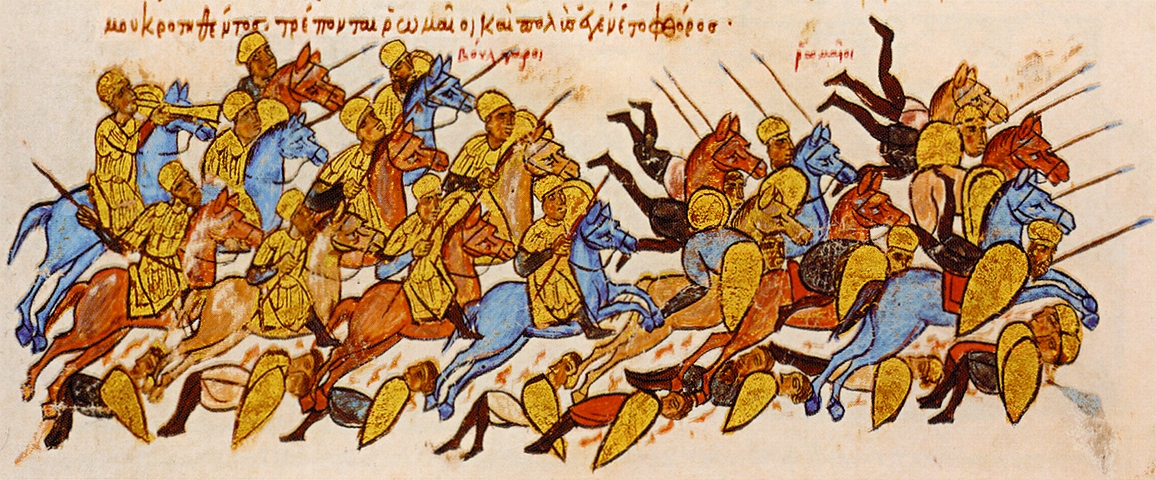
Settling south of the Danube, they merged with Slavic populations, adopting their language and culture while keeping their state’s name and elite structures. For centuries, they were obsessed with Constantinople, the “Queen of Cities,” whose capture would crown them heirs of Roman imperial power.

  • 913 AD: Under Simeon I, Bulgarians made their first major attempt to seize the city, repelled by the legendary Theodosian Walls.

  • 921–923 AD: Simeon launched further sieges, exploiting Byzantine turmoil; Constantinople held, but Bulgarian ambition remained undimmed.

  • 1235–1246 AD: Tsar Ivan Asen II, alongside the Empire of Nicaea, attempted to dislodge the Latin occupiers after the Fourth Crusade in 1204. The city remained out of reach, yet their campaigns weakened the Latin Empire and reshaped the region.

The Ottoman Era

Centuries later, when Bulgarians finally established a community in Ottoman Istanbul, their first church in Fener — the Iron Church — was a modest achievement compared to the glory of the 10th-century empire under Simeon I. It symbolized both their persistence and the diminished power of a diaspora now far from their medieval heights.

Yet the centuries-long fascination with Constantinople remained, visible today in landmarks like the Iron Church.

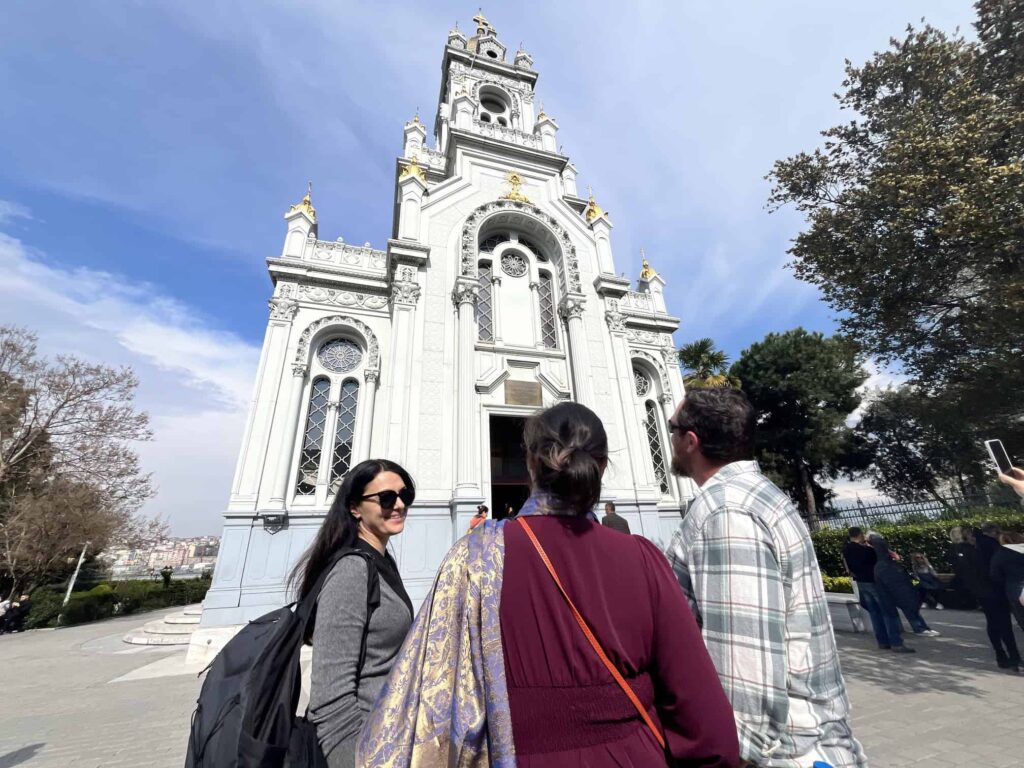
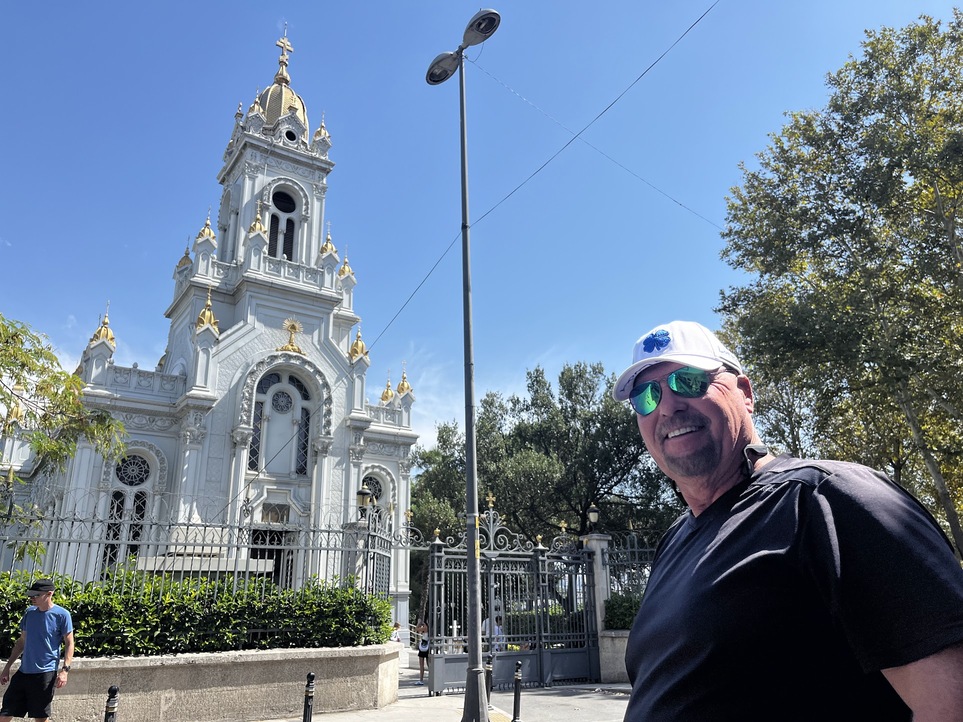
Damla Arslan - English Speaking Senior Guide - Bulgarian Iron Church in Balat Fener - Golden Horn - The Other Tour Istanbul

Introduction to A Story of Identity, Politics and a Church

For centuries, Bulgarians in the Ottoman capital lived in the shadow of the Ecumenical Patriarchate. They prayed in churches run by Greek clergy, heard sermons delivered in Greek, and sent their children to schools where Bulgarian was treated like a provincial dialect.

As the 19th century rolled in, and national consciousness began to spread like wildfire across the Balkans, this dependence became the heart of a quiet revolution.

The Bulgarians of Istanbul wanted the basics: prayers in their own language, bishops who understood their people, schools that taught the alphabet they grew up with. But in the Ottoman world, religion wasn’t just religion. It was your passport, your political status, the very structure that defined who you were.

To control your church meant to control your future. So the battle began in Istanbul, not in Sofia or Plovdiv. Right here, along the Golden Horn.

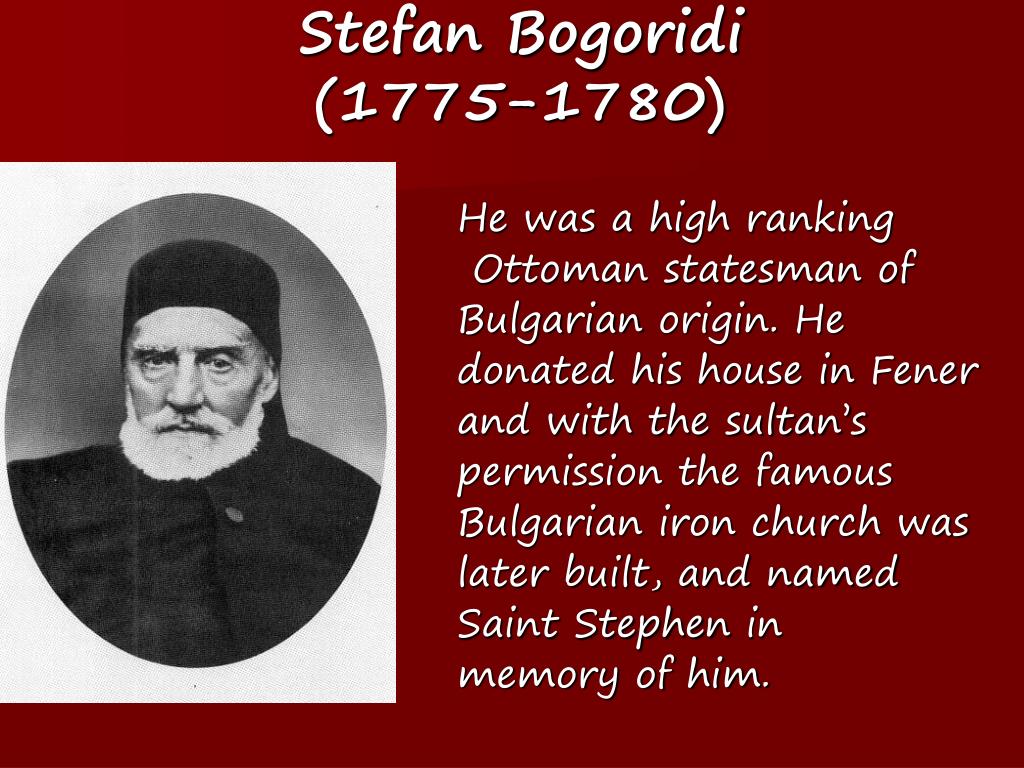
Stefan Bogoridi: The Ottoman Statesman Who Played a Long Game

Every movement needs someone on the inside. For the Bulgarians, that figure was Stefan Bogoridi. Born in Kotel, raised in the Ottoman Empire, Bogoridi rose high within the state. He advised Sultan Mahmud II, negotiated imperial policies, lived in palaces. But he never quite forgot who he was.

And in 1849, under the reign of Sultan Abdülmecid I, he made a decision that would change the future of Bulgarian identity. He asked for permission from Abdülmecid to donate his personal waterfront mansion in Balat to the Bulgarian community—and the Sultan approved.

Imagine that. A high-ranking Ottoman official giving away prime Golden Horn real estate so a minority community could build a church that might one day challenge the authority of the Phanar.

That’s not real estate. That’s a political message disguised as charity. And it was called Saint Stephen’s Bulgarian Orthodox Church.

The First Wooden Church: Small, Fragile, Revolutionary

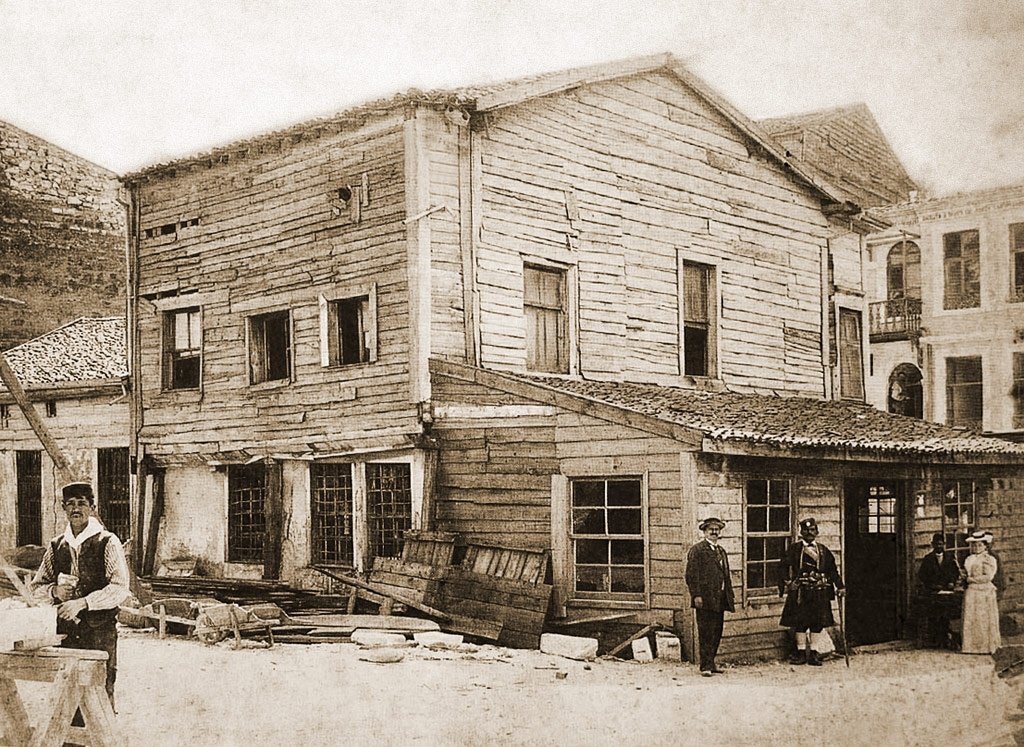
On the land that Stefan Bogoridi donated, the Bulgarians first converted his old waterfront mansion into a modest chapel. It wasn’t grand or imposing, nothing compared to the towering basilicas of Fener, but it was the first space they could finally call their own.

As the community grew, that converted mansion could no longer hold their ambitions. So they replaced it with a simple wooden church, a fragile structure that soon became the beating heart of the Bulgarian Revival.

Inside that wooden chapel, the Bulgarian intellectual class met, argued, wrote, dreamed. This was where the early sparks of the 1870 Ottoman decree were struck—the decree that recognized the Bulgarian Exarchate and gave the Bulgarians their religious independence.

What Was the Bulgarian Exarchate?

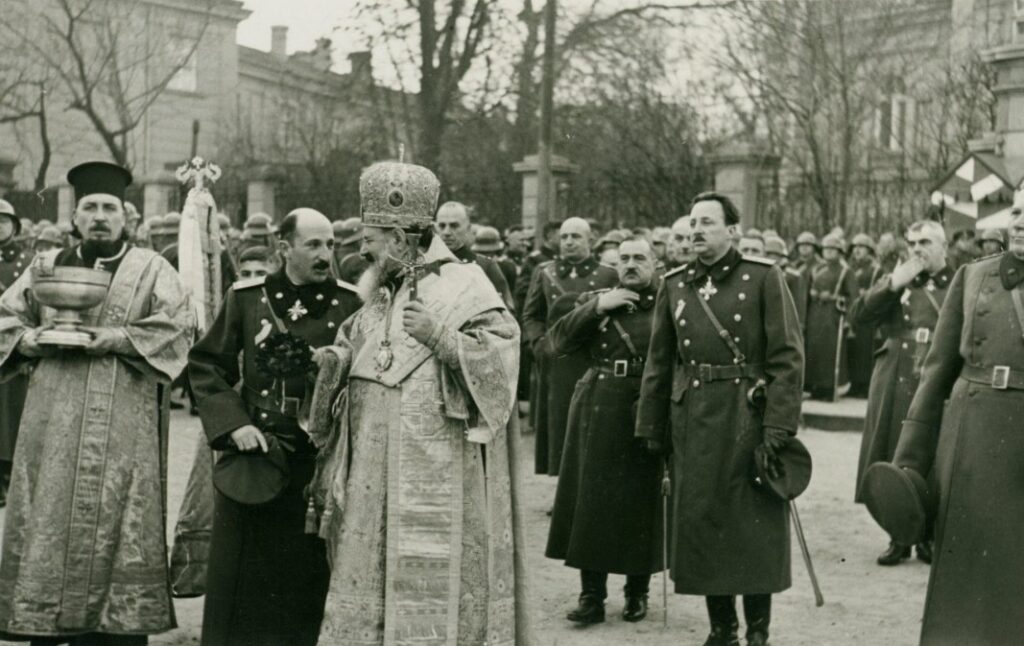
The Bulgarian Exarchate, established by an Ottoman decree in 1870, was the moment the Bulgarians were officially recognized as a distinct nation inside the empire. It created a separate Bulgarian Orthodox Church, no longer under the Greek-led Ecumenical Patriarchate, allowing Bulgarians to worship, learn, and organize in their own language.

  • It was more than a religious institution.
  • It was national identity taking legal form.

And many of the petitions, meetings, and debates that led to this breakthrough began right here, in the small Bulgarian church that once stood in Balat—long before the iron church rose on this spot.

If the Balkan nations were rising, this small wooden church was one of the quiet launchpads. But wood rots. Especially on the marshy banks of the Golden Horn. After decades, the building was falling apart. The community needed something stronger. Something symbolic. Something that matched their newfound identity.

They needed iron.

The Iron Church

Bulgarian St. Stephen Church: Shipped Like Cargo

If someone told you that an entire church was manufactured in Vienna like industrial machinery, floated down the Danube, crossed the Black Sea, and was assembled in Istanbul like a Lego set, you’d think it was a joke.

But that’s exactly what happened.

In the 1890s, the Bulgarian Exarchate commissioned the Austrian firm of Rudolf von Wagner, specialists in prefabricated metal architecture. Over 500 pieces were cast and numbered. Columns, walls, arches, decorative panels—everything. The church was effectively built twice: once in a factory in Vienna, and once again here on the shore of the Golden Horn.

Why iron?

Because the ground would never support heavy stone. And because the Bulgarians were entering the modern age. Iron was fast, light, industrial, futuristic. It made a statement:

“We are part of Europe, part of modernity, part of this city.”

 The Architecture

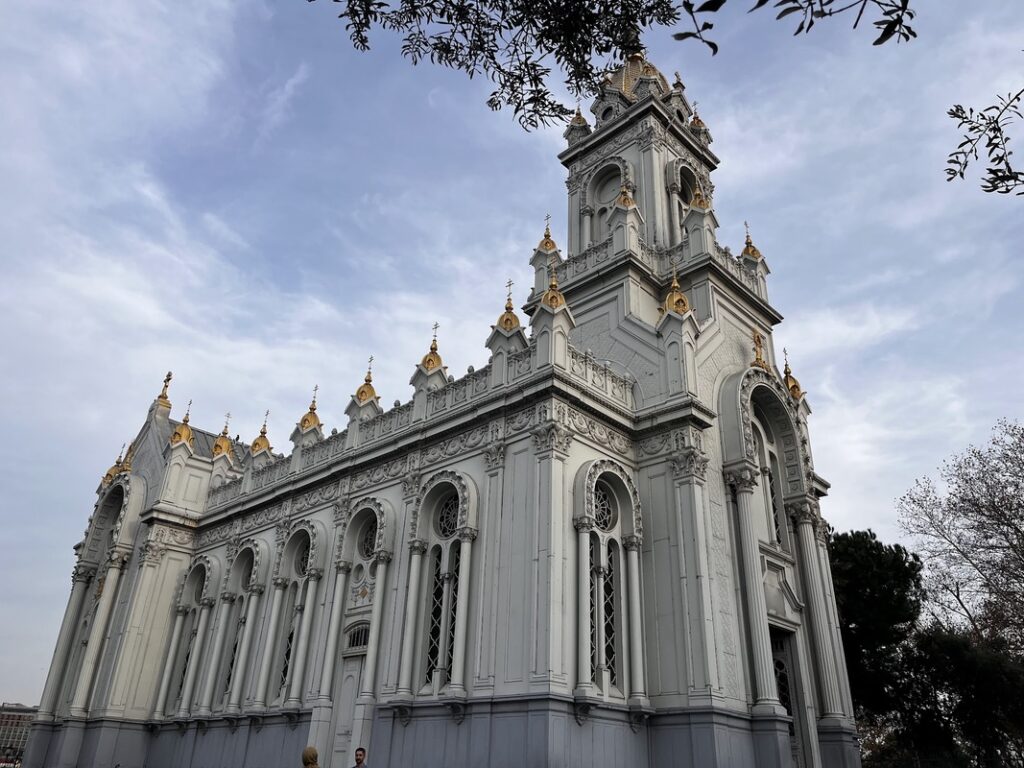
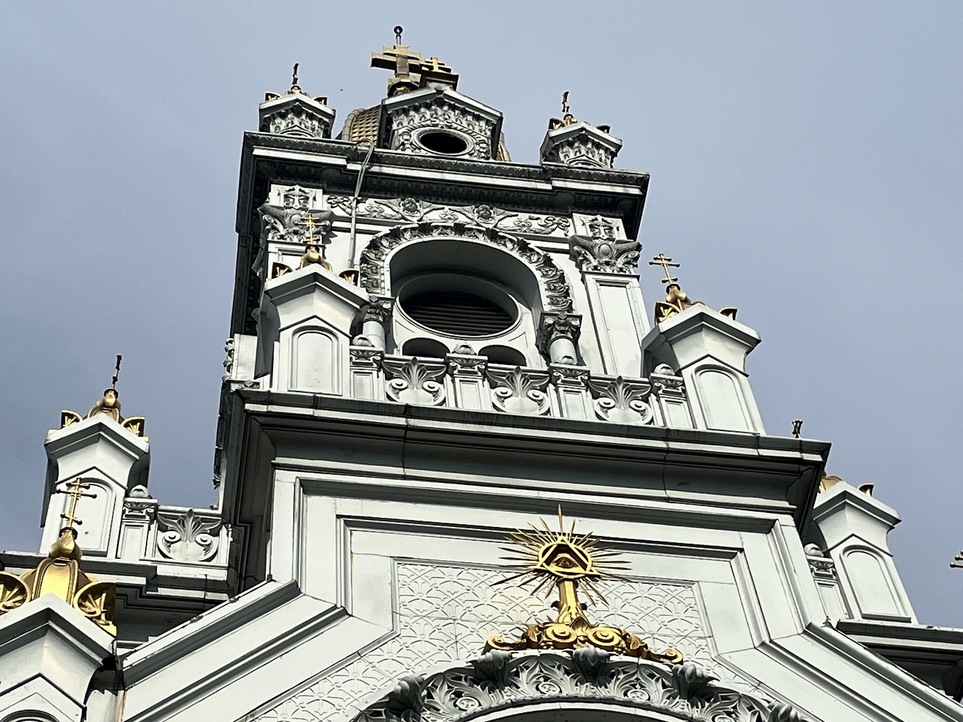
A blend of Neo-Baroque curves and Neo-Gothic verticality, wrapped in an iron skin.

  • A three-aisled basilica with a central dome.
  • A bell tower once ringing with bells cast in Russia.
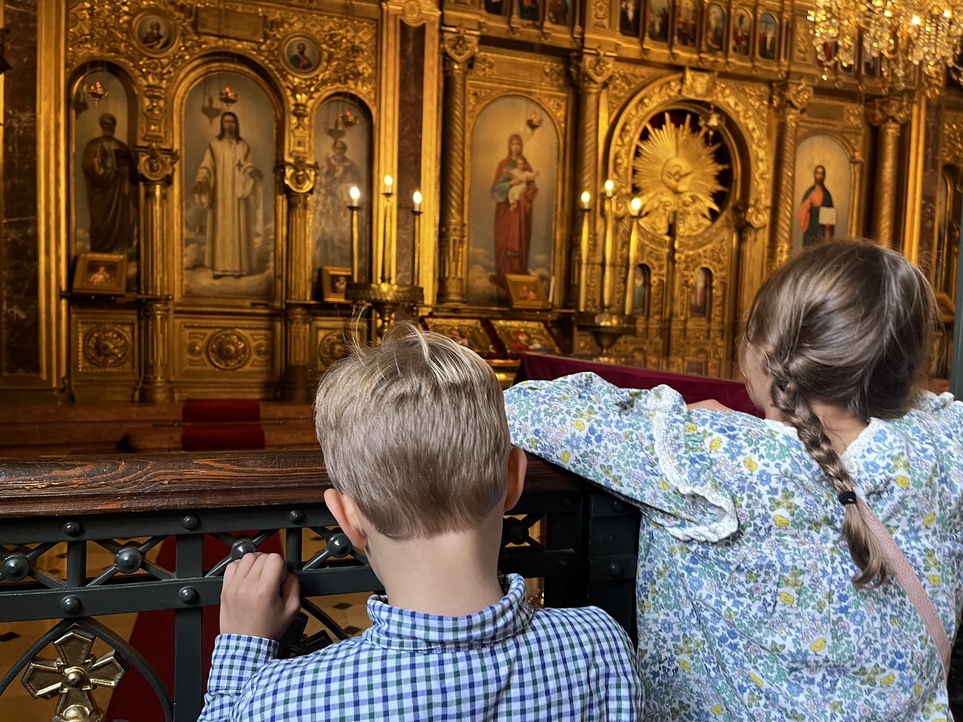
  • An iconostasis of iron painted to imitate marble.

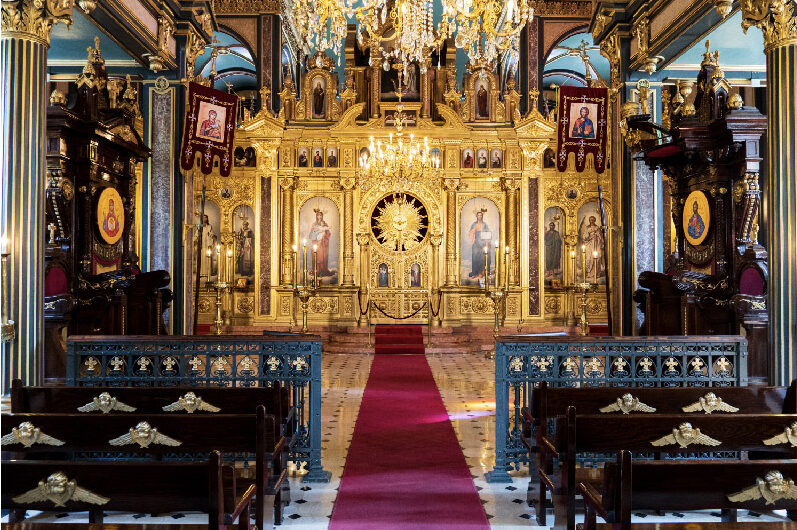
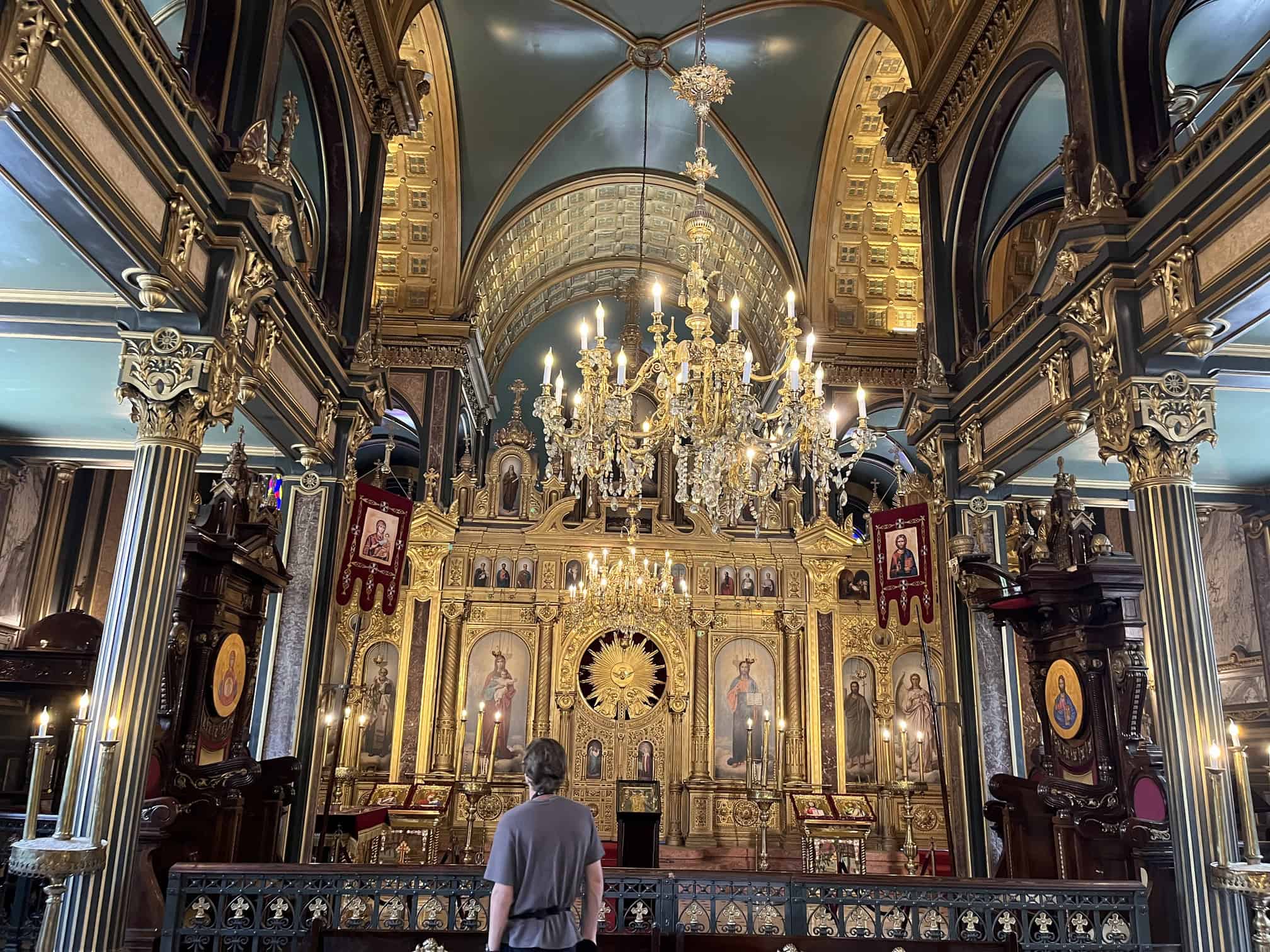
Walk inside and it feels like a ship’s hull transformed into a cathedral. The acoustics hum. The light filters through stained glass in blues and golds. It’s industrial romanticism. A rare marriage of spirituality and 19th-century engineering.


Ten Years of Resurrection

By the 2000s, the iron was bleeding rust. Water seeped through every joint. The whole building was in danger. Then came a decade-long restoration, a rare moment of cooperation between Türkiye and Bulgaria.

Every panel was removed or cleaned, the entire structure was sandblasted, the foundations strengthened, the stained glass repaired, the gilding renewed. 

On January 7, 2018, the church reopened—reborn with the same iron bones, but a new heartbeat.

Closing Thought

When you stand in front of Sveti Stefan, you’re looking at more than a church. You’re looking at a community that insisted on its voice, a statesman who played both sides of the Ottoman Empire, an identity forged in negotiations and prayers, a building that traveled across a continent, and a restoration that brought two nations together.

Most churches are built of stone.
This one is built of iron, memory, and stubborn hope.                                                    And only a city like Istanbul could hold a story like that.

Iron Church - Interior

Get in Touch with Us

Reach out anytime. If you are planning a visit to Bulgarian St. Stephen Church or its environs with an excellent professional tour guide, just fill in the form below.

Tags: ArchitectureArts & CultureChristian LegacyChurchConstantinopleEuropean SideHistoric LandmarksHistoryMinoritiesOttomansReligionThrace
Share130Tweet82
Ömer Çelik

Ömer Çelik

Ömer Çelik is a professional tour guide and art history student from Sivas, Turkey. He holds a degree in Tourist Guidance from Erzincan University and is currently studying Art History at Sivas Cumhuriyet University. With over six years of experience in the tourism industry, including guiding in Istanbul, Ömer brings a deep passion for cultural exploration and storytelling to his work. His academic background and personal experiences enrich his insights into Turkey's rich heritage, with a particular focus on the history of Sivas and the legacy of the Seljuk Empire. Through his blog posts for The Other Tour, Ömer shares his extensive knowledge and enthusiasm, offering readers a unique perspective on Turkey's historical and cultural treasures.

Related Posts

Istanbul alternative tours
Services

Istanbul Alternative Tours

Focus on unique experiences, responsible tourism, and personalized interactions with local guides: Istanbul Alternative Tours.

Balat - Kamış Sokak - Armenian Church - The Other Tour Istanbul 2025
Istanbul Neighborhoods

Balat: The Old Jewish Quarter of Istanbul

Explore Balat's hidden gems & historic quarters with The Other Tour. Dive into Istanbul's culture, from cozy cafes to ancient synagogues.

The Ecumenical Patriarchate of Constantinople
Byzantine Empire

The Ecumenical Patriarchate of Constantinople

Explore the Ecumenical Patriarchate of Constantinople—its origins, Byzantine legacy, Ottoman era, and global role today in Fener, Istanbul.

Golden Horn Tour (Full-Day)
Istanbul Neighborhoods

Fener – Greek Heritage of Istanbul

Explore Fener, Istanbul’s gem of history and culture, with vibrant streets, iconic landmarks, and a rich blend of heritage.

Culinary Tours
Istanbul Tours

Istanbul Walking Tours

Istanbul is a fantastic city to explore on foot. Discover her history and culture with a diverse pool of guided walking tours.

Balat - Istanbul - The Other Tour 2026
Istanbul Daily Tours

Golden Horn Tour (Half-Day)

Explore the Half-Day Golden Horn Tour and uncover the historic streets, vibrant culture, and iconic landmarks of Fener and Balat in Istanbul.

Comments 1

  1. Ian says:
    1 hour ago

    wow, i always the argument that suggested that the Bulgarian people had Turkic origins was some kind of a self-aggrandizing story us, Turks, told ourselves. Now that I’ve seen it here and I’ve checked with GPT, wow, I’m shocked! really interesting stuff.. especially considering how much historical baggage there is between turks and bulgarians.

    Reply

Leave a Reply Cancel reply

Your email address will not be published. Required fields are marked *

  • Ömer Çelik — Istanbul’s Lead Tour Guide in 2026

    Is it safe to travel to Turkey in 2026?

    16 shares
    Share 2212 Tweet 1383
  • Istanbul Earthquake: A 2025 Update

    42 shares
    Share 1820 Tweet 1138
  • Exploring Istanbul’s Asian Side

    10 shares
    Share 788 Tweet 493
  • The Mystery of Turkish Language

    46 shares
    Share 639 Tweet 400
  • Top 5 Bookshops in Istanbul

    15 shares
    Share 673 Tweet 421

Our Tags

Aegean Sea Ancient City Ancient Civilizations Archaeology Architecture Arts & Culture Asian side Best Tours in Turkey Bosphorus Byzantine Legacy Cappadocia Church Constantinople Cruise Culture Day trips Environment Ephesus European Side Events and Happenings Fun Hagia Sophia Historic Landmarks History Hotels Istanbul Istanbul Tours Istanbul travel Istanbul Trip Istanbul Visit Mediterranean Museums Nature Ottomans Recommendations Religion Restaurants Reviews Sultanahmet The Other Tour Turkey Turkey Travel Turkish Cuisine Turkish Culture Water

Watch The Other Tour’s video

https://youtu.be/hCPhlFh9N8Q

About us

The Other Tour is an alternative city experience in Istanbul that immerses visitors in local culture through unique activities, personal interactions, and off-the-beaten-path explorations.

Newsletter

The Other Tour is an immersive Istanbul experience, taking you beyond tourist spots to explore local culture with activities like home-cooked meals, school visits, and Bosphorus cruises. As a travel agency, we also offer personalized travel planning in Istanbul and Turkey, crafting custom itineraries and unique experiences tailored to each traveler.

Company

  • Explore
  • 2025 Itinerary
  • Services
  • F.A.Q.
  • Blog
  • Philosophy
  • About
  • Contact

Our Services

  • Private Tours
  • Private Tour Guides
  • Airport Transfers
  • Made-to-order
  • Hotel Selection
  • Culinary Tours
  • Shopping Tours
  • Unique Activities

Turkey

  • Destinations
  • Istanbul
  • Cappadocia
  • Ephesus
  • Pamukkale
  • Bodrum
  • Antalya
  • Mediterranean
  • Terms & Conditions
  • Privacy Policy
  • Jobs
  • Get in touch

© 2025 The Other Tour - Istanbul by Eren Nergiz Travel.

No Result
View All Result
  • Home
  • The Other Tour
    • Introduction
    • 2025 Itinerary
    • F.A.Q.
    • About us
    • Reviews
    • Contact
  • Istanbul
    • Tours
    • Tour Guides
    • Attractions
    • Neighborhoods
    • Food
    • Stay
    • The Bosphorus
  • Turkey
    • Turkey Tours
    • Destinations
    • Cappadocia
    • Ephesus
    • Pamukkale
    • Antalya
    • Bodrum
  • Services
    • Private Tours
    • Daily City Tours
    • Made-to-order Travel Planning
    • Unique Activities
    • Hire a tour guide in Istanbul
    • Layover Tours
    • Culinary Tours
    • Hotel Selection
    • Family Time
    • Event Planning
    • Corporate Group Tours
  • Blog
    • TOP 5 ISTANBUL
    • Read
    • Events
    • News
    • Turkey
    • Documentary
    • Turkish Food
    • Turkish Music
    • Istanbul Videos
    • All Categories
    • All Posts

© 2025 The Other Tour - Istanbul by Eren Nergiz Travel.