Before you walk past that modest bronze stump in Sultanahmet Square, stop. Hidden inside a brick pit lies the Serpent Column, a 2,500-year-old monument forged from the melted armor of the defeated Persian army at Plataea. From a golden trophy at Delphi to a Byzantine fountain, its survival through wars and crusades is a miracle.
Table of Contents
The Ultimate War Trophy in Sultanahmet Square
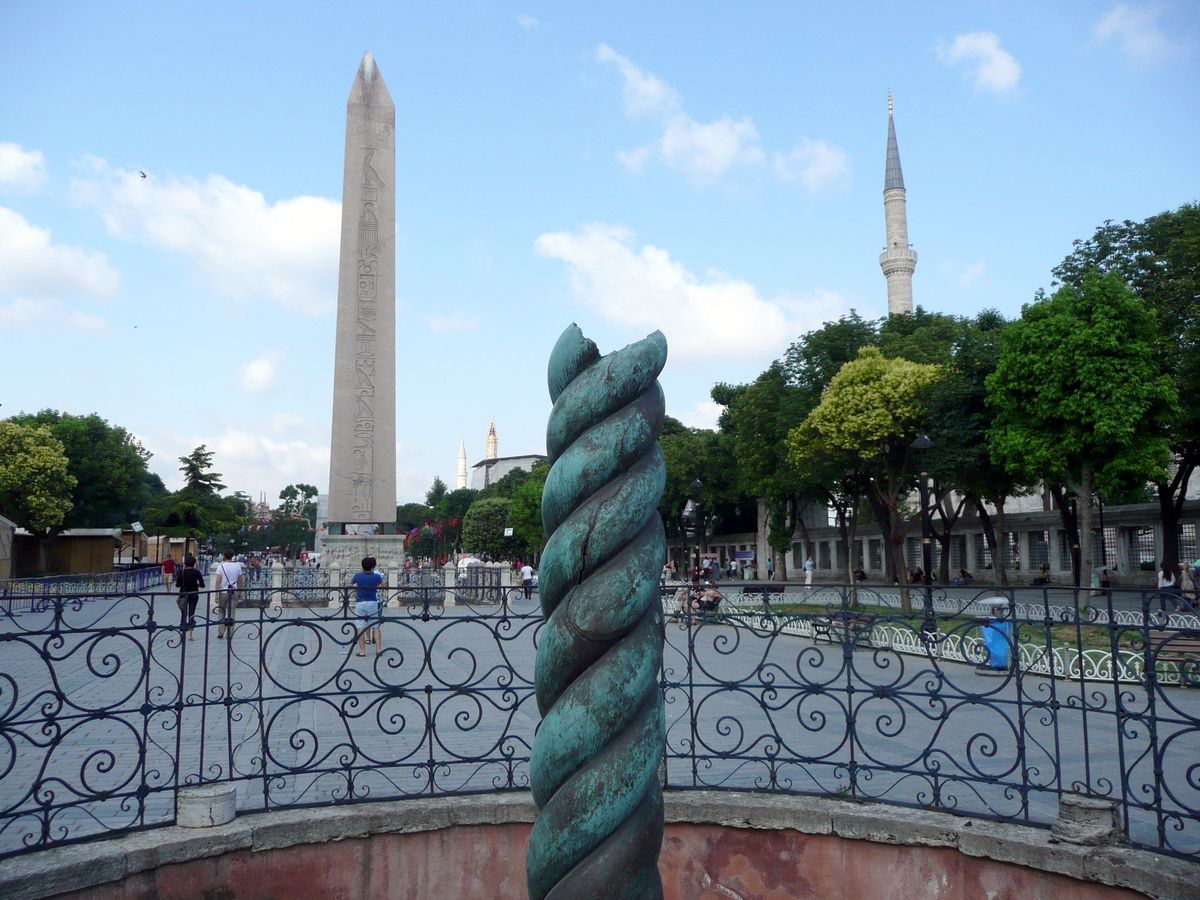
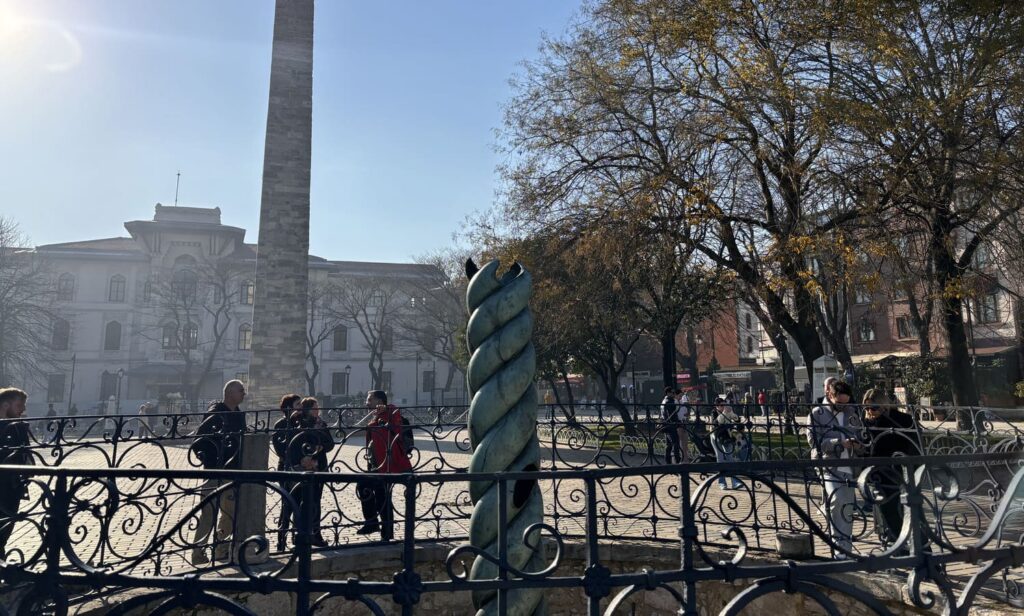
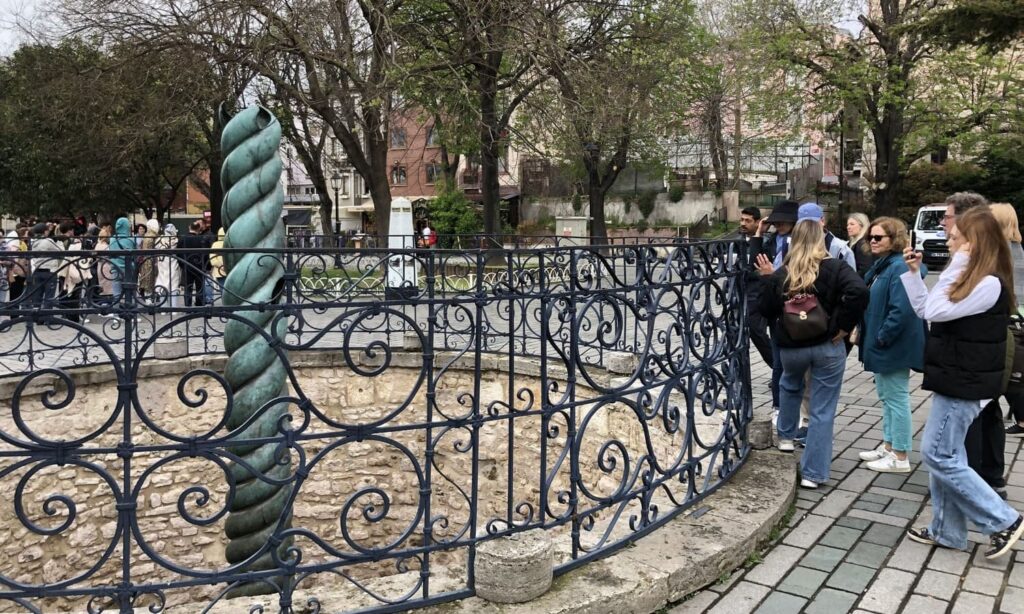
Peering into the brick-lined pit in Sultanahmet Square, you might see nothing more than a modest bronze shaft. In reality, you are looking at one of the most significant victory trophies of classical antiquity. Its story begins in 479 BC at the Battle of Plataea, where a fragile confederation of Greek city-states decisively smashed the invading Persian forces of Xerxes. To thank the gods, the Greeks melted down the bronze armor, shields, and weapons left behind by the fleeing Persian army.
They used the metal to forge a grand votive offering for the Temple of Apollo at Delphi, the spiritual heart of the Greek world. Originally standing a towering 18 feet (5.5 meters) high, the monument featured three bronze serpents intertwined in a tight spiral. Resting upon their extended heads was a glittering golden tripod cauldron.
The choice of serpents was highly symbolic. In Greek mythology, Apollo established his oracle by slaying the monstrous serpent Python, ushering in an era of peace. By dedicating this monument, the Greeks made a bold statement: they had crushed the chaotic Persian threat, and under Apollo’s blessing, a new era of Greek peace had arrived.
The 31 City-States: Ancient Graffiti on the Coils
If you get close enough to the bronze coils today, you are looking at a literal roll call of ancient defiance. Carved into 11 of the lower spirals are the names of the 31 Greek city-states that stood together to defeat the Persians, topped by the superpower trio of Sparta, Athens, and Corinth.
While this sounds like the work of a master royal craftsman, the reality is far more human. The lettering is actually quite uneven, poorly distributed across the bronze, and written entirely in the Phocian script—the local dialect of the people living around Delphi.
This strongly suggests that the inscriptions were not part of the original, polished grand design. Instead, someone likely hacked the names into the bronze coils at a later date, turning a generic religious dedication into a permanent political receipt.
The ravages of time and pollution have made these 2,500-year-old marks incredibly difficult to see with the naked eye. However, if you know exactly where to look—specifically scanning the sixth coil up from the bottom—you can still just make out the first few ancient Greek letters of Eretria.
Roll Call of the 31 Greek City-States
| Ancient City-State | Region | Modern Reference |
|---|---|---|
| Sparta (Lacedaemon) | Laconia | Peloponnese, Greece |
| Athens | Attica | Athens, Greece |
| Corinth | Corinthia | Corinth, Greece |
| Tegea | Arcadia | Peloponnese, Greece |
| Orchomenus | Boeotia / Arcadia | Central Greece |
| Sicyon | Corinthia | Near Corinth |
| Epidaurus | Argolis | Peloponnese, Greece |
| Troezen | Argolis | Peloponnese, Greece |
| Hermione | Argolis | Peloponnese, Greece |
| Tiryns | Argolis | Near Nafplio |
| Mycenae | Argolis | Mycenae, Greece |
| Phlius | Corinthia | Nemea Region |
| Megara | Megaris | Western Attica |
| Aegina | Saronic Gulf | Aegina Island |
| Chalcis | Euboea | Evia Island |
| Eretria | Euboea | Evia Island |
| Styra | Euboea | Southern Evia |
| Elis | Western Peloponnese | Olympia Region |
| Potidaea | Chalcidice | Northern Greece |
| Leucas | Ionian Islands | Lefkada Island |
| Anactorium | Acarnania | Western Greece |
| Kythnos | Cyclades | Aegean Island |
| Siphnos | Cyclades | Aegean Island |
| Ambracia | Epirus | Western Greece |
| Lepreum | Elis | Peloponnese |
| Naxos | Cyclades | Aegean Island |
| Tenos (Tinos) | Cyclades | Tinos Island |
| Melos | Cyclades | Milos Island |
| Ceos (Kea) | Cyclades | Kea Island |
| Plataea | Boeotia | Battle Site |
| Thespiae | Boeotia | Central Greece |
Spina’s Living Talisman: Fountain and Protector
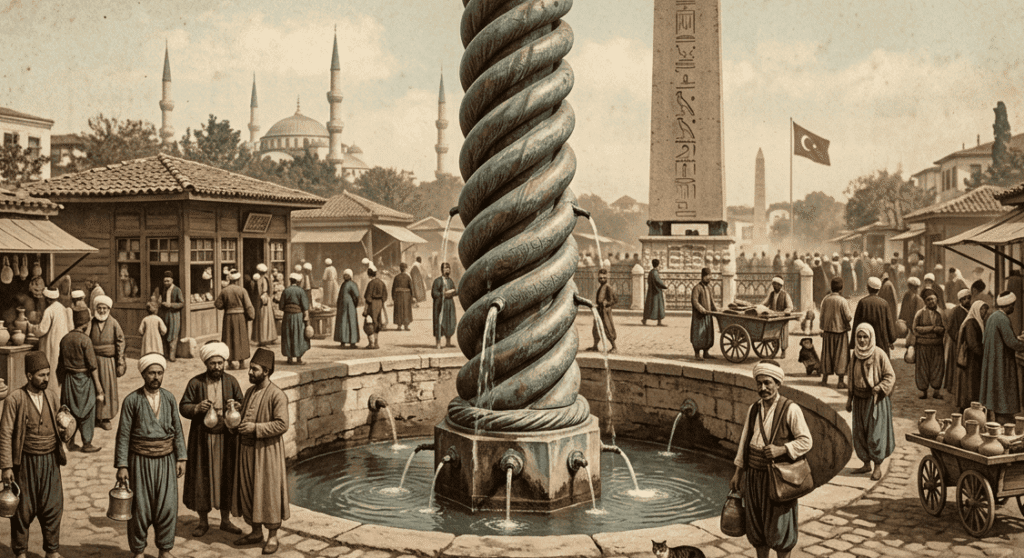
Once settled into its new home on the Spina, the Serpent Column didn’t just sit there as a static museum piece. The Byzantines were masters of engineering and spectacle, and at some point, they decided to modify this hollow bronze trophy into an active, public water fountain. By drilling into the structure and running advanced water conduits underground, they engineered it so that water actively spewed out of the three snakes’ mouths.
During major chariot races, this would have been an incredible sight for the crowds packing the Hippodrome. 1850s excavations confirmed this ingenious plumbing setup, uncovering the distinct water pipes running beneath the track that connected directly to the base of the column.
Why wasn't this Statue melted down during Fourth Crusade?
When Western Christian Crusaders brutally sacked Constantinople in 1204, they systematically stripped the city of its wealth. They melted down almost every single bronze statue they could lay their hands on to strike cheap coins to pay off their debts. Yet, they left the Serpent Column completely untouched. Historians point to two likely reasons:
- Practical Utility: The fountain was simply too useful as a functioning public water source for the occupying troops to destroy.
- Supernatural Fear: The local residents of Constantinople deeply believed that the city’s bronze statues acted as magical talismans controlling nature. The serpents were widely rumored to hold a powerful spell that kept poisonous snakes and scorpion plagues out of the city walls.
The Mystery of the Broken Heads
By the year 1700, the monument suffered its most devastating blow: all three serpent heads completely vanished. While wild legends blame drunk diplomats or stray cannonballs, the real explanations are far more practical:
- Athletic Mishaps: During the Ottoman era, the Hippodrome was used for equestrian sports, javelin games, and acrobatics. Decades of careless collisions with stray sporting gear or climbing daredevils likely snapped the projecting heads.
- Structural Fatigue: The 29 twisting coils were cast as a single bronze piece, but the three heads were welded on separately. After holding that heavy bronze aloft for over 2,200 years, the ancient welds simply failed under their own weight.
Fortunately, the story doesn’t end in total loss. In 1848, a surviving upper jaw fragment was discovered near Hagia Sophia. Today, you can see this piece of ancient history up close at the Istanbul Archaeology Museums.
Discover Other Related Posts
Discover how Constantine the Great reshaped Rome, founded Constantinople, and transformed the Roman Empire forever.
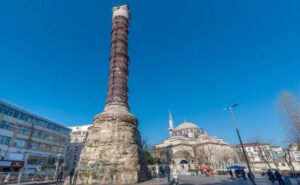
Discover the Column of Constantine in Istanbul. Uncover the dramatic history of the Burnt Pillar and its incredible Roman origins.
Explore Anatolia’s ancient mother goddess tradition through Phrygian myths, sacred symbols, and surviving archaeological traces.
Explore Sultanahmet’s hidden treasures with The Other Sultanahmet Tour, featuring unique sites, rich history, and breathtaking views.
The heart of Istanbul’s Old Town, Sultanahmet is home to some of the world’s most iconic monuments from The Byzantines and The Ottomans.
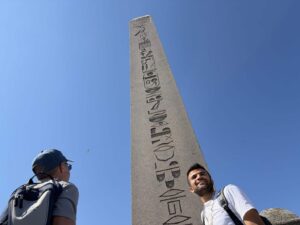
Visitors to Istanbul can experience the ancient Hippodrome with its monuments, like the Obelisk of Theodosius and the Serpent Column.
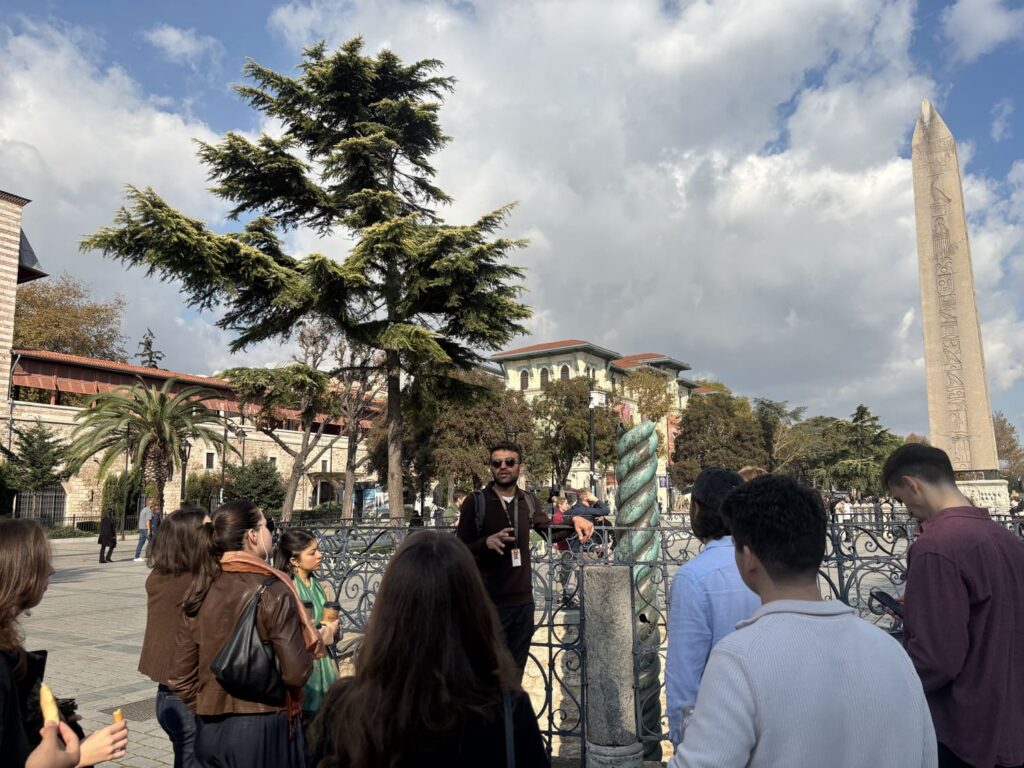
Experience the Hippodrome on Foot
The best way to truly appreciate these hidden details is to walk the ancient track yourself. We offer an exclusive, expert-led walking tour through Sultanahmet that brings the entire history of the arena back to life.
Over the course of a few hours, we will uncover the Serpent Column, the Egyptian Obelisk, the Column of Constantine, and the surrounding relics that defined the heart of the Byzantine and Ottoman empires.
You don’t have to worry about navigating the historic streets or missing the subtle details buried in plain sight—we provide a seasoned local guide to decode the stories and seamless, comfortable transportation to ensure a completely stress-free experience.
If you are ready to discover the secret histories written into the stones of Istanbul, please fill out the form below to secure your spot.